Table of Contents >> Show >> Hide
- Introduction: When Late-Night Comedy Becomes a Battlefield
- What Happened to Stephen Colbert’s Late Show?
- Why Piers Morgan Pounced
- Was Colbert Canceled Because of Politics?
- The Economics Behind the Late-Night Comedy Crisis
- Was Piers Morgan Right About Partisan Comedy?
- Why Colbert Still Matters
- The Culture War Around Late-Night TV
- Specific Examples: How the Debate Played Out
- What This Means for the Future of Late-Night Comedy
- Experience-Based Reflection: Watching the Colbert-Morgan Moment as a Media Lesson
- Conclusion: A Funeral, a Roast, or a Reset?
Note: This article is written as commentary and analysis based on publicly reported events surrounding Stephen Colbert, CBS, late-night television, and Piers Morgan’s reaction to the cancellation of The Late Show with Stephen Colbert.
Introduction: When Late-Night Comedy Becomes a Battlefield
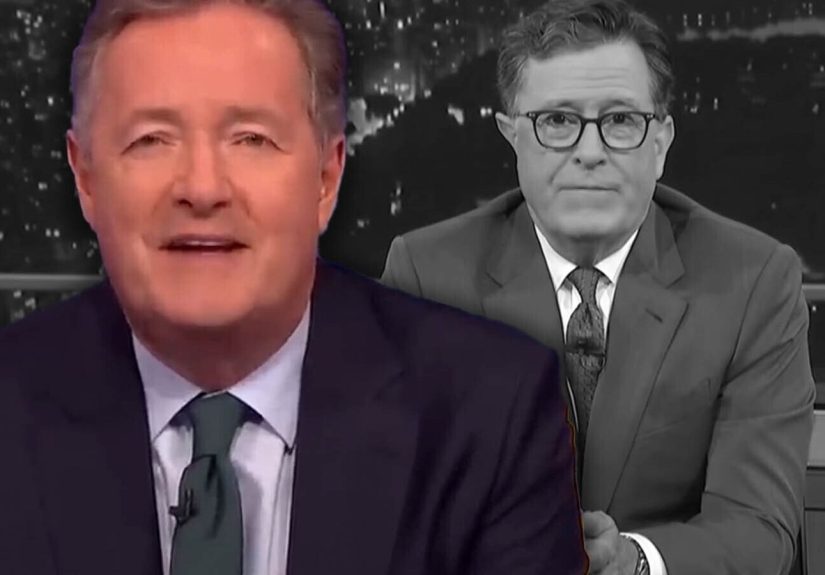
The phrase “Piers Morgan dances on comedy grave of Stephen Colbert” sounds like the title of a roast battle held in a haunted television studio, but it captures a very real media moment. After CBS announced that The Late Show with Stephen Colbert would end in May 2026, Piers Morgan reacted not with sympathy, not with a polite “best of luck,” and certainly not with a tasteful fruit basket. Instead, he took the cancellation as proof that modern American late-night comedy had become too partisan, too predictable, and too cozy with one political side.
That reaction lit up the familiar culture-war pinball machine. Conservatives saw Colbert’s cancellation as evidence that audiences were tired of anti-Trump monologues. Liberals questioned whether politics, corporate pressure, and Paramount’s business interests played a role. CBS said the decision was financial. Colbert’s supporters pointed out that he had been a leading figure in late-night TV for years. Morgan, meanwhile, leaned into the moment with the kind of theatrical confidence normally reserved for boxing promoters, tabloid columnists, and people who use “just saying” after saying something very much on purpose.
To understand why this story matters, you have to look beyond one host, one critic, and one canceled show. This is really a story about the changing economics of television, the shrinking influence of legacy media, the rise of political comedy, and the uncomfortable question facing every late-night host: are you making jokes for everyone, or are you performing for the people who already agree with you?
What Happened to Stephen Colbert’s Late Show?
Stephen Colbert took over The Late Show from David Letterman in 2015, inheriting one of the most important desks in American television. At first, the transition was not always smooth. Colbert had spent years playing a satirical conservative character on The Colbert Report, while The Late Show required him to appear as himself. That adjustment took time, but the political chaos of the Trump era gave Colbert a sharper identity. He became one of the most visible anti-Trump voices in late-night comedy.
For many viewers, that made him essential. His monologues blended outrage, sarcasm, wordplay, and a school-principal-with-a-sword kind of moral energy. For others, it made his show feel repetitive. If you loved Trump, Colbert was probably not your nightly cup of chamomile. If you disliked Trump, Colbert offered a polished, theatrical way to laugh through clenched teeth.
In July 2025, CBS announced that The Late Show with Stephen Colbert would end after the 2025–2026 broadcast season. The final episode was scheduled for May 21, 2026. CBS said the move was a financial decision tied to the difficult late-night television environment, not to Colbert’s performance, content, or politics. The network also made clear that Colbert was not simply being replaced by another host. Instead, the broader Late Show franchise itself would end.
That distinction matters. This was not the usual late-night handoff where one host rides into the sunset and another arrives with a new mug, new band, and suspiciously similar desk. CBS was signaling that the economics of the entire format had become shaky. Traditional late-night TV once depended on big live audiences, strong advertising revenue, and the daily habit of viewers watching after the local news. Streaming, YouTube clips, social media, and audience fragmentation have changed all of that.
Why Piers Morgan Pounced
Piers Morgan has never been known for tiptoeing gently across a media controversy. He is more of a “march in wearing tap shoes” commentator. After news of Colbert’s cancellation, Morgan argued that much of American late-night television had become dominated by what he described as hyper-partisan activism. He suggested Colbert’s fate was unsurprising and predicted that more late-night hosts could face similar trouble.
Morgan’s argument was blunt: late-night comedy had stopped trying to entertain a broad audience and had instead turned into a political comfort zone for liberal viewers. In his view, hosts like Colbert were no longer simply comedians taking shots at power; they had become campaign-adjacent cultural figures whose jokes traveled in one predictable direction.
That criticism did not appear in a vacuum. Former Tonight Show host Jay Leno had also raised concerns that modern late-night shows risk alienating half the country by leaning too heavily into one-sided political humor. Morgan seized on that idea because it fit his broader critique of media institutions: that they often mistake applause from like-minded audiences for genuine national relevance.
Of course, Morgan’s critics would say he was enjoying the moment a little too much. The image of him “dancing on Colbert’s comedy grave” is not literal, unless someone has invented a cemetery for canceled shows and invited Morgan to bring a Bluetooth speaker. It is a metaphor for the relish with which he treated the news. Where Colbert’s fans saw the end of a respected comedy institution, Morgan saw confirmation of a long-running complaint.
Was Colbert Canceled Because of Politics?
The question hovering over the story is whether politics played a role in CBS’s decision. CBS said no. The network described the cancellation as purely financial. Late-night television has become expensive to produce, and large staffs, studio costs, shrinking ratings, and changing ad markets make the old model harder to justify.
Still, the timing raised eyebrows. Colbert had recently criticized Paramount, CBS’s parent company, over its settlement with Donald Trump related to a 60 Minutes dispute. Paramount was also involved in major corporate maneuvering around its merger with Skydance. Because the entertainment business does not operate in a clean laboratory where politics, money, and influence are politely separated into labeled jars, some lawmakers, commentators, and fans questioned whether Colbert’s sharp political commentary had made him inconvenient.
The most responsible answer is this: the public evidence supports CBS’s stated financial explanation, while the political timing created understandable suspicion. Those two ideas can coexist. A show can be expensive and politically controversial. A network can make a financial decision that also happens to please certain political figures. The entertainment industry, like a family Thanksgiving dinner, often contains several motives at once and at least one person pretending everything is fine.
The Economics Behind the Late-Night Comedy Crisis
For decades, late-night television was a powerful cultural machine. Johnny Carson could make careers. David Letterman could turn absurdity into art. Jay Leno could dominate ratings with a broad, middle-American comic approach. Conan O’Brien built a cult following through weirdness, irony, and characters who seemed designed in a laboratory run by sleep-deprived theater kids.
But the audience has changed. Younger viewers do not necessarily watch an entire hour of television at 11:35 p.m. They watch clips on YouTube, scroll jokes on TikTok, catch monologues on X, or ignore the format altogether because a raccoon video and a geopolitical explainer are competing for the same attention span. That shift weakens the traditional business model.
Late-night shows are also expensive. Writers, producers, bookers, musicians, editors, stage crews, researchers, and production staff all cost money. The prestige of a legacy show may remain high, but prestige does not automatically pay the lighting bill. Networks now ask a colder question: does this program generate enough revenue across broadcast, streaming, and digital platforms to justify the cost?
That is why the Colbert cancellation became bigger than Colbert. It suggested that even a prominent host with cultural influence and industry respect might not be safe if the financial math stops working. In that environment, Morgan’s criticism lands with extra force because it connects two issues: political narrowness and business weakness. His message is essentially, “If you shrink your audience, do not be shocked when the accountants arrive with a clipboard.”
Was Piers Morgan Right About Partisan Comedy?
Morgan’s critique contains a point worth considering, even for people who dislike his tone. Comedy works best when it surprises. If the audience knows the target, the punchline, and the moral lesson before the joke begins, the laugh can start to feel like a group exercise rather than a comic discovery.
Colbert’s strongest fans would argue that he was not being partisan for sport; he was responding to an extraordinary political era. They would say that mocking Donald Trump night after night was not laziness but necessity, because Trump’s presidency and public persona constantly generated material. In that view, Colbert was doing what satirists are supposed to do: challenging power, exposing hypocrisy, and giving anxious viewers a release valve.
But Morgan’s side of the argument is that repetition dulls the blade. When every monologue travels down the same road, viewers who are not already on board may leave. Even some viewers who agree politically may eventually crave variety. Nobody wants dinner to be one giant bowl of mustard, even if they enjoy mustard. Political comedy needs seasoning, not saturation.
The deeper issue is not whether comedians should discuss politics. They absolutely should. American late-night comedy has always joked about presidents, scandals, elections, wars, and public stupidity. The question is whether the joke comes first or the sermon comes first. When comedy feels like a lecture wearing a fake mustache, audiences notice.
Why Colbert Still Matters
It would be unfair to reduce Stephen Colbert’s career to anti-Trump jokes. Before The Late Show, he helped redefine political satire on The Colbert Report. His mock-conservative persona was one of the sharpest inventions in modern television comedy. It allowed him to parody cable news arrogance, ideological performance, and media vanity from the inside out.
On The Late Show, Colbert also brought intelligence, warmth, musical theater energy, religious literacy, literary references, and emotional depth. His interviews could be funny, but they could also be unusually sincere. He was capable of discussing grief, faith, art, and democracy without sounding like he had wandered into the wrong show.
That is why the cancellation hit hard for many viewers. To them, Colbert was not merely a partisan comic. He was a nightly companion during years of political stress, pandemic anxiety, institutional distrust, and cultural exhaustion. His show gave structure to chaos. Even when the jokes were predictable, the ritual mattered.
Morgan’s celebration of the cancellation therefore struck Colbert’s fans as cruel. It sounded like cheering not just the end of a show but the loss of a community. Yet Morgan’s defenders would say that media figures who mock others for a living should expect mockery when their own fortunes change. In show business, the pie flies both ways.
The Culture War Around Late-Night TV
The Colbert-Morgan clash is part of a larger culture war over who gets to define comedy. One side argues that comedy should punch up, challenge authoritarianism, and respond fiercely to political threats. The other side argues that much of mainstream comedy has become predictable, elitist, and hostile to anyone outside progressive cultural circles.
Late-night hosts now operate in an environment where every joke is treated as evidence in a national trial. A punchline is not just a punchline; it becomes a signal. Viewers ask, “Whose side is he on?” before they ask, “Was that funny?” That is a brutal environment for comedy because humor needs room to be messy, unfair, playful, and surprising.
Piers Morgan thrives in that environment because he is less a neutral observer than a combatant. His brand depends on confrontation. Colbert’s brand depends on polished satire with a moral point of view. Their clash was almost inevitable. One man sees himself as calling out media groupthink. The other became famous, in part, by mocking political absurdity through performance. Put them in the same story and the sparks arrive pre-installed.
Specific Examples: How the Debate Played Out
One example is Morgan’s reaction to claims that Colbert’s cancellation was politically suspicious. Morgan dismissed much of that as overblown, arguing that the show’s cost and political repetitiveness were enough to explain its fate. He also criticized the idea that a high-profile host should be treated as untouchable simply because he was popular with liberal audiences.
Another example is the response from Colbert’s peers. Fellow late-night hosts showed public support, and major entertainment figures appeared during his final stretch. That solidarity suggested that, inside the comedy community, Colbert’s cancellation was seen as more than a routine programming decision. It felt like a symbolic blow to the late-night tradition.
Then there is the audience reaction. Supporters saw Colbert as a victim of corporate caution during a politically sensitive merger period. Critics saw the cancellation as the market correcting a show that had narrowed its appeal. Both narratives are emotionally satisfying. Both are also incomplete. The truth likely sits in the less glamorous middle: late-night TV is financially strained, politically charged, and increasingly difficult to sustain in its old form.
What This Means for the Future of Late-Night Comedy
The end of Colbert’s Late Show does not mean political comedy is dead. It means the old delivery system is weakening. The next generation of late-night humor may not live behind a giant desk on a broadcast network. It may live on podcasts, YouTube channels, streaming specials, newsletters, short-form video, and independent media platforms.
That shift could be healthy. Comedy might become more diverse, more experimental, and less dependent on network approval. But it also means fewer shared cultural moments. In the Carson and Letterman eras, millions of people watched the same jokes at the same time. Today, comedy is scattered across platforms like confetti after a parade no one agreed to attend.
For hosts who remain on television, the lesson is not necessarily “avoid politics.” That would be impossible and boring. The lesson is to avoid becoming too predictable. The best political humor does not simply confirm what the audience already believes. It reveals something absurd, uncomfortable, or unexpected. It makes the viewer laugh first and argue second.
Experience-Based Reflection: Watching the Colbert-Morgan Moment as a Media Lesson
From a viewer’s perspective, the “Piers Morgan dances on comedy grave of Stephen Colbert” moment feels like watching two different media eras collide in public. Colbert represents the polished late-night institution: the studio audience, the band, the monologue, the celebrity guest, the carefully built desk, the ritual of closing the day with jokes. Morgan represents the modern outrage-commentary engine: fast reactions, sharp opinions, social media amplification, and a willingness to turn every news event into a verbal boxing match.
The strange thing is that both styles can be entertaining. A great Colbert monologue can feel like a beautifully arranged orchestra of sarcasm. A classic Morgan rant can feel like someone kicked open a pub door and started an argument before the bartender even asked what he wanted. One is scripted precision; the other is combative momentum. The clash between them reveals how audiences now consume media in completely different moods.
If you are a longtime late-night viewer, Colbert’s cancellation may feel like the closing of a familiar neighborhood diner. Maybe the menu had become predictable. Maybe the prices were too high. Maybe younger people were eating elsewhere. But it was still part of the landscape. You knew where it was. You knew what it served. You knew that if the world had a ridiculous day, someone behind that desk would try to turn it into a joke before bedtime.
If you are more skeptical of mainstream media, Morgan’s reaction may feel like someone finally saying what you have thought for years: that late-night comedy became less about jokes and more about applause from one political tribe. From that angle, Colbert’s cancellation is not a tragedy but a market signal. Audiences changed. Habits changed. The old formula stopped working as well as it once did. The desk was famous, but fame does not guarantee survival.
The most useful lesson is that comedy cannot live on agreement alone. Agreement can create applause, but surprise creates laughter. Colbert’s best work often came when he combined moral seriousness with absurdity. Morgan’s most effective commentary comes when he punctures media self-importance rather than merely swapping one tribe’s certainty for another’s. Both men are strongest when they resist becoming caricatures of themselves.
For writers, comedians, media creators, and SEO publishers watching this story, there is a practical takeaway: audiences reward clarity, but they punish monotony. A point of view is valuable. A predictable point of view is less valuable. If every headline, joke, segment, and reaction tells the audience exactly what they expected to hear, eventually the content becomes wallpaper. It may still decorate the room, but nobody stops to study it.
That is why the Colbert-Morgan controversy is more than celebrity sniping. It is a case study in modern attention. People want entertainment, but they also want identity. They want jokes, but they also want validation. They want honesty, but only until honesty makes their side uncomfortable. The next successful version of late-night comedy will have to navigate all of that without sounding like a campaign email that learned how to wink.
In the end, Piers Morgan may have danced on the metaphorical comedy grave, but Stephen Colbert is not exactly buried. His influence on political satire is secure, his fan base remains loyal, and his next creative chapter will be watched closely. The real grave may belong to the old assumption that a network late-night desk is the permanent center of American comedy. That world is fading. The jokes will continue, but the stage is changing.
Conclusion: A Funeral, a Roast, or a Reset?
The story of Piers Morgan and Stephen Colbert is not just about one British broadcaster mocking one American late-night host. It is about the future of comedy in a divided media age. CBS says The Late Show ended for financial reasons. Morgan says Colbert’s brand of partisan comedy helped make the outcome inevitable. Colbert’s supporters say the cancellation reflects corporate fear, political pressure, and the loss of an important satirical voice.
The truth is complicated, which is inconvenient because the internet prefers its truth served in snackable rage pellets. Late-night TV is under financial pressure. Political comedy has become more polarized. Colbert’s show mattered deeply to many viewers. Morgan’s critique resonated with others who felt alienated by modern late-night humor. All of these things can be true at the same time.
So, did Piers Morgan dance on Stephen Colbert’s comedy grave? Metaphorically, yesand he brought his own spotlight. But the bigger story is not the dance. It is the ground beneath the graveyard: a media landscape where legacy television, political satire, audience trust, and entertainment economics are all shifting at once. Colbert’s exit may mark the end of one chapter, but comedy is not dead. It is simply looking for a new room, a cheaper set, and maybe a punchline nobody sees coming.