Table of Contents >> Show >> Hide
- Quick Definitions (So You Don’t Have to Squint)
- The Key Difference: Location and “Permission to Cross the Line”
- Pinguecula vs. Pterygium: Side-by-Side Comparison
- Symptoms: What You Might Notice Day-to-Day
- What Causes Them? (Spoiler: The Sun Is Involved)
- Can a Pinguecula Turn Into a Pterygium?
- How Eye Doctors Tell the Difference
- Treatment Options: From “Leave It Alone” to Surgery
- Prevention: The Part Your Future Self Will Thank You For
- When to See an Eye Doctor (Don’t Tough-It-Out Olympics This)
- The Takeaway
- Real-World Experiences: What People Commonly Report
- 1) “I thought it was a stuck contact lens… but it wasn’t.”
- 2) “It’s not painful… it’s just always red after I’m outside.”
- 3) “It’s tiny, but it bugs me every time I look in the mirror.”
- 4) “My glasses prescription changed, and now I’m wondering if it’s related.”
- 5) “I didn’t realize sunglasses mattered until now.”
- 6) “I’m worried about surgery and recurrence.”
- SEO Tags
If you’ve ever noticed a little yellow bump on the white of your eyeor a fleshy triangle that looks like it’s
trying to move in on your corneayou’ve already met the two main characters of today’s show:
pinguecula and pterygium.
They’re both common, both usually benign (not cancer), and both have a “sun + wind + dust” origin story.
But they’re not the same thing. And knowing the difference matters, because one of them can affect vision
while the other usually just… sits there, being mildly annoying and occasionally photobombing your selfies.
Quick Definitions (So You Don’t Have to Squint)
What is a pinguecula?
A pinguecula is a small, raised, white-to-yellow bump on the conjunctiva
(the thin, clear tissue covering the white part of your eye). It typically appears near the cornea, often on
the side closest to your nose, but it can show up on the outer side too.
Pingueculae are often linked to long-term irritationthink ultraviolet (UV) light exposure, wind, dust, and dry
conditions. Most are harmless and don’t threaten sight, though they can cause redness or a gritty “something’s
in my eye” feeling.
What is a pterygium?
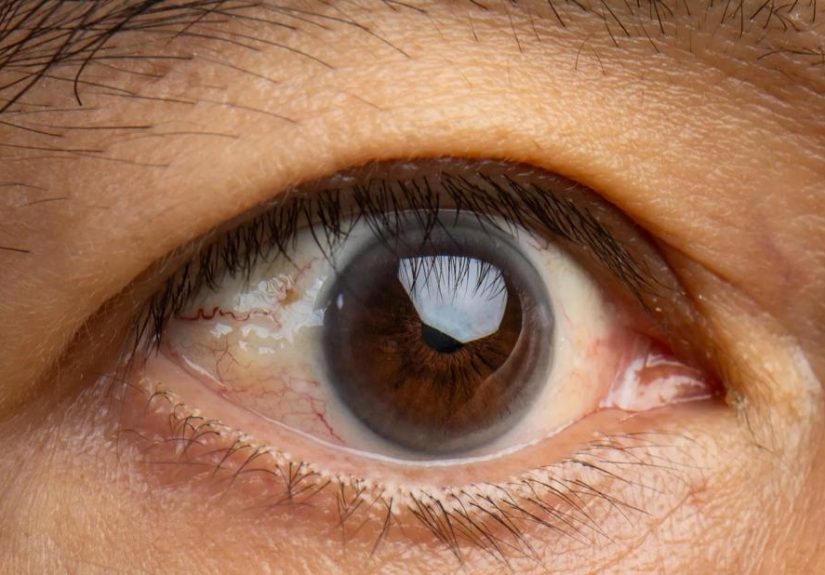
A pterygium (often nicknamed “surfer’s eye”) is a wedge-shaped, fleshy growth that starts on the
conjunctiva and can extend onto the cornea (the clear front window of your eye).
That “onto the cornea” part is the headlinebecause that’s where vision issues can enter the chat.
Like pinguecula, pterygium is associated with chronic irritation and UV exposure. It may remain small and quiet,
or it may slowly grow. If it changes the shape of the cornea, it can contribute to astigmatism or blurred vision.
The Key Difference: Location and “Permission to Cross the Line”
Here’s the simplest way to remember it:
Pinguecula stays on the conjunctiva.
Pterygium can grow onto the cornea.
Both typically sit near the border where the white of the eye meets the clear cornea. But a pinguecula is like a
neighbor who keeps their lawn ornaments on their own property. A pterygium is the neighbor who slowly extends
their garden edging past the sidewalk and acts like it’s always been that way.
Pinguecula vs. Pterygium: Side-by-Side Comparison
| Feature | Pinguecula | Pterygium |
|---|---|---|
| Where it grows | On the conjunctiva (white of the eye) | Starts on conjunctiva and can extend onto the cornea |
| Typical appearance | Small yellow/white bump or patch | Fleshy, wedge/triangle-shaped growth, often with visible blood vessels |
| Can affect vision? | Usually no | Yesespecially if it grows onto the cornea or changes corneal shape |
| Common symptoms | Dryness, irritation, redness; may be cosmetic | Irritation, redness, foreign-body sensation; possible blurry or distorted vision |
| Main risk factors | UV light, wind, dust, chronic dryness/irritation | UV light, wind, dust, chronic irritation; often seen in sunny climates |
| Typical treatment | Lubricating drops; occasional anti-inflammatory drops if inflamed | Drops for comfort; surgery if vision is affected, growth is significant, or inflammation keeps returning |
Symptoms: What You Might Notice Day-to-Day
Common pinguecula symptoms
- A visible yellowish bump on the white of the eye
- Dryness or a scratchy/gritty sensation
- Redness, especially after sun or wind exposure
- Occasional swelling or irritation (sometimes called pingueculitis when inflamed)
Many people have a pinguecula with few symptomsuntil a windy beach day (or a dusty commute) turns the eye into
a tiny drama club performing “The Gritty Sensation: A Tragedy.”
Common pterygium symptoms
- Redness and irritation that may flare with sun/wind/dust
- Foreign-body sensation (like there’s a lash stuck… when there isn’t)
- Dry eye symptoms
- Blurred vision or visual distortion if it induces astigmatism or approaches the visual axis
- Cosmetic concern if the growth becomes noticeable
A pterygium can be quiet and stable for years. Or it can slowly enlargeso gradually you don’t notice until you
look at an old photo and think, “Wait… was that little triangle always there?”
What Causes Them? (Spoiler: The Sun Is Involved)
Neither condition has a single “one weird trick” cause. Instead, they’re associated with long-term irritation of
the ocular surface. The most consistent risk factors include:
- UV exposure (especially cumulative, long-term sunlight exposure)
- Wind and dust (think: dry, gritty environments)
- Dry eye or chronic surface irritation
- Outdoor work or hobbies (construction, farming, boating, fishing, beach sports)
- Living in sunny regions where UV intensity is high
In practical terms: people who spend lots of time outdoorsespecially around reflective surfaces like water or sand
tend to see these more often. That’s why pterygium’s nickname “surfer’s eye” stuck.
Can a Pinguecula Turn Into a Pterygium?
Sometimes, yes. A pterygium may develop from tissue changes that begin as a pingueculaespecially if irritation and
UV exposure continue over time. But it’s not a guaranteed “evolution.” Many pingueculae never progress and remain
small or stable for years.
Think of it like this: a pinguecula is a warning light that your eye’s surface has been dealing with chronic
environmental stress. A pterygium is what can happen when that stress continues and the tissue becomes more
activesometimes growing onto the cornea.
How Eye Doctors Tell the Difference
Diagnosis is usually straightforward during a comprehensive eye exam. Your eye doctor can look at the lesion’s
location, shape, and whether it involves the cornea. A slit-lamp exam (a special microscope) helps confirm what’s
going on and rule out less common conditions.
What the exam is looking for
- Does it stop at the conjunctiva? That points toward pinguecula.
- Does it extend onto the cornea? That’s pterygium territory.
- Is the tissue inflamed or vascular? Pterygium often has more visible blood vessels.
- Is vision affected? If there’s astigmatism or reduced vision, pterygium becomes more urgent to monitor.
Your doctor may also evaluate dry eye, eyelid inflammation, contact lens fit issues, and other factors that can
worsen symptomseven if the growth itself is benign.
Treatment Options: From “Leave It Alone” to Surgery
When treatment is minimal (common scenario)
If you have a pinguecula or a small, stable pterygium that isn’t affecting vision, treatment often focuses on
comfort and prevention. That typically includes:
- Lubricating eye drops (artificial tears) to ease dryness and irritation
- Avoiding triggers like smoke, dust, and direct wind when possible
- UV protection (more on that in a minute)
When inflammation flares
Sometimes the tissue becomes irritated and red. In those cases, an eye doctor may recommend short-term
anti-inflammatory treatment (for example, prescription drops) depending on your symptoms and exam findings.
Because not all “red eye” is the same, it’s smart to get evaluated rather than guessing with leftover drops from
2019.
When surgery is considered
Surgery is usually not the first move for a pinguecula and is often reserved for:
- Significant discomfort that doesn’t respond to conservative treatment
- Persistent inflammation
- Major cosmetic concern (for some people, this truly affects confidence)
For pterygium, surgery becomes more likely if the growth:
- Threatens vision (approaches the visual axis or causes significant astigmatism)
- Keeps recurring with repeated inflammation
- Interferes with contact lens wear or daily comfort
- Is cosmetically significant and the person wants removal after discussing risks
Important reality check: pterygium can recur after removal. Surgical technique matters, and eye surgeons often use
tissue grafting approaches to reduce recurrence risk. If you ever find yourself comparing surgeons, asking about
recurrence prevention is a fair (and very normal) question.
Prevention: The Part Your Future Self Will Thank You For
Because UV exposure and surface irritation are key drivers, prevention is about reducing those exposuresespecially
if you spend time outdoors.
Practical prevention tips
- Wear sunglasses that block UVA and UVB (look for 99–100% UV protection or “UV400”).
- Choose wraparound or close-fitting frames to reduce UV coming in from the sides.
- Add a wide-brimmed hat for extra shade and less glare.
- Use artificial tears if you’re prone to drynessespecially in wind, air conditioning, or heated environments.
- Protect your eyes in dusty/windy conditions (protective eyewear is underrated until the day it isn’t).
Prevention won’t “erase” an existing pinguecula or pterygium, but it can help reduce irritation and may slow
progressionparticularly for pterygium.
When to See an Eye Doctor (Don’t Tough-It-Out Olympics This)
Many people live with a pinguecula or small pterygium without major issues. But you should schedule an eye
evaluation if you notice:
- Vision changes (blur, distortion, new astigmatism, or trouble focusing)
- Growth that seems to be expanding, especially toward the center of the cornea
- Persistent redness, pain, or light sensitivity
- Recurring inflammation that keeps coming back
- Any uncertainty about what the bump is (because not every eye growth is benign)
If it’s new, changing, or bothering you, it’s worth a proper look. Peace of mind is an underrated treatment.
The Takeaway
Pinguecula and pterygium are related cousins on the eye’s surface, often linked to
sun, wind, dust, and dryness. The big difference is that a pinguecula stays on the conjunctiva, while a pterygium
can extend onto the cornea and potentially affect vision.
Most cases are manageable with protection and comfort measures. And if symptoms escalateor the growth threatens
sighteye doctors have effective options, including surgery when appropriate.
Informational note: This article is for general education and isn’t a substitute for medical advice or diagnosis.
500+ word experience section
Real-World Experiences: What People Commonly Report
Reading definitions is helpful, but many people first notice these conditions in very human, very everyday ways
usually involving a mirror, a phone camera, or a friend saying, “Hey… what’s that on your eye?” Below are common
experiences patients often describe when talking with eye-care providers (not a diagnosisjust patterns that show
up again and again).
1) “I thought it was a stuck contact lens… but it wasn’t.”
One of the most common early complaintsespecially with dry eyeis that gritty, foreign-body sensation. People
describe it like an eyelash is trapped in the corner of the eye, except there’s nothing there. With a pinguecula,
the bump can slightly disrupt how tears spread across the eye, so dryness feels worse on windy days or in air
conditioning. Contact lens wearers sometimes notice discomfort sooner, because lenses and mild surface irritation
are not always best friends.
2) “It’s not painful… it’s just always red after I’m outside.”
Many people don’t feel “pain” exactlymore like irritation or burning after outdoor time. Someone might spend a
Saturday gardening, boating, or playing outdoor sports and then notice the eye looks unusually red near the inner
corner. Others notice it after a beach trip, where sun plus wind plus reflective glare from water and sand creates
the perfect storm. The redness often calms down with rest, lubrication, and getting out of the elements, which can
be a clue that the ocular surface is reacting to the environment.
3) “It’s tiny, but it bugs me every time I look in the mirror.”
Cosmetic impact is real. Even a small pinguecula can feel big if it’s in your line of sight when you check your
reflection. Some people describe a frustrating loop: the bump makes them worry, worry makes them check it more,
and checking it more makes it feel even more noticeable. For pterygium, the concern can be stronger because the
growth sometimes looks fleshy or vascular. People often ask, “Is it going to keep growing?”and that’s a valid
question for an eye doctor, because growth patterns vary.
4) “My glasses prescription changed, and now I’m wondering if it’s related.”
This is a classic pterygium storyline. A pinguecula usually doesn’t change vision, but a pterygium can alter the
cornea’s shape and contribute to astigmatism. Some people notice increasing blur in one eye, more glare at night,
or that their vision seems “warped” in a way glasses don’t fully fix. Others only learn about the connection when
an eye exam shows new or changing astigmatism alongside a pterygium that’s creeping forward.
5) “I didn’t realize sunglasses mattered until now.”
Many people associate sunglasses with comfort or fashionuntil they learn the eye’s surface is sensitive to UV.
After a diagnosis, lots of folks become “the person who always has sunglasses,” and honestly, it’s a solid glow-up
for your future eyes. People often report that wraparound styles or better coverage reduces irritation, especially
in windy environments. Some add a wide-brimmed hat and say it makes outdoor time noticeably more comfortable.
6) “I’m worried about surgery and recurrence.”
For those who need pterygium surgery (or are considering it), anxiety often centers on two things: recovery and
whether it will come back. Patients commonly say they want to avoid “doing it twice.” Eye doctors typically discuss
recurrence risk, the technique they recommend, and what patients can do afterwardlike being consistent with UV
protectionto help reduce irritation and support healing. People also appreciate hearing what “success” means for
them personally: improved comfort, cosmetic improvement, stabilized vision, or reduced inflammation.
The biggest theme across these experiences is reassurance mixed with practicality: most cases are manageable, many
don’t threaten sight, and small habitsespecially UV protectionoften make a meaningful difference in comfort over
time.