Table of Contents >> Show >> Hide
- What Happened at Jana Elementary School?
- The Coldwater Creek Connection
- Why Parents Were Alarmed
- What Officials Said After Further Testing
- Health Concerns Around Coldwater Creek
- Environmental Justice and Community Trust
- What Schools Can Learn From the Missouri Case
- Why This Story Still Matters
- Experience-Based Reflections: Living With an Invisible Environmental Threat
- Conclusion
When parents send children to elementary school, they expect scraped knees, lost lunchboxes, and maybe a glitter-based art project that follows the family home like a sparkly ghost. What they do not expect is a headline about radioactive waste near classrooms and playgrounds.
That is exactly what happened in Florissant, Missouri, when Jana Elementary School, part of the Hazelwood School District in suburban St. Louis, became the center of a national environmental controversy. In 2022, a private environmental report alleged radioactive contamination inside the school and on its grounds. The discovery shocked families, triggered school closure decisions, and reopened a much older wound: the radioactive legacy of Coldwater Creek and the St. Louis region’s role in the Manhattan Project.
The story is not simple. It includes a private report, federal testing, conflicting conclusions, worried parents, cleanup work, health assessments, and a community asking why children ever had to learn next to a contaminated creek in the first place. This is not just a story about one school. It is a story about how historical industrial decisions can echo for generations, sometimes showing up in the most ordinary places: a school library, a cafeteria fan, a playground, and a creek behind a neighborhood.
What Happened at Jana Elementary School?
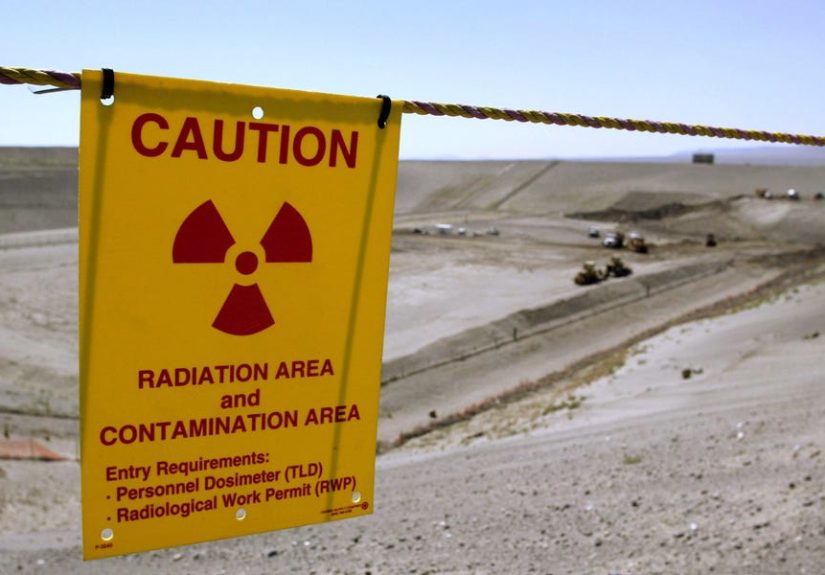
Jana Elementary School sat near Coldwater Creek, a Missouri River tributary that has long been associated with radioactive contamination from waste linked to the nation’s early atomic weapons program. In October 2022, a report by Boston Chemical Data Corp. claimed that radioactive material was present at the school at levels that raised serious concern. The report pointed to contamination in areas such as playground soil and parts of the building.
For parents, the technical language mattered less than the plain-English terror of it all: radioactive waste, children, school. Those three phrases do not belong in the same sentence. The Hazelwood School District moved students away from the building, first through virtual learning and then by sending children to other schools in the district. Jana Elementary did not reopen as a regular elementary school.
However, the case quickly became more complicated. The U.S. Army Corps of Engineers, which oversees cleanup work in parts of the St. Louis radioactive waste area through the Formerly Utilized Sites Remedial Action Program, conducted its own testing. The Corps later reported that it did not find radiological contamination at the school above expected background levels and stated that the school was safe from a radiological standpoint. A district-hired consultant also reportedly reached a similar safety conclusion.
So, did radioactive waste pollute the school or not? The public answer depends on which testing, which contaminants, which sampling methods, and which risk standards are being discussed. That is one reason the controversy has been so painful. Families were not just dealing with fear; they were dealing with uncertainty, and uncertainty is basically fear wearing a lab coat.
The Coldwater Creek Connection
To understand Jana Elementary, it is necessary to understand Coldwater Creek. The creek runs through North St. Louis County and has been linked to radioactive waste from uranium processing that supported the Manhattan Project during World War II. Uranium was processed in St. Louis, and waste materials were later stored near the St. Louis airport. Over time, contaminated material affected nearby areas, including Coldwater Creek and portions of its floodplain.
The creek is not some remote industrial ditch behind a locked fence. It passes through communities where people lived, played, gardened, rode bikes, and walked dogs. For decades, many residents had little idea that a local waterway carried a nuclear-age legacy. Children played near it. Floodwaters spread sediment. Families built lives around it. Then, years later, came the questions: What was in that mud? What did we breathe? What did our kids touch?
Federal and state agencies have studied parts of the area for years. Cleanup work has taken place, but the full remediation timeline remains long. EPA materials have described the U.S. Army Corps of Engineers as the lead agency for the St. Louis Airport Sites and Coldwater Creek cleanup, with EPA acting as regulator under federal cleanup law. A 2025 EPA timeline evaluation estimated complete transfer of the site to Department of Energy legacy management in 2038, meaning this is not a quick “bring a shovel and wrap it up by Friday” situation.
Why Parents Were Alarmed
The reaction from parents was immediate and emotional. That is not hard to understand. Schools are supposed to be safe spaces. Parents worry about bullying, test scores, cafeteria mystery meat, and whether their child remembered their jacket. They should not have to add “possible radiological exposure” to the morning drop-off checklist.
Reports that contamination might exist in the school building and playground were especially disturbing because young children are more vulnerable to environmental hazards. They breathe closer to the ground, touch everything, and often have a talent for turning dirt into a full-contact sport. If contamination is present in dust or soil, children can be exposed through inhalation, ingestion, or contact with contaminated surfaces.
At the same time, public health communication must be precise. Radioactive material exists naturally in the environment at low levels. Not every detection means a dangerous exposure. Risk depends on the type of radionuclide, the concentration, the exposure pathway, the duration, and whether people actually contacted the material. That is where the Jana Elementary debate became difficult: one report suggested unacceptable contamination, while later agency reviews said the school did not pose a radiological public health threat.
What Officials Said After Further Testing
The U.S. Army Corps of Engineers released multiple reports in 2023 related to Jana Elementary. Its public statements said extensive sampling and testing found no radiological concerns in or around the school building and immediate grounds. The Corps also continued remediation work along nearby areas of Coldwater Creek, including creek bank work adjacent to Jana Drive.
Missouri health officials also reviewed the situation and explained that lead-210, one of the materials discussed in the controversy, can occur naturally as part of the decay chain of radon. The Missouri Department of Health and Senior Services stated that lead-210 is a small fraction of the overall radiological contamination associated with Coldwater Creek and is not significantly associated with the historical contamination in the same way as other radionuclides. The agency also said it found no radiological public health threat at the school based on its review of the Army Corps documents.
That did not erase community concern. Once a school has been closed after a radioactive contamination scare, trust does not bounce back like a rubber ball. It returns slowly, if it returns at all. Parents asked why the school was built or operated near a contaminated creek in the first place. They asked why communication had not been clearer. They asked why government agencies seemed to disagree. Those are fair questions.
Health Concerns Around Coldwater Creek
The broader Coldwater Creek story includes long-running health concerns. In 2019, the Agency for Toxic Substances and Disease Registry concluded that radiological contamination in and around Coldwater Creek before remediation could have increased the risk of some cancers for people who played or lived there for many years, especially in past decades. The agency also noted uncertainties and did not recommend additional general disease screening for all past or present residents, instead encouraging people with possible exposure histories to discuss concerns with their physicians.
In 2025, research published in JAMA Network Open added another important layer. The study examined participants from the St. Louis Baby Tooth–Later Life Health Study and found an association between childhood residential proximity to Coldwater Creek and increased self-reported cancer incidence during long-term follow-up. The study reported evidence of a dose-response pattern, meaning risk appeared higher among those who lived closer to the creek as children.
This kind of research does not prove that every illness in the area was caused by the creek. Environmental health rarely works like a detective show where the villain confesses in the final five minutes. But the study strengthened the argument that Coldwater Creek exposure deserves serious attention, continued research, and careful public health response.
Environmental Justice and Community Trust
The Jana Elementary case also raised questions about environmental justice. Communities near Coldwater Creek include families that have lived with uncertainty for decades. Many residents feel they were not adequately warned, protected, or heard. When a contamination issue involves a school, the stakes become even more emotional because children have no power over where adults build buildings, store waste, or draw district boundaries.
Environmental justice is not only about whether contamination exists. It is also about who carries the burden of doubt. Who has to attend meetings after work? Who has to read technical reports that look like they were designed to scare away normal humans? Who has to decide whether to test a child, move homes, or trust a statement from an agency that may have arrived years too late?
For many families, the Jana Elementary controversy was not just about radiation. It was about credibility. Once people feel that information has been slow, confusing, or incomplete, even accurate statements can sound suspicious. Public agencies need more than data; they need transparency, plain language, consistent updates, and humility. Nobody wants a 200-page PDF when the real question is, “Is my child safe?”
What Schools Can Learn From the Missouri Case
The Jana Elementary story offers lessons for school districts across the country. First, environmental history matters. Before building, renovating, or operating schools near former industrial, military, mining, or waste sites, districts need strong environmental due diligence. A playground is not the place to discover an old contamination problem by accident.
Second, communication must be fast and honest. If testing is underway, parents should know who is testing, what is being tested, what standards are being used, when results will arrive, and what actions will follow. Silence creates rumors. Conflicting statements create panic. Clear communication does not eliminate fear, but it gives families something solid to stand on.
Third, independent review can help rebuild trust. When federal agencies, private consultants, community groups, and school districts disagree, a transparent third-party scientific review may help clarify the facts. Communities should not have to become amateur radiation experts just to understand whether their kids can safely go to school.
Why This Story Still Matters
Even though the most intense Jana Elementary headlines appeared in 2022 and 2023, the story remains relevant. The school’s closure changed children’s routines, disrupted a neighborhood community, and became a symbol of a larger regional problem. Cleanup of Coldwater Creek continues. Research into long-term health effects continues. Public pressure for accountability continues.
The phrase “radioactive waste found polluting a Missouri elementary school” is powerful because it sounds like a worst-case scenario. But the deeper issue is not only what was found in one building. It is how a region that helped fuel America’s atomic age was left to manage the leftovers for generations. The waste may have been produced in the name of national security, but the consequences landed locally, in backyards, creek beds, school boundaries, and family medical histories.
Experience-Based Reflections: Living With an Invisible Environmental Threat
Imagine being a parent in Florissant when the news breaks. One day, your child is practicing spelling words, trading snacks, and complaining that recess is too short. The next day, you are reading about radioactive contamination at the school. You may not know what lead-210 means. You may not know how radiation testing works. But you know enough to feel your stomach drop.
The first experience is confusion. Parents hear one report saying contamination is serious, then another agency saying the school is safe from a radiological standpoint. That kind of contradiction does not feel like reassurance. It feels like standing in two checkout lines at once while both cashiers insist they are correct. Families want certainty, but environmental investigations often move slowly and speak in probabilities. For a scientist, “no elevated risk based on available data” may be a careful conclusion. For a parent, it can sound like, “We think so, probably.”
The second experience is disruption. When a school closes, children do not simply teleport into a new routine. They lose familiar teachers, classmates, bus routes, playgrounds, and support systems. Younger students may not understand why adults are suddenly tense. Older students may hear enough to worry. Parents must juggle transportation, schedules, and emotional reassurance. The contamination issue becomes part of daily life, right next to homework folders and permission slips.
The third experience is research overload. Many families start searching online, and that can feel like opening a trapdoor into a basement full of acronyms: FUSRAP, EPA, ATSDR, CERCLA, Pb-210, Th-230, SLAPS, HISS. It is enough alphabet soup to feed a bureaucracy. Parents may read government PDFs, news stories, advocacy pages, and social media posts, trying to separate fact from fear. The more they learn, the more they may wonder why they had to become environmental investigators in the first place.
The fourth experience is anger. Not reckless anger, but the reasonable anger that comes from asking why children were anywhere near a site with such a complicated contamination history. Communities near Coldwater Creek have raised concerns for years. When official action feels slow, residents may conclude that their neighborhood was treated as less urgent than it deserved. That perception matters. Trust is not restored by telling people to calm down. Trust is restored by showing the work, sharing the data, admitting uncertainty, and acting with urgency.
The fifth experience is resilience. Families affected by the Jana Elementary controversy did what communities often do when institutions move too slowly: they organized, asked questions, attended meetings, pushed for testing, spoke to reporters, and refused to let the issue disappear. That persistence is one reason the story gained national attention. Environmental safety is not only created in laboratories and agency offices. Sometimes it starts with parents who refuse to accept vague answers when their children’s health may be involved.
For readers far from Missouri, the lesson is personal. Every community has a history under its feet. Some places have old factories. Some have landfills. Some have military sites, mines, rail yards, or chemical plants. Most days, that history stays invisible. But when it intersects with a school, a playground, or a neighborhood creek, people suddenly realize that the past is not past. It is soil. It is dust. It is water. And sometimes, it is a question a child brings home without knowing it: “Am I safe?”
Conclusion
The Jana Elementary School controversy is a reminder that environmental contamination is never just a technical problem. It is a family problem, a school problem, a trust problem, and a public accountability problem. A private report alleged radioactive contamination at a Missouri elementary school. Federal and state reviews later disputed the level of danger at the school itself. Meanwhile, the broader Coldwater Creek contamination remains a documented and ongoing cleanup issue with real community health concerns.
The fairest reading is this: Jana Elementary became the flashpoint for a much larger story. Whether one focuses on the private findings, the federal response, or the long-term health research, the community deserved clear answers, timely action, and a school environment beyond question. Children should be able to worry about multiplication tables, not Manhattan Project leftovers. That should not be a controversial opinion.