Table of Contents >> Show >> Hide
- Why Reptiles Need Better Paparazzi
- What RepTrap Actually Does
- Why RepTrap Fits the Bigger Conservation Picture
- Real-World Uses That Make the Idea Shine
- What Makes RepTrap Especially Promising
- What Still Needs Work
- RepTrap and the Future of Wildlife Tech
- Field Notes: What Working Around a System Like RepTrap Feels Like
- Conclusion
Wildlife cameras are great at catching deer, foxes, raccoons, and the occasional possum that looks like it pays taxes. Reptiles and amphibians, though, have long been the awkward customers in the monitoring line. They are smaller, quieter, often closer to ambient temperature, and very good at moving like tiny professionals who do not wish to be perceived. That creates a problem for biologists, conservation groups, and field researchers who need reliable ways to study ectotherms without turning every survey into a marathon of bucket traps, drift fences, and weather anxiety.
That is exactly why RepTrap is so interesting. Rather than asking a traditional trail camera to do a job it was never really designed for, RepTrap rethinks the trigger itself. The project takes aim at one of the oldest frustrations in reptile monitoring: heat-based motion sensors are often much better at spotting warm-blooded animals than they are at catching snakes, frogs, lizards, or other low-profile creatures. In other words, the forest has had a blind spot, and RepTrap is trying to hand it glasses.
This matters far beyond gadget curiosity. Reptiles and amphibians help control rodents and insects, move nutrients through ecosystems, feed larger predators, and serve as valuable indicators of environmental change. When these species disappear or decline, ecosystems do not just get quieter; they get less balanced. Better monitoring means better science, better conservation, and fewer moments where researchers stare at empty data folders and wonder whether their target animal was never there or simply too clever for the camera.
Why Reptiles Need Better Paparazzi
Most commercial trail cameras rely on passive infrared, or PIR, sensors. That technology works by detecting temperature contrast between an animal and the background. For a warm-bodied mammal trotting through cool air, that is usually easy. For a snake basking on warm ground, a frog slipping through leaf litter, or a lizard whose body temperature closely matches the environment, not so much. The result is a lot of missed detections, especially when the target species is small, fast, or low to the ground.
That technical mismatch has shaped field methods for years. Researchers studying herpetofauna have often leaned on pitfall traps, drift fences, box traps, or labor-intensive visual surveys. These methods can work, but they come with obvious headaches. They demand time, repeated checks, careful placement, and sometimes a fair amount of luck. They can also create risks for animals if traps flood, overheat, or leave a captured creature exposed to predators and stress. For shy species, or for work in remote places, the old-school toolbox can feel more exhausting than elegant.
The classic camera trap problem
Camera traps are popular for good reason: they are non-invasive, can run for long periods, create a permanent visual record, and often disturb wildlife less than hands-on approaches. But their usual hardware bias toward larger, warmer animals has limited their usefulness for many reptiles and amphibians. That has pushed researchers to experiment with time-lapse modes, modified placements, drift-fence systems, and active-trigger designs that can catch smaller animals more consistently.
Why that gap matters in the field
Small ectotherms are not side characters in ecosystem science. Snakes help control rodent populations. Frogs and salamanders can reflect wetland and habitat health. Lizards, turtles, and amphibians together contribute to food webs, nutrient cycling, and biodiversity that land managers rely on to understand whether a place is thriving or quietly slipping into trouble. If your monitoring gear routinely misses them, your data can end up telling a cleaner story than reality deserves.
What RepTrap Actually Does
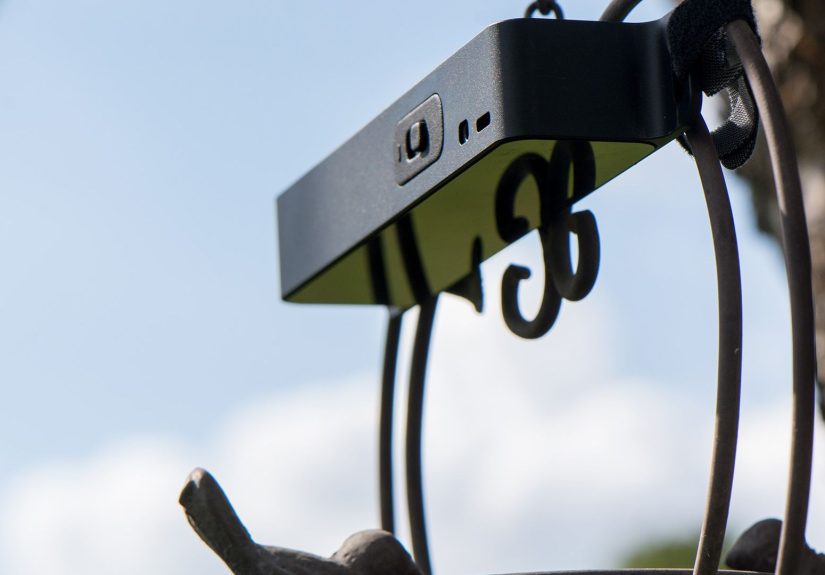
RepTrap is an open-source detection device and camera trigger designed specifically for relatively small animals, including cold-blooded species. Instead of depending on heat contrast, it watches for changes in height beneath the device using time-of-flight distance sensing. In plain English, it does not ask, “Is something warm moving by?” It asks, “Did the space under me just change shape?” For reptile work, that is a big shift.
The published project materials describe a gate-like arrangement that animals pass beneath. When the measured distance changes, the system triggers a connected camera shutter. That sounds simple because the smartest ideas often do. A snake does not need to be hot. A frog does not need to glow like a toaster. The system only needs to notice that a body entered the monitored zone.
A smarter trigger for colder bodies
This is the genius of RepTrap: it replaces thermal assumptions with spatial detection. Reptiles and amphibians are often hard to monitor not because they are invisible, but because the equipment expects them to behave like mammals. RepTrap stops making that assumption. It is a hardware solution built around the actual physical profile of ectotherms, which is exactly what wildlife tech should do more often.
Why the design feels humane
RepTrap is also appealing because it aims to reduce dependence on more invasive trapping methods. Traditional pitfall systems can be effective, but they also create welfare and logistics problems. A trapped animal may remain in the setup until checked, which raises the risk of stress, predation, or drowning during bad weather. A non-capture trigger system offers a gentler alternative for many use cases: detect, photograph, record, and leave the animal free to continue being a reptile with places to be.
Open-source is not a small detail
Because RepTrap is open-source, it invites adaptation. That matters in conservation, where one size rarely fits all. A lizard study in scrubland, a frog survey near wetlands, and a snake project along drift fencing may all need slightly different spacing, timing, power use, and camera behavior. Open hardware gives researchers, students, and small organizations a chance to tailor tools instead of accepting whatever a hunting-oriented trail camera happens to offer.
Why RepTrap Fits the Bigger Conservation Picture
RepTrap is exciting not just because it is clever, but because it slots neatly into a much larger conservation need. Across the United States and beyond, reptiles and amphibians face habitat loss, pollution, disease, invasive species, climate stress, road mortality, and human misunderstanding. Some species are declining in places where people barely notice them until they are almost gone. Monitoring is the first step in protecting what remains, because conservation without detection is basically educated guessing in hiking boots.
U.S. conservation agencies and organizations regularly emphasize that amphibians and reptiles can function as indicators of environmental health. Their population changes can reflect broader ecological stress before other signals become obvious. That makes accurate monitoring especially valuable. If a wetland is losing amphibian diversity, or a landscape no longer supports the reptile species it once did, those are not random trivia facts; they are ecological warning lights on the dashboard.
RepTrap belongs to a growing category of tools that try to make wildlife monitoring less invasive, more precise, and more accessible. That is a healthy trend. Invasive reptiles in Florida, secretive snakes in longleaf pine systems, and general herpetofauna monitoring in parks and research sites all depend on better detection. When scientists can gather more reliable records with less disturbance, the whole field improves.
Real-World Uses That Make the Idea Shine
A device like RepTrap makes immediate sense anywhere ectotherms are present but hard to detect. Think of narrow trails, burrow entrances, fence gaps, basking corridors, or carefully managed funnel points where animals predictably pass. In those situations, a gate-style trigger can turn a camera from a vague watcher into a focused observer.
Surveying rare or secretive snakes
Research from Texas A&M has shown that time-lapse-triggered camera trap methods can be effective for rare or secretive snake species and can provide a less intrusive, more cost-effective alternative or complement to traditional box trapping. That is the same practical lane RepTrap wants to drive in. It is not trying to replace every field method ever invented. It is trying to give researchers another option that may be more scalable, more humane, and better suited to species that refuse to cooperate with heat-triggered cameras.
Monitoring invasive reptiles
Florida’s Everglades have already shown how serious reptile monitoring can become when invasive species are involved. Programs there have logged huge numbers of trap nights and surveys while removing nonnative animals and refining methods over time. That kind of long-term effort benefits from tools that are cost-effective, adaptable, and capable of running under real field conditions. A specialized trigger for small reptiles is not just a neat lab toy in that context. It is the sort of niche innovation that can save time and improve response.
Park and habitat management
National parks and habitat managers frequently treat herpetofauna as indicators of ecosystem health. That makes consistent observation important even when the goal is not a headline-grabbing endangered species search. A device like RepTrap could help document activity in restored habitats, near water edges, along managed corridors, or around structures where reptiles and amphibians regularly move but conventional trail cameras underperform.
What Makes RepTrap Especially Promising
Several things make the project feel more than merely clever.
First, it solves a real field problem rather than inventing one. Nobody woke up and said, “You know what the reptile world needs? More gadgets.” The need already existed. Traditional PIR systems are biased toward warm-bodied wildlife, and that leaves a monitoring gap for ectotherms.
Second, the design is intuitive. Researchers do not need a philosophical lecture to understand why height change can outperform heat contrast for a cold animal. The logic is clear, which increases the odds that people can adapt the idea, improve it, and deploy it in varied settings.
Third, the project is evolving. Public project logs show refinements aimed at lower deep-sleep power consumption, BLE-based configuration, over-the-air updates, and improved waterproofing through an ESP32-S3 variant. That is the kind of practical engineering progression you want to see in a field device. Wildlife tech does not live on a clean workbench. It lives in mud, rain, dust, cold mornings, and the occasional moment when a curious animal decides to inspect it more aggressively than expected.
Fourth, it is accessible. Open hardware lowers the barrier for experimentation. A well-funded lab might build custom monitoring rigs from scratch, but many educators, students, citizen scientists, and smaller conservation groups cannot. RepTrap points toward a future where specialized ecological tools are not reserved for the institutions with the biggest budgets.
What Still Needs Work
As promising as RepTrap looks, it is not magic and it should not be marketed like a silver bullet with a USB port. Specialized wildlife hardware always runs into tradeoffs. Placement matters. Battery life matters. Weatherproofing matters. Detection speed matters. Small animals move fast, and field conditions are rude in ways that product brochures rarely mention.
False triggers, missed passes, and habitat-specific quirks are all part of the game. A system that works beautifully at a narrow trail crossing may need rethinking in dense grass or cluttered understory. A species that hugs the edge of cover may behave differently from one that moves openly. Some setups may benefit from pairing RepTrap with fencing, habitat funnels, or carefully chosen substrates. Others may work best as a complement to time-lapse, acoustic, or traditional survey methods.
That is not a flaw in the concept. It is simply how good field science works. The best monitoring systems are usually not the ones that promise perfection. They are the ones that make better data more possible.
RepTrap and the Future of Wildlife Tech
RepTrap represents a larger shift in conservation technology: tools are becoming more species-aware. Instead of forcing every research question through the same off-the-shelf device, scientists and makers are beginning to build hardware around the actual biology of the animals they want to study. That sounds obvious, but for a long time wildlife technology leaned heavily toward mammals because mammals were easier for the standard equipment to detect.
If projects like RepTrap continue to mature, herpetology could gain a much more flexible monitoring toolkit. The future likely includes hybrids: specialized triggers, open-source control boards, low-power communication, smarter image pipelines, and AI-assisted classification layered on top of better raw detections. But the first step is still the most important one: seeing the animal in the first place.
And that is where RepTrap earns its applause. It does not treat reptiles and amphibians as weird edge cases in wildlife monitoring. It treats them as worthy subjects whose lives deserve tools built with them in mind. That is good engineering, good science, and frankly good manners.
Field Notes: What Working Around a System Like RepTrap Feels Like
A realistic day with a system like RepTrap does not feel like a glossy nature documentary. It feels closer to patience wearing hiking boots. You start early, usually when the ground still holds a little coolness and the insects are already acting like they own the place. You kneel in dirt, fiddle with angles, double-check the trigger zone, and then step back a few feet to see whether the setup looks obvious. If it does, that is bad news. Good wildlife gear should not scream, “Hello, I am a science project.”
Then comes the strange mix of confidence and doubt. The confidence says the logic is sound: reptiles move through this corridor, the sensor is pointed correctly, the camera is armed, and the path under the gate is clean. The doubt says a leaf will blow through at the wrong moment, a spider will adopt the housing as prime real estate, or the exact lizard you want will stroll around the rig as if it personally objects to your methodology.
What makes the experience memorable is how focused your attention becomes. With mammal cameras, you often think in broad terms: a trail, a clearing, a game path. With reptile monitoring, everything gets smaller and more precise. Suddenly a ten-inch strip of ground matters enormously. A shallow dip in the soil matters. The shadow from a rock matters. A stick that looks harmless at noon becomes a sensor headache by late afternoon. You begin to appreciate that “watching for reptiles” is really a form of learning how tiny movements shape a habitat.
Checking the results later is its own emotional sport. Sometimes you get nothing, which is humbling. Sometimes you get a hundred frames of absolutely nobody, which is even more humbling because now the empty ground has a photo album. But then a useful image appears: a snake sliding through at dawn, a frog passing beneath after evening moisture rolls in, a lizard freezing mid-step as if it knows it has been caught on camera and would like legal counsel. Those moments feel earned because they are earned.
There is also a quiet relief in knowing the animal was observed without being trapped. That matters more than people outside field biology often realize. Non-capture monitoring changes the mood of the work. You are not just trying to get data; you are trying to get data while causing as little disruption as possible. When that balance works, the technology starts to feel less like a gadget and more like a respectful witness.
And yes, there is humor in it. Field technology always has a way of puncturing your ego. The expensive part might work perfectly while a cheap cable decides today is its villain era. You may spend an hour designing the ideal alignment only to discover that an ant has become the dominant subject in half the images. But that is also why a tool like RepTrap feels so promising. It was clearly imagined by someone who understood the very specific frustration of wanting to study animals that do not cooperate with standard equipment. In that sense, the experience around RepTrap is not just about seeing reptiles. It is about finally feeling like the hardware is on your side.