Table of Contents >> Show >> Hide
- Why this concept hits so hard (in the best way)
- A quick, useful primer on Romanian traditional dress
- Now add ballet: technique that makes elegance look effortless
- When ballet meets Romanian folk tradition, something special happens
- Tradition is aliveespecially when people keep choosing it
- A modern wrinkle: inspiration, credit, and cultural respect
- What to look for in photos like this (so you enjoy them more)
- If you want to experience the vibe yourself (no tutu required)
- Conclusion: elegance isn’t the opposite of traditionit’s often the result of it
- Extra: of experiences related to the theme
There are two kinds of “wow” in this world: the kind you whisper in a museum, and the kind you blurt out at your screen
when a dancer appears mid-air like gravity briefly forgot its job. The Bored Panda-style idea behind
“Romanian Ballerina Shows The Elegance And Grace Of Tradition” lands right in the sweet spot between both.
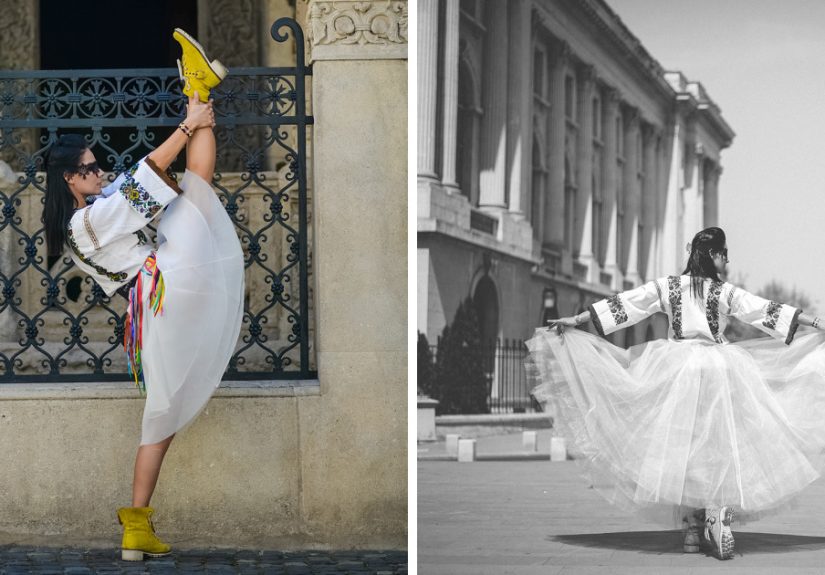
Picture a ballerina (all clean lines, control, and practiced calm) wearing elements of Romanian traditional dress
(all story, symbolism, and regional pride). It’s the kind of visual that makes you think, “Okay, who gave history permission
to look this good?”
But the real charm isn’t just the photo-ready contrast. It’s the message hiding in plain sight: tradition isn’t a dusty display
caseit can move. It can spin. It can breathe. And, in the hands (and ankles) of a ballerina, it can look like the past and the
present are happily sharing the same dance floor.
Why this concept hits so hard (in the best way)
Ballet is often framed as “timeless,” but it’s also extremely specific: formal technique, codified positions, and a training culture
that can be equal parts beautiful and brutal. Romanian folk clothing, on the other hand, is deeply localdistinct by region,
shaped by materials people had, and stitched with patterns that carry meaning. When you blend the two, you get a kind of cultural
shorthand: the discipline of ballet meeting the identity of heritage.
And yes, it’s also just plain satisfying to see. Traditional garments have texture and movementembroidered sleeves, woven aprons,
layered skirts, belts, vestsso when a dancer turns, the costume doesn’t merely “sit there.” It performs right along with her.
If ballet is a language of lines, traditional dress adds punctuation marks, exclamation points, and the occasional dramatic comma.
A quick, useful primer on Romanian traditional dress
Romanian traditional clothing isn’t one outfitit’s a family of outfits. Different regions have their own variations, and those
differences matter. One of the most recognizable pieces is the Romanian blouse often called the ie, typically white and
richly embroidered, especially around the shoulders and sleeves. You’ll also see wrap-style skirts or aprons, woven belts, vests,
headscarves, and boots or leather footwear depending on location and occasion.
The “ie” blouse: more than pretty embroidery
The Romanian blouse has gained international attention not just for style, but for cultural significance. Traditional shoulder
embroidery (often referred to with the Romanian term altiță) has been recognized internationally as part of intangible
cultural heritageessentially a public “this matters” stamp for a living craft tradition. That recognition helps explain why a photo
series featuring a ballerina in traditional attire feels like more than aesthetics: it’s cultural identity, worn proudly, in motion.
Museums treat these garments as art for a reason. For example, historical Romanian blouses in museum collections highlight how
design placementdense bands over the shoulders and structured vertical motifscreates a distinctive visual language. Even outside
Romania, these pieces have influenced artists and fashion conversations for decades. In other words: that sleeve embroidery is doing
a lot of work, and not just visually.
Regional variety: the reason “traditional costume” is plural
If you’ve ever looked at Romanian folk attire and thought, “I love itwhat is it called?” the honest answer is: “Which region?”
Some areas feature layered aprons, others emphasize woven wool skirts, and color palettes can swing from restrained to celebratory.
The point is not uniformityit’s belonging. Each variation says, “This is where we’re from,” without needing a caption.
Now add ballet: technique that makes elegance look effortless
Ballet’s secret is that it’s basically a magic trick performed by someone who has spent years training their body to lie convincingly.
A steady balance, a long line, a soft landingthose are built from strength and repetition, not fairy dust. Even foundational concepts
like turnout (rotating from the hips), posture, and balance require careful training to avoid injury.
If you want to understand why a ballerina in traditional clothing is so compelling, start here: ballet creates shapes that read clearly
from far away. Folk costume adds detail that holds up close. Together, they give you a picture that works at every distancelike a
painting that’s also a performance.
The funny part: “Grace” is often just “strength in disguise”
People love to say ballerinas float. Ballerinas would probably like to remind everyone that floating is expensive and paid for with calf
raises, core work, and a relationship with sore muscles that borders on legal marriage. The elegance you see in photosextended arms,
lifted chest, calm faceoften sits on top of intense control. The body is working; the expression is whispering, “No big deal.”
When ballet meets Romanian folk tradition, something special happens
Romanian folk dance and music traditions are famously vibrant, with everything from circle dances to group formations where dancers link
hands or shoulders. That communal structure contrasts beautifully with ballet’s often solo-focused “spotlight” moments. Put a ballerina in
a traditional outfit, and you can feel both worlds at once: the individual skill of a trained dancer and the collective memory of a culture.
This is also why the concept works even if you’ve never taken a dance class. You don’t need to know the difference between an arabesque
and an attitude to feel the storytelling. The outfit signals heritage. The movement signals devotion. Your brain does the rest.
Example: the “circle” idea matters more than you think
Romanian social dances like the hora are often described as circle dances tied to weddings and community events. Symbolically, the
circle can stand for belongingwho’s in, who’s welcomed, who’s supported. A ballerina posed in traditional clothing can echo that same
idea visually: the body becomes a symbol, not just a performer. In a single image, you get community and individuality playing nice together.
Tradition is aliveespecially when people keep choosing it
One reason the “Romanian ballerina + tradition” theme resonates is that Romanian cultural traditions have been actively documented and
celebrated, including in U.S. cultural spaces. Programs highlighting Romanian music and dance have emphasized that these traditions aren’t
frozen in the past; they continue through performance, craft, and teaching. When you see traditional garments worn with prideespecially in
a modern, artistic contextit’s a reminder that heritage survives because people keep practicing it.
In the U.S., this shows up in festivals, archives, and stages
Romanian folk culture has appeared in major U.S. cultural institutions through festivals and archival work, preserving dance and music and
making it accessible to broader audiences. Meanwhile, performance venues and ensembles in the United States continue to present Romanian and
Eastern European folk dances to diverse crowds. The result is a healthy ecosystem: tradition isn’t only “back home”it travels, adapts, and
still feels authentic.
A modern wrinkle: inspiration, credit, and cultural respect
Here’s where things get spicyin a thoughtful way, not a comment-war way. Traditional clothing has entered global fashion conversations,
including debates about cultural appropriation and the importance of acknowledging origins. When a traditional Romanian blouse becomes a
reference point in international luxury fashion discussions, it reinforces a key lesson: these garments are not just “cute peasant tops.”
They’re cultural property, creative labor, and identity.
That’s part of why the ballerina concept feels respectful when done right. It doesn’t flatten tradition into “exotic vibes.” It highlights
tradition as something powerful, precise, and worth naming. The best versions of this theme treat the clothing as heritagenot costume.
What to look for in photos like this (so you enjoy them more)
- How the embroidery frames the movement: shoulder and sleeve patterns can emphasize arm positions and turns.
- Contrast in textures: soft ballet lines against structured woven pieces makes the body’s shape pop.
- Grounding details: belts, aprons, and boots visually “anchor” the dancergreat for storytelling compositions.
- Setting choices: old streets, rural landscapes, or simple backdrops can signal “heritage lives here.”
If you want to experience the vibe yourself (no tutu required)
You don’t have to become a dancer to connect with this theme. Try any of these:
- Watch performances and cultural programming: public media and cultural institutions sometimes feature Romanian music and dance.
- Explore museum collections: seeing a Romanian blouse in a museum context changes how you understand the craft.
- Attend a folk dance event: many U.S. communities host nights where beginners are welcome (and yes, you can learn a simple circle dance).
- Follow craft and heritage groups: embroidery and textile traditions are often taught through workshops and cultural centers.
Conclusion: elegance isn’t the opposite of traditionit’s often the result of it
The idea behind “Romanian Ballerina Shows The Elegance And Grace Of Tradition” works because it reveals a truth we forget:
tradition isn’t only preserved in books and museums. It’s preserved in bodies, hands, communities, and the decision to keep doing the thing.
Ballet shows what the human body can be trained to express. Romanian traditional dress shows what a culture chooses to remember and celebrate.
Put them together, and you get a moving argument for heritageliterally moving.
Also, it’s a gentle reminder that “grace” doesn’t have to be delicate. Sometimes grace looks like a dancer holding a perfect line while wearing
centuries of history on her sleeves. And if that doesn’t deserve a slow clap, I don’t know what does.
Extra: of experiences related to the theme
If you’ve ever stood in a theater lobby after a ballet performance, you know the exact vibe: people speak softer, like the air itself is still
balancing on pointe. Someone is describing a leap with their hands, as if the story can’t stay inside their mouth. Someone else is quietly
stretching their calves because they suddenly remembered they have legs and would like to apologize to them.
Now imagine carrying that “post-performance glow” into a totally different spacelike a cultural festival where the music is louder, the rhythm
is more communal, and the dancers are connected by hands and laughter. That’s the emotional bridge this Romanian ballerina theme creates. It feels
like walking from one kind of reverence to another: ballet’s hush to folk tradition’s warmth.
For a lot of people, the first “experience” of Romanian traditional clothing is visual: you notice embroidery that looks too intentional to be
random. You start spotting patterns the way you spot constellationsrepeating motifs, careful symmetry, color choices that feel inherited. In a
photo series with a ballerina, those details become even more noticeable because ballet simplifies the body into clean geometry. The clothing then
becomes the storytelling layer. A lifted arm isn’t just technique; it’s a display of craft. A turn isn’t just rotation; it’s the fabric’s moment
to speak.
There’s also a shared “training” experience between dancers and artisans that people don’t always name. Ballet dancers repeat movements until the
body memorizes them. Traditional textile makers repeat stitches until the hand knows them without thinking. Both are forms of devotion. Both can
feel meditative, even when they’re difficult. And both can be passed down: a teacher correcting your posture, a grandmother correcting your thread
tension, each insisting (lovingly, firmly) that the details matter.
If you’ve ever tried a circle dance at a community event, you’ve felt the magic of low-stakes participation: you don’t have to be “good,” you just
have to join. The steps are simple enough to learn by watching, and the point isn’t perfectionit’s togetherness. That’s a powerful contrast to
ballet’s perfection culture, where the mirror can be your biggest fan and your worst critic in the same five-minute stretch. When a ballerina steps
into traditional Romanian aesthetics, it can feel like a soft reset: artistry without isolation, skill that still belongs to a community.
And finally, there’s the experience of recognition. People with Romanian roots often describe a jolt of pride when they see traditional elements
treated with respectnamed correctly, worn thoughtfully, presented as heritage rather than novelty. Meanwhile, people encountering it for the first
time often have the same reaction: “Wait, this is gorgeouswhat’s the story?” That moment of curiosity is the real win. Because once you start
asking about the story, you’re already participating in keeping it alive.