Table of Contents >> Show >> Hide
- Why Sectionals Are Having a Moment (Again)
- What “Sectionals From $290” Usually Looks Like
- Deal-Spotting at Wayfair Without Getting Burned
- How to Choose the Right Sectional for Your Space
- Quality Checklist: What Makes a Sectional Last
- Pet-Friendly (and Kid-Friendly) Sectional Shopping Tips
- Small Space Strategy: Make a Sectional Work in an Apartment
- Delivery, Assembly, and Returns: The Unsexy (But Important) Part
- How to Evaluate Reviews Like a Pro (Not a Panic-Scroller)
- Examples of “Best Fit” Sectionals by Lifestyle
- Experiences and Real-Life Scenarios: What It’s Like Shopping a $290–$900 Wayfair Sectional
- The “Painter’s Tape Blueprint” moment
- The “firm vs soft” debate (aka: the cushion personality test)
- The “pet hair reality” and the color you didn’t know you needed
- The “multiple boxes, multiple days” delivery saga
- The “configuration regret” that modular solves
- The “this couch changed how we use the room” surprise
- Conclusion
- SEO Tags
A sectional couch is basically the living room’s “group chat”: everyone fits, someone always takes the corner seat,
and the vibes can swing from movie-night cozy to hosting-your-cousins-for-the-holidays chaotic in minutes.
The best part? You don’t have to sell a kidney to get one. Wayfair promos sometimes drop sectional prices to the
“wait…is that real?” zonestarting around $290which is roughly the cost of two fancy area rugs and a bad decision.
In this guide, I’ll break down what “$290 sectional” can realistically mean, how to shop Wayfair deals without
accidentally buying the world’s largest couch for the world’s smallest doorway, and what construction details separate
“nice!” from “why does this squeak like a haunted staircase?” (Yes, we’re going there.)
Quick note: prices, colors, and availability on Wayfair can change fastsometimes faster than your dog can find the one cushion you wanted to keep clean.
Why Sectionals Are Having a Moment (Again)
Sectionals solve a modern problem: we want a couch that can do everything. Lounge. Nap. Host friends. Hold snacks.
Pretend we’ll “sit up straight” while we work (we won’t). Modular sectionals, sleeper sectionals, and reversible-chaise
designs make it easier to fit real lifesmall apartments, open-plan homes, kids, pets, and that one friend who always
“just stays for one episode.”
What “Sectionals From $290” Usually Looks Like
A starting price around $290 typically means you’re shopping the budget-friendly end of the market: smaller configurations,
simpler silhouettes, and materials that prioritize affordability. That’s not automatically badespecially if your goal is
a starter sectional, a basement hangout sofa, or an apartment-friendly L-shaped couch.
Common configurations at entry-level pricing
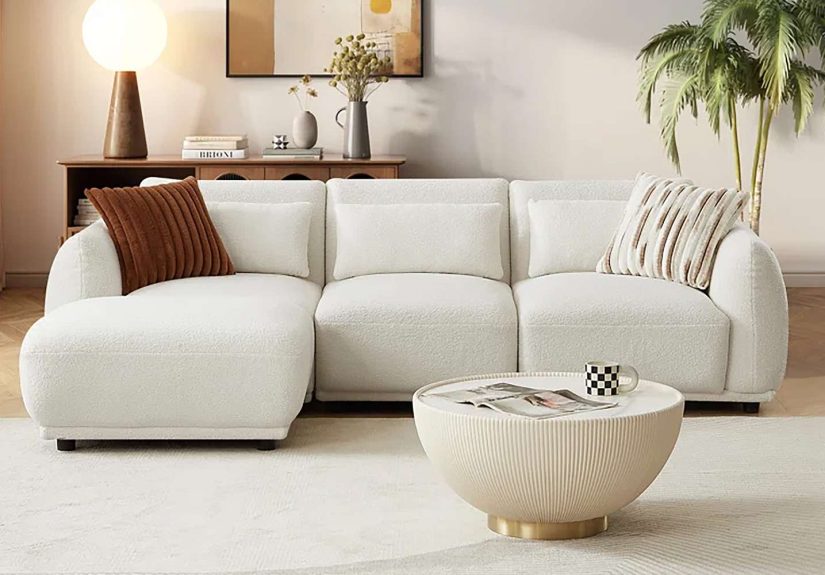
- Sofa + chaise (often sold as a “2-piece sectional”): the classic small-space sectional.
- Reversible chaise sectional: you can place the chaise on the left or right, which is a lifesaver when you move.
- Compact L-shaped sectional: still room-conscious, but more “real sectional” energy.
What to be realistic about
- Size: budget sectionals often run smaller or have slimmer arms to save space (and cost).
- Seat feel: expect “medium-firm” more often than cloud-soft.
- Longevity: it can last, but construction details matter more than the marketing name.
Deal-Spotting at Wayfair Without Getting Burned
Shopping a big retailer is like ordering at a diner with a 12-page menu: the right choice exists, but you need a system.
Here’s a practical approach to finding a good sectional couch deal at Wayfairespecially when prices start low.
1) Filter like a grown-up (even if you don’t feel like one)
- Size range: use overall width/length filters, not just “apartment size.”
- Configuration: L-shaped, U-shaped, modular, sleeper sectional, reversible chaise.
- Upholstery type: polyester, microfiber, velvet, performance fabric, faux leather, leather.
- Delivery timeline: if you need it by next weekend, “fast delivery” matters.
2) Read dimensions like your comfort depends on it (because it does)
“Fits my living room” is a beautiful dream. Reality is measuring tape, painter’s tape on the floor, and making sure
the chaise doesn’t block the walkway to the kitchenbecause nobody wants a couch that turns snack time into an obstacle course.
3) Pay attention to left-facing vs right-facing
This is the most common “how did I do this to myself?” mistake. A sectional’s “facing” is based on the side the chaise
is on when you’re looking at the couch. If the extended section is on your left, it’s left-facing; if it’s on your right,
it’s right-facing. Modular and reversible-chaise sectionals reduce the risk, but you still want to confirm orientation before checkout.
How to Choose the Right Sectional for Your Space
Pick a shape that matches your room (not your fantasy)
- L-shaped sectional: great for most rooms; anchors a corner; works in open layouts.
- U-shaped sectional: maximum seating; best for larger rooms; can dominate small spaces fast.
- Curved sectional: stylish and social; often needs more floor space to breathe.
- Modular sectional: flexible; can expand later; great if you move or like rearranging.
Check the “real comfort” details
Comfort isn’t just soft cushions. It’s seat depth (do your feet touch the floor?), seat height (can you stand up
without making a noise like a folding chair?), and back height (are you supported or just emotionally encouraged?).
If you’re tall, measure the chaise length so you’re not stuck with ankles hanging off like a sad bookmark.
Quality Checklist: What Makes a Sectional Last
At any priceespecially at the budget enddurability comes down to what’s inside. Marketing phrases are cute.
Frames and suspension systems are cuter (and by “cute,” I mean “not collapsing in two years”).
Frame
- Kiln-dried hardwood is commonly cited as a strong option because it resists warping compared to softer woods.
- Avoid vague listings that don’t describe frame materials at allsilence is not a feature.
Suspension/support
- Sinuous springs are common and can be supportive when done well.
- Webbing can be fine, but quality variescheck reviews for sagging complaints.
Cushions
- High-density foam tends to hold shape better than low-density foam.
- Look for notes about cushions “bouncing back” and staying supportive after a few months.
Upholstery: choose your “real life” level
Fabric choice is where lifestyle shows up. Kids? Pets? Red wine? All three? Choose accordingly.
- Polyester & microfiber: often durable and easier to clean; popular for pet households.
- Performance fabrics: designed for higher traffic and easier stain cleanupgreat if your home is lively.
- Velvet (especially polyester velvet): can be surprisingly pet-friendly compared to looser weaves, but always check reviews.
- Linen-like weaves: pretty, breathable, and sometimes a magnet for snagsuse caution with claws.
Pet-Friendly (and Kid-Friendly) Sectional Shopping Tips
If you share your couch with a dog, a cat, or a tiny human who believes crayons are a food group, prioritize fabrics and colors that forgive.
Tight weaves and easy-clean materials are your best friends. Mid-tones can hide fur and minor wear better than stark white.
Easy wins for messy households
- Choose removable cushions when possibleit’s easier to spot-clean thoroughly.
- Look for washable or replaceable covers on modular styles if available.
- Pick a texture that hides life: subtle weaves can camouflage everyday use better than flat, shiny fabrics.
Small Space Strategy: Make a Sectional Work in an Apartment
Yes, you can have a sectional in a smaller home without turning your living room into a furniture-themed escape room.
The trick is picking compact proportions and avoiding bulky arms that steal seating space.
Smart choices for small rooms
- Sofa-chaise combos often provide the “sectional feel” with a smaller footprint.
- Reversible chaise sectionals add flexibility if your layout changes.
- Storage ottomans can replace a coffee table and reduce clutter.
Delivery, Assembly, and Returns: The Unsexy (But Important) Part
A deal isn’t a deal if the couch can’t get into your homeor if returning it requires a quest, a map, and three adult siblings.
Before you check out, verify delivery method, box dimensions if listed, and what happens if something arrives damaged.
Wayfair returns, in plain English
Wayfair generally accepts returns for many items within a set window after delivery, with conditions such as the item being in original, undamaged condition.
Because sectionals are big and logistics are real, always read the specific return details on your order page before committingespecially for large furniture.
Assembly reality check
- Many sectionals arrive in multiple boxes (sometimes on different dayssurprise!).
- Assembly can range from “attach legs” to “build a small upholstered spaceship.”
- Plan for two people if you’re moving modules upstairs or around tight corners.
How to Evaluate Reviews Like a Pro (Not a Panic-Scroller)
Reviews are useful, but only if you read them strategically. Don’t just look at star ratingslook for patterns.
What to search for in reviews
- “Seat depth” and “firmness”: comfort is personal, but repeated notes are meaningful.
- “Pilling” or “snags”: important for pets and high friction households.
- “Sagging” and “flattening”: can hint at cushion quality.
- Delivery condition: damaged legs, torn fabric, missing hardwarelogistics matter.
Examples of “Best Fit” Sectionals by Lifestyle
If you host often
Consider a U-shaped sectional (if your room can handle it) or a modular sectional that expands later.
Look for supportive seating and enough depth for relaxed lounging without everyone sliding off the edge.
If you’re a nap champion
Prioritize chaise length and seat depth. A sleeper sectional can also be a strong choice if you want an actual flat sleeping surface,
not just “two cushions pushed together and hope.”
If you have pets
Choose tighter weaves, durable synthetics, or performance fabrics. Mid-tone colors can hide fur. And if you’re worried about claws,
skip delicate weaves that snag easily.
If your space is tight
Look for compact sofa-chaise sectionals, narrow arms, and reversible chaises. Measure pathways, not just the wall.
Your knees will thank you for leaving a comfortable walkway.
Experiences and Real-Life Scenarios: What It’s Like Shopping a $290–$900 Wayfair Sectional
Let’s talk about the part nobody puts in the product description: the lived experience. Not “my personal experience” (I don’t live on a couchtempting),
but the real-life situations people consistently run into when buying budget-to-midrange sectionals online.
The “Painter’s Tape Blueprint” moment
Many shoppers swear the sectional will fit… until they outline it with painter’s tape. Suddenly the chaise is blocking the best walking path,
the corner seat is eating your only outlet, and your coffee table looks like a postage stamp. The takeaway is oddly empowering:
once you see the footprint on the floor, you can choose a smarter configurationmaybe a slimmer-arm model, a shorter chaise, or a reversible layout
that keeps the room flowing.
The “firm vs soft” debate (aka: the cushion personality test)
Budget sectionals often lean firmer out of the box, and people either love it (“supportive!”) or panic (“this is a bench wearing fabric!”).
What tends to happen is the middle: cushions soften slightly with use, but they shouldn’t collapse. If your household rotates between sitting upright,
lounging, and full-body flopping, a medium-firm seat can actually be a winespecially if you want the sofa to look neat when guests show up.
The “pet hair reality” and the color you didn’t know you needed
A lot of shoppers start with a dream: crisp, bright upholstery. Then a dog shakes off, a cat claims the corner cushion, and you discover lint rollers
have a monthly subscription plan. People with pets often end up happiest with mid-tone colors (charcoal, taupe, navy, olive) or subtle textures
that disguise fur. It’s not about hiding your animals (they’re not stealthy). It’s about making the couch look good between cleanings.
The “multiple boxes, multiple days” delivery saga
Sectionals can arrive in more than one box, and sometimes they don’t show up together. That’s when the living room becomes a cardboard obstacle course.
The helpful mindset shift is planning for a delivery window, not a delivery moment. Have a space cleared, a basic toolkit ready, and a plan for where
boxes will sit without blocking doors. If you’re in an apartment, coordinating with building rules (elevator reservations, delivery hours) can be the
difference between a smooth setup and a lobby drama.
The “configuration regret” that modular solves
People commonly realize after a week that their chaise is on the “wrong” sidenot because they measured wrong, but because life happened.
You changed the TV position. You added a bookcase. Your kid started using the corner as a fort headquarters. Modular and reversible-chaise sectionals
reduce this risk, which is why many shoppers feel calmer buying them online. Even if you never reconfigure it, knowing you could is strangely soothing.
The “this couch changed how we use the room” surprise
One of the most consistent outcomes: a sectional changes behavior. People sit together more. Movie nights become a thing. The living room feels “finished.”
In smaller homes, a sectional can also encourage you to simplifyfewer random chairs, fewer awkward furniture pieces, and a more defined seating zone.
It’s not just a purchase; it’s a layout decision that nudges your whole routine in a nicer direction.
The bottom line: a $290 starting price can absolutely be worth it if you shop smartmeasure carefully, prioritize durable materials,
and choose a configuration that matches your actual life (not your “we host fancy dinners every week” alter ego).
Conclusion
Wayfair deals can make a sectional couch surprisingly attainableeven around the $290 mark during certain promos.
The key is shopping with intent: measure your room, confirm left-facing vs right-facing orientation, choose fabrics that match your household,
and focus on construction cues that support comfort and longevity. Do that, and you’ll end up with a sectional that feels like a lifestyle upgrade,
not a large, upholstered apology.