Table of Contents >> Show >> Hide
- What Is the Sensorimotor Stage?
- Why the Sensorimotor Stage Matters
- The 6 Substages of the Sensorimotor Stage
- 1. Reflexive Actions (Birth to about 1 month)
- 2. Primary Circular Reactions (About 1 to 4 months)
- 3. Secondary Circular Reactions (About 4 to 8 months)
- 4. Coordination of Secondary Circular Reactions (About 8 to 12 months)
- 5. Tertiary Circular Reactions (About 12 to 18 months)
- 6. Beginning of Representational Thought (About 18 to 24 months)
- Major Milestones During the Sensorimotor Stage
- Best Sensorimotor Activities and Play Ideas
- How Caregivers Can Support Sensorimotor Development
- When to Talk to a Pediatrician
- What the Sensorimotor Stage Looks Like in Real Life
- Conclusion
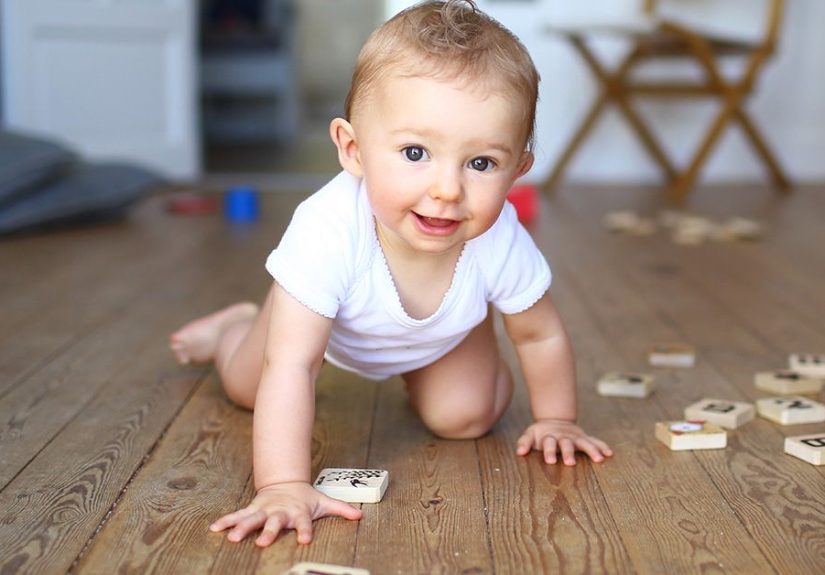
The sensorimotor stage is the grand opening act of cognitive development: messy, fascinating, loud, and occasionally sticky. It covers roughly the first two years of life, when babies and young toddlers learn about the world by seeing, touching, grabbing, kicking, dropping, mouthing, shaking, crawling toward, and triumphantly pulling on anything within reach. In Jean Piaget’s theory of cognitive development, this is the period when children build knowledge through sensory experiences and physical actions.
That sounds academic, but real life is much funnier. In the sensorimotor stage, a spoon is not just a spoon. It is a drumstick, a catapult, a teething tool, a magic wand, andif you look away for three secondssomehow missing. During this stage, children begin to understand that their actions matter. They discover patterns, practice cause and effect, develop object permanence, and slowly move from reflexes to intentional behavior. By the end of the stage, they are no longer just reacting to the world. They are experimenting with it.
For parents and caregivers, understanding the sensorimotor stage helps make everyday moments more meaningful. Peekaboo is not “just a game.” Dropping blocks from a high chair is not always random chaos. Rolling a ball back and forth is not filler between snacks. These are learning experiences. Knowing what is happening in the brain behind the adorable destruction can help you choose better activities, support healthy development, and worry less when your child becomes obsessed with doing the same thing fifty-seven times in a row.
What Is the Sensorimotor Stage?
The sensorimotor stage is the first of Piaget’s four stages of cognitive development. It begins at birth and lasts until about age 2. The word sensorimotor says exactly what is going on: babies learn through their senses and their movements. They are not sitting around forming abstract theories. They are gathering information by looking, listening, reaching, grasping, sucking, rolling, crawling, cruising, and repeating behaviors that get interesting results.
At first, behavior is driven mostly by reflexes. Newborns suck, grasp, and turn toward stimuli. Over time, those reflexes become more purposeful. Babies begin repeating actions they enjoy, like shaking a rattle to hear the noise or kicking their legs to make something move. Later, they combine actions to reach goals, such as moving a blanket to uncover a toy. By the end of the sensorimotor stage, toddlers start using mental representations. In other words, they can hold simple ideas in mind, imitate actions they saw earlier, and use objects in more symbolic ways.
This stage matters because it lays the groundwork for later learning. Language, memory, problem-solving, social interaction, and play all build on the early discoveries children make in this period. A baby who learns that hidden things still exist is taking a major step toward memory and symbolic thought. A toddler who figures out how to open a container is doing early problem-solving. Tiny humans are busy.
Why the Sensorimotor Stage Matters
The sensorimotor stage is important because it is when children build their earliest understanding of how the world works. They learn that actions have consequences. They learn that people and objects still exist even when they disappear from view. They learn that sounds, textures, movement, and social interaction all carry meaning. And they begin to connect body control with thinking.
That last part is a big deal. In adults, thinking and movement often feel separate. In babies, they are deeply connected. A child learns about a ball by watching it roll, feeling its texture, squeezing it, dropping it, and trying to chase it. Learning is embodied. It is hands-on, face-first, and occasionally chewed on. This is why play is not a break from learning during infancy and toddlerhood. Play is learning.
It is also why responsive caregiving matters so much. Babies develop through interaction. When an adult talks, imitates, smiles, responds to cues, and joins in play without taking over, the child gets richer feedback from the environment. The best “educational technology” for a young baby is still a human face, a warm voice, and time on the floor with safe things to explore. Sorry to every expensive blinking toy that thought it was the main character.
The 6 Substages of the Sensorimotor Stage
1. Reflexive Actions (Birth to about 1 month)
In the earliest weeks, babies rely on built-in reflexes like sucking, grasping, and looking. These actions are not yet deliberate in the way older behaviors are, but they are the starting point for learning. Through repetition, infants begin adjusting these reflexes to different situations. Even in this early phase, the brain is collecting data at full speed.
2. Primary Circular Reactions (About 1 to 4 months)
Now babies start repeating actions centered on their own bodies because those actions feel interesting or comforting. A baby may suck a thumb, coo repeatedly, or kick legs for the sheer joy of it. Piaget called these “circular reactions” because the child performs the action, notices the result, and repeats it again. It is basically the infant version of discovering a favorite button and refusing to stop pressing it.
3. Secondary Circular Reactions (About 4 to 8 months)
At this point, babies become more interested in the outside world. They repeat actions involving objects and people. Shake the rattle, hear the sound, grin, repeat. Drop the spoon, watch the adult pick it up, drop it again like a tiny research scientist with no ethics board. Cause and effect becomes much more exciting here.
4. Coordination of Secondary Circular Reactions (About 8 to 12 months)
This is when behavior becomes more clearly goal-directed. Babies combine actions to get something they want. They might push one toy aside to reach another or pull a cloth to retrieve an object. Object permanence becomes more noticeable during this phase, which is why hiding games become so delightful. When a baby actually looks for the toy under the blanket, the plot has thickened.
5. Tertiary Circular Reactions (About 12 to 18 months)
Welcome to the “little scientist” stage. Toddlers experiment on purpose, varying actions to see what happens. They may drop different objects from different heights, bang things with different amounts of force, or test how water pours from one container to another. This is not merely mischief. It is early experimentation, hypothesis testing, and sensory investigation dressed up as kitchen chaos.
6. Beginning of Representational Thought (About 18 to 24 months)
Near the end of the sensorimotor stage, toddlers begin forming mental images and simple symbols. They can imitate an action they saw earlier, pretend to talk on a toy phone, or use a block as if it were a car. This is the bridge into the next stage of cognitive development. Thinking starts to become less tied to immediate action and more connected to memory, imagination, and mental representation.
Major Milestones During the Sensorimotor Stage
Object Permanence
Object permanence is one of the most famous achievements of the sensorimotor stage. It is the understanding that people and objects continue to exist even when they are out of sight. Before this develops, if you hide a toy, the baby may act as though it has vanished from the universe. Later, the child will search for it, pull away the blanket, and look extremely pleased with this groundbreaking discovery.
Cause and Effect
Babies and toddlers gradually learn that their actions can change what happens around them. Kick the play gym, and the toy jiggles. Press the button, and the song plays. Drop the cup, and gravity remains undefeated. Cause and effect is a core part of sensorimotor learning and shows up constantly in play.
Imitation
Imitation begins early and grows stronger across this stage. Babies copy facial expressions, sounds, hand movements, and simple actions. Later, toddlers imitate things they saw earlier, even when the model is no longer present. That delayed imitation is a sign that memory and mental representation are growing.
Goal-Directed Behavior
As infants move through the stage, they shift from accidental actions to purposeful ones. Instead of randomly moving arms and hitting a toy, they begin reaching with intention. Instead of stumbling into an outcome, they plan a simple sequence to get there. This is a major leap in cognition.
Early Symbolic Play
By the end of the sensorimotor stage, toddlers may begin pretending in simple ways: drinking from an empty cup, feeding a doll, or making a toy animal “walk.” These early pretend actions show that thought is becoming more flexible and less tied to what is directly in front of them.
Best Sensorimotor Activities and Play Ideas
The best activities during the sensorimotor stage are simple, safe, and interactive. You do not need a house full of gadgets. In fact, babies are often thrilled by ordinary objects used in thoughtful ways. Here are some of the most effective kinds of play:
Tummy Time
Tummy time helps babies build neck, shoulder, arm, and core strength while exploring their surroundings from a new angle. Place a safe toy just out of reach, lie down face-to-face, or use a mirror for visual interest. Short, frequent sessions work well. Think of it as baby strength training, but with more drool.
Peekaboo and Hiding Games
Peekaboo is classic for a reason. It supports visual attention, social connection, and object permanence. Hide your face with your hands, drape a soft cloth over a toy, or tuck an object partly under a blanket and let your child find it. Few games offer such a high return on investment.
Reaching, Grasping, and Shaking
Offer safe rattles, textured balls, soft blocks, rings, and crinkle toys. These help babies connect hand movements with sensory feedback. They also support fine motor development and hand-eye coordination. Bonus points if the toy makes a gentle sound without sounding like a fire alarm at 6 a.m.
Container Play
Older babies and toddlers love putting things in containers and taking them out again. This kind of play supports problem-solving, motor planning, and early categorization. Cups, baskets, large blocks, and chunky household items can work beautifully. To adults, it may look repetitive. To toddlers, it is a full-time engineering project.
Water and Texture Play
Supervised sensory play with water, soft fabric squares, safe sponges, large spoons, or textured balls helps children learn through touch. Let them squeeze, pat, splash, and compare. Sensory experiences build awareness of texture, temperature, movement, and body position.
Rolling and Ball Play
Rolling a ball back and forth encourages social turn-taking, tracking, reaching, and simple prediction. As toddlers grow, they can chase, carry, sort, and toss balls in developmentally appropriate ways. It is simple, active, and surprisingly educational for something that looks like recess.
Music, Movement, and Imitation Games
Singing songs with gestures, clapping games, dancing, and copying sounds all support attention, imitation, social interaction, and rhythm. Repetition helps, but variety matters too. Babies love predictable routines, yet they also enjoy novelty. A silly voice can go a long way here. Scientific? Debatable. Effective? Extremely.
How Caregivers Can Support Sensorimotor Development
Support does not mean nonstop stimulation. Babies and toddlers need room to explore, but they also need responsive adults who notice cues, offer safe materials, and join in without dominating the experience. Narrate what your child is doing. Pause for back-and-forth interaction. Follow their interest. When they lose focus, let them rest. The goal is not to turn play into a lecture.
Reading, talking, singing, and face-to-face interaction remain incredibly valuable throughout this stage. So does giving children chances to move. Floor time, supervised exploration, and age-appropriate opportunities to reach, crawl, cruise, and carry objects all support learning. If a toy does everything by itself, it may actually reduce how much your child gets to do.
It also helps to remember that development is not a race. Milestones are useful guides, not a scoreboard. Children develop at different paces. A baby may be advanced in movement and slower in expressive language, or vice versa. Patterns matter more than perfection. If concerns come up, talk with your pediatrician rather than spiraling after a 2 a.m. internet search session.
When to Talk to a Pediatrician
Most variation in development is normal, but it is worth speaking with a pediatrician if your child seems to be missing several milestones, loses skills they previously had, rarely responds to people or sounds, shows limited interest in interaction or play, or has motor difficulties that interfere with daily exploration. Trust your observations. You know your child best.
Early conversations matter. Developmental screening and support can make a real difference when concerns are present. Asking questions is not overreacting. It is informed parenting.
What the Sensorimotor Stage Looks Like in Real Life
On paper, the sensorimotor stage sounds tidy: reflexes, repetition, object permanence, experimentation, symbolic beginnings. In real homes, it looks more like a tiny person discovering that cabinets open, socks can be removed during the car ride, and the family dog is both fascinating and inconveniently mobile. The theory is elegant. The lived experience is gloriously chaotic.
Many parents first notice sensorimotor learning through repetition. A baby drops a spoon. You pick it up. The baby drops it again. You pick it up again. Somewhere around round nine, it becomes clear this is not an accident. It is a study. The child is not trying to ruin your dinner. They are learning about gravity, timing, attention, and the absolutely remarkable fact that adults will often participate in nonsense for love.
Then there is the moment object permanence starts showing up. One day, a toy hidden under a blanket might as well be lost to history. A few months later, the child lifts the blanket with all the determination of a detective solving a major case. Peekaboo gets funnier. Separation becomes more emotional. Suddenly, “Where did Mom go?” becomes a very real question with feelings attached.
Toddlers in the later sensorimotor stage often act like miniature lab directors. They test how hard to push, how fast to run, which button controls which sound, whether a lid twists or pops, and what exactly happens when water leaves the cup but not the table. These experiences can be inconvenient for nearby adults and deeply valuable for developing brains. The trick is not to stop exploration altogether, but to guide it into safe forms. Offer bins, cups, balls, scarves, blocks, and sturdy household objects. Save the toothpaste tube for another day.
There is also a deeply human side to this stage that parents sometimes overlook while focusing on milestones. Sensorimotor development happens through relationships. A baby studies your face, waits for your response, smiles when you imitate a sound, and learns from the rhythm of shared attention. A toddler brings you a block not just because it is a block, but because you are part of the experiment. Learning is social from the beginning.
That is why ordinary routines matter so much. Diaper changes, bath time, feeding, walks, songs before naps, and floor play after breakfast are packed with opportunities for cognitive growth. Babies learn from hearing the same words, seeing the same gestures, and connecting action with outcome. Toddlers learn from helping, copying, trying, failing, and trying again. No fancy curriculum required. Just consistency, curiosity, and a willingness to clap when a block finally goes into the cup instead of onto the dog.
In the end, the sensorimotor stage is a reminder that early learning is active, physical, social, and surprisingly inventive. Children are not waiting to become thinkers later. They are thinkers nowjust in a very hands-on, chew-first, ask-questions-never, investigate-everything kind of way.
Conclusion
The sensorimotor stage is the foundation of early cognitive development. From birth to about age 2, children learn through action, sensation, repetition, and play. They move from reflexes to experiments, from accidental discoveries to purposeful problem-solving, and from “out of sight, gone forever” to “I know that toy is under the couch and I will find it.”
For caregivers, the takeaway is refreshingly simple: talk, play, respond, read, sing, and make space for safe exploration. The best support for sensorimotor development is not perfection. It is presence. A responsive adult, a few safe objects, and time to explore can do a lot of heavy lifting in those first two years.