Table of Contents >> Show >> Hide
- Roulette in Plain English: A Wheel, a Ball, and a Whole Lot of “Maybe”
- The Simple Roulette Game (No Money): “Spin for Points”
- The Math Behind “Test Your Luck” (a.k.a. Why the Wheel Feels Psychic)
- Make It Even More Fun: Mini-Modes and Challenges
- What This Game Teaches (Without Feeling Like Homework)
- FAQ: Quick Answers to Common Roulette-Style Questions
- Real-World “Test Your Luck” Experiences (No Money Required)
Roulette has a reputation: velvet ropes, green felt, and that tiny white ball that makes people act like it owes them money. But strip away the cash and the casino drama, and roulette becomes something way more fun (and way less stressful): a fast, flashy game of chance that’s perfect for parties, classrooms, family game nights, or anyone who just wants to say, “I KNEW it would land on red,” and then be wildly, gloriously wrong.
This article breaks roulette down into two things:
- A simple, roulette-style game you can play with zero real-world gamblingjust points, tokens, or bragging rights.
- The math behind the wheelwhy streaks happen, what “house edge” means, and why “it’s due!” is usually your brain doing improv comedy.
Quick note: real-money roulette is age-restricted in many places and can be risky. Everything here is designed as a no-money game and a probability explainer. If you want the “roulette vibe,” keep it friendly: points, snacks, or silly prizes only.
Roulette in Plain English: A Wheel, a Ball, and a Whole Lot of “Maybe”
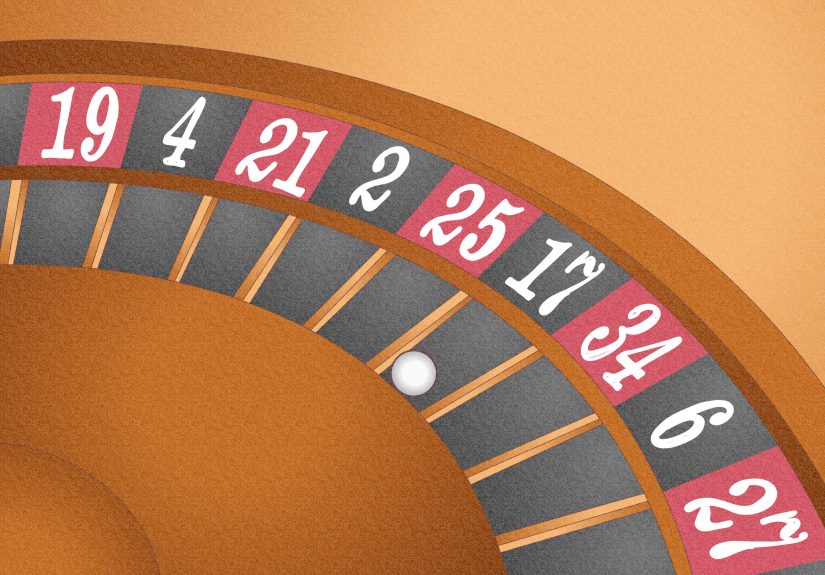
At its core, roulette is simple: outcomes are labeled (numbers and colors), something spins, something bounces, and one outcome wins. The drama comes from the fact that the result is meant to be random, so nobody knows what’s coming nexteven if they swear they have a “system” (spoiler: they mostly have confidence).
Traditional roulette wheels usually include numbers 1 through 36, colored red or black, plus one or more green slots (the zeros). Those green slots matter a lot for the math, and we’ll get to thatbecause they’re the reason roulette is a great probability lesson.
Two common wheel “flavors” (for math purposes)
- Single-zero wheel: 37 slots total (1–36 plus 0).
- Double-zero wheel: 38 slots total (1–36 plus 0 and 00).
You don’t need a real wheel to play a roulette-style game, but you do want a random picker that can mimic “one result out of many.”
The Simple Roulette Game (No Money): “Spin for Points”
This is the version you can play anywhere: a roulette-inspired game that keeps the excitement but drops the real-money betting. The goal is to score points by predicting outcomes. The risk/reward choices are still therebecause that’s the fun partbut the “loss” is just points, not your allowance.
What you need
- A random result generator (choose one):
- A printable spinner wheel (DIY paper spinner works great)
- A phone “spin the wheel” app set to 37 or 38 outcomes
- A deck-of-cards method (explained below)
- A random number generator (RNG) app or website
- Tokens/points: coins, poker chips, beads, sticky notesanything
- Score sheet: paper, whiteboard, or a notes app
Step 1: Choose your wheel size
Pick either:
- 37-outcome mode (0–36), or
- 38-outcome mode (0, 00, 1–36).
If you’re using a phone app, you can label outcomes as numbers. If you’re doing DIY paper, write the outcomes around a circle and use a spinner arrow. Keep it simple: neat handwriting beats “authentic casino typography.”
Step 2: Pick a “prediction” type
Each round, every player chooses one prediction. Here are friendly options that feel like roulette without requiring a casino table layout:
- Color (Red or Black): a classic 50-ish/50-ish call
- Parity (Odd or Even): similar risk level to color
- Range (1–18 or 19–36): another “broad” guess
- Dozens (1–12, 13–24, 25–36): medium risk
- Single number (any one outcome): high risk, big points
Important simplification: treat 0 (and 00 if you use it) as special “green” outcomes. For the no-money version, you can decide they don’t count as red/black, odd/even, or rangesbecause that’s where roulette’s math gets spicy.
Step 3: Use points instead of money
Give each player 10 points to start. Each round, they “risk” 1 point on their prediction. If they’re right, they gain points. If they’re wrong, they lose the point.
Suggested point payouts (inspired by traditional roulette-style payouts):
- Color / Odd-Even / 1–18 vs 19–36: win +1 point (profit), lose -1 point
- Dozens: win +2 points, lose -1 point
- Single number: win +35 points, lose -1 point
That last one is the “YOLO pick.” It’s also the perfect doorway into expected value, because it looks huge, feels huge, and is mathematically… not huge.
How a round works (quick and clean)
- Everyone chooses one prediction and risks 1 point.
- Spin/generate one outcome.
- Pay out points to winners; subtract 1 point from everyone who missed.
- Play 10–20 rounds, or until someone dramatically declares, “I’m retiring on top,” and stops at 12 points.
Deck-of-cards “roulette-ish” method (no apps needed)
If you want a low-tech version:
- Use 36 cards to represent numbers 1–36 (for example, take a deck and assign values by a chart).
- Add one “green” card for 0 (and another for 00 if you want 38 outcomes).
- Shuffle well, draw one card per round, then reshuffle after each draw to keep outcomes independent.
The Math Behind “Test Your Luck” (a.k.a. Why the Wheel Feels Psychic)
Roulette-style games are a great way to see probability in the wild. Even when you know it’s random, your brain will still try to tell stories: streaks, patterns, “hot” outcomes, “due” outcomes. That’s not you being sillyit’s you being human.
Probability 101: one outcome out of many
On a 38-outcome wheel, the probability of hitting one specific number is:
1 / 38 (about 2.63%).
On a 37-outcome wheel, it’s:
1 / 37 (about 2.70%).
That difference looks tiny, but it’s the entire reason “house edge” exists in real-money roulette. In a points game, it’s just a cool math knob you can turn to see how results change over time.
Expected value: the long-run “average vibe”
Expected value (EV) is a fancy way of saying: “If you repeated this forever, what would your average result be per round?”
Let’s use the classic single-number payout idea: you risk 1 point. If you win, you earn +35 points profit. If you lose, you lose -1 point.
EV on a 38-outcome wheel:
- Win probability: 1/38, profit = +35
- Lose probability: 37/38, profit = -1
EV = (1/38)(+35) + (37/38)(-1)
EV = (35/38) – (37/38) = -2/38 = -1/19 ≈ -0.0526
So on average, that bet “costs” about 0.0526 points per spin in the long run. That’s about a 5.26% disadvantage per point risked in the classic double-zero setup.
EV on a 37-outcome wheel:
EV = (1/37)(+35) + (36/37)(-1) = (35/37) – (36/37) = -1/37 ≈ -0.0270
That’s about a 2.70% disadvantage per point risked. Again: tiny difference, big long-run effect.
The law of large numbers: why “eventually” shows up
In short sessions, anything can happen: someone can nail three correct calls in a row and start planning their victory speech. But as the number of spins grows, the average outcome tends to drift toward the expected value. That’s not magic; it’s what large samples do. Over time, randomness gets less “storybook” and more “spreadsheet.”
The gambler’s fallacy: “It’s due!” (Nope.)
The gambler’s fallacy is the idea that past outcomes change the odds of the next independent outcome. Like: “We’ve seen black five times, so red has to be next.”
If the spins are independent (and your game reshuffles or re-randomizes each round), the wheel has no memory. A streak feels meaningful, but the probability of red on the next spin stays the same as it was before the streak.
In a no-money game, this is a great moment to laugh at yourself, because everybody falls for it at least once. The trick is noticing it and treating it like a fun brain glitch, not a strategy.
Make It Even More Fun: Mini-Modes and Challenges
Once you’ve played a few rounds, try these add-ons. They keep the roulette-style excitement while turning it into a social game instead of a serious thing.
1) The 10-Spin Sprint
Everyone plays exactly 10 spins. No changing prediction types. After 10 spins, highest score wins. It’s quick, dramatic, and nobody has time to spiral into “the wheel is personally attacking me.”
2) Risk Ladder
Start with only low-risk predictions (color/odd-even). After three rounds, everyone must move one step riskier (ranges, dozens, then single numbers). It’s like watching bravery develop in real time.
3) Team vs. “The House” (a.k.a. The Snack Jar)
Put 30 points in a “house bank.” Players collectively try to drain it by scoring wins. The house gains points on losses. If players drain the bank, they win a group prize (pick the next movie, choose dessert, etc.). If the house survives 20 spins, it wins (and gets to claim something silly like “All hail the Wheel”).
4) Prediction Draft
Players take turns choosing which prediction types they’re allowed to use. Someone might “draft” single numbers early, forcing others into safer picks. It becomes half luck, half playful sabotage.
What This Game Teaches (Without Feeling Like Homework)
- Randomness can look patterned even when it isn’t.
- Big payouts don’t mean good odds; EV matters.
- Small rule changes add up over many rounds.
- Your brain loves stories (streaks, “luck,” “due outcomes”), and learning to spot that is a legit life skill.
That last one matters outside games toosports slumps, stock market “hot streaks,” and social media trends all trigger the same pattern-finding instincts.
FAQ: Quick Answers to Common Roulette-Style Questions
Is there a guaranteed way to win?
Not in a truly random game. You can choose different risk levels, but you can’t force the wheel to “owe” you anything. If your version reshuffles/re-randomizes every round, no outcome becomes more likely just because it hasn’t happened lately.
Why do people feel like the wheel has a personality?
Because humans are pattern machines. We’re amazing at spotting meaningsometimes so amazing that we spot meaning where there isn’t any. Streaks are rare, but they’re not impossible. And when one happens, it’s memorable.
What’s the best way to keep it safe and fun?
Keep it no-money. Use points, silly prizes, or group challenges. Set a fixed number of rounds. And if anyone starts feeling stressed instead of amused, that’s your cue to switch games. Luck should be entertaining, not heavy.
Real-World “Test Your Luck” Experiences (No Money Required)
Here are some realistic, everyday ways people experience roulette-style funwithout stepping anywhere near real-money gambling. Think of these as “moments the wheel creates,” the kind that turn a normal night into a story.
1) The party-night confidence spike. Someone picks red three times in a row and instantly becomes the group’s unofficial “luck consultant.” They start giving dramatic advice like, “Trust mered is vibing tonight,” even though they are, statistically speaking, just having a moment. This is the best kind of confidence: harmless, funny, and destined to be humbled by the next spin.
2) The classroom or club “probability reveal.” A teacher (or a math-loving friend) runs 20 spins and asks everyone to guess how many reds should show up. People shout out wild numbers. Then the group does 200 spins (or simulates them) and watches the results settle into something eerily reasonable. The big “aha” is that randomness doesn’t get less randomit just gets more predictable in bulk. It’s like watching chaos agree to a budget.
3) The streak that breaks your brain (in a fun way). You see black land five times, then six, then seven. The room gets louder with every spin. Half the group insists red is “due.” The other half insists black is “hot.” Then someone quietly says, “What if it’s just… random?” and everyone boos them for ruining the movie. This is the gambler’s fallacy in its natural habitat: not evil, just human.
4) The “high-risk hero” moment. There’s always one player who loves the single-number pick because it feels like calling a shot in basketball. Most of the time, they miss and laugh it off. But once in a while, they hiteveryone screams, the room loses its mind, and suddenly you understand why big long-shot wins are so emotionally powerful. In a no-money setup, it’s pure joy: a tiny miracle with zero regret attached.
5) The game-night innovation spiral. After a few rounds, people start customizing rules: bonus points if you call the exact number, “double points” for back-to-back wins, or silly penalties like “talk like a sports commentator for one round.” This is the secret superpower of a roulette-style party game: it’s flexible. The wheel is just a randomness engine; the group provides the entertainment.
6) The “I can code this” experience. Some players turn it into a mini tech project: simulate 10,000 spins, graph results, and compare 37-outcome vs 38-outcome versions. The fun isn’t only the gameit’s seeing how tiny probability differences create noticeable long-run effects. You end up with the best kind of takeaway: not “how to win,” but “how randomness actually behaves.”
7) The wholesome ending. The best roulette-style sessions end with laughter, not obsession: a clear finish line (“last five spins!”), a goofy champion, and one final joke about the wheel being “rigged” by the universe. When the game stays light, it becomes what it was always meant to be: a playful way to test your luck and learn something sneaky about probability along the way.