Table of Contents >> Show >> Hide
- What Actually Happened at Boca Chica
- Why Starhopper Mattered More Than Its Appearance Suggested
- What the Accident Revealed About SpaceX’s Development Culture
- From Wind Damage to Flight Tests
- Why This Story Still Matters Today
- Experiences Related to “SpaceX Starship Test Rocket Was Knocked Over by High Winds”
- Conclusion
- SEO Tags
Space rockets are supposed to soar, roar, and occasionally make engineers sweat in a very professional way. They are not, in theory, supposed to get pushed around by the weather like a patio umbrella on a bad beach day. But that is exactly why the early Starship story remains so fascinating. In January 2019, strong winds at SpaceX’s Boca Chica, Texas, site knocked over the upper portion of the company’s Starhopper prototype, turning an ambitious rocket-development moment into one of the most memorable “well, that happened” episodes in modern aerospace.
The incident quickly became a headline because it felt almost absurd: a vehicle tied to Mars dreams, lunar ambitions, reusable rocket technology, and the future of spaceflight was brought low not by an exploding engine or a software failure, but by high winds. Yet the story matters for a bigger reason. What happened to Starhopper said a lot about how SpaceX builds hardware, how risky rapid prototyping can be, and why early setbacks do not always mean a program is in trouble. In fact, you could argue this windy mishap revealed the truth about Starship long before the giant rocket became famous for bigger, louder, and far more expensive test campaigns.
What Actually Happened at Boca Chica
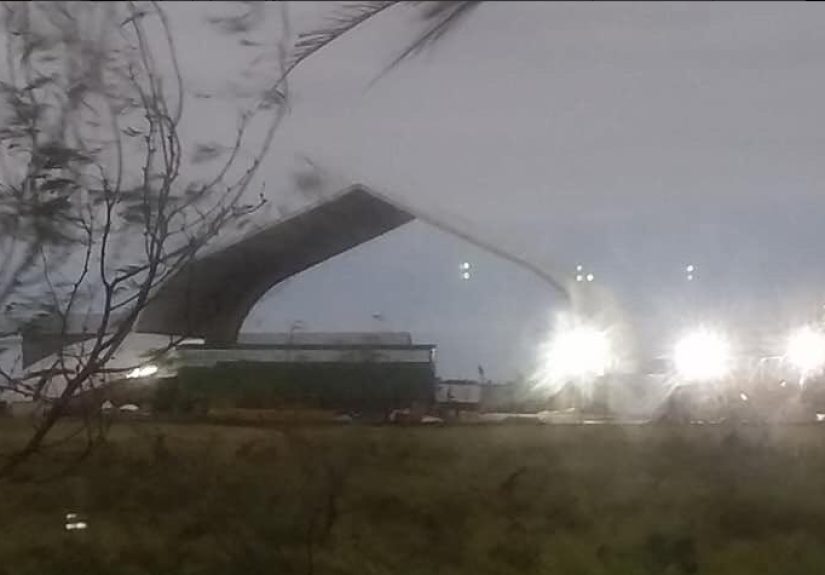
The headline version is simple: SpaceX’s Starship test rocket was knocked over by high winds. The more precise version is even more interesting. Reports from the time explained that the Starhopper prototype’s fairing or nose cone was blown over after strong gusts broke the mooring blocks securing it in place. Elon Musk said repairs would take a few weeks and emphasized that the actual tanks were fine. So while the whole vehicle was not flattened like a soda can in a parking lot, a major visible section of the prototype was damaged enough to delay testing.
That distinction matters because Starhopper was not yet the sleek, flight-ready spacecraft people now associate with Starship. It was an early, low-altitude test article: shorter, simpler, and built to validate fundamentals. SpaceX was using it to prove out the basic idea of a stainless-steel, vertically launching, vertically landing vehicle powered by the company’s new Raptor engine. In other words, this was the engineering equivalent of learning to ride a bicycle before attempting a motocross race.
The Boca Chica site itself also played a role in the drama. South Texas can deliver beautiful launch-day light, but it can also serve up coastal winds, weather swings, and real exposure to the elements. When engineers move fast and build large hardware outdoors, nature becomes an uninvited but very committed member of the test team. On that day, nature won the argument.
Why the Wind Incident Became Such a Big Story
Part of the reason this event exploded across science and tech coverage was the contrast. SpaceX had spent years selling a bold vision of Starship as the fully reusable transportation system that could carry people and cargo to orbit, the Moon, and eventually Mars. The vehicle looked like science fiction. The mission sounded world-changing. Then came a very earthly problem: wind.
It also happened at a time when public interest in Starship was ramping up. The stainless-steel design looked unusual, especially compared with the matte-black, high-tech expectations many people had for future spacecraft. To some observers, Starhopper looked less like a Mars ship and more like a silver water tower that had wandered into the wrong industry. That visual strangeness made the high-wind mishap irresistible. It was serious aerospace news with a side of visual comedy.
But underneath the memes and one-liners, the engineering reality was more serious. Hardware had been damaged, schedules would shift, and the company had to absorb an avoidable-looking delay during a crucial early development phase.
Why Starhopper Mattered More Than Its Appearance Suggested
It is easy to dismiss Starhopper because it looked rough, squat, and a little homemade from certain camera angles. That would be a mistake. Starhopper was a bridge between concept art and actual flight hardware. Before SpaceX could dream about orbital refueling, lunar missions, or Mars cargo drops, it had to solve a more basic challenge: could the Raptor-powered architecture work on a real flying prototype?
That is where Starhopper came in. It was a pathfinder. The vehicle was built to test engine integration, thrust control, vehicle stability, and landing behavior. These are not glamorous topics if you are trying to sell the public on interplanetary civilization, but they are exactly the sort of problems that determine whether a rocket is revolutionary or just very expensive lawn art.
The wind damage did not destroy that mission. It delayed it. More importantly, it showed that even early ground handling and site logistics matter in a major rocket program. Before a vehicle reaches the sky, it has to survive the pad, the weather, the transport process, and the thousand unromantic details that never make it into a glossy animation.
The Stainless-Steel Bet
The incident also unfolded during a period when SpaceX had pivoted to stainless steel for Starship construction. That choice surprised many space watchers, because advanced rockets are often associated with exotic composite materials. But SpaceX argued that stainless steel offered advantages in heat tolerance, strength, and cost, particularly for a system meant to be built rapidly and used repeatedly.
In that context, the Starhopper damage was embarrassing, but it did not necessarily undermine the larger design philosophy. If anything, it reinforced the idea that SpaceX was building in public, iterating in public, and occasionally getting humbled in public. The company’s approach has never depended on looking elegant every day. It depends on learning quickly enough that ugly moments become useful ones.
What the Accident Revealed About SpaceX’s Development Culture
SpaceX does not develop rockets like a company trying to avoid every visible mistake. It develops rockets like a company trying to compress time. That means building prototypes fast, testing them fast, breaking things, fixing things, and moving on. For supporters, this is thrilling. For critics, it can look chaotic. The Starhopper wind accident became a perfect case study because it sat right at the intersection of both views.
On one hand, critics could say the incident reflected sloppy preparation. If a prototype can be knocked over by weather, that raises uncomfortable questions about operations and readiness. On the other hand, supporters could point out that this is exactly what test programs are for: finding weak spots early, while the hardware is still relatively simple and the cost of learning is lower than it would be later.
That tension still defines how people talk about Starship. Every setback invites the same debate. Is this proof the program is reckless, or proof the program is doing real development instead of polished theater? The honest answer is that it can be both messy and meaningful. Aerospace history is full of programs that looked awkward before they looked inevitable.
A Failure in Optics, Not in Vision
The Starhopper mishap was terrible for optics. Nobody launching a next-generation spacecraft wants viral photos of a crumpled section lying on its side. But in strategic terms, the vision behind Starship did not change. SpaceX still intended to build a reusable system, still planned low-altitude hop tests, and still saw the Boca Chica site as central to development.
In fact, the company adjusted. The damaged nose cone was not essential for the earliest low-altitude tests, and later reporting noted that initial hop plans could proceed without it. That is a useful reminder that prototypes are not sacred objects. They are tools. If one configuration fails, engineers may simplify, modify, or bypass features to keep learning.
From Wind Damage to Flight Tests
This is where the story becomes more than a quirky setback. Starhopper did not remain a symbol of weather-related humiliation. Months later, it flew. First came a brief untethered hop of roughly 20 meters, proving the prototype could leave the ground and return under control. Then came the higher-profile 150-meter hop, in which Starhopper rose to about 500 feet and translated to a nearby landing pad.
That sequence changed the meaning of the earlier accident. Instead of becoming the moment the program lost momentum, the wind incident became the kind of opening chapter that makes later progress look tougher and more credible. SpaceX had taken a prototype that had been publicly damaged and turned it into a working test vehicle. That matters, both technically and psychologically.
For engineers, successful hop tests validated key parts of the architecture. For the public, they reframed Starhopper from “that thing the wind knocked over” to “that weird metal thing that can actually fly.” In aerospace, reputation is often built not by avoiding all setbacks, but by surviving them visibly.
The Bigger Lesson: Rockets Grow Up Through Awkward Phases
There is a temptation in coverage of advanced technology to focus only on polished end states. We love finished products, triumphant launches, and glossy renderings. Starhopper was a useful antidote to that fantasy. It reminded everyone that breakthrough systems often begin in rough, awkward, almost comically vulnerable forms.
That is especially true for reusable rocket development. Reusability is not just about power. It is about control, structure, materials, thermal behavior, landing systems, and operations. A vehicle that one day may support lunar infrastructure or Mars transport still has to pass the humble exam first: can it stay upright, ignite safely, rise, translate, and land?
Starhopper’s answer, eventually, was yes.
Why This Story Still Matters Today
Even years later, the high-wind incident remains relevant because it captures the essence of the Starship program. It is ambitious, highly visible, relentlessly iterative, and often a little chaotic around the edges. That combination has made Starship one of the most watched aerospace projects in the world.
The program also matters beyond SpaceX fandom. Starship has implications for commercial launch economics, deep-space exploration, satellite deployment, national prestige, NASA partnerships, and the regulatory future of heavy launch systems in the United States. NASA’s Human Landing System planning has tied part of its lunar ambitions to a version of Starship, while the FAA continues to oversee the licensing and safety framework surrounding operations at Boca Chica.
That broader context makes early prototype stories more than trivia. They show how giant aerospace programs are really born: not in perfect silence, but in welding sparks, delayed schedules, weather headaches, and photos that make the internet ask whether the future of Mars travel just got body-checked by a Texas gust.
Experiences Related to “SpaceX Starship Test Rocket Was Knocked Over by High Winds”
One reason this story stuck with so many people is that it felt strangely human. Not because anyone wants a rocket project to fail, but because the scene was instantly relatable in the most absurd way. Almost everyone has had some version of this experience. You spend days building something, planning something, polishing something, and then the weather strolls in like an overconfident movie villain and wrecks the mood in ten seconds flat. The only difference is that most people are dealing with a tent, a sign, or patio furniture. SpaceX was dealing with a giant stainless-steel prototype tied to humanity’s future in space.
For space enthusiasts following the Boca Chica site in 2019, the experience was a mix of excitement, disbelief, and grudging admiration. Every new image from the test area felt like progress toward science fiction becoming real. Then the wind damage appeared, and suddenly the story became more intimate. The project no longer looked like an untouchable marvel from a corporate presentation. It looked like real hardware built in the real world, exposed to real problems. Oddly enough, that made the whole effort feel more authentic.
For local observers and residents around Boca Chica, the Starhopper era likely felt even more intense. Rocket development was not just a livestream event or a trending science headline. It meant road closures, safety notices, noise, testing windows, public curiosity, and a front-row seat to a project that could swing from quiet construction to headline-making drama overnight. The wind incident fit that atmosphere perfectly. It was another reminder that living near a cutting-edge launch site means witnessing the future in a form that is often loud, inconvenient, and deeply unpredictable.
For engineers and builders everywhere, the experience connected to a familiar truth: early versions are rarely pretty. The first draft of anything ambitious tends to be awkward. It gets dented, revised, patched, tested, mocked, and rebuilt. That is true in software, architecture, filmmaking, product design, and aerospace. Starhopper became a giant metallic symbol of that uncomfortable stage between idea and mastery. It looked vulnerable because it was vulnerable. That was not a contradiction. That was the process.
And for casual readers who only dipped into the story because the headline was irresistible, the experience was probably delightfully confusing. Was this really the Mars rocket? Why did it look like that? How does a company making orbital-class hardware lose a battle with the wind? Those questions pulled people into a deeper understanding of how experimental development works. Space is glamorous in the abstract, but up close it is full of crude prototypes, test stands, blown timelines, improvised fixes, and engineers refusing to quit after a public embarrassment.
That may be the most lasting experience tied to this story: it turned a futuristic rocket program into something people could emotionally understand. Big dreams are not built in a straight line. Sometimes they wobble. Sometimes they fall over. Sometimes they get repaired and come back better. In that sense, the Starhopper wind accident was not just a weird news item. It was a surprisingly honest portrait of progress itself.
Conclusion
The story of how SpaceX’s Starship test rocket was knocked over by high winds is funny at first glance, but it is far more revealing than it seems. The incident showed that even the boldest aerospace projects remain vulnerable to ordinary physical realities. It also showed why Starship became such a compelling program to watch: every success had to earn its way through visible, sometimes awkward setbacks.
Starhopper’s damaged fairing did not end the project. It became one more lesson in a development campaign built around testing, iteration, and stubborn persistence. Later hops proved the concept had real promise, and the broader Starship effort continued to evolve into one of the most important programs in commercial spaceflight. In the end, the wind did not defeat the idea. It just added an early chapter that made the rest of the story impossible to ignore.