Table of Contents >> Show >> Hide
- What “Sports for Toddlers” Really Means (and Why It Matters)
- A Reality Check: Toddlers Aren’t Built for “Real” Team Sports Yet
- Age-Appropriate Sports: The 5-Part Checklist
- Signs Your Toddler Might Be Ready for a Beginner Sports Program
- Best Sports and Activities by Age: Practical Options That Actually Work
- How Much Activity Do Toddlers and Preschoolers Need?
- Picking the Right Program: Questions to Ask Before You Pay
- Safety Basics: Protect the Joy (and the Teeth)
- Avoid the “Early Specialization” Trap
- When a Sport Isn’t the Right Fit (Yet): What to Do
- How to Support Your Toddler Without Becoming “That Parent”
- Conclusion: The Best Toddler Sport Is the One That Keeps Them Moving and Smiling
- Real-Life Experiences: What Parents Often Notice (and What Actually Helps)
If you’ve ever watched a toddler “play soccer,” you know the ball is mostly a suggestion. One kid hugs it. Another sprints the wrong direction like they’re late for a very important snack. And the third? They’re lying on the grass, studying clouds like a tiny meteorologist.
That’s not failurethat’s toddlerhood. The goal at this age isn’t perfect form or learning a playbook. It’s building confidence, coordination, and a lifelong “moving is fun” mindset. The trick is choosing sports and programs that match your child’s development, attention span, and personality… not your fantasy of raising the next Olympic gold medalist (who, to be fair, might currently be eating crayons).
What “Sports for Toddlers” Really Means (and Why It Matters)
People use “toddler” differently. Some mean ages 1–3. Others lump in preschoolers up to 5. Either way, the principle is the same: young kids need movement that’s play-based, skill-building, and low-pressure.
Regular activity supports gross motor development (running, jumping, climbing), fine motor control (gripping, throwing), body awareness, balance, and social growth (sharing space, taking turns, following simple cues). And it helps burn energybecause yes, toddlers can run on what appears to be one blueberry and pure determination.
A Reality Check: Toddlers Aren’t Built for “Real” Team Sports Yet
Most toddlers and many preschoolers aren’t ready for traditional organized sports with strict rules, positions, and strategies. That’s normal. Young children are still developing balance, visual tracking, coordination, and the ability to focus in groups. Programs that demand too much too soon can lead to frustrationfor kids and parents.
Translation: You’re not behind if your 3-year-old doesn’t “get” the game. At this age, the best “sports” are really movement experiences that teach fundamentals like running, tumbling, throwing, catching, kicking, and swimming skills.
Age-Appropriate Sports: The 5-Part Checklist
When you’re trying to decide if an activity is right for your toddler, use this quick checklist. An age-appropriate option is usually:
1) Skill-focused (not score-focused)
Look for words like “fundamentals,” “movement,” “coordination,” “intro,” or “parent-and-me.” Be cautious of programs that talk like a mini pro league.
2) Short and structured… but flexible
For toddlers and preschoolers, shorter sessions work best. Think 30–45 minutes with frequent transitions and built-in water breaks (and, realistically, feelings breaks).
3) Small groups with supportive coaching
Young kids learn by copying and experimenting. Coaches should model skills, keep instructions simple, and treat mistakes like part of the game.
4) Safe by design
Age-appropriate equipment matters: smaller balls, lower hoops, softer bats, shorter fields, and fewer kids in one space. If the setup looks like it was made for older kids, your toddler is going to spend the session dodging chaos.
5) Fun for your child’s temperament
Some toddlers love group energy. Others need warm-up time. Choose an activity that fits your child, not the neighbor’s highlight reel.
Signs Your Toddler Might Be Ready for a Beginner Sports Program
You don’t need perfectionjust a few readiness clues. Your child may do well in a structured “sports intro” class if they can:
- Follow 1-step directions (“Kick the ball,” “Jump here,” “Freeze!”)
- Handle a group setting without melting down the whole time
- Separate from you (or stay with you calmly in a parent-participation class)
- Wait briefly for a turn (even if “briefly” means 6 seconds)
- Show interest in moving, balls, music, water, or climbing
If your toddler isn’t there yet, it’s okay. The “right sport” right now might be the playground, a living-room obstacle course, or dancing like nobody’s watching (except your dog, who is judging quietly).
Best Sports and Activities by Age: Practical Options That Actually Work
Below are age-leaning suggestions. Kids develop at different speeds, so treat these like guidelinesnot laws written on a tiny stone tablet.
Ages 1–2: Movement Play That Builds Confidence
- Parent-and-me gymnastics/tumbling: rolling, balancing, jumping, crawling through tunnels.
- Water comfort classes: safe water exposure with an adult (formal swim readiness varies by child).
- Music-and-movement: rhythm, hopping, marching, and coordinationsneaky athleticism.
- Playground “sports”: climbing, sliding, swinging, and runningcore skills for everything later.
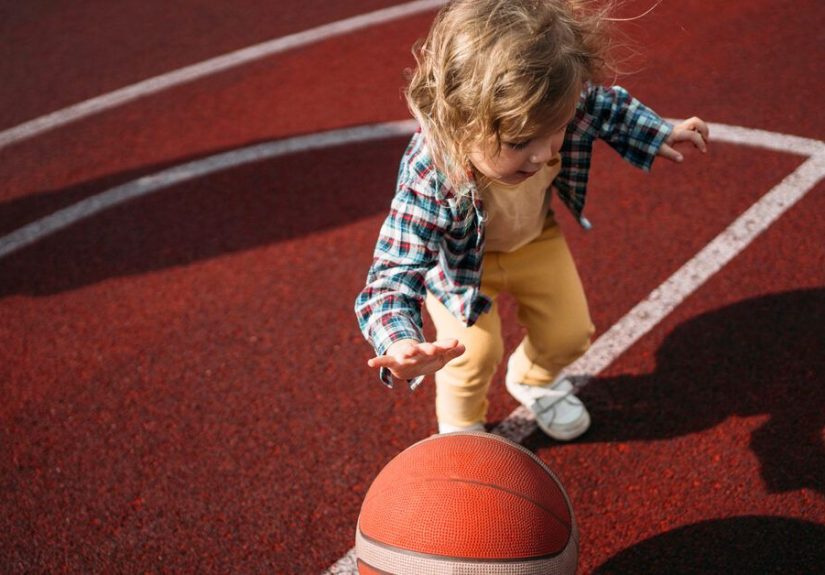
- Mini ball play at home: tossing a soft ball into a laundry basket counts as a win.
Ages 2–3: Intro Classes, Not “Teams”
- Toddler soccer (skills-based): dribbling games, kicking practice, chasing bubbles with a ball nearby.
- Dance: balance, coordination, listening skills, and body control.
- Tumbling/gymnastics: excellent for strength, flexibility, and confidence.
- Swim lessons (if ready): many children can begin around age 1, but readiness variesfocus on safety, comfort, and skills.
- Tricycle or balance bike practice: coordination and spatial awareness in motion.
Ages 3–4: “Preschool Sports” That Teach Fundamentals
- Multi-sport sampler programs: try soccer, basketball basics, T-ball conceptswithout pressure.
- Martial arts for little kids: listening, balance, body control, and confidence (choose a gentle, age-specific class).
- Beginner skating (where offered): balance and coordination, with lots of support.
- More structured swim lessons: building skills and water safety (still requires constant supervision).
Ages 4–5: More Structure, Still Mostly Play
- Soccer with simple rules: short drills, small-sided games, rotating roles.
- T-ball: hitting off a tee, running bases, learning “my turn/your turn.”
- Gymnastics/dance progression: more sequences, more skill-building, still fun-first.
- Intro basketball skills: dribbling games, shooting on lower hoops, coordination drills.
Helpful mindset: At these ages, the best programs measure success by smiles, participation, and skill exposurenot by wins.
How Much Activity Do Toddlers and Preschoolers Need?
Here’s the good news: “practice” doesn’t need to look like practice. For preschool-aged kids (around 3–5), major health guidance emphasizes being active throughout the day, mixing light, moderate, and energetic movement. Many organizations translate that into roughly a few hours of active play spread across the day, not one long workout session.
So if your child runs in bursts, climbs, dances for two songs, rides a trike, then does one dramatic flop on the rugthat can still add up to meaningful daily activity.
Picking the Right Program: Questions to Ask Before You Pay
Not all “toddler sports” are created equal. Before committing, ask these questions (yes, you’re allowed to interview the toddler-soccer establishment):
Is it truly age-specific?
Look for separate groups for ages 2–3 and 4–5. A 2-year-old and a 5-year-old are basically different species.
What’s the coach-to-child ratio?
For toddlers, smaller groups are safer and more effective. More adults = more support = fewer chaos-related collisions.
What’s the coaching style?
You want patient, positive, and playful. If the vibe feels like “tiny boot camp,” keep walking.
How do they handle attention spans?
Good programs expect wandering, fidgeting, and occasional emotional plot twists. They build in movement stations and quick transitions.
What safety steps are built in?
Ask about equipment, space, hydration breaks, bathroom policies, and how they manage bumps and falls. A clear safety plan is a green flag.
Safety Basics: Protect the Joy (and the Teeth)
Toddler sports should be low-risk, but “low-risk” isn’t “no-risk.” Use these common-sense safety practices:
- Choose the right environment: safe surfaces, enough space, and age-appropriate obstacles.
- Dress for movement: comfortable clothes, proper shoes, hair tied back if needed.
- Hydration and snacks: young kids crash fast. Bring water. Keep a simple snack for after.
- Protective gear when appropriate: helmets for bikes/scooters; properly fitted gear for anything wheeled.
- Watch for overload: if your child is exhausted, cranky, or clinging, it may be too long or too intense.
A special word about swimming
Water activities can be fantastic, but water safety needs extra seriousness. Swim lessons can add a layer of protection and may begin for many children around age 1but they do not replace close supervision and safety barriers. Think of swim skills as one layer in a multi-layer plan.
Avoid the “Early Specialization” Trap
It’s tempting to lock onto one sport early. Maybe your toddler kicked a ball once and you felt destiny calling. But early childhood is usually better for sampling: trying different activities that build a wide base of skills.
Multi-sport exposure supports overall athletic development and keeps things fun. Later, if a child truly loves a sport, they can lean in. Right now, the goal is to help them discover what they enjoywhile protecting their growing bodies and their motivation.
When a Sport Isn’t the Right Fit (Yet): What to Do
If your toddler hates an activity, you don’t need to force it “for resilience.” You can teach resilience without paying a registration fee.
Consider pausing, switching formats, or trying again later if you see:
- Consistent fear, distress, or refusal week after week
- Frequent overstimulation in the class environment
- Meltdowns that don’t improve with routine and support
- No interest in the activity at all (which is allowed!)
Try a smaller class, a parent-and-me version, or a different “sport” entirely (dance, tumbling, swim, playground skills). Some kids just aren’t group-program people at 2 or 3and that’s perfectly normal.
How to Support Your Toddler Without Becoming “That Parent”
Here are ways to encourage confidence without accidentally turning Saturday morning into a high-stakes documentary series:
- Praise effort, not outcome: “You kept trying!” beats “You scored!”
- Keep expectations toddler-sized: participation is the win.
- Practice at home in micro-bursts: 5–10 minutes of kicking, throwing, or balancing is plenty.
- Let them lead sometimes: if they want to “play soccer” by rolling the ball down a slide, congratulationsyou’re playing soccer now.
Conclusion: The Best Toddler Sport Is the One That Keeps Them Moving and Smiling
Choosing age-appropriate sports for toddlers isn’t about picking the “best” sport in generalit’s about picking the best match for your child right now. Look for programs that emphasize fundamentals, safety, short attention spans, and fun over competition.
If your toddler spends more time chasing butterflies than the ball, you’re still doing it right. Movement builds skills. Fun builds confidence. And confidence is what keeps kids active long after the toddler years are over.
Real-Life Experiences: What Parents Often Notice (and What Actually Helps)
Parents usually walk into toddler sports with one of two expectations: either “My child will learn the basics!” or “This will finally tire them out!” Sometimes both. Then reality arrives wearing tiny shoes on the wrong feet. The most common experience? The first few sessions can feel like organized confusionbecause toddlers need time to adjust to new routines, new adults, and a room full of other small humans who also have Big Plans.
One thing parents often notice quickly is that the transition is the hard part, not the sport. Getting into the building, separating from a caregiver, waiting for instructionsthese are advanced life skills for a 2- or 3-year-old. Families who have the smoothest experience tend to build a simple ritual: same arrival time, same “pep talk,” same water bottle, and a consistent goodbye if separation is required. Toddlers love predictability, even when they pretend they don’t.
Another common observation: toddlers learn by watching first. A child might refuse to kick the ball in week one, observe quietly in week two, and suddenlywithout warningdribble like they invented soccer in week three. Parents sometimes worry that “not participating” means the class is useless. But watching is participation at this age. It’s how many kids gather information before they feel safe enough to try.
Parents also report that the “best” coaches for toddlers rarely sound like coaches. They sound like warm, upbeat camp counselors: “Can you stomp like a dinosaur to the cone?” “Let’s jump over the river!” These playful cues turn skills into games. And when skills are games, toddlers try them more oftenwithout the pressure that triggers shutdowns.
It’s also normal for toddlers to latch onto one favorite part of class and ignore the rest. Maybe they’ll do every balance activity but refuse the ball. Or they’ll only participate when bubbles appear. Many parents find it helpful to reframe success: instead of asking, “Did they do everything?” ask, “Did they try something new?” If your child spent 30 minutes in a group setting, practiced one new movement, and left without tears, that’s a strong day.
Parents frequently say the biggest surprise is that toddler sports can improve things outside the sport: better confidence at playgrounds, more willingness to climb, improved turn-taking with siblings, even better bedtime (not guaranteed, but we can all dream). The key is consistency without intensity. One gentle class per week plus playful movement at home is often more effective than stacking activities back-to-back and hoping your toddler “gets serious.”
Finally, many families discover that the “right” activity can change quickly. A child who hates noisy group classes at 2 might adore them at 4. A kid who refuses swim lessons one summer might beg to try again after watching a friend. Parents who stay flexibleand treat sports as exploration rather than a long-term contractusually end up with kids who feel capable, supported, and genuinely excited to move. And that’s the real win, no trophy required.