Table of Contents >> Show >> Hide
- Meet Superiore: Italian engineering, built with North America in mind
- What makes a range “Ferrari-like,” anyway?
- Performance under the hood: burners, brass, and a serious oven
- Three style “families”: NEXT vs DECO vs LA CUCINA
- Choosing your “engine”: gas, dual fuel, or induction hybrid?
- The part nobody puts on Instagram: installation and ventilation
- Ownership vibes: what it’s like living with a Superiore range
- Who should buy Superiore ranges?
- Are they the Ferrari of the kitchen?
- Bonus: of real-life “Superiore energy” in the kitchen
Some people buy a kitchen range the way they buy a toaster: “Does it heat? Cool.” Others buy one the way they buy a car:
obsessing over performance, fit-and-finish, and whether the knobs feel expensive enough to deserve their own Instagram account.
If you’re in the second camp, you’ve probably stumbled onto Superiore rangesItalian-built appliances that show up
in North American kitchens looking like they came straight from a design studio… with a pit crew hiding inside.
So, are Superiore ranges really the Ferrari of the kitchen? Not in the “will it do 0–60?” sense (unless you count boiling pasta water),
but in the “engineered, expressive, high-performance, and slightly dramaticin the best way” sense, absolutely.
Let’s pop the hood and see what makes these Italian range cookers tick, who they’re for, and what it’s like to live with one day after day.
Meet Superiore: Italian engineering, built with North America in mind
Superiore positions itself as a premium range brand “made for North America” but inspired by Italian design and a manufacturing story rooted in
Gualtieri, Italy, in the Emilia-Romagna regionan area famous for both serious food culture and serious engineering.
That combination matters: the best kitchen appliances aren’t just pretty; they’re practical tools designed by people who cook
and built by people who understand heat, metal, airflow, and durability.
Superiore’s branding leans into the “Motor Valley” vibethink fastidious mechanical detail, bold finishes, and a belief that
function should look good while it’s functioning. It’s an appliance that wants to be the centerpiece, not the background character.
(If your kitchen is the movie, Superiore is the star with perfect lighting.)
What makes a range “Ferrari-like,” anyway?
Calling a range the “Ferrari of the kitchen” is a metaphorbut a useful one. High-end performance ranges tend to share a few traits:
- Power you can actually use (not just marketing numbers)
- Control at low heat (true simmering, not “kind of warm-ish”)
- Even oven performance for baking, roasting, and big holiday loads
- Engineering details that make daily cooking smoother
- Fit, finish, and materials that hold up (and feel great)
- Safety + comfortbecause nobody wants a beautiful range that turns your kitchen into a sauna
Superiore checks these boxes with a mix of raw burner output, multi-fan convection oven design, premium materials like brass burners,
and some signature design choicesmost notably its Panorama “wide screen” door aesthetic and old-school-meets-new-school touches
like analog-style gauges and bold finishes.
Performance under the hood: burners, brass, and a serious oven
Brass burners and smart flame geometry
Let’s start where most people fall in love: the cooktop. Superiore highlights brass burners and engineering choices meant to
minimize wasted heat and maximize real cooking power. In one representative 36-inch configuration, you’ll see a practical spread:
two 18,000 BTU power burners, a high-output burner around 11,000 BTU, mid burners around 6,500 BTU,
and a smaller burner around 3,600 BTU, plus a true low simmer capability (about 750 BTU) for gentle sauces
and chocolate that won’t scorch the second you blink.
Translation: it’s built for the full range of cookinghard sears, fast boils, and low, steady simmeringwithout forcing you to pick
between “volcano” and “off.” And with continuous-style grates, you can slide heavy pots across the surface without the awkward “lift-and-pray”
maneuver that turns cooking into a forearm workout.
A big oven designed for real cooking (not just “reheat a casserole”)
Superiore emphasizes large-capacity ovens, with some 36-inch models reaching about 6.7 cu. ft. and using
multiple convection fans (Superiore highlights four) to promote even cooking on multiple levels and reduce flavor crossover.
That matters if you’re baking cookies on multiple racks, roasting vegetables while finishing a protein, or doing the full “holiday kitchen”
performance where every dish wants oven time right now.
This is where the Ferrari analogy fits again: it’s not just about top speed. It’s about stability, balance, and consistency.
The goal is repeatable resultscrispy edges, tender interiors, and fewer “Why is the back rack done but the front rack still pale?” mysteries.
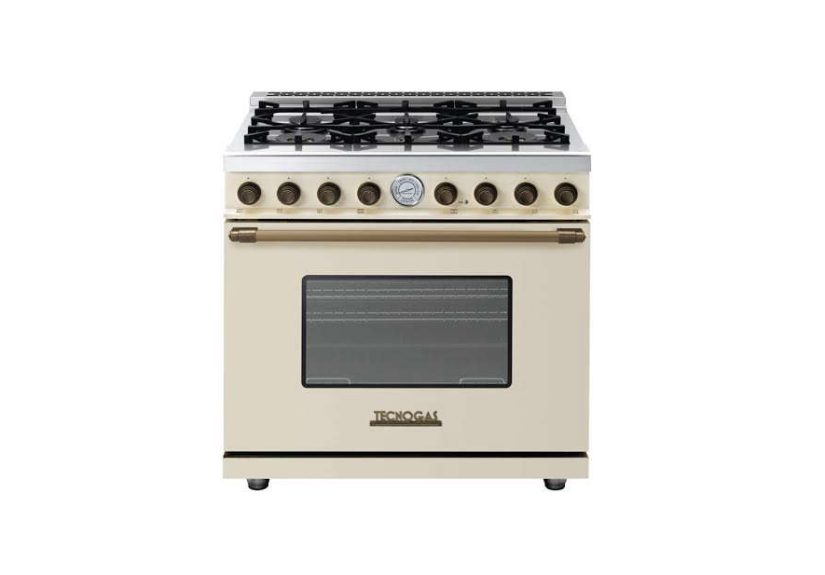
Panorama door, triple glass, and “form-for-function” design
A range door is usually… a door. Superiore treats it like a feature. The brand highlights a triple-layer glass door for insulation,
an easy-to-clean internal surface design, and a “Panorama” wide-view look that lets you watch cooking progress without opening the door
and dumping heat into your kitchen. Add in a soft-motion mechanism (because a $5,000+ range shouldn’t slam like a discount rental apartment cabinet),
and you’ve got a door that’s both stylish and genuinely useful.
Trifuel thinking: induction + gas + griddle (yes, really)
Some Superiore 48-inch “NEXT” configurations lean into maximum versatility with a hybrid approach: multiple induction zones
(often cited at around 2,100 W each with a boost up to roughly 3,700 W), plus an 18,000 BTU gas burner
for open-flame lovers, plus an integrated electric griddle (around 1,150 W). It’s basically the “why choose?” approach:
fast, efficient induction for daily cooking, real flame when you want it, and a griddle for breakfast chaos or weeknight quesadillas.
If you’ve ever argued with yourself over gas vs induction, Superiore’s answer is: “Yes.”
Three style “families”: NEXT vs DECO vs LA CUCINA
NEXT: contemporary, panoramic, and unapologetically bold
The NEXT line is Superiore’s modern statement: clean angles, panoramic glass, and a design language that nods to high-tech performance.
It’s the choice for modern kitchens that want the range to look like it belongs next to architectural lighting and a seriously overconfident espresso machine.
Sizes typically range from compact (like 24-inch) up through 30, 36, and 48-inch builds, including models with induction/gas combos and double-oven layouts.
DECO: old-world soul, updated for modern cooking
DECO leans traditional: textured matte colors, art-deco-inspired knobs and handles, and finishes that feel designed rather than selected
from a dropdown menu. It’s the line for people who want a kitchen that feels warm, classic, and “lived in,” but still demands modern cooking performance.
If NEXT is a sleek sports coupe, DECO is the vintage grand tourer with an upgraded engine and better brakes.
LA CUCINA: premium entry, cleaner lines, still unmistakably Italian
LA CUCINA is positioned as a premium-grade gateway into the brandclean lines, robust materials, and a refined color palette.
It’s for shoppers who want Italian style and performance without going full maximalist on finishes.
Choosing your “engine”: gas, dual fuel, or induction hybrid?
Superiore’s lineupand the broader high-end range marketusually lands in three camps. Choosing the right one isn’t about what’s “best”
on the internet; it’s about how you cook and what your kitchen can support.
All-gas ranges: live flame, quick response, “chef-y” feel
A gas range gives you immediate response when you adjust the flame, and many cooks love that tactile, visual control.
Gas ovens can also retain a bit more moisture than electric ovensgreat for certain roasts and breadsthough results vary by design.
If you’re a stovetop-first cook who sautés, simmers, and sears daily, an all-gas setup can feel like home.
Dual fuel ranges: gas on top, electric in the oven
Dual fuel combines a gas cooktop with an electric ovenpopular because electric ovens can excel at even, dry heat for baking and roasting.
Many industry guides note dual fuel often brings more advanced oven features, but it can also mean higher cost and more complex installation
(you’ll typically need a proper 240V electrical setup in addition to gas).
If your kitchen life includes frequent bakingcookies, pastries, sheet-pan meals, holiday roastsdual fuel can be a sweet spot:
responsive burners on top, consistent oven results below.
Induction or induction-hybrid: speed, efficiency, and a cooler kitchen
Induction is fast, precise, and notably efficientmany energy-focused resources cite induction transferring a very high share of energy into the pan
compared to gas. Practically, this can mean less “ambient heat” blasting your torso while you cook (your air conditioner may send a thank-you note).
The tradeoff: you’ll need induction-compatible cookware and you’ll want to ensure your electrical infrastructure is ready.
A Superiore-style induction hybrid can be a best-of-both-worlds answer: induction for daily speed and cleanliness, plus a real flame burner when you want
that open-flame char on peppers or the ritual of cooking with fire.
The part nobody puts on Instagram: installation and ventilation
A premium Italian range can absolutely transform a kitchenprovided you respect the unglamorous realities:
clearances, electrical demands, gas supply, and (most importantly) ventilation.
Great cooking produces smoke, grease, moisture, and odors. High-output burners can produce a lot of “kitchen atmosphere” very quickly.
Ventilation: size it like you mean it
If you’re investing in a pro-style or premium freestanding range, don’t pair it with a whisper-weak vent that recirculates vibes and hope.
U.S. ventilation guidelines often frame hood power in terms of stove output, cooking style, and capture area.
Many rules of thumb suggest scaling CFM to BTU output (and also considering whether your cooktop sits against a wall or on an island).
Also: make-up air can become a real issue. In many U.S. jurisdictions, if your hood exhausts above a threshold
(commonly cited around 400 CFM), you may need a make-up air system to avoid depressurizing the home.
This isn’t just bureaucracyit’s about safety and comfort, especially in tighter, newer construction.
Bottom line: talk to a qualified installer, check local code, and plan ventilation early. “We’ll figure it out later” is the enemy of a smooth remodel.
Gas, electric, and the “call-a-pro” reality
Dual fuel and induction models typically require a solid electrical setup; gas models still need proper gas line sizing and safe installation.
Premium ranges are heavy and exactingmeasure carefully, confirm cutouts, and don’t assume your existing setup is automatically compatible
with a higher-performance appliance.
Think of it like buying a performance car: the purchase is only part of the story. You also need the right garage, the right fuel, and the right mechanic.
Ownership vibes: what it’s like living with a Superiore range
Here’s the honest truth: a premium Italian range is both a tool and a lifestyle object. You’ll enjoy it most if you like cooking
and you like the ritual of owning something built with intention.
- The good: powerful burners with real low control, a big oven that can handle serious meals, and design that elevates the entire kitchen.
- The “sports car” part: you’ll care about cleaning, you’ll want the right cookware, and you’ll be more aware of ventilation and heat management.
- The practical win: details like insulated doors, wide viewing glass, and thoughtful airflow systems can make the kitchen more comfortable and safer during long cooking sessions.
If you cook often, you’ll notice the difference. If you mostly reheat takeout, a Superiore range is like buying a track car for a commute to the mailbox.
(No judgment. Okay, a little judgment. But mostly admiration for the aesthetic commitment.)
Who should buy Superiore ranges?
Superiore is a great fit if you:
- Cook frequently and want both high heat and true simmer control
- Care about oven capacity and multi-rack performance
- Want Italian design that’s bold, detailed, and built to be seen
- Are planning proper ventilation and professional installation
- Enjoy owning “objects with personality,” not just appliances
You might want to look elsewhere if you:
- Need the lowest-maintenance option possible
- Prefer a minimalist, invisible appliance look
- Don’t want to budget for ventilation, installation, and potential electrical upgrades
- Rarely cook and won’t benefit from performance features
Are they the Ferrari of the kitchen?
If “Ferrari” means Italian, performance-forward, design-obsessed, and built with an
“engineering-meets-emotion” mindsetthen yes, Superiore ranges absolutely fit the metaphor.
The key is buying it for the right reasons: not just to impress guests (though it will), but because you actually want
high-output burners, a large, thoughtfully engineered oven, and a range that feels like a crafted object rather than a commodity.
Get the ventilation right, choose the fuel type that matches your cooking habits, and you’ll have a kitchen centerpiece that’s
as fun to use as it is to look at. And if you catch yourself lovingly wiping fingerprints off the Panorama door like it’s a showroom hood?
Congratulations. You are now a “range person.”
Bonus: of real-life “Superiore energy” in the kitchen
Picture a Saturday afternoon where cooking isn’t a choreit’s the main event. The kind of day where you start with “I’ll just make lunch”
and end up hosting an accidental micro-feast because the kitchen feels like a stage and you’re suddenly in a cooking montage.
That’s the vibe a Superiore range can create, mostly because it makes you want to use it.
First, the stovetop ritual: you twist a knob and you get immediate, confident heat. Not the timid little flame that suggests the appliance is
asking permission to cookthis is “Yes, chef” energy. You throw a pan on a high-output burner and it actually responds like a professional tool.
Searing becomes less of a gamble. Stir-frying feels less like chasing heat and more like controlling it. And then, the real flex:
you slide over to a proper low simmer and the sauce behaves. Tomato ragù can bubble gently for hours without turning into a volcanic splatter situation.
(Your backsplash breathes a sigh of relief.)
Then there’s the ovenwhere premium ranges either shine or get exposed. On a big cooking day, you want space and predictability.
With a large cavity and strong convection design, the oven stops feeling like a “one dish at a time” bottleneck.
You can roast vegetables on one rack, bake garlic bread on another, and still have room for a tray of chicken thighs that actually crisp
instead of steaming in their own sadness. And because the door is designed for visibility, you spend more time watching the food and less time
opening the oven like it’s a surprise party you keep ruining.
The Superiore “sports car” personality shows up in little moments. You notice how the door closes. You appreciate that the outside doesn’t feel
like it’s trying to brand your forearm. You realize you’re cooking longer but feeling less cooked yourself, especially if your ventilation plan
is solid and your kitchen isn’t trapping heat like a sweater in July.
The funniest part is how it changes your behavior. You start “testing” things. You make pancakes on the griddle because it exists.
You try a quick wok stir-fry because the burner can handle it. You decide to bake bread because the oven has the capacity for it and the kitchen
suddenly feels like a place where bread should happen. A great range doesn’t just cook foodit nudges you into cooking more often, with more confidence,
and with a little extra joy. It’s not magic. It’s design meeting performance meeting “Wow, I actually want to be in my kitchen.”
If that sounds like your kind of Saturday, a Superiore range isn’t just an appliance. It’s your kitchen’s new personality.