Table of Contents >> Show >> Hide
- Why This Plane Seat Drama Took Off Online
- The Real Villain Is the Economy-Class Squeeze
- So, Does the Passenger in Front Have the Right to Recline?
- Why Airline Etiquette Feels So Complicated Now
- What the Tall Passenger Could Have Done Better
- What the Reclining Passenger Could Have Done Better
- The Bigger Truth: Airlines Sell the Same Space Twice
- A Fair Verdict on the Viral Seat-Recline Showdown
- Related Experiences From the World of Cramped Flights
- Final Thoughts
If modern economy class had a slogan, it would probably be: Good luck, everybody. You board the plane with a neck pillow, a dream, and approximately three square inches of personal dignity. Then someone in front of you reaches for the recline button, someone behind you starts knee-tapping your seat like they’re auditioning for a drumline, and suddenly the cabin turns into a tiny flying courtroom.
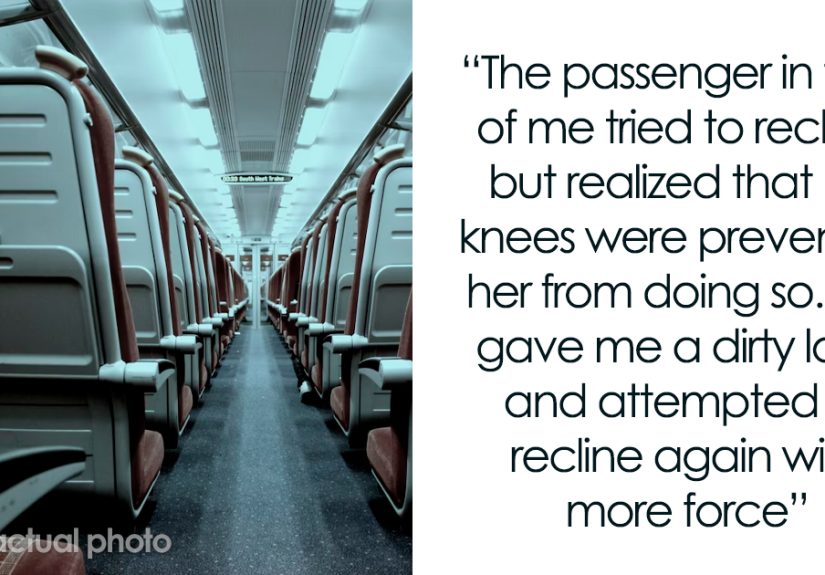
That is exactly why the headline “Tall Guy Doesn’t Fit In Plane Seat Comfortably, Drama Ensues After Woman Tries To Recline Her Seat” struck a nerve online. On the surface, it sounds like a simple in-flight disagreement. A tall passenger physically could not give up more room because his knees were already jammed into the seat in front of him. The woman ahead of him wanted to recline. Neither person felt unreasonable. Both felt uncomfortable. The internet, naturally, reacted like it had been personally summoned for jury duty.
But the reason this story keeps traveling is not just the awkward seat-back showdown. It is because it taps into a bigger truth about flying in 2026: airplane etiquette is messy, space is scarce, and airlines have gotten very good at turning discomfort into a premium upgrade option. In other words, this was never just about one tall guy and one recline button. It was about the modern economy-class experience, where courtesy matters more than ever because comfort is in such short supply.
Why This Plane Seat Drama Took Off Online
Stories like this spread fast because almost everyone has lived some version of it. You do not need to be six-foot-eight to understand the tension. Maybe you have been the passenger whose laptop nearly got folded like a taco when the seat in front dropped backward. Maybe you have been the person desperate for a little recline on a long flight, only to feel the judgment of three rows behind you. Or maybe you have simply stared into the middle distance while wondering why a seat that moves backward somehow creates a moral crisis every holiday season.
The debate is so fierce because both arguments sound logical when presented in isolation. Team Recline says, “The seat has a button, I paid for the seat, therefore I can use the button.” Team Knees says, “Your comfort cannot come at the direct expense of my kneecaps, tray table, and will to live.” Put those two viewpoints in the same row, add cramped seating and a four-hour flight, and you have all the ingredients for airborne philosophy.
The viral story also resonated because it showed something people do not always say out loud: being tall on a plane is not a personality trait; it is geometry. A person with very long legs cannot simply “tuck in a bit more” when there is no more room to tuck. At a certain point, the body stops negotiating and starts filing silent complaints.
The Real Villain Is the Economy-Class Squeeze
If this situation feels increasingly common, that is because it is part of a larger travel reality. Airplane cabins have become more efficient for airlines and less forgiving for human knees. Over the years, travelers have watched seat pitch, width, and general breathing room become hot-button topics. The result is a cabin environment where ordinary body positions now feel luxurious.
That matters because seat-recline disputes are rarely born from pure selfishness. More often, they are a collision between two people trying to survive the same cramped design. The recliner wants relief for their back. The taller passenger wants to preserve the only sliver of legroom keeping them from fusing permanently to the seat frame. Both are reacting to the same problem: there just is not much space left to share.
This is why the tall-guy story feels bigger than itself. It is not really about villainy. It is about what happens when airlines create a cabin layout where every inch matters so much that using one standard feature can ruin another passenger’s entire flight. That is not a personality problem. That is a design problem wearing a customer-service nametag.
For Tall Travelers, This Is Math, Not Drama
When people say tall passengers should “just sit normally,” they are usually imagining a body that bends on command like a carry-on strap. In reality, tall flyers deal with a chain reaction of discomfort. Knees press into the hard shell of the seat in front. Hips twist sideways. Feet end up trapped under bags, bars, or seat supports. Once the person ahead reclines, the little bit of usable space can vanish completely.
Even tasks that sound basic become ridiculous. Opening a laptop becomes a hand-contortion trick. Taking a drink off the tray table becomes a trust fall. Standing up to stretch requires timing, diplomacy, and sometimes the flexibility of a circus performer who also happens to be wearing jeans.
That does not mean tall passengers automatically “win” every etiquette battle. It does mean their discomfort is often structural, not theatrical. If their knees are already touching the seat in front before takeoff, there is no magical second setting called “extra folding.”
So, Does the Passenger in Front Have the Right to Recline?
Here comes the part everyone loves to argue about: yes, the seat usually reclines for a reason. But social permission and mechanical ability are not the same thing. You can physically recline a seat. That does not automatically mean every moment is the right moment to do it.
Across travel experts and etiquette commentary, the most sensible middle ground is surprisingly consistent. Reclining is more accepted on longer or overnight flights, when people are actually trying to rest. It is less welcome on short daytime hops where everyone is already upright, alert, eating, typing, or balancing a ginger ale that cost more than dignity should.
And there are a few unwritten rules that should probably be written on the safety card, right next to the illustration of the happy emergency exit family. Recline slowly. Check behind you first. Do not slam your seat backward like you are launching a medieval drawbridge. And when meal service starts, bring the seat back up unless your goal is to become the villain in someone else’s group chat.
That is why the woman in the viral story was not necessarily wrong for wanting to recline. But the tall passenger was not wrong for being physically unable to donate more space either. The problem is that airplane seating turns what should be a simple comfort feature into a shared-resource dispute. One seat, two people, zero consensus.
Why Airline Etiquette Feels So Complicated Now
Air travel used to have clearer social expectations because cabins were, in many cases, a little less punishing. Today, everyone boards already a little defensive. Bags cost extra. Better seats cost extra. Earlier boarding costs extra. Breathing room feels one subscription tier away. So passengers show up feeling like they must guard the tiny comforts they managed to keep.
That is why seat etiquette sparks so much emotion. The modern cabin turns strangers into reluctant roommates. You share armrests, overhead space, foot room, seat angle, and sometimes the emotional energy of a man eating tuna at 7:15 a.m. The rules are not always formal, but the consequences of ignoring them are immediate.
Some airlines have even started reducing the drama by using fixed or “pre-reclined” seats in some cabins. That tells you everything you need to know. When a feature causes enough conflict, someone eventually decides it is easier to remove the choice than to trust passengers to negotiate it politely at 35,000 feet.
What the Tall Passenger Could Have Done Better
Even if the tall guy was in a genuinely impossible position, there is still room for better handling. The strongest move in any seat dispute is calm communication before frustration gets promoted to first class.
Instead of a hard stop or a tense back-and-forth, a simple line works wonders: “I’m sorry, I’m very tall and my knees are already pressed into your seat. I’m not trying to be difficult, but there really isn’t any room back here.” That kind of phrasing matters because it turns the conflict from accusation into explanation.
It also helps to involve a flight attendant early if the situation clearly cannot be solved between the two passengers. Cabin crew cannot create legroom out of thin air, but they can sometimes help with seat swaps, spacing solutions, or at least keeping the situation from turning into a passive-aggressive Olympic event.
And yes, whenever possible, taller travelers are smart to book aisle, exit-row, or extra-legroom seats. That advice is practical, though not always satisfying. Those seats can be limited, expensive, or gone before a tall traveler even gets a shot at them. So while it is a good strategy, it is not a complete answer.
What the Reclining Passenger Could Have Done Better
On the other side of the seat battle, the reclining passenger also had options besides going full button-push patriot. A quick glance back can reveal a lot. Is the person behind you typing on a laptop? Balancing a drink? Built like a power forward stuffed into row 23? That information should shape how far, how fast, and whether you recline at all.
Even a small courtesy line changes the mood instantly: “Would it be okay if I lean back a little?” Nobody expects perfection, but people do notice effort. On a crowded plane, that tiny moment of acknowledgment can prevent a lot of resentment.
Partial recline is also criminally underrated. You do not always need the full lean. Sometimes just a slight adjustment offers enough relief without turning the person behind you into an accidental chiropractor’s case study. Air travel does not always reward moderation, but this is one place where it helps.
The Bigger Truth: Airlines Sell the Same Space Twice
If there is one takeaway from this story, it is that airlines have built a system where passengers are often forced to fight over the same piece of space. The person in front feels ownership of the recline. The person behind feels ownership of the legroom. Both are right in a limited sense, and that is exactly why these conflicts keep happening.
From a customer perspective, it can feel like the cabin has been divided into tiny, overlapping claims. Your seat is yours, except when it affects someone else. Their seat is theirs, except when it crushes your knees. The tray table is yours, until the seat back drops. The floor space is yours, unless your personal item steals half of it. Flying can feel less like transportation and more like a highly organized game of personal-space Jenga.
This is why blaming only the tall passenger or only the recliner misses the real point. The system encourages friction. It creates discomfort and then asks ordinary people to solve it with manners alone. Manners matter, but they are doing a lot of heavy lifting in row 29.
A Fair Verdict on the Viral Seat-Recline Showdown
So who was right? The unsatisfying but honest answer is that both passengers had understandable needs, and the cabin setup made those needs incompatible. The tall guy was not wrong for physically existing in a body that did not fit comfortably in the available space. The woman was not ridiculous for wanting to use a feature designed into her seat. The drama happened because economy class leaves very little margin for grace.
That said, courtesy should usually beat entitlement. If using your seat feature clearly causes immediate pain or severe discomfort to the person behind you, that is the moment to pause, communicate, and adjust. Likewise, if your height or body position limits the movement of another passenger’s seat, it helps to explain the situation politely instead of turning the moment into a standoff with tray tables.
In other words, the best rule is not “always recline” or “never recline.” It is this: act like the person around you is a human being and not a seat-shaped obstacle to your happiness. Revolutionary stuff, I know.
Related Experiences From the World of Cramped Flights
Anyone who has flown regularly has probably collected a mental scrapbook of moments that feel suspiciously close to the tall-guy story. One traveler gets to their seat and realizes their knees are touching the magazine pocket before the plane has even left the gate. Another spends three hours holding their shoulders at an angle because the passenger next to them has claimed the armrest, the shared air, and perhaps a small emotional province.
Tall passengers often describe the boarding process as a weird game of optimism. You see the seat number, you walk down the aisle, and for a brief second you think, “Maybe this one won’t be so bad.” Then you sit down and discover your kneecaps are now engaged to a seatback tray latch. Romance, apparently, can happen anywhere.
One common experience is the “laptop collapse” moment. A traveler opens a computer, gets halfway through an email, and then the seat in front reclines without warning. The screen tilts, the elbows jerk, and everyone involved suddenly becomes very interested in conflict resolution. Nobody planned to become enemies over a spreadsheet, yet here we are.
Another classic scenario is the meal-service crunch. The person in front stays reclined, the tray table drops, and the passenger behind must now eat pasta in the posture of a frightened flamingo. This is when even mild-mannered people begin to develop strong constitutional views about seat angles.
Then there is the aisle-seat tall traveler, who chooses that seat for one precious reason: somewhere to put a long leg without folding it into abstract sculpture. It sounds brilliant until the beverage cart arrives, at which point the leg must be retracted with the speed of a turtle spotting danger. Stretching out helps, but only until someone or something needs the exact same space.
Some travelers swear by exit rows. Others chase bulkhead seats like treasure hunters chasing gold. Some pack carefully to keep the under-seat area clear. Some stand in the galley for a minute just to remind their body what vertical existence feels like. And plenty of people do all the right things and still end up crammed into a seat that feels designed by someone measuring humans with a ruler from 1994.
What makes these experiences so relatable is that they are rarely about one dramatic person behaving badly. More often, they are about ordinary people trying to protect a little comfort in a system that does not offer much. A short passenger may recline because their back hurts. A tall passenger may object because their legs genuinely do not fit. A parent may need space for a child. A business traveler may need room for a laptop. Everyone has a reason. The cabin just does not have enough forgiveness to absorb all of them at once.
That is why the tall-guy story keeps landing with readers. It is not just gossip from a flight gone weird. It is a snapshot of modern air travel, where small movements feel huge, tiny decisions have ripple effects, and good manners are often the only thing standing between a routine trip and a viral disaster. When people say airplane etiquette matters, this is why. In a cramped cabin, kindness is not decorative. It is functional.
Final Thoughts
The headline may focus on one tall passenger, one reclining seat, and one burst of in-flight drama, but the deeper story is about the strange social contract of modern flying. Economy cabins ask strangers to share tight space with almost no privacy, very little comfort, and a long list of silent expectations. Under those conditions, even a few inches can feel personal.
So the next time a seat-recline debate erupts online, it is worth remembering that the best answer is rarely a dramatic absolute. The smartest approach is part empathy, part timing, and part accepting that airlines have turned basic physical space into a competitive resource. If you recline, do it thoughtfully. If you need more room, speak up calmly. And if you are lucky enough to fit comfortably in an airplane seat, maybe take a quiet moment to appreciate your blessings.
Because on today’s flights, comfort is not just a feature. It is practically a miracle.