Table of Contents >> Show >> Hide
- Why This CCTV Story Hit So Hard
- What CCTV Can and Cannot Do
- Why Random Violence Feels So Psychologically Heavy
- The Delivery-Worker Angle Makes The Story Even More Complicated
- Why The Internet Uses Extreme Language In Cases Like This
- The Bigger Social Fear Behind The Story
- What A Better Response Looks Like
- Everyday Experiences That Make Stories Like This Feel Uncomfortably Personal
- Final Thoughts
There are viral videos that make people laugh, viral videos that make people argue, and then there are viral videos that make the entire internet collectively put down its coffee and say, “What is wrong with people?” This story falls squarely into that last category.
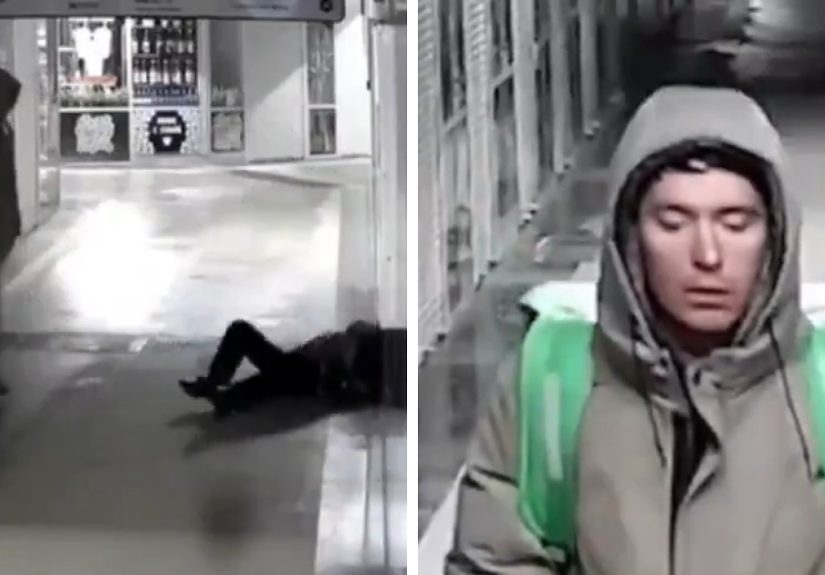
Reports about CCTV footage from Novosibirsk, Russia, showed a delivery worker allegedly carrying out a sudden, unprovoked attack on an older woman in a public underpass. Online commenters quickly reached for dramatic language, including the phrase in this headline, because the clip looked so senseless, so casual, and so cruel that people struggled to explain it in ordinary words. And honestly, that reaction makes sense. When violence appears random, it rattles us in a way that feels bigger than the incident itself.
This is why the footage spread so fast. It was not just about one awful moment. It was about what that moment represented: the collapse of ordinary social rules. We all move through public spaces with a basic, mostly unspoken agreement that strangers will leave each other alone. A sidewalk, a stairwell, a building entrance, a delivery route, a grocery runthese are routine parts of life, not audition tapes for chaos. When that expectation gets shattered on camera, people do not just feel angry. They feel personally offended by reality.
That is also why this story has legs beyond the initial shock value. It taps into bigger conversations about public safety, the role of surveillance video, the trust people place in delivery platforms, and the lasting emotional toll of violent incidents that seem to come out of nowhere. In other words, this is not just clicky internet outrage. It is one of those stories that sticks because it touches a nerve a lot of people already had.
Why This CCTV Story Hit So Hard
Part of the public reaction comes from the plain randomness of the alleged assault. People can process conflict when there is a visible argument, an obvious dispute, or some context that explains why a situation escalated. It does not excuse violence, but it gives the brain a storyline to work with. Here, the narrative people saw was much simpler and much more disturbing: routine encounter, zero warning, sudden aggression.
That kind of footage is especially unsettling because it turns a normal errand into a horror-movie jump cut. One second, someone is just moving through public space. The next, the social contract has evaporated. There is no dramatic soundtrack, no cinematic buildup, no giant flashing sign that says danger ahead. Real life, annoyingly, rarely bothers with those details.
Public reaction also intensified because the victim appeared to be an older woman. When violence targets someone who is visibly more vulnerable, audiences often respond with a sharper kind of anger. It feels less like a fight and more like predation. That distinction matters. People are not simply reacting to a bad act; they are reacting to the perceived imbalance of power in the scene.
The internet, for all its flaws, is actually pretty consistent about one thing: it despises bullies. It may disagree on politics, pizza toppings, and whether socks with sandals are a crime, but it usually recognizes cowardice when it sees it.
What CCTV Can and Cannot Do
Whenever a violent incident goes viral because of surveillance footage, a familiar debate follows. One side says cameras make people safer. The other says cameras mostly help us replay terrible things in high definition after they have already happened. The truth, as usual, is messier.
CCTV can absolutely matter. Video can help identify suspects, verify timelines, and support investigations. It can also deter certain kinds of crime in some settings. But cameras are not magic shields floating above society. They are tools, not force fields. They do not replace visible security, fast police response, smart environmental design, or a public culture that takes violence seriously.
That distinction is important in stories like this one. A camera capturing an attack is useful for accountability, but it is not the same thing as prevention. People often confuse proof with protection. Proof helps after the fact. Protection is what everyone wants before something happens.
In many urban spaces, surveillance works best as part of a broader safety ecosystem: well-lit public areas, clear sightlines, reliable reporting systems, trained responders, and an actual willingness to follow through when someone crosses the line. Without those pieces, cameras can become little more than digital witnesses with excellent memory and terrible reflexes.
Why Random Violence Feels So Psychologically Heavy
Violence is frightening on its own. Random violence carries an extra psychological charge because it attacks predictability. Human beings are excellent at building small everyday routines that help us feel in control. We take the same route to work. We order from the same apps. We walk through familiar entrances. We assume the person carrying a thermal delivery bag is doing delivery-person things, not auditioning for a villain origin story.
When an attack appears motiveless, people cannot file it neatly under “bad breakup,” “bar fight,” or “neighborhood dispute.” It lingers in the brain because it suggests that danger might not announce itself at all. That uncertainty can be deeply unsettling for both victims and viewers.
Trauma experts have long noted that acts of violence can trigger a wide range of responses, from anger and hypervigilance to sleep problems, concentration issues, and intrusive thoughts. Even witnesses and people who repeatedly watch disturbing clips online can feel shaken. That does not mean every person who sees a viral crime video develops lasting trauma. It means the emotional fallout is real, and dismissing it with “well, that happened somewhere else” misses the point.
Our nervous systems are not especially impressed by geography. They respond to threat, vulnerability, and identification. If viewers can imagine themselves, their parent, or their grandparent in the victim’s place, the clip stops being abstract almost immediately.
The Delivery-Worker Angle Makes The Story Even More Complicated
The fact that the suspect was described as a delivery man adds another layer to the outrage. Delivery workers occupy an odd place in modern life: they are strangers, but familiar strangers. They appear at front doors, apartment lobbies, elevators, hallways, and office entrances every single day. They are part of the background rhythm of app-based convenience. We barely notice how much trust is built into that system until a story like this blows it up.
Most delivery workers are simply doing demanding, underpaid, time-sensitive jobs. They are hustling through traffic, racing against app timers, and trying to get through long shifts without drama. That is precisely why stories involving violent or abusive behavior from someone in that role attract so much attention. They violate the expected script twice: first as a public attack, and second as a betrayal of a service role people are conditioned to see as ordinary and transactional.
Major delivery platforms in the United States now emphasize identity checks, trust-and-safety teams, community guidelines, and incident-reporting systems. That is a sign of how seriously companies know consumers take these issues. But safety language on a website is only the beginning. Public trust depends on enforcement, transparency, and quick action when someone behaves in a threatening or violent way.
In other words, “we take this seriously” is not enough anymore. People want to know what happens next. Was the person identified? Was the account removed? Did investigators get the footage? Were local authorities able to act? Safety is not just policy copy. It is the speed and seriousness of the response when something goes wrong.
Why The Internet Uses Extreme Language In Cases Like This
Let us address the headline phrase for a moment. Online commenters labeled the attacker a “terrible psychopath,” which is emotionally understandable but medically sloppy. The internet loves to diagnose people from 18 seconds of footage, and that habit is about as reliable as using a horoscope to file taxes.
What viewers actually mean when they use language like that is simpler: the behavior looked shockingly callous, cruel, and devoid of empathy. That is a moral judgment, not a clinical one. And in a case like this, people are trying to communicate revulsion more than precision.
Still, it is worth being careful. Turning every violent person into a pop-psychology label can muddy the bigger issue, which is accountability. Whether someone acted out of cruelty, rage, thrill-seeking, instability, or some ugly mix of all four, the point is the same: random violence in public is not an internet genre. It is a real safety problem with real consequences.
The Bigger Social Fear Behind The Story
What this incident really exposed was not only one person’s alleged behavior, but a broader fear many people already carry: that public life feels more brittle than it used to. That fear may not always be backed by neat, universal statistics in every place and every year, but it is undeniably part of modern social experience. People talk about being more alert in parking garages, more cautious on transit, more aware of who is behind them on stairs, and more likely to glance at security cameras and think, “At least someone would see it.”
That is not paranoia. It is adaptation. In a world where viral clips constantly remind us that ordinary moments can go sideways, people adjust their habits. They share live locations. They avoid isolated walkways. They wait for elevators rather than taking certain stairwells. They check peepholes before opening doors. They text “home safe” like it is punctuation.
And when a video like this explodes online, it validates those instincts for a lot of viewers. Not in a comforting way, obviously. More in a “great, my anxiety has a press secretary now” kind of way.
What A Better Response Looks Like
If there is any useful takeaway from a story this grim, it is that response matters. First, authorities need to treat random public assaults seriously and quickly. Delayed action sends the worst possible message to both victims and the public. Second, platforms tied to service workers must have reporting and enforcement systems people can actually use. Third, communities need stronger support for victims after violent incidents, including medical care, documentation help, compensation information, and mental health resources.
There is also a human response that matters just as much: believing the person who was harmed, avoiding victim-blaming nonsense, and recognizing that “but it was only a few seconds” is not how trauma works. The duration of an incident does not determine its impact. Sometimes the shortest events leave the longest echo.
That is one reason victim assistance programs and trauma-informed care are so important. Recovery is not just about surviving the moment. It is about feeling safe enough to re-enter ordinary life afterward. For some people, that means medical treatment. For others, it means counseling, community support, or practical help navigating police reports and compensation systems. Usually, it means some combination of all of the above.
Everyday Experiences That Make Stories Like This Feel Uncomfortably Personal
One reason this story spread so aggressively is that it collides with experiences many people already know by heart. Maybe not the exact event, thankfully, but the emotional logic around it. Most adults can recall at least one moment when a public interaction suddenly felt off: the stranger following too closely on the stairs, the person in the parking lot whose energy turned weird without warning, the late-night walk that was supposed to take four minutes but somehow lasted a lifetime in your nervous system.
Women, older adults, and people who move through cities alone often build entire safety rituals around that feeling. Keys in hand. Head on a swivel. Earbuds in, but not really listening. Quick glance behind. Slower step near the entrance. Faster step past the shadowy corner. None of that is melodrama. It is experience translated into routine.
There is also the deeply modern experience of trusting technology just enough to feel calm, but not enough to feel safe. A doorbell camera may record what happened. A phone may capture location data. A delivery app may show a name and profile photo. A building may have CCTV. Yet none of those things can fully erase the vulnerability of being alone in a public or semi-public space when another person decides to act unpredictably.
That gap between documentation and protection is something people feel strongly, even when they do not describe it in those words. It is why so many reactions to violent footage sound like this: “Thank goodness it was caught on camera,” immediately followed by, “But where was everyone?” We want proof, yes. But what we really want is interruption. We want the bad thing stopped before it becomes evidence.
Then there is the aftermath, which people often underestimate. A frightening encounter can turn ordinary habits into emotional obstacle courses. The hallway feels different. The bus stop feels different. The building entrance feels different. Even someone dropping off dinner can feel different. Trauma does not need a dramatic monologue to make itself known. Sometimes it arrives as poor sleep, jumpiness, anger, or the sudden inability to enjoy routines that used to feel harmless.
Older adults can experience this especially sharply because a violent public incident does not just hurt physically or emotionally; it can change confidence. One random act can make a person less willing to go out alone, use transit, shop independently, or trust people in service roles they used to regard as neutral. Families often notice that shift quickly. A parent or grandparent who was once active and independent becomes more hesitant, more watchful, more likely to say, “I think I’ll stay home.”
And let us be honest: the audience carries some of that aftermath too. Viral crime clips do not just inform people. They train them emotionally. Each one becomes another tiny argument for caution, another reason to double-check surroundings, another reminder that bizarre cruelty sometimes shows up in broad daylight wearing ordinary clothes and doing an ordinary job.
That is why this story is more than a piece of internet outrage bait. It reflects a set of lived experiences many readers already understand without needing a footnote. The specifics may belong to one city and one victim, but the unease travels well. Sadly, so does the recognition.
Final Thoughts
The viral outrage surrounding this CCTV case is not hard to understand. People were not merely reacting to a shocking clip. They were reacting to what it symbolized: how fragile everyday safety can feel when one person decides to act with random cruelty. The story struck a nerve because it touched on public vulnerability, the limits of surveillance, the trust built into delivery culture, and the long shadow a violent moment can cast.
That is also why this incident should not be reduced to a cheap “wow, the internet is crazy” headline and then forgotten. Stories like this matter when they push a more serious conversation: how public assaults are handled, how victims are supported, how platforms enforce safety standards, and how communities respond when routine life is violently interrupted.
Because at the end of the day, nobody should have to treat walking through a public space like a surprise boss battle.