Table of Contents >> Show >> Hide
- Jump to a Failure
- Why Rocket Launch Failures Matter (Beyond the Fireball)
- 1) Vanguard TV3 (1957): “Flopnik” and the Birth of Urgency
- 2) Mariner 1 (1962): The Bug That Made Software a Flight-Critical Discipline
- 3) Soyuz 18a (1975): The Abort That Proved Escape Systems Matter
- 4) N1 Moon Rocket (1969): The Explosion That Helped End a Moon Race
- 5) Challenger (1986): When Schedule Beat Physics (Until It Didn’t)
- 6) Ariane 5 Flight 501 (1996): A Reused Software Assumption, Catastrophically Reused
- 7) Columbia (2003): A Launch Debris Problem with a Reentry Consequence
- 8) Falcon 1 (2006–2008): Three Strikes That Helped Create “NewSpace”
- 9) Antares Orb-3 (2014): A Supply-Chain Lesson in Rocket Form
- 10) SpaceX CRS-7 (2015): The “Small Part” That Took Down a Giant
- Patterns Across These Historic Rocket Launch Failures
- Conclusion: Failure as an Engine for Safer Spaceflight
- Experiences: What These Rocket Failures Feel Like (Even If You’re Just Watching)
Rocket launches are basically controlled explosions with a timetable. Most days, the control part wins. On the unforgettable days, the “explosion” part reminds everyone who’s bossand the space industry levels up because of it.
This is a tour of ten historic rocket launch failures (and a couple of “failed to launch” moments that still count), chosen not for spectacle, but for impact: the ones that rewired engineering checklists, reshaped safety culture, changed national priorities, or flipped the business model of getting to orbit.
Why Rocket Launch Failures Matter (Beyond the Fireball)
In aviation, a failure can mean a forced landing. In rocketry, a failure can mean “your vehicle is now a very fast, very expensive weather event.” That harsh reality is exactly why failures drive progress: they force engineers to stop debating hypotheticals and start fixing facts.
The most history-changing mishaps don’t just teach one team one lesson. They change: design rules (materials, redundancy, margins), process (testing, QA, audits), and culture (how dissent is handled, how risk is communicated, how launch decisions get made).
1) Vanguard TV3 (1957): “Flopnik” and the Birth of Urgency
On December 6, 1957, Vanguard Test Vehicle 3 tried to leap into the Space Ageand made it roughly as high as a confident toddler: a few feet. Thrust dropped, the rocket fell back, and the launch pad became a headline.
What failed
A loss of thrust right after liftoff turned the mission into an on-pad explosion. The satellite survived briefly (awkward!), but the attempt did not.
What changed afterward
- National momentum: In the Sputnik era, public confidence matteredand this failure accelerated U.S. urgency.
- Systems thinking: Early launch attempts made it painfully clear that “mostly ready” isn’t a category in rocketry.
- Reliability as strategy: The U.S. doubled down on proving it could do repeatable, credible spaceflightnot just one-off stunts.
Vanguard TV3 didn’t just fail; it helped define what success needed to look like: reproducible, test-driven, and politically undeniable.
2) Mariner 1 (1962): The Bug That Made Software a Flight-Critical Discipline
Mariner 1 was supposed to head to Venus. Instead, it headed toward a career in interpretive danceveering off course enough that range safety destroyed it shortly after launch.
What failed
The post-flight analysis pointed to a pair of issues working together: a guidance/communications problem and a software error in the guidance logic. The upshot: the rocket couldn’t reliably interpret corrections, and the trajectory diverged.
What changed afterward
- Software got “real”: Not “nice-to-have,” not “we’ll patch it later,” but a primary safety-and-mission driver.
- Verification culture: Independent review, validation, and test coverage became more than paperwork.
- Interface discipline: Guidance systems live at the intersection of sensors, math, and assumptionsMariner 1 made that undeniable.
Mariner 1 helped cement a modern truth: rockets don’t just fly on propellantthey fly on correct interpretation of reality, in code, under stress, at speed.
3) Soyuz 18a (1975): The Abort That Proved Escape Systems Matter
One of the most important “failures” in spaceflight history is also a success storybecause the crew survived. On April 5, 1975, a Soyuz mission suffered a serious anomaly during ascent and triggered an abort.
What failed
A stage separation problem during ascent forced the spacecraft to separate and return to Earth on a steep, ballistic trajectory. It was violent, fast, and absolutely not the scenic route.
What changed afterward
- Abort capability became non-negotiable: If you’re launching people, you need a plan for the moment the rocket disagrees.
- Design emphasis on survivability: Capsules, parachutes, and recovery systems aren’t accessoriesthey’re the second half of the vehicle.
- A modern design echo: Today’s crewed spacecraft put crews atop the rocket with escape options for a reason. This is that reason.
The lesson is blunt: the launch vehicle may fail, but the mission can still succeed if “mission” includes “everyone comes home.”
4) N1 Moon Rocket (1969): The Explosion That Helped End a Moon Race
The Soviet N1 was a monster rocket built to chase a lunar dream. On July 3, 1969, one N1 launch ended almost immediately in a catastrophic pad-impact explosionan event so large it became part of the geopolitical story.
What failed
The vehicle lost control shortly after liftoff and crashed back onto the launch complex, detonating an enormous propellant load. It wasn’t just a failure of one component; it was a failure of managing a breathtakingly complex first stage and its engines.
What changed afterward
- Moon-race reality: N1 setbacks helped tilt the odds toward the United States in the race to land humans on the Moon.
- Complexity costs: “More engines” can mean more redundancyor more failure modes. N1 made the trade painfully visible.
- Transparency by physics: Secrecy is hard when your launch pad becomes a landmark from space.
N1 is a reminder that rocketry doesn’t forgive “almost ready.” At lunar scale, systems engineering is not optional; it’s survival.
5) Challenger (1986): When Schedule Beat Physics (Until It Didn’t)
Challenger’s loss 73 seconds after liftoff on January 28, 1986, is one of the most analyzed launch disasters in history. Not because the hardware problem was mysteriousbut because the organizational story was devastatingly familiar.
What failed
The immediate technical cause centered on the solid rocket booster field joint and O-ring sealing performance in unusually cold conditions, allowing hot gases to breach the joint and cascade into structural failure.
What changed afterward
- Safety culture became a headline item: Communication, dissent, and escalation processes moved from “soft skills” to mission-critical.
- Design and process reforms: Joint redesigns, improved acceptance criteria, and deeper scrutiny of “known issues” followed.
- Risk communication: Challenger changed how NASAand the publictalked about the true cost of spaceflight.
Challenger didn’t just change engineering. It changed governance: who can stop a launch, how concerns are documented, and what it means when an organization starts treating anomalies as “normal.”
6) Ariane 5 Flight 501 (1996): A Reused Software Assumption, Catastrophically Reused
Ariane 5 Flight 501 lasted under a minute, yet it became a legendary case study in modern engineeringespecially software engineering. The rocket veered, broke up, and was destroyed after losing guidance.
What failed
The inertial reference system software encountered an exception tied to a value exceeding a limit that made sense for an older flight profile. Redundancy didn’t save it because the backup ran the same software and failed the same way. Two systems, one shared assumption, zero mercy.
What changed afterward
- “Heritage” became a warning label: Reuse is powerfuluntil you reuse the wrong assumptions.
- True diversity in redundancy: Identical backups protect against random hardware faults, not identical software design flaws.
- Exception handling is flight hardware: If your code can throw an error, your rocket can throw itself.
Ariane 5 made a simple point in a dramatic way: software limits aren’t abstract. They’re aerodynamic, explosive, and very expensive.
7) Columbia (2003): A Launch Debris Problem with a Reentry Consequence
Columbia’s STS-107 mission launched on January 16, 2003. About 80 seconds into ascent, foam insulation from the external tank struck the orbiter’s left wing. The crew continued the missionbecause the program had, over time, learned to treat foam shedding as “a thing that happens.”
What failed
The physical initiating event was tied to launch debris impact. The tragic outcome came later: during reentry on February 1, 2003, hot plasma entered through damage to the thermal protection system, leading to the loss of the vehicle and crew.
What changed afterward
- Launch is part of landing: Columbia reinforced that ascent events can be latent failures that only reveal themselves at the end.
- Inspection and repair became central: NASA introduced stronger on-orbit inspection practices and contingency planning.
- Strategic shift: Columbia accelerated the end of the Space Shuttle era and pushed human spaceflight back toward capsule-style architectures.
Columbia’s lesson is uncomfortable but crucial: if you normalize anomalies, eventually you normalize catastrophe.
8) Falcon 1 (2006–2008): Three Strikes That Helped Create “NewSpace”
SpaceX’s first rocket, Falcon 1, didn’t arrive as a polished “heritage” system. It arrived as a start-up’s best attempt to do something brutally difficult with a fraction of the usual budgetand then it failed. Repeatedly. Publicly. And instructively.
What failed
Falcon 1’s early flights included failures tied to issues like leaks and fires, control problems, and (famously) staging dynamics where the first stage could recontact the second stage at separation if timing and residual thrust weren’t handled correctly.
What changed afterward
- Iteration as a strategy: Falcon 1 helped normalize fast learning loops in launch vehicle development.
- Commercial credibility: When Falcon 1 finally reached orbit, it wasn’t just a successit was proof that a private company could build a liquid-fueled orbital rocket.
- Design maturity through failure: Fixes weren’t philosophical; they were hardware, software, and procedures changed under real constraints.
Falcon 1’s story helped change the industry’s imagination. It made “commercial orbital launch” feel less like a novelty and more like a future.
9) Antares Orb-3 (2014): A Supply-Chain Lesson in Rocket Form
On October 28, 2014, an Antares rocket launching the Cygnus Orb-3 cargo mission to the International Space Station failed shortly after liftoff from Wallops. The vehicle was lost, and the pad area suffered damage (thankfully, no injuries).
What failed
Investigation work pointed to an internal failure within an AJ26 engine (a refurbished engine with roots in older designs), triggering the loss of the vehicle.
What changed afterward
- Engine strategy shifted: The incident accelerated changes in engine selection and long-term propulsion planning.
- Program resilience: ISS resupply is a system, not a single rocket. The program adapted with alternate launch arrangements while Antares evolved.
- Supply-chain realism: “Refurbished” can be brilliantor it can hide complexity you pay for later.
Antares Orb-3 underscored a modern truth: reliability isn’t only in your CAD files. It lives in vendors, refurbishment records, and the parts you inherit from someone else’s era.
10) SpaceX CRS-7 (2015): The “Small Part” That Took Down a Giant
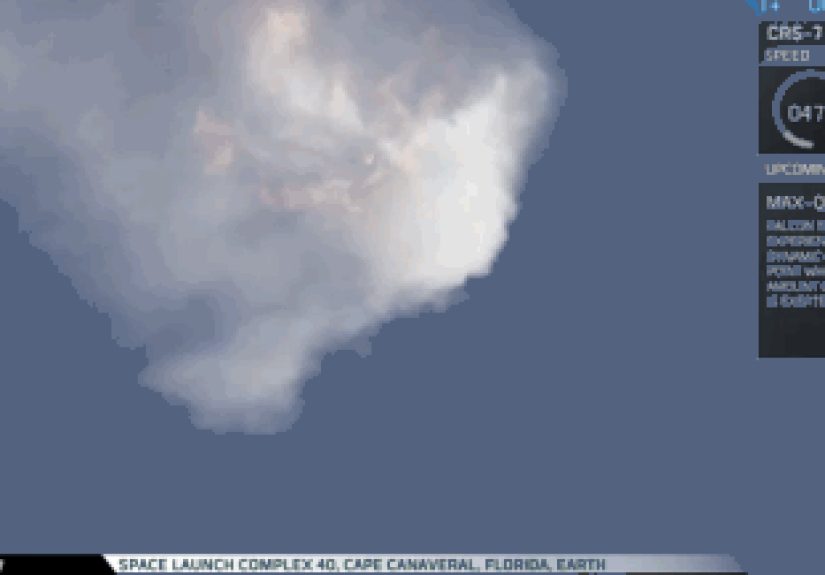
CRS-7 was a Falcon 9 mission carrying cargo to the ISS on June 28, 2015. It failed a little over two minutes after liftoff. The image burned into memory isn’t just the breakupit’s the brutal simplicity of the suspected trigger.
What failed
SpaceX’s public explanation centered on a failure of a strut supporting a high-pressure helium bottle, which then caused a rapid overpressure event. Later reviews emphasized how component selection, safety factors, and verification practices can turn a “minor” part into a mission-ending part.
What changed afterward
- Parts discipline scaled up: In high-performance vehicles, “industrial-grade” and “aerospace-grade” are not interchangeable vibes.
- Testing philosophy tightened: Load testing under realistic conditions and stricter QA on supplier components gained new urgency.
- Commercial space maturity: CRS-7 was a reminder that operational cadence doesn’t eliminate riskit just means you must learn faster.
CRS-7 made a point every launch team eventually learns: rockets fail at the seamsliteral and organizationalwhere assumptions meet reality.
Patterns Across These Historic Rocket Launch Failures
Different countries, decades, fuels, and budgetsyet similar failure themes show up like uninvited guests who know the door code:
- Normalization of deviance: When anomalies become “routine,” you stop seeing the cliff edge until you’re airborne over it.
- Coupled complexity: A rocket is not one system. It’s dozens of systems arguing in real time.
- Redundancy without diversity: Two identical systems can fail identically. (Ariane 5 made that unforgettable.)
- Supply chain is part of design: A component’s pedigree and testing history can matter as much as its drawing.
- Culture is hardware: If warnings can’t travel upward, the vehicle doesn’t have real situational awareness.
The uncomfortable irony is that rocket history is written in both triumph and wreckageand the wreckage often does the teaching.
Conclusion: Failure as an Engine for Safer Spaceflight
If you only remember one thing from these ten stories, make it this: the launch is never “just a launch.” It’s the final exam for thousands of design decisions and human decisionsand the grade is immediate.
From Vanguard’s public stumble to Challenger’s cultural reckoning, from Ariane 5’s software wake-up call to CRS-7’s component-level humility, these failures changed history because they changed what the industry was willing to question, test, and redesign.
Space will always be hard. The goal isn’t to pretend otherwise. The goal is to make sure every hard-earned lesson sticks so the next countdown ends with a bright line in the sky instead of a cautionary tale.
: experiences section
Experiences: What These Rocket Failures Feel Like (Even If You’re Just Watching)
Watching a rocket launch is a strange kind of time travel. You’re seeing cutting-edge engineering in the most ancient human ritual imaginable: a crowd staring at the sky, waiting for fire to mean something. Most launches feel like a promise: a controlled roar, a slow rise, then the vehicle becomes a bright needle and finally a star that’s not supposed to be there. When it goes right, it’s almost suspiciously clean like the universe forgot to be complicated for nine minutes.
A failure flips the emotional physics. The first second is confusionyour brain tries to classify what it saw: “Was that staging?” “Was that a camera cut?” Then comes the delayed comprehension as the plume changes shape, the trajectory looks wrong, or the vehicle disappears into a bloom of light that’s far too wide to be “nominal.” It’s a gut-punch moment because it’s so visually final. In rocketry, you don’t get a graceful emergency landing. You get an instant lesson in energy.
Even from a couch, you can feel why engineers obsess over checklists. Launch audio loopsthose calm, clipped callssound like a ritual of discipline: a way to keep human adrenaline from contaminating decisions. When something breaks, the voice usually doesn’t. The control room shifts into a new mode that feels like a different profession: fewer dreams, more diagnostics. It’s the same reason pilots train for emergencies until it becomes muscle memory. Rocket teams do it too, because panic doesn’t belong anywhere near pressurized tanks and high-frequency vibrations.
There’s also a quieter experience that lingers after the clips stop replaying: the realization that “failure” is rarely one villain. It’s often a chainan assumption here, a tolerance there, a test that didn’t cover a corner case, a meeting where the wrong person had the loudest voice. That’s why these stories become lore. Not because engineers love drama (they mostly love sleep), but because the details matter. “Foam strike at ~80 seconds.” “Exception at ~40 seconds.” “Cold temperature at launch.” Those aren’t trivia; they’re coordinates on a map of how systems break.
If you visit a space museum after learning these histories, the hardware feels different. The engines aren’t just impressivethey’re intimate, like you can almost hear the conversations that happened around them: “What if it vibrates here?” “What if the sensor lies?” “What if we’re wrong?” You start noticing the boring-looking partsthe brackets, fasteners, wiring routesbecause you understand that rockets don’t usually fail in the glamorous places. They fail where something small was trusted too much.
And maybe the most honest experience is this: awe doesn’t disappear after a failure. It becomes more mature. You respect the courage of crews, the weight carried by launch teams, and the humility that space demands. You also appreciate the best kind of optimismthe kind that isn’t blind, but built from evidence, redesigns, and the willingness to say, “Stop. We don’t know enough yet.” That’s how failures change history: they teach us how to keep reaching without pretending the reach is easy.