Table of Contents >> Show >> Hide
- Quick Take: The Top 5 at a Glance
- How BHG Tested Stud Finders (And Why That Matters)
- The 5 Best Stud Finders, Tested by BHG
- How to Choose the Right Stud Finder (So Your Wall Stops Gaslighting You)
- How to Use a Stud Finder Without Starting a Feud With Your Drywall
- Common Stud Finder Problems (And How to Fix Them Fast)
- Safety Notes: Wires, Pipes, and “Please Don’t Drill There” Zones
- FAQ
- Extra: Real-World Experiences That Make You Respect a Stud Finder (500+ Words)
- Bottom Line
Hanging a heavy mirror shouldn’t feel like defusing a bomb. Yet the moment you pick up a drill, your wall suddenly
becomes a mystery novel: Who’s behind the drywallwood studs, metal studs, copper pipes, or a surprise live wire?
A good stud finder turns that suspense story into a straightforward checklist.
Better Homes & Gardens (BHG) put stud finders through real-world wall scenarios, and their winning picks cover the
full spectrum: an easy, highly accurate electronic model, a no-batteries magnetic option, a budget helper, a screen-equipped
scanner for detail lovers, and a model that shines when copper pipes are your biggest fear.
Quick Take: The Top 5 at a Glance
| Pick | Best For | Why It Stands Out | Watch-Out |
|---|---|---|---|
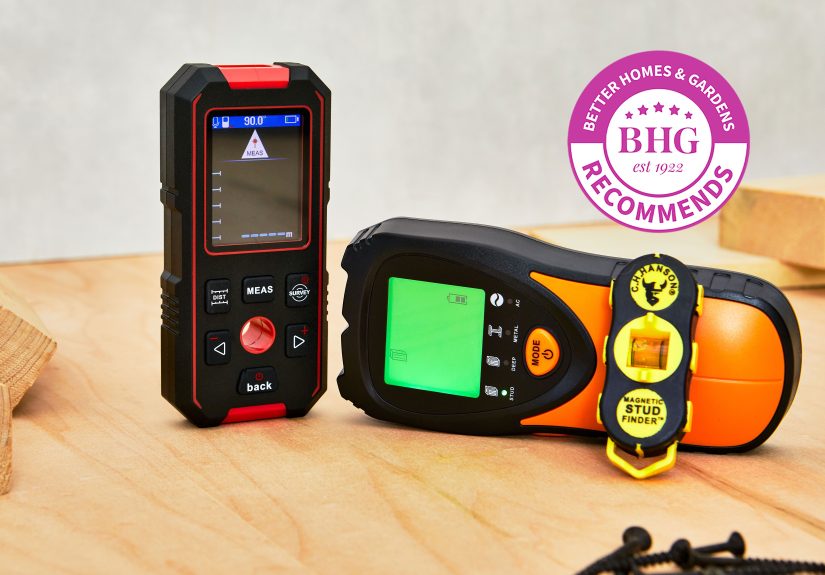
| Franklin Sensors ProSensor M90 (Best Electronic) | Most DIY projects | Fast, accurate stud location; great visibility; finds more than just studs | No live-wire detection |
| CH Hanson 03040 (Best Magnetic) | Simple stud hunting, no batteries | Dead-simple, surprisingly precise for nails/screws | Doesn’t detect wires/pipes; needs patience |
| Craftsman 3/4-Inch Depth Stud Finder (Best Budget) | Occasional use on drywall | Compact, easy, affordable | You mark edges and calculate center yourself |
| Mecurate Stud Finder Wall Scanner (Best with Display) | Detail + safety checks | Digital screen + modes + AC detection | Needs calibration each pass |
| DeWalt 1-1/2 in. Stud Finder (Best for Copper) | Projects where pipes are a concern | Consistent copper detection; no calibration | Finds stud center (not edges) |
How BHG Tested Stud Finders (And Why That Matters)
BHG’s approach wasn’t “wave it near a wall and hope.” They ran each stud finder across multiple wall surfaces and
built test conditions that included common behind-the-wall obstacleswiring, PVC pipe, copper pipeand both wood and
metal studs. That matters because a stud finder can look brilliant on plain drywall and then melt into confusion the
minute it meets plaster or hidden metal hardware.
The result: these five picks aren’t just popularthey’re chosen for performance under varied conditions. Translation:
fewer mystery beeps, fewer false alarms, and fewer “well… I guess that shelf lives on the floor now” moments.
The 5 Best Stud Finders, Tested by BHG
1) Best Electronic: Franklin Sensors ProSensor M90
If you want the “turn it on and immediately feel smarter” experience, this is the one. The ProSensor M90 is built around
multiple sensors and bright indicators, so you’re not relying on a single tiny light that blinks like it’s Morse-coding
your fate. It’s also known for being ready right out of the box without the usual calibration ritual that makes you
stare at the wall like it owes you money.
- Best for: Hanging shelves, mounting curtain rods, anchoring furniture, and general DIY projects.
- Why it wins: Strong accuracy across common wall types and clear feedback that’s easy to interpret.
- Also nice: It can locate more than studs (helpful when you want to avoid pipes).
- Keep in mind: It doesn’t detect live wires, so this isn’t your “electrical safety blanket.”
Practical tip: when you’re marking your stud location, don’t just mark one point like you’re planting a flag on the moon.
Mark a small vertical line. Studs run vertically, and your mounting holes will be happier if you treat the stud like a
zone, not a single magic pixel.
2) Best Magnetic: CH Hanson 03040 Magnetic Stud Finder
This is the minimalist’s stud finder: no batteries, no screens, no “press and hold until the device achieves enlightenment.”
It finds studs by locating the nails or screws fastened into them. That means it can be extremely accuratewhen conditions
are rightbecause fasteners tend to sit near the stud’s centerline.
- Best for: Quick checks on drywall when you just need a reliable stud anchor point.
- Why it wins: Simple, sturdy, and very good at detecting metal fasteners.
- Bonus: Often includes a small levelbecause crooked wall art is a crime against geometry.
- Keep in mind: It won’t detect wires or pipes, and it may take more than one pass to confirm.
Magnetic models are great when you want “quiet confidence.” They’re less great when your wall is full of random metal
(corner bead, brackets, old repairs). If your magnet sticks everywhere, congratulations: you’ve discovered the wall’s
secret hobby of collecting hardware.
3) Best Budget: Craftsman 3/4-Inch Depth Stud Finder
Sometimes you just need a tool that works, fits in a drawer, and doesn’t cost the same as a fancy dinner. This Craftsman
model is a basic electronic stud finder with a modest detection depth that’s well suited for standard drywall projects.
It’s especially handy for renters, new homeowners, or anyone who hangs things twice a year and still calls it “a hobby.”
- Best for: Light-to-medium DIY tasks on drywall (picture frames, small shelves, towel bars).
- Why it wins: Straightforward and surprisingly accurate for the price.
- Keep in mind: To find the stud center, you’ll locate both edges and then mark the midpoint yourself.
This “find both edges” approach isn’t a flawit’s a learning moment. Once you do it a few times, you’ll understand how
studs read on a tool, and you’ll be less likely to trust a single beep that could be caused by a dense patch of drywall mud.
4) Best with Display: Mecurate Stud Finder Wall Scanner
If your ideal tool has a screen, modes, and the vibe of “I do spreadsheets for fun,” the Mecurate wall scanner fits.
A display can reduce confusion because it gives you a clearer sense of what the tool thinks it’s seeing. Many display-style
scanners also include AC detection mode for live wire sensing, which is great for projects near outlets, switches, and
“mystery walls.”
- Best for: Bigger jobs, thicker walls, or anyone who wants extra guidance while scanning.
- Why it wins: Visual feedback + multiple scan modes + AC detection can improve confidence.
- Keep in mind: It typically needs calibration before each pass to read correctly.
Display models shine when the wall is trickyplaster, paneling, or walls with lots of “stuff” behind them. The tradeoff
is procedure: you’ll need to scan carefully, move slowly, and calibrate as instructed.
5) Best for Copper: DeWalt 1-1/2 in. Stud Finder
Some DIY fears are rationallike drilling into a copper pipe and instantly inventing an indoor water feature. This DeWalt
model stands out for consistent copper pipe detection and a no-calibration workflow. It’s also designed to identify stud
centers quickly, which can be convenient when your goal is “put the screw in the safe middle and move on.”
- Best for: Bathrooms, kitchens, laundry rooms, and any wall likely to hide plumbing.
- Why it wins: Reliable copper detection and straightforward operation.
- Keep in mind: It reports stud center rather than both edges, so you get less “stud width” information.
Tip: even when a tool has wire detection, treat it as an alertnot a guarantee. The safest approach is to scan, mark,
verify stud spacing, and then drill carefully (and shallow at first) when you’re near outlets or switches.
How to Choose the Right Stud Finder (So Your Wall Stops Gaslighting You)
Magnetic vs. Electronic: The “Simple” vs. “Feature-Rich” Choice
Magnetic stud finders locate fasteners (nails/screws) attached to studs. They’re affordable, battery-free, and often very
accurateif the wall has consistent fasteners and not a bunch of random metal.
Electronic stud finders detect changes in wall density to infer where a stud begins and ends. They tend to be faster,
can offer edge/center finding, and some add scanning modes for deeper walls and alerts for live AC wiring.
Detection Depth: Match the Tool to Your Wall
Standard drywall jobs rarely need extreme scanning depth. But if you have plaster, thick paneling, tile backer, or layered
walls, a deeper scan mode and a clearer display can reduce “false positives.” If you’re in an older home, it’s worth
prioritizing a tool known to behave well on plaster rather than choosing purely on price.
Edge vs. Center Finding: Why It Affects How Secure Your Mount Is
Studs are not a single point. A typical wall stud is about 1.5 inches wide, and mounting hardware behaves best when you’re
close to the center. Edge-finding lets you mark both sides, then pick a secure centerespecially important for heavy loads
like TVs, cabinets, and floating shelves.
Live Wire Detection: Helpful, But Not a Superpower
Many electronic stud finders can detect live AC voltage, often with a warning icon or tone. That’s useful for planning
around outlets and switches. But no consumer stud finder can promise a wall is “100% safe” to drillwires can be deeper,
shielded, or routed in unexpected ways. When in doubt, use multiple checks and consider a non-contact voltage tester,
especially for electrical-heavy areas.
How to Use a Stud Finder Without Starting a Feud With Your Drywall
-
Start with fresh batteries (if applicable).
Weak batteries can turn readings into interpretive dance. -
Calibrate correctly (for tools that require it).
Place the tool flat on the wall, press/hold as directed, and wait for the “ready” signal before moving. -
Scan slowly and steadily.
Speed-scanning is the DIY version of speed-reading: you might finish quickly, but you won’t know what happened. -
Mark both edges when possible.
If your tool provides edge detection, approach from both directions and mark each edge. -
Verify with spacing.
Studs are commonly spaced 16 inches on center (sometimes 24). If your marks don’t follow a pattern, you may be reading
pipes, wiring, or a patch behind the wall. -
Confirm with a “sanity check.”
A light tap test, a small finishing nail in a hidden spot, or checking near outlets can help confirm you’re on the right track.
If your stud finder is acting dramatic, try these resets: clean the wall surface (dust can interfere), move away from
corners and door frames (extra framing lives there), and re-scan at a slightly different height (blocking and braces can
confuse edge detection).
Common Stud Finder Problems (And How to Fix Them Fast)
“It keeps beeping everywhere.”
You may be scanning over a dense repair, metal corner bead, or a cluster of fasteners. Slow down, re-calibrate (if needed),
and scan vertically along the area to see if it’s a consistent stud-like signal or a localized metal hit.
“It can’t find anything.”
This can happen with thick plaster, lath, or textured walls. Use deep scan mode (if available), try a display-style scanner,
and start the scan on a clear section of wall. If you’re using a magnetic model, remember: it finds fasteners, not the stud
itselfso you may need a wider search pattern.
“My marks don’t line up with 16-inch spacing.”
You might be in a wall section with unusual framing, a doubled stud, blocking, or non-stud objects (pipes/wires). Re-scan
higher or lower. If the pattern becomes consistent, you’ve likely found the true framing layout.
Safety Notes: Wires, Pipes, and “Please Don’t Drill There” Zones
Stud finders are designed to help you avoid expensive surprises, not to guarantee perfection. Treat any “live wire” alert as
a serious warning. Be extra cautious around outlets, light switches, and plumbing walls (kitchens, baths, laundry areas).
When mounting heavy objects, follow manufacturer mounting instructions, use appropriate anchors/screws, and consider professional
help if you suspect complex wiring or plumbing behind the surface.
FAQ
Do I really need a stud finder to hang something heavy?
If it’s heavy enough to hurt someone or damage something when it fallsyes. Anchoring into studs is the safest approach for
TVs, cabinets, shelving, and large mirrors. Drywall anchors have limits, and gravity does not negotiate.
Are magnetic stud finders “better” than electronic ones?
“Better” depends on the job. Magnetic models are simple and reliable for finding fasteners in standard drywall. Electronic
models are usually faster, provide more information, and can offer features like deep scan and wire alerts.
Why do some stud finders need calibration?
Many electronic stud finders “learn” the baseline density of the wall so they can detect changes. If you calibrate over a stud
or over a dense patch, the tool may interpret everything weirdly afterward. (Yes, tools can be moody.)
Extra: Real-World Experiences That Make You Respect a Stud Finder (500+ Words)
Imagine it’s Saturday. You’ve got coffee, confidence, and a brand-new shelf that will “totally take ten minutes.” This is the
exact moment your wall decides to become a puzzle box.
In a typical DIY scenariosay, mounting a floating shelf in a living rooman electronic stud finder like the Franklin Sensors
ProSensor M90 can feel like cheating (in the best way). You glide it across the wall and get immediate, readable feedback.
Instead of interpreting a single blinking light like you’re decoding ancient runes, you can mark a stud zone confidently. The
emotional benefit is real: fewer “are we sure?” pauses, fewer unnecessary holes, and fewer frantic Google searches about drywall
patch kits.
Now switch scenes: you’re hanging a big mirror in a hallway and you grab a magnetic stud finder because it’s quick and doesn’t
need batteries. At first it feels almost too simpleslide, stick, slide, stick. But then you learn the magnetic reality:
it’s only finding what’s metal. If the fasteners are sparse, buried deep, or offset, you may need multiple passes and a wider
sweep. The “experience lesson” here is patience. Magnetic finders are wonderfully honest, but they don’t rush for anyone.
The win is accuracy when you do find that fastenerit often lands you near the stud’s center, which is exactly where you
want to drive a screw for a secure hold.
The budget experience is a different vibe. With the Craftsman 3/4-inch model, you may feel like you’re doing a bit more work:
find the edge, mark it; find the other edge, mark it; then split the difference for center. But that extra step teaches you
what a stud “looks like” on a tool. After a couple projects, you start spotting patterns: how signals change near corners,
how door frames have extra framing, and how textured walls can make scanning slower. It’s like learning to drive a manual
carmore effort, but it builds skill.
When you step into kitchens and bathrooms, the emotional stakes rise. Nobody wants to discover plumbing with a drill bit. That’s
where a “pipe-aware” experience matters. A stud finder that consistently flags copper can change your whole approach: you stop
thinking “Where’s a stud?” and start thinking “Where’s the safe lane?” In real life, that might mean shifting a towel bar
slightly, choosing shorter screws, or moving a mounting bracket a couple inches to avoid a hazard. The best experience here
isn’t just successit’s avoiding a disaster you never have to explain to your future self.
Finally, display-style scanners bring a certain calm when walls are complicated. If you’ve ever tried to find studs in plaster
and felt like the wall was laughing, a screen and multiple modes can be reassuring. The experience becomes more methodical:
calibrate, scan slowly, confirm, scan again. It’s less “guess and drill” and more “measure twice, drill once.” And honestly?
That’s the whole point. A stud finder isn’t just a toolit’s a small plastic device that prevents you from turning home décor
into home damage.