Table of Contents >> Show >> Hide
- What Are the Black Lines on School Buses Called?
- The Real Purpose of School Bus Rub Rails
- Why Are There Multiple Black Lines Instead of Just One?
- Why Are the Rub Rails Black?
- How Rub Rails Fit Into Overall School Bus Safety
- Common Myths About the Black Lines on School Buses
- Why This Tiny Detail Fascinates People
- Experience Related to the Topic: What People Notice After Years Around School Buses
- Conclusion
At first glance, those black lines running along the sides of school buses look like a styling choice someone made in a very practical mood. Not flashy. Not fancy. Just a few dark stripes on a sea of yellow. The kind of design detail most people clock once in third grade and then never think about again.
But here is the fun twist: those black lines are not decorative. They are not there because yellow needed a little contrast, or because school buses were trying to borrow a look from muscle cars. Those lines are actually hard-working safety features called rub rails, and they are part of the reason school buses are built like rolling fortresses with stop signs.
In other words, the black lines are doing real work. They help reinforce the body of the bus, protect side panels, and support the structure in places where impact resistance matters. So yes, the clever reason behind those black lines is simple: they help make school buses safer, stronger, and better able to handle the daily chaos of roads, weather, bumps, scrapes, and the occasional driver who should probably reconsider multitasking.
What Are the Black Lines on School Buses Called?
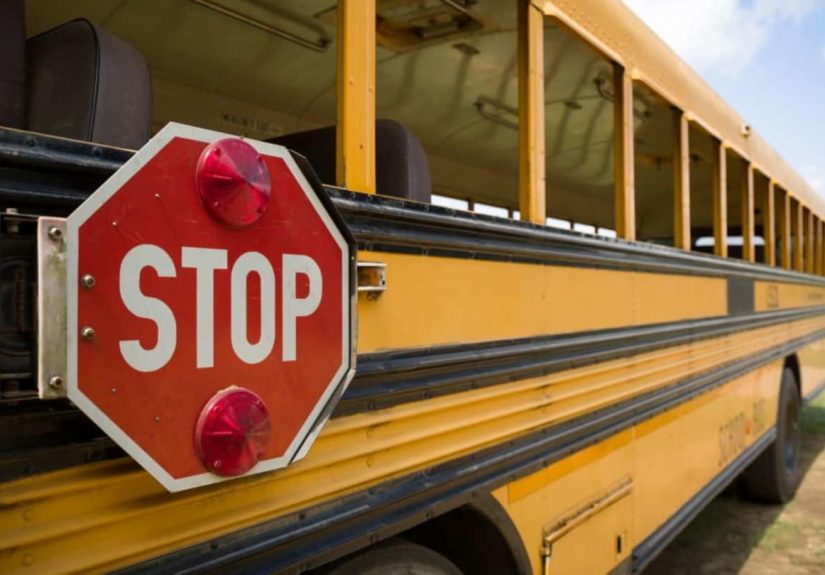
The black lines on the sides of school buses are called rub rails. They are usually metal rails attached to the outside of the bus body. Unlike painted stripes, they are physical components built into the design of the vehicle.
That distinction matters. A painted line can suggest a shape. A rub rail actually changes the structure of the bus. It adds reinforcement to broad side panels that would otherwise take more abuse from minor collisions, side swipes, parking lot bumps, and road wear. Think of rub rails as a school bus’s version of a protective backbone on the outside.
Most people assume the rails are there because black looks sharp against school-bus yellow. And sure, the contrast does make them stand out. But the color is not the main story. The real story is strength.
The Real Purpose of School Bus Rub Rails
If you boil it down to one sentence, the black lines exist to reinforce the bus body and improve protection. That is the heart of it. But their job is easier to understand when you break it into pieces.
They strengthen the side of the bus
School buses have large side panels, long spans of bodywork, and a structure that has to hold up over years of daily use. Rub rails add rigidity across those long sections. That extra reinforcement helps the bus body resist flexing and damage over time.
It is a little like adding support beams to a wall. The wall may already stand on its own, but once you reinforce it properly, it becomes much better at handling force. That matters on a vehicle that spends its life bouncing over potholes, stopping hundreds of times a week, and hauling precious cargo who may or may not be trading fruit snacks like Wall Street traders.
They help protect against side impact and intrusion
Rub rails are also positioned to help reduce damage when something hits the side of the bus. They do not magically turn physics off, of course. But they can help spread force, protect body side panels, and reduce the chance that an impact pushes directly through a weaker section of the bus body.
That is why many bus specifications require rub rails to be attached to body posts and other upright structural members. They are not just hanging out on the surface for appearances. They are tied into the bus’s frame structure in a way that helps the body perform better under stress.
They reduce everyday damage
Not every hit is a major crash. School buses also live rough lives in tight loading zones, crowded depots, narrow neighborhood streets, and winter conditions that are basically “ice, but with attitude.” Rub rails help limit damage from everyday bumps and scrapes.
That makes them useful not only in serious safety terms, but also in maintenance terms. Protecting body panels can mean fewer repairs, less deformation, and better long-term durability. In plain English, the rails help a bus stay tougher for longer.
Why Are There Multiple Black Lines Instead of Just One?
One rail would be better than none, but multiple rub rails do a better job because they reinforce different parts of the bus body. Their placement is not random. On many buses, one rail is positioned near seat level, another near the floor line, and another higher up near the window line. Some specifications and manufacturers call for three rails, while others use four depending on the bus type and design.
That layout creates reinforcement across several key horizontal zones of the body. It helps protect areas where structural strength matters most and where impacts or crushing forces could affect passengers or the bus shell.
So when you see several black lines on a school bus, you are really seeing a layered safety strategy. It is not “three stripes for looks.” It is “multiple rails for reinforcement.” Very different energy.
Why Are the Rub Rails Black?
Now we get to the part that confuses a lot of people. If the real purpose is structural, why paint them black?
The practical answer is that school bus standards in many places specify black trim or black rub rails on the yellow body. That means the black color is often part of standard bus construction and identification rules, not an artistic flourish from a designer who loved bold contrast.
That said, black on yellow does have a visual benefit. It creates a crisp outline that makes important body features easier to distinguish. School buses are already designed for visibility, and the strong contrast of black trim against yellow supports that overall look. Still, it is important to keep the order straight: the rails are there for protection first, and they happen to be black because that is part of the standardized exterior design.
So if you have ever wondered whether those black lines are just glorified pinstripes, the answer is no. They are safety hardware wearing regulation-approved clothing.
How Rub Rails Fit Into Overall School Bus Safety
Rub rails are just one part of a much bigger safety picture. School buses are engineered differently from ordinary passenger vehicles, and that is one reason they remain one of the safest ways for children to travel to and from school.
Large school buses are designed with protective seating, crush-resistant body standards, rollover protection features, and a safety concept often called compartmentalization. That means the seats themselves are built and spaced to help protect passengers during a crash. Add in the bus’s size, visibility, stop-sign arm, flashing lights, mirrors, and reinforced body design, and you start to see why school bus safety is not based on one gadget. It is based on layers.
Rub rails fit neatly into that layered approach. They are not the star of the show, but they are part of the cast that makes the whole performance work. You may never hear a kid say, “Wow, what excellent side-body reinforcement,” but the engineering team certainly hopes the bus has it.
Common Myths About the Black Lines on School Buses
Myth 1: They are just painted stripes
Nope. Rub rails are actual structural components attached to the body of the bus. They are not just surface decoration.
Myth 2: They are mainly there for style
Also no. The main purpose is reinforcement, protection, and durability. The bold black color may look intentional, but the engineering purpose came first.
Myth 3: Every bus has the exact same number and placement
Not necessarily. Different standards, bus types, and manufacturers may use slightly different configurations. But the basic idea remains the same: reinforce the body and protect key side areas.
Myth 4: They are only useful in major crashes
Not true. Rub rails also help with minor impacts, daily wear, side scrapes, and long-term body durability. They earn their keep even when nothing dramatic happens.
Why This Tiny Detail Fascinates People
There is something oddly satisfying about learning that a familiar object has a hidden purpose. The black lines on a school bus are a perfect example. Most of us grow up seeing them without ever asking why they are there. Then one day the question pops up, and suddenly a basic yellow bus becomes a master class in practical design.
That is part of what makes this topic so appealing. It reminds us that good design often looks simple from the outside. The smartest features are not always the flashy ones. Sometimes the genius is tucked into a metal rail running quietly along the side of a bus, doing its job every single day without demanding applause.
And honestly, that feels very on-brand for school transportation. No fireworks. No drama. Just tough, standardized engineering built to keep kids safe while getting them from home to homeroom.
Experience Related to the Topic: What People Notice After Years Around School Buses
If you talk to people who have spent years around school buses, the black lines stop looking like random details pretty quickly. Riders may not know the term rub rails when they are young, but many remember tracing those black bands with their eyes while waiting for the bus on dark mornings. They became part of the visual language of school itself, right up there with squeaky sneakers, overstuffed backpacks, and the mysterious ability of one classmate to lose a pencil before first period every single day.
Parents often experience the bus differently. To them, the school bus is a moving promise: a big yellow vehicle that is supposed to arrive on time, be easy to spot, and carry children safely. The black rails are not something most parents point out by name, but they contribute to the tough, unmistakable look that makes a school bus feel substantial. There is reassurance in that design. It looks built for a purpose because it is.
Drivers and mechanics usually notice even more. Drivers spend enough time around their buses to recognize that nearly every exterior detail exists for a reason. Mirrors are where they are for visibility. Lights flash in a specific sequence. The stop arm is not decoration. And those rub rails? They are part of the bus’s durable shell. Ask a veteran driver about them and you are less likely to get a design lecture than a practical answer: they help protect the body, they matter in daily wear, and they are one more reason the bus can handle rough service year after year.
Mechanics see the topic from the least glamorous but perhaps most convincing angle of all. They know what repeated contact, road vibration, weather exposure, and minor impacts do to large vehicles over time. A bus is not living a gentle life. It is opening and closing, braking and accelerating, flexing over uneven pavement, getting brushed by backpacks, curbs, tree limbs, and the occasional parking-lot miscalculation. In that world, reinforcement is not some theoretical bonus. It is survival. The black rails make sense because buses are working vehicles, not museum pieces.
There is also a memory factor. Many adults can picture the exact bus they rode as kids, right down to the black stripes, the tall seats, and the sound of the folding door. At the time, those rails faded into the background because they were simply part of what a school bus looked like. Learning later that the lines were there for safety and structure gives those memories a new dimension. Suddenly, a detail you ignored for years turns out to have been pulling real weight the whole time.
That is what makes this little piece of school-bus design so memorable. It connects engineering with everyday life. A child sees stripes. A mechanic sees reinforcement. A driver sees durability. A parent sees security. All of them are looking at the same black lines, but each perspective reveals a different part of the story. And once you know what rub rails actually do, it becomes almost impossible to see a school bus the old way again.
Conclusion
The clever reason behind those black lines on the sides of school buses is not style. It is smart engineering. Those lines are rub rails, and they help reinforce the body, protect side panels, support key structural areas, and contribute to the bus’s overall safety and durability.
That may not sound as flashy as some urban legend about secret design codes, but the truth is better. It is real, practical, and quietly brilliant. The next time you spot a school bus rolling by, you will know those black lines are not just there to look official. They are there because the bus was built to do a serious job well.