Table of Contents >> Show >> Hide
- What Is the Interstellar Shifting Method?
- Is Reality Shifting Actually Real?
- Why the Interstellar Method Feels So Powerful
- How to Do the Interstellar Shifting Method
- Step 1: Set your intention
- Step 2: Make your environment boring in the best possible way
- Step 3: Relax your body from head to toe
- Step 4: Slow your breathing
- Step 5: Build the interstellar scene
- Step 6: Link the journey to your desired reality
- Step 7: Use affirmations sparingly
- Step 8: Let go of control
- Step 9: Sleep, dream, or journal afterward
- Common “Shifting Symptoms” and What They Usually Mean
- Mistakes That Make the Method Harder
- How to Practice Reality Shifting More Safely
- Does the Interstellar Method Actually Work?
- Experiences Related to the Interstellar Shifting Method
- Final Thoughts
Editor’s note: This guide approaches reality shifting as a dream-adjacent visualization practice. There is no scientific proof that people literally move to alternate universes, but many of the techniques used in shifting communities overlap with real relaxation, meditation, guided imagery, and lucid-dream routines.
If the internet has taught us anything, it is this: give human beings a pillow, a playlist, and a little existential curiosity, and we will absolutely try to leave Earth without paying for rocket fuel. That, in a nutshell, is part of the appeal behind the Interstellar shifting method, a space-themed version of reality shifting that blends visualization, affirmations, relaxation, and sleep.
For some people, shifting feels spiritual. For others, it feels like creative meditation with better special effects. And for a growing number of curious beginners, the big question is simple: how do you shift realities without turning bedtime into a three-hour audition for a sci-fi movie?
This guide gives you a grounded, practical answer. You will learn what the Interstellar shifting method is, why it can feel so intense, how to try it step by step, what experiences people commonly report, and how to keep the practice safe, calm, and sleep-friendly. In other words, we are aiming for cosmic vibes without chaotic side effects.
What Is the Interstellar Shifting Method?
The Interstellar shifting method is a sleep-based shifting method built around one big idea: you imagine yourself traveling through space, stars, light, or a cosmic corridor until you arrive in your desired reality. Some people picture floating through a galaxy. Others imagine a spaceship, a portal, or a glowing path lined with stars. The theme changes, but the structure stays pretty consistent.
Most versions of the method include:
- deep relaxation or body scanning
- slow breathing or counting
- visualization of space, motion, or a journey
- affirmations about reaching a desired reality
- a drowsy transition into sleep or a dream-like state
In plain English, it is a guided imagination routine dressed in celestial clothing. Think meditation, but make it dramatic. Think bedtime, but with stars.
Is Reality Shifting Actually Real?
Here is the grounded answer: there is no scientific evidence that people can literally shift to parallel universes or physically move their consciousness into another reality. That claim belongs to belief, personal interpretation, or online culture rather than established science.
What science does support is that the human mind can create extremely vivid inner experiences. Guided imagery can feel immersive. Meditation can change your sense of focus. Sleep-onset states can produce floating sensations, heavy limbs, vivid mental scenes, and unusual body awareness. Lucid dreams can feel startlingly real. Sleep paralysis and false awakenings can blur the line between dream and waking experience. So when people describe shifting as powerful, emotional, cinematic, or “more real than expected,” that part is not hard to understand.
In other words, you do not need literal multiverse travel to explain why the Interstellar method can feel intense. Your brain already comes with a ridiculously impressive built-in projector.
Why the Interstellar Method Feels So Powerful
1. It uses visualization, which gives the mind a job
Many people fall asleep badly because their brains decide bedtime is the perfect hour to replay awkward conversations from 2017. Visualization interrupts that loop. Instead of free-floating stress, you give your mind a specific scene: stars, motion, light, arrival, calm. That structure can make the experience feel focused rather than random.
2. It borrows from relaxation techniques
Breathwork, muscle relaxation, body scans, and guided imagery are common in sleep and stress-reduction routines. The Interstellar method works best when you are not forcing anything. The body softens, breathing slows, and attention narrows. That can create a strong sense of “something is happening,” even when what is happening is simply that your nervous system is finally unclenching.
3. It happens near the edge of sleep
The most vivid shifting attempts often happen in that fuzzy borderland between awake and asleep. This is where people may notice tingling, heaviness, floating, spinning, flashes of imagery, or the odd feeling that their room is both there and not there. That does not mean magic has clocked in for its night shift. It usually means you are entering a dream-adjacent state.
4. Expectation amplifies experience
If you prepare carefully, script your scenario, repeat affirmations, and spend ten minutes telling yourself that you are about to step into another reality, your mind becomes more likely to notice every sensation and interpret it as meaningful. That is not fake. It is how attention works. The brain loves a theme, and the Interstellar method gives it one.
How to Do the Interstellar Shifting Method
If you want to try the Interstellar shifting method for beginners, use this version. It is simple, grounded, and less likely to turn bedtime into a performance review.
Step 1: Set your intention
Before bed, decide where you want your mind to go. Your desired reality can be fictional, symbolic, or personal. Keep it clear. You do not need a 42-page script unless that makes you happy. A few details are enough: where you are, who is there, how you feel, and what makes this reality appealing.
Step 2: Make your environment boring in the best possible way
Dim the lights. Put your phone away. Get physically comfortable. If your room feels like a nightclub, your brain may choose “alert mode” over “cosmic glide mode.” A quiet, dark, cool environment is your friend.
Step 3: Relax your body from head to toe
Lie down and release tension a little at a time. Unclench your jaw. Drop your shoulders. Loosen your hands. Let your legs feel heavy. If you rush this part, the rest of the method tends to wobble. A relaxed body makes visualization easier.
Step 4: Slow your breathing
Breathe in gently and out slowly. You can count your breaths if you like. A simple rhythm works well: inhale for four, exhale for six, then repeat. Keep it comfortable. You are not trying to win a breathing competition.
Step 5: Build the interstellar scene
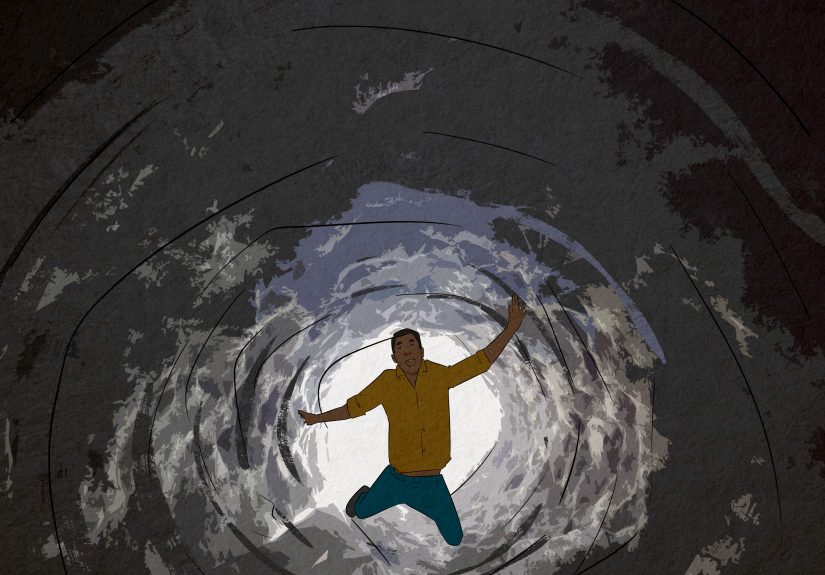
Now imagine yourself suspended in a dark, peaceful sky. Stars glow around you. A path of light opens ahead. You drift forward without effort. Maybe you pass planets, constellations, or a silver doorway floating in space. The goal is not visual perfection. The goal is steady immersion.
Step 6: Link the journey to your desired reality
As you move through the scene, connect it to where you want to arrive. Maybe each star represents a layer of distance between your current reality and the place you want to experience. Maybe a spacecraft carries you there. Maybe a final door opens onto a room, a campus, a city, or a person you want to meet. Keep it emotionally calm and clear.
Step 7: Use affirmations sparingly
Good affirmations feel steady, not frantic. Try phrases like:
- “I am calm, safe, and open to the experience.”
- “I am getting closer to my desired reality.”
- “My mind is relaxed, focused, and ready to dream.”
- “I allow the experience to happen naturally.”
Avoid turning affirmations into a speed run. Whispering “I am shifting” 900 times like you are trying to summon customer service from the cosmos is usually not more effective.
Step 8: Let go of control
This is where many people sabotage themselves. They keep checking: Am I there yet? Is this working? Was that a symptom? Was that my leg or the multiverse? Relax. The Interstellar method tends to work better when you stop monitoring it like a stock ticker and simply allow yourself to drift.
Step 9: Sleep, dream, or journal afterward
You may fall asleep normally. You may have vivid dreams. You may feel nothing dramatic at all. That is fine. If you notice an intense dream, a lucid moment, a strong image, or a false awakening, write it down when you wake up. A journal helps you track patterns without exaggerating them.
Common “Shifting Symptoms” and What They Usually Mean
People in reality shifting communities often report symptoms before they believe they have shifted. These may include:
- tingling or buzzing sensations
- heaviness in the limbs
- a floating or spinning feeling
- hearing voices, sounds, or distant music
- rapid imagery behind closed eyes
- the sense that the bed or room is changing
These experiences can feel huge, but they are not necessarily proof of literal reality travel. They often match ordinary sleep-onset sensations, vivid imagery, dream-entry experiences, or the strange overlap between REM sleep and waking awareness. The more tired, focused, or emotionally invested you are, the more vivid they may feel.
Mistakes That Make the Method Harder
Trying too hard
Effort matters at the beginning, not at the end. The method needs setup, but the experience itself depends on surrender. If you are mentally gripping the steering wheel, you are less likely to drift into anything immersive.
Practicing only when desperate
If you attempt the Interstellar method only on nights when you are stressed, panicky, or angry, your body may associate it with pressure rather than calm. Practice it as a relaxing ritual, not an emergency exit.
Destroying your sleep schedule
Some people chase reality shifting by intentionally interrupting sleep or staying up too late. That can backfire. Poor sleep can increase strange experiences, yes, but it can also increase stress, exhaustion, and confusion. That is not exactly premium stargate energy.
Treating every sensation as proof
Curiosity is useful. Over-interpretation is exhausting. Tingling is tingling. A vivid dream is a vivid dream. You do not need to inflate every eyelid flutter into a cosmic memo.
How to Practice Reality Shifting More Safely
If you want to explore how to shift realities without making yourself miserable, keep these rules in mind:
- prioritize sleep quality over dramatic results
- stop if the practice increases anxiety or leaves you feeling detached
- avoid using shifting as your only escape from real-life problems
- do not confuse dreams, sleep paralysis, or false awakenings with proof of danger
- talk to a licensed mental health professional if you start feeling persistently unreal, disconnected, or distressed
The healthiest version of the Interstellar shifting method is creative, calming, and voluntary. It should feel like a ritual, not a compulsion. If it starts harming your sleep or mental balance, that is your cue to step back and re-ground.
Does the Interstellar Method Actually Work?
That depends on what you mean by “work.” If you mean, “Can it help me relax, focus, daydream vividly, or drift into a dream-like state?” then yes, it absolutely can. If you mean, “Can science confirm that I literally traveled to another dimension?” then no, not at this time.
For many people, the value of the Interstellar shifting method is not proof. It is experience. It offers a structured way to use imagination, emotion, and bedtime calm to enter a rich inner world. Even when nothing dramatic happens, the routine can still function as a form of sleep meditation, guided imagery, or narrative visualization.
That may sound less flashy than “I boarded a quantum express to another timeline,” but honestly, better sleep and a calmer mind are not exactly disappointing prizes.
Experiences Related to the Interstellar Shifting Method
The experiences below are the kinds of reports people commonly share around the Interstellar shifting method. They are useful because they show how different the practice can feel from one person to the next. They are not scientific proof of literal shifting. Instead, they reflect the mix of visualization, expectation, dream imagery, emotion, and sleep-state weirdness that makes this topic so fascinating.
One common experience is the “slow launch.” A person lies down, starts visualizing stars, and feels nothing special for ten minutes. Then suddenly their body feels very heavy, almost glued to the bed, while their mental picture becomes sharper. They may feel as if they are floating forward even though they know they are physically still. Some describe this as the exact moment they are “leaving” their current reality. A more grounded interpretation is that they are entering a drowsy, deeply relaxed state where body awareness changes and imagination becomes more immersive. Either way, the sensation can be surprisingly strong.
Another common report is the “almost there” experience. Someone practices the method, sees flashes of bright imagery, hears faint voices or background sounds, and then snaps awake because they get too excited. This is the bedtime equivalent of opening the oven every 30 seconds to check whether the cookies are done. The person often walks away convinced they were close to shifting, and that belief can make the next attempt feel even more charged. In practical terms, this kind of experience usually means the mind was balancing on the edge of sleep but got pulled back by alertness and adrenaline.
Some people report a vivid dream that feels connected to their desired reality. They may dream about the place they scripted, meet familiar characters, or experience a scene that feels emotionally meaningful. When they wake up, they are unsure whether they shifted, lucid dreamed, or simply had a very immersive dream influenced by their pre-sleep focus. This may actually be one of the most understandable outcomes of the Interstellar method. When you spend time before bed visualizing a specific setting, the sleeping mind may pick up those details and continue the story in dream form. It can feel magical, but it also makes perfect sense.
Then there are the frustrating experiences. A person tries the method for a week and mostly gets distracted, itchy, annoyed, or sleepy in a very unromantic way. They wonder whether they are “bad” at shifting. Usually, they are not. They are just human. Some nights the mind is receptive, and some nights it is a raccoon rummaging through mental trash cans at full speed. In many cases, the best results come when the person stops chasing fireworks and starts treating the Interstellar method as a calming routine. Ironically, the less theatrical the expectation, the more natural the experience often becomes.
Finally, a smaller group reports intense experiences such as false awakenings, sleep paralysis, or an eerie sense that their room changed around them. These moments can be deeply convincing. They can also be unsettling. If that happens, grounding matters more than lore. Notice your breathing, wiggle your fingers or toes if you can, turn on a light once fully awake, and remind yourself that unusual sleep experiences can happen during transitions in and out of REM sleep. Mystery may be part of the appeal, but feeling safe is more important than chasing a dramatic story.
Final Thoughts
The Interstellar shifting method sits at the crossroads of imagination, sleep, meditation, internet culture, and human curiosity. That is a lot of traffic for one little bedtime ritual. But maybe that is why people love it. It gives shape to a wish many people quietly carry: the wish to step outside ordinary life, even for a moment, and enter a place that feels more beautiful, meaningful, or under their control.
If you want to try it, do it with curiosity, creativity, and a little skepticism in your pocket. Use the method as a tool for visualization, calm, and dream exploration. Protect your sleep. Stay grounded. And remember: sometimes the most interesting reality shift is not escaping your life, but learning how to guide your mind more gently within it.