Table of Contents >> Show >> Hide
- What an EpiPen isand why timing matters more than almost anything
- The decade-long price climb that made EpiPen a household name
- So who is “the maker,” exactly?
- How a cheap medicine becomes an expensive “must-carry” product
- Regulators, lawsuits, and the consequences of pushing too far
- The collateral damage: families, schools, and “expiration-date anxiety”
- Where things stand now: more options, new innovations, and the same old distrust
- Practical ways patients can reduce risk (without pretending the burden should be on them)
- Experiences from the front lines (what “sticker shock” looks like in real life)
- Final takeaway: the needle isn’t the pointthe power is
The EpiPen is supposed to be boring. It’s not a lifestyle product, not a luxury item, not something you “treat yourself” to.
It’s an emergency toolone job, one moment, zero drama. And yet, for years in the United States, EpiPen became famous for
something that had nothing to do with medicine and everything to do with money: the price.
If you’ve ever watched someone scramble to refill an expired two-pack before a school trip, or seen a parent do the mental
math between rent and “just in case,” you already know the punchline. The joke isn’t funny. The system is.
This is the story of how a lifesaving drug-device combo turned into a case study in modern American drug pricingwhere
“the maker” isn’t just one company, the sticker price isn’t the real price, and patients too often become the shock absorber
for a very profitable supply chain.
What an EpiPen isand why timing matters more than almost anything
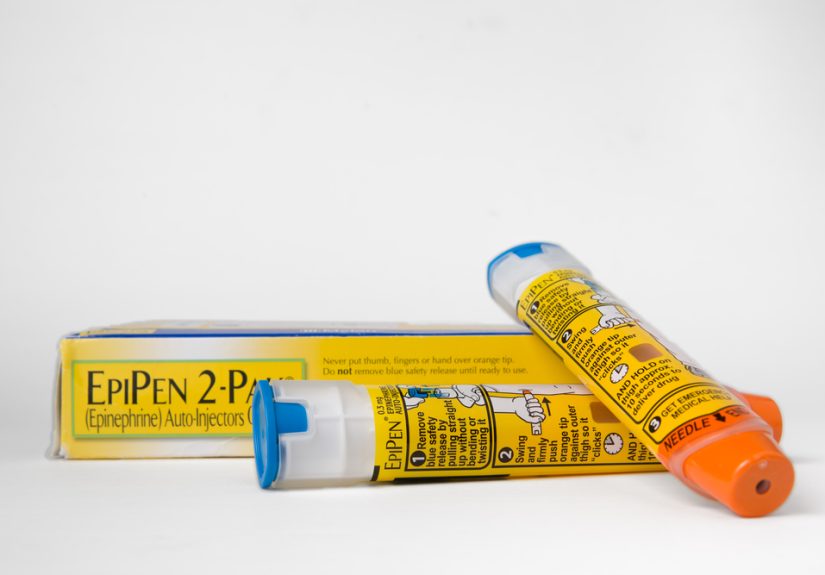
An EpiPen is an epinephrine auto-injector used for severe allergic reactions (anaphylaxis). Epinephrine works fast to open
airways, raise blood pressure, and reverse dangerous symptoms while help is on the way. In real life, it’s often carried in
backpacks, glove compartments, nurse’s offices, purses, and sports bagsbecause allergic reactions don’t schedule appointments.
The key detail for understanding the EpiPen controversy is this: it’s not just a drug. It’s a drug plus a device designed
for people to use under stresssometimes by someone who has never done it before. That design matters. So does safety.
But none of that explains why the price story became so outrageous.
The decade-long price climb that made EpiPen a household name
By the mid-2010s, the list price for a two-pack of EpiPens had soared over the span of about a decadean increase so steep
it triggered congressional scrutiny, wall-to-wall media coverage, and late-night monologues. When politicians from both
parties start agreeing on anything, you know the receipt is ugly.
The “two-pack” reality: safety logic meets wallet panic
EpiPens are commonly sold as two-packs. Clinically, having a second dose available can be important if symptoms return
or the first dose doesn’t fully control the reaction before emergency care. Economically, though, packaging as a two-pack
means the checkout pain arrives as a lump sumexactly the kind of surprise that turns “I should refill this” into
“I’ll do it next month.” And in anaphylaxis, “next month” is not a strategy.
List price vs. what people actually pay: the pricing mirage
The number that sparked outrage was typically the list pricethe sticker price before insurance, coupons, or rebates.
Some insured patients paid far less. Othersespecially those with high-deductible plans, no insurance, or coverage that treated
EpiPen as non-preferredgot hammered. The public conversation often sounded like this:
“It costs $600!” “No, it doesn’t!” “Tell that to my pharmacy receipt!”
All three statements can be true at once. That’s the magic trick of U.S. drug pricing: a product can be “discounted” in ways
that benefit middlemen, while still being unaffordable at the exact moment a patient needs to pick it up.
So who is “the maker,” exactly?
People say “the maker of EpiPen,” but the reality is more like a relay race.
For years, Mylan was the company most associated with EpiPenmarketing, distribution, and pricing strategy.
Later, Mylan became part of Viatris after a major corporate combination. Meanwhile, manufacturing of the device and product
has involved other entities, including a well-known large pharmaceutical manufacturer.
This matters because it explains how accountability gets blurry. When patients are angry, they’re not usually mad at
the concept of manufacturing quality systems or distribution logistics. They’re mad that a must-have emergency product
is priced like a premium gadget. But in a multi-player system, each player can point to another and say,
“Don’t look at uswe’re just one link in the chain.”
How a cheap medicine becomes an expensive “must-carry” product
Epinephrine itself is not new. The shocking part wasn’t that innovation cost money; it was that the price behavior looked
like what happens when competition is weak, demand is inelastic, and the product is framed as non-optional.
(A lifeboat is always a great business, if you’re allowed to charge for the oars separately.)
The device isn’t free, but the markup isn’t explained by plastic alone
Auto-injectors have real costs: engineering, manufacturing controls, testing, training materials, replacements,
and quality oversight. They also face recalls and production constraints when quality problems appearbecause a device that
might fail at the worst moment is not acceptable. But those realities don’t automatically justify massive list price hikes.
They explain why this market is complicated, not why it’s allowed to behave like a monopoly with a megaphone.
The “drug channel”: PBMs, rebates, and the incentive to raise the sticker price
One of the most misunderstood parts of the EpiPen saga is the role of rebates and middlemen.
Pharmacy benefit managers (PBMs) negotiate deals with drug manufacturers to win placement on insurance formularies.
Those deals can involve rebates that are calculated off the list price. In a system like that, the sticker price can rise
while negotiated discounts rise tooso the manufacturer can keep access, the PBM can claim savings, and the plan can say it
negotiated hard.
But the person at the pharmacy counterespecially someone paying out of pocket or before meeting a deductibleoften pays
based on the inflated sticker price, not the behind-the-scenes net price. It’s like being told there’s a “secret sale,”
but only in a room you’re not allowed to enter.
Competition that struggled to land a clean punch
In normal markets, a dramatic price increase invites competitors. In the epinephrine auto-injector space, competition has
existed, but it has been uneven, delayed, and complicated by device design requirements and regulatory expectations.
Even when new products arrive, they may not instantly become “easy swaps” at pharmacies, and insurance coverage can lag.
Over time, more alternatives and formats have entered the conversationauthorized generics, true generics, and even newer
delivery approaches. That’s progress. But it’s also a reminder that patients spent years waiting for “the market” to do the
thing textbooks promise it will do automatically.
Regulators, lawsuits, and the consequences of pushing too far
Congressional heat: when pricing became a national spectacle
In 2016, congressional investigators publicly examined the dramatic price increases, the lack of transparency in the
pricing ecosystem, and the market conditions that allowed a dominant product to keep raising prices while competition stayed
thin. The hearings didn’t fix the system overnight, but they made something clear: the public was no longer willing to treat
this as “just how it works.”
Government action: Medicaid rebates and legal accountability
The EpiPen story also included serious legal issues beyond public outrage. The U.S. Department of Justice announced a major
settlement involving allegations that EpiPen was misclassified in a way that reduced rebate obligations to Medicaid.
Translation: when the rules are designed to protect taxpayers and patients, “creative labeling” can become extremely expensive
in court.
Antitrust pressure: claims about blocking competition
A separate category of lawsuits and settlements focused on allegations that competition was delayed or suppressedexactly the
kind of behavior that, if proven, turns a high-price product from “unfortunate” into “unlawful.” Some cases have resulted in
settlement payments and continuing legal disputes, reflecting how seriously the system treats alleged efforts to keep cheaper
rivals off the shelf.
The collateral damage: families, schools, and “expiration-date anxiety”
When the price of a critical emergency product rises, people adapt in ways that are perfectly rational and completely unfair:
stretching expiration dates, carrying just one injector instead of two, skipping refills, or hoping a school nurse has a spare.
None of this is about irresponsibility. It’s about a system that turns safety into a subscription fee.
Schools became a major part of the conversation because allergic reactions don’t care about bell schedules. Federal policy
pushed states and schools toward better access to emergency epinephrine, and many districts built programs to keep stock
epinephrine available. Meanwhile, manufacturer-driven school programs increased visibility and accessbut also raised a
reasonable question: why does a lifesaving tool require a patchwork of programs, grants, and favors to be affordable?
Where things stand now: more options, new innovations, and the same old distrust
Compared with the peak outrage years, patients have more pathways today: different brands, generic options, and assistance
programs that can reduce out-of-pocket cost for some families. But the emotional residue remainsbecause once people learn
that the “life-or-death” aisle follows different rules, it’s hard to unlearn.
The market is also evolving. In recent years, regulators have approved new approaches to epinephrine delivery, including
needle-free formats that aim to widen access and reduce hesitation. That’s genuinely exciting innovationespecially for
patients who fear injections or delay treatment. Still, innovation only helps if it’s available, covered, and affordable.
Practical ways patients can reduce risk (without pretending the burden should be on them)
It shouldn’t be a patient’s job to outsmart an entire pricing ecosystem, but until policy catches up, a few practical moves
can help:
-
Ask specifically about alternatives. Clinicians and pharmacists can often discuss different epinephrine
auto-injectors or formats, which may vary in coverage and cost. -
Check coverage before you’re down to your last day. Prior authorizations and formulary rules can take time.
Planning ahead reduces the chance of paying the worst-case price at the worst possible moment. -
Use legitimate assistance channels. Some manufacturers offer savings programs or patient assistance options,
and some states have enacted cost-sharing limits for certain residents. -
Plan for real life. If the injector needs to be in multiple locations (home, school, sports bag), talk with
your care team about a realistic planbecause “just carry it everywhere” sounds simple until you live it.
Experiences from the front lines (what “sticker shock” looks like in real life)
The most revealing “data” in the EpiPen story isn’t a spreadsheet. It’s the moment someone stands at a pharmacy counter,
hears a number, and suddenly has to negotiate with their own safety. Patients describe it as a unique kind of whiplash:
you know the product is essential, you know the risk of going without is real, and yet you’re being asked to treat it like an
optional upgrade. The pharmacist isn’t the villain; they’re the messenger. Still, the message lands hard.
Parents of kids with severe allergies often talk about the calendar as their enemy. There’s the school year, sports season,
summer camp, and family traveland hovering over it all is the expiration date. You replace the two-pack and feel relief for
about five minutes, until you remember you need one at school and one at home, and the “extra” for Grandma’s house is now
expired, and the one that lives in the car is questionable after a brutal hot week. The logistics are exhausting even when
the product is affordable. When it’s expensive, those logistics become a monthly stress test.
School staff experience a different kind of pressure. Many nurses and administrators have described the quiet fear of being
underpreparedknowing that not every student with a severe allergy has been diagnosed, that not every family can afford
multiple devices, and that a field trip can turn an otherwise controlled environment into a chaos generator. Stock epinephrine
policies help, but schools still deal with budgets, training, and the awkward reality that they’re being asked to patch a
healthcare affordability problem with fundraiser-level resources.
Teenagers and college students, meanwhile, often describe the social side of it: carrying an injector can feel like carrying
a label. Some keep it visible because they want friends to know where it is. Others hide it because they don’t want to be
“the allergy person.” Add a high price tag, and the psychology gets worsepeople may hesitate to bring it to casual outings
because they don’t want to lose it, damage it, or leave it behind. The product becomes precious in the wrong way.
It’s supposed to be used when needed, not treated like a collectible.
Clinicians see the downstream effects in conversations that should never happen in exam rooms:
“Can I just have one injector this year?” “Can I keep using the old one?” “What if I only refill it when I travel?”
These aren’t reckless patients. These are people trying to make imperfect choices in a system that makes safety feel
financially conditional. The “best practice” answer is straightforward. The real-life answer is constrained by price.
Across all these stories, the common thread is not ignoranceit’s adaptation. People become experts in insurance jargon,
pharmacy timing, and workaround strategies. They trade tips in parent groups and allergy forums. They learn which pharmacy is
more helpful, which plan is more restrictive, which month is better to refill, and how to argue politely but persistently.
If that sounds like a lot of labor, it is. And it’s labor patients shouldn’t have to do for a product designed for
emergencies.
Final takeaway: the needle isn’t the pointthe power is
The EpiPen saga is often summarized as “a company raised prices.” But the deeper lesson is that the U.S. healthcare pricing
ecosystem can reward high sticker prices, tolerate limited competition, and leave patients to navigate the mess during
emergencies and deadlines. Even when reforms, settlements, and new competitors appear, the trust doesn’t bounce back quickly
because trust is harder to manufacture than plastic.
Patients don’t want drama. They want an affordable emergency device that works, is available, and doesn’t require a
part-time job in paperwork. In a country that can land robots on Mars, “reasonable access to epinephrine” shouldn’t be a
heroic quest. It should be boring. Gloriously, lifesavingly boring.