Table of Contents >> Show >> Hide
- What’s the “Amazon Math Problem” Everyone Shares?
- Why This Puzzle Became Interview Folklore
- How to Solve the Hanging Cable Problem
- So… Does Amazon Actually Ask This in Interviews?
- What Interviewers Actually Learn From a Puzzle Like This
- How to Handle a Surprise Math Puzzle in Any Interview
- Conclusion
- Candidate Experiences With the “Amazon Math Problem” (And Similar Puzzles)
Every so often, the internet discovers a “real interview question” that sounds like it was designed by a mischievous
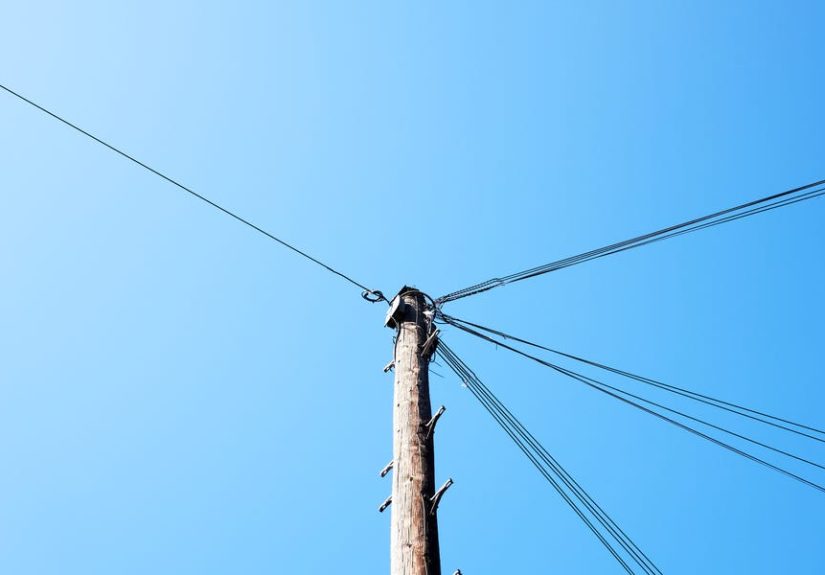
math professor who owns a stopwatch and drinks espresso for fun. This time, the legend comes with two telephone poles,
an 80-meter cable, and a deceptively simple question: How far apart are the poles?
The twist? The puzzle is usually framed as something Amazon supposedly asks job applicants to solve on the spot.
Whether or not it actually appears in an Amazon interview loop, the problem is a perfect example of why “math interview questions”
can be less about crunching numbers and more about how you think when the room goes quiet and someone slides you a marker.
What’s the “Amazon Math Problem” Everyone Shares?
Here’s the viral version, often called the hanging cable problem:
A cable of 80 meters hangs from the tops of two poles, each 50 meters tall.
Find the distance between the poles (to one decimal place) if the lowest point of the cable is:
- 20 meters above the ground
- 10 meters above the ground
On paper, it reads like a calm geometry question. In real life, it’s the kind of prompt that makes people suddenly forget
what numbers are, what poles are, and whether they’ve always been bad at math (spoiler: you haven’t).
Why This Puzzle Became Interview Folklore
1) It tests “constraint thinking” before “calculator thinking”
Strong candidates don’t sprint into equations. They check whether the situation is even physically possible. This puzzle rewards
the person who pauses, sketches, and asks, “Wait… can this cable even do that?”
2) It’s secretly about a real engineering curve
A freely hanging cable forms a catenary curve, not a perfect V-shape and not a neat parabola. That word alone
makes the puzzle sound fancybut the core idea is simple: gravity pulls the cable into the shape that balances tension and weight.
3) It creates a “gotcha” momentwithout being mean (usually)
The 10-meter case looks like “more sag, more distance,” but it’s actually a trapdoor. If you spot the constraint, you can solve it
with logic and basic geometryno heavy math required.
How to Solve the Hanging Cable Problem
Step 1: Turn the story into lengths you can compare
The poles are 50 meters tall. The cable is 80 meters long. The cable is symmetric, so it helps to think in halves:
from the top of one pole to the lowest point is half the cable, or 40 meters.
Now compare that 40-meter half-cable to the vertical drop from the top of the pole down to the lowest point.
That one comparison basically runs the whole show.
Case 1: Lowest point is 10 meters above the ground
If the lowest point is 10 meters high, the vertical drop from the top of the pole (50 m) to the lowest point (10 m) is:
50 − 10 = 40 meters
Here’s the key: the shortest possible path between two points is a straight line.
So the cable segment from the top of the pole to the lowest point must be at least the straight-line distance between those points.
But that straight-line distance is already 40 metersand we only have 40 meters of cable for that half.
That means there is zero extra length available for any horizontal separation.
In plain English: the cable uses its entire 40 meters just to go straight down 40 meters.
There’s no cable left to travel sideways.
So the only way this can happen is if the poles are 0.0 meters apartcoincident at the same point (or, if you prefer,
“touching,” “stacked,” or “basically the same pole wearing two hats”).
Answer (10 m case): 0.0 meters
Case 2: Lowest point is 20 meters above the ground
Now the lowest point is 20 meters high, so the vertical drop is:
50 − 20 = 30 meters
Each half of the cable is still 40 meters long, but the vertical drop is only 30 meters, so we have room for horizontal distance.
This is where the puzzle shifts from “spot the constraint” to “model the curve.”
If the cable were a perfectly straight V (two straight segments meeting at the bottom), you could estimate the distance using
the Pythagorean theorem. That approximation gives a distance a bit above 50 meters. But a real hanging cable is not a sharp V;
it’s a smooth curve.
The standard model for a hanging cable under its own weight is a catenary. Without drowning you in calculus,
here’s the idea: the catenary has a parameter that controls how “wide” it is, and you can use two facts:
- The cable rises from the lowest point up to the top of the pole by 30 meters.
- The half-length of the cable is 40 meters.
Solving the catenary equations for this setup produces a distance between the poles of about 45.4 meters
(to one decimal place). That’s the classic published result you’ll see in serious walkthroughs of the problem.
Answer (20 m case): 45.4 meters
If you’re thinking, “Wait, why is the catenary distance smaller than the sharp-V estimate?”great instinct.
A sharp V wastes length in a way a smooth curve doesn’t. The catenary distributes curvature so the same 80 meters can’t stretch
as far horizontally as the straight-segment fantasy suggests.
So… Does Amazon Actually Ask This in Interviews?
“Supposedly” is doing a lot of work in the titleand it should. Amazon’s public interview resources focus heavily on
structured interviews, the interview loop, and evaluating candidates against
Leadership Principles. For technical roles, Amazon also highlights core areas like data structures,
algorithms, and system design rather than “gotcha math riddles.”
That doesn’t mean no one at a large company has ever asked a puzzle. Big organizations contain multitudesteams, interviewers,
eras, and habits. But it’s safer (and more accurate) to treat this question as interview folklore:
a viral puzzle that captures how interviews feel, even if it isn’t standard practice everywhere.
It’s also worth noting that many employers have publicly criticized brainteasers as weak predictors of job performance,
shifting toward structured interviews and job-relevant assessments. In other words: even when puzzles show up, they’re usually
a side dish, not the main course.
What Interviewers Actually Learn From a Puzzle Like This
They’re watching your process
Do you clarify what “center cable is 20 meters off the ground” means? Do you draw a diagram? Do you notice symmetry?
Do you check whether the numbers force an extreme case (like 0.0 meters)?
They’re checking how you handle uncertainty
The 20-meter case quietly assumes a catenary model. A strong candidate might say:
“If we assume a freely hanging cable (catenary), the distance is about 45.4 meters. If we approximate it as two straight segments,
we get a different value. Which model do you want?”
That’s not “talking your way out of it.” That’s demonstrating real-world judgmentbecause real problems come with modeling choices.
How to Handle a Surprise Math Puzzle in Any Interview
- Start with a sketch. A 10-second diagram prevents 10 minutes of wrong assumptions.
- Check extremes. Here, half the cable is 40 m. If the drop is 40 m, there’s no room for horizontal distance.
- Say your assumptions out loud. “I’m assuming the lowest point is centered and the cable hangs freely.”
-
Offer a simple bound before an exact value. “The distance can’t be more than 80 m and can’t be negative.
The 10 m case forces 0 m.” - Stay calm when the answer is weird. Weird answers are sometimes the point. “Zero” can be correct, even if it feels illegal.
Conclusion
The reason the “Amazon interview math problem” travels so well is that it’s a two-for-one:
part logic trap, part real mathematical modeling. If the lowest point of an 80-meter cable is 10 meters above the ground when hung
from 50-meter poles, the poles must be 0.0 meters apart. If the lowest point is 20 meters above the ground, a catenary-based solution
gives a distance of about 45.4 meters.
Whether or not Amazon asks it, the best takeaway is practical: in interviews (and in work), the fastest way to look smart is
to pause long enough to check the constraints.
Candidate Experiences With the “Amazon Math Problem” (And Similar Puzzles)
People who run into puzzle-style interview questions often describe the same emotional arc: confidence, confusion, and then a sudden
urge to negotiate with gravity. The first “experience lesson” is that puzzles feel personaleven though they aren’t.
Candidates commonly report that the moment a math prompt appears, their brain tries to rewrite the story as,
“I am being tested as a human,” rather than, “We’re exploring how I think.” Reframing it back to process can be the difference between freezing
and functioning.
Another frequent experience: candidates over-commit to calculation too early. Someone sees “80 meters,” “50 meters,” and “one decimal place,” and
assumes the interviewer wants a neat numeric answer with a neat formula. That’s exactly why the 10-meter case is such a good trap:
it punishes autopilot. Candidates who do well tend to narrate the situation first“Half the cable is 40 meters; the drop is 40 meters; therefore there’s
no horizontal distance”and only then worry about the requested precision.
Many candidates also describe the “model mismatch” moment in the 20-meter case. Some interviewers are happy with a strong approximation plus reasoning;
others want you to recognize that a hanging cable forms a catenary and that the exact answer depends on that model. A useful strategy candidates share is
to offer two paths: a quick estimate (treat it like two straight segments) and then a more accurate model (catenary). Even if you can’t derive the full
catenary solution under pressure, showing that you know why the model matters can score points.
Candidates also talk about the “communication tax” of puzzlesespecially in remote interviews. On video calls, you can’t always see facial cues, and silence
can feel louder. People who handle puzzles well tend to fill that space with calm narration: what they know, what they’re assuming, and what they’re trying next.
They’ll say things like, “Let me set up a coordinate system,” or “I’m going to use symmetry and analyze half the cable.” That narration isn’t fluff; it turns the
interview from a private struggle into a collaborative problem-solving session.
Finally, candidates who practice puzzle-style questions often say the biggest benefit isn’t memorizing answersit’s building a routine for uncertainty.
They learn to draw quickly, label numbers clearly, check limits, and sanity-test results. The “experience” that sticks is realizing that a surprising answer
doesn’t automatically mean a wrong answer. In the hanging cable problem, 0.0 meters sounds absurd until you see the constraint. That’s a powerful
interview habit: when your result seems strange, don’t panicinterrogate the assumptions. Sometimes the problem is a trick. Sometimes your model is off.
And sometimes the weird answer is exactly what the question was built to reveal.