Table of Contents >> Show >> Hide
- Why Rifles Matter in American History
- The Pennsylvania Long Rifle: The Frontier Tool That Became a Legend
- The Springfield Model 1795: A Young Nation Learns to Arm Itself
- The Hall Rifle: The Breechloader That Pointed Toward the Factory Future
- The Springfield Model 1861 Rifle-Musket: The Workhorse of the Civil War
- The Henry Rifle: Sixteen Shots of “Wait, That’s Allowed?”
- The Spencer Repeating Rifle: Lincoln’s Favorite Test Drive
- The Winchester Model 1873: The Rifle That Sold the West
- The M1903 Springfield: America Steps Onto the World Stage
- The M1 Garand: The Rifle of the Arsenal of Democracy
- The M16: The Lightweight Rifle That Changed the Modern Battlefield
- How These Rifles Changed American Manufacturing
- How These Rifles Changed American Mythology
- Field Notes: Experiences That Bring These Rifles to Life
- Conclusion: The Rifles That Made Americaand the America That Made Them
America was not built by rifles alone. It was built by farmers, printers, sailors, inventors, enslaved people, immigrants, lawmakers, rebels, railroad workers, factory hands, soldiers, and a suspicious number of people who thought “just one more frontier cabin” sounded like a reasonable weekend project. Still, certain rifles and long guns did more than appear in the background of American history. They shaped the way the country fought, expanded, manufactured, mythologized itself, and argued about power.
The story of the rifles that made America is not a simple parade of walnut stocks and polished steel. It is a story of survival and violence, independence and conquest, engineering genius and political consequence. From the Pennsylvania long rifle to the M1 Garand and the M16, American firearms history reveals how technology can transform not only battlefields, but also factories, economies, communities, and national identity.
This guide explores the most important American rifles and rifle-like long arms in context. We will look at what made them significant, how they changed military and civilian life, and why some of them became symbols far larger than the objects themselves. Consider it a historical road tripless “pew-pew,” more “how did this complicated nation get here?”
Why Rifles Matter in American History
A rifle is usually defined by its rifled barrel: spiral grooves inside the bore that spin the projectile and improve accuracy. That technical detail sounds modest, but in history, modest details often kick down the door wearing muddy boots. Rifling changed hunting, frontier defense, military tactics, and eventually mass production. Early smoothbore muskets were easier to load quickly, but rifles offered greater accuracy at longer distances. That difference mattered on the frontier, in wooded terrain, and later in wars where industrial power became as important as courage.
The rifles that made America mattered for three big reasons. First, they helped people survive and fight in environments where distance and accuracy could decide the day. Second, they pushed American manufacturing toward interchangeable parts, precision tooling, and large-scale production. Third, they became cultural symbolssometimes romanticized, sometimes feared, and often debated.
In other words, these rifles are not just “old guns.” They are artifacts of ambition, conflict, invention, and identity. They tell us what Americans valued, what they feared, and how often they tried to solve complicated problems with a machine shop.
The Pennsylvania Long Rifle: The Frontier Tool That Became a Legend
Before the “Kentucky rifle” became a household phrase, many of these elegant long guns were made in Pennsylvania by German-influenced gunsmiths. The Pennsylvania long rifle, also called the American long rifle or Kentucky rifle, was lean, graceful, and surprisingly practical. Its long barrel improved sight radius and helped burn black powder efficiently, while its rifling gave it a reputation for accuracy far beyond the average smoothbore musket.
On the American frontier, a reliable long rifle was a food provider, a defensive tool, and a traveling companion. Settlers used it to hunt deer and other game, and riflemen brought their marksmanship into the Revolutionary War. It was slower to reload than a smoothbore musket and usually could not mount a bayonet, which made it less ideal in formal line infantry combat. But in wooded terrain, skirmishing, and long-distance shooting, the American long rifle earned a powerful reputation.
Why It Helped Shape America
The long rifle shaped the American imagination. It became linked with frontier independence, self-reliance, and the idea of the backwoods marksman. That image was partly real and partly polished into legend. Daniel Boone, long hunters, and frontier militias helped turn the rifle into a symbol of westward movement. But the same expansion also brought violent displacement for Native nations, making the long rifle a symbol with two shadows: survival for some, dispossession for others.
Its legacy remains strong because it represents an early example of technology adapted to American conditions. It was not simply imported and copied. It evolved in response to forests, long hunts, scarce supplies, and the need for precision. In that sense, the Pennsylvania long rifle was one of the first truly American arms: practical, local, inventive, and more than a little dramatic.
The Springfield Model 1795: A Young Nation Learns to Arm Itself
The Springfield Model 1795 was technically a smoothbore musket rather than a rifle, but no serious list of the long guns that made America can ignore it. It was the first standardized official musket produced at the Springfield Armory, one of the most important federal arms-making sites in U.S. history. Based heavily on French military patterns used during the American Revolution, the Model 1795 represented something larger than a single weapon: national self-reliance.
After independence, the United States needed more than patriotic speeches and a flag collection. It needed the ability to produce its own military arms. Springfield Armory became a center of government manufacturing, experimentation, and standardization. The Model 1795 helped establish the idea that the young republic should not depend entirely on foreign suppliers for national defense.
Why It Helped Shape America
The Model 1795 helped turn federal armories into engines of industrial development. Making thousands of arms to consistent patterns required tools, skilled labor, inspection systems, and supply networks. That effort fed into what later became known as the American system of manufacturing, where interchangeable parts and precision machinery would influence industries far beyond firearms.
The Model 1795 was not glamorous in the way a polished lever-action rifle would later be. It was long, heavy, smoky, and about as subtle as a marching band falling down stairs. But historically, it mattered because it helped the United States build the manufacturing muscle it would rely on in later wars and industries.
The Hall Rifle: The Breechloader That Pointed Toward the Factory Future
John H. Hall’s rifle deserves more attention than it usually receives. Developed in the early 19th century and produced at Harpers Ferry, the Hall rifle was one of the first breech-loading rifles adopted by the U.S. military. Instead of loading from the muzzle, a shooter loaded it from the breech, which was a major conceptual step forward.
Even more important was Hall’s work on interchangeable parts. At a time when many firearms were still hand-fitted by skilled craftsmen, Hall pursued precision machinery that could produce parts consistent enough to be swapped between arms. That might sound ordinary today, but in the early 1800s it was a manufacturing moonshotexcept with more files, gauges, and people arguing over tolerances.
Why It Helped Shape America
The Hall rifle helped move the United States toward mechanized production. Its greatest legacy may not be battlefield performance, but industrial influence. The drive to produce interchangeable firearm parts helped develop machine tools, quality control systems, and production methods that later supported sewing machines, clocks, bicycles, automobiles, and other manufactured goods.
In short, the Hall rifle helped America learn how to make things at scale. It was a weapon, yes, but also a classroom in steel. Its story reminds us that rifles shaped America not only through wars, but through workshops.
The Springfield Model 1861 Rifle-Musket: The Workhorse of the Civil War
The Civil War forced the United States to arm soldiers on a massive scale. The Springfield Model 1861 rifle-musket became the standard infantry arm for Union forces and one of the defining long guns of the conflict. Chambered in .58 caliber and using the Minié ball, it combined rifled accuracy with easier loading than earlier patched round-ball rifles.
The Model 1861 was a muzzleloader, so it was not “modern” in the way repeating rifles were beginning to be. But compared with older smoothbores, it gave infantry far greater effective range. The grim irony is that tactics did not always catch up quickly. Soldiers often still advanced in formations that made sense in the musket age, even as rifled arms made battlefields deadlier.
Why It Helped Shape America
The Springfield Model 1861 helped define the Civil War as an industrial war. The U.S. government contracted with private firms to meet demand, and roughly one million Model 1861-type rifle-muskets were produced during the war. The rifle-musket became a symbol of the Union soldier, the citizen-army, and the enormous manufacturing effort required to preserve the United States.
It also shows how technology can outpace doctrine. The rifle-musket extended the reach of infantry fire, but commanders often learned its lessons at terrible cost. If the Pennsylvania long rifle belonged to the frontier, the Model 1861 belonged to the age of mass armies, railroads, factories, and national trauma.
The Henry Rifle: Sixteen Shots of “Wait, That’s Allowed?”
The Henry rifle, patented in 1860 and made by the New Haven Arms Company, was one of the most famous repeating rifles of the Civil War era. It used a .44 rimfire cartridge and a tubular magazine, allowing a much higher rate of fire than the single-shot muzzleloaders most soldiers carried. Soldiers who encountered it quickly understood the difference. A Henry in capable hands could feel like several rifles arriving at the same argument.
The Henry was not issued universally. It was expensive, and many were privately purchased. But its influence was enormous. It proved that repeating rifles using metallic cartridges were no longer curiosities. They were the future.
Why It Helped Shape America
The Henry rifle helped bridge the gap between Civil War technology and the lever-action rifles of the American West. It was the immediate forerunner of the Winchester rifles that later became deeply embedded in American popular culture. The Henry also demonstrated a key historical pattern: once soldiers and civilians experienced faster, more convenient firepower, there was no going back to the old rhythm.
In the larger story of American rifles, the Henry stands for acceleration. It sped up the battlefield, sped up expectations, and sped up the commercial race to produce better repeating arms.
The Spencer Repeating Rifle: Lincoln’s Favorite Test Drive
The Spencer repeating rifle and carbine became among the most important Union repeating arms of the Civil War. Its seven-round magazine, located in the buttstock, fed metallic cartridges into the action. The design was rugged, practical, and powerful enough to make military traditionalists nervouswhich, historically speaking, is often how you know an invention is onto something.
Abraham Lincoln personally tested a Spencer rifle near the White House, a famous episode that helped burnish the weapon’s reputation. The Spencer did not replace the rifle-musket across the entire army, but it gave Union cavalry and mounted infantry a major firepower advantage in several campaigns.
Why It Helped Shape America
The Spencer showed the military value of repeaters and metallic cartridges. It also reflected the complicated relationship between invention and bureaucracy. Good technology does not automatically win approval; it must survive procurement systems, budgets, skepticism, and people who insist the old way is better because they already bought the manual.
The Spencer helped push American military thinking toward breechloaders, repeaters, and cartridge arms. After the Civil War, that shift became impossible to stop.
The Winchester Model 1873: The Rifle That Sold the West
Few rifles have a nickname as bold as the Winchester Model 1873’s: “The Gun That Won the West.” Like most nicknames, it is catchy, useful for marketing, and historically too simple. The West was not “won” by one rifle, and that phrase often hides the violent realities of settlement, Native resistance, federal policy, railroads, ranching, mining, and land hunger. Still, the Winchester 1873 was undeniably important.
The Model 1873 improved on earlier lever-action designs and became one of the most recognizable rifles in American history. It was popular with settlers, ranchers, lawmen, outlaws, and showmen. It paired manageable handling with repeating fire, and its association with the frontier turned it into a cultural icon.
Why It Helped Shape America
The Winchester 1873 helped shape the mythology of the American West. It appeared in stories, dime novels, later films, museum displays, and family legends. Its practical value was real, but its symbolic value became enormous. For many Americans, the lever-action rifle became shorthand for frontier independence, even when the actual history was messier, harsher, and more crowded than the myth allowed.
The Model 1873 also shows how commerce and culture reinforce each other. A good rifle became a popular rifle; a popular rifle became a legend; the legend helped sell more rifles. America has always had a talent for turning machinery into mythology.
The M1903 Springfield: America Steps Onto the World Stage
The M1903 Springfield was a bolt-action rifle adopted after the United States learned hard lessons from the Spanish-American War. Spanish Mauser rifles had demonstrated the advantages of modern bolt-action design, smokeless powder, and clip-fed repeaters. The U.S. response was the M1903, a strong, accurate rifle that became a standard American service arm in the early 20th century.
The M1903 served through World War I and remained in use during World War II, especially when there were not enough M1 Garands to go around. It also served as a sniper platform and ceremonial rifle. Soldiers respected it for accuracy and reliability, even after semi-automatic rifles began changing expectations.
Why It Helped Shape America
The M1903 Springfield represented the United States adapting to global military standards. By the early 1900s, America was no longer just a continental power looking inward. It had overseas territories, global interests, and a growing role in world affairs. The M1903 fit that moment: precise, modern, and built for a nation entering the century with new ambitions.
It also reflected a recurring American pattern: learn from rivals, redesign quickly, manufacture at scale, and give the result a name that sounds like it belongs on a government form.
The M1 Garand: The Rifle of the Arsenal of Democracy
If one rifle symbolizes American infantry in World War II, it is the M1 Garand. Designed by John C. Garand at Springfield Armory, the M1 was a semi-automatic .30-caliber rifle adopted before the war and issued widely to U.S. troops. While many other nations still relied heavily on bolt-action rifles, American soldiers carried a standard infantry rifle that fired much faster without requiring manual bolt cycling after every shot.
General George S. Patton famously praised the M1 as the greatest battle implement ever devised. Hyperbole? Certainly. Patton was not known for whispering modest compliments into a teacup. But the praise reflected the M1’s battlefield reputation. It was rugged, powerful, and well suited to the mass mobilization of American forces.
Why It Helped Shape America
The M1 Garand represented American industrial power at its peak. Springfield Armory and other manufacturers produced millions of rifles, supporting U.S. forces in Europe and the Pacific. The Garand was more than a weapon; it was a product of engineering discipline, standardized production, and national mobilization.
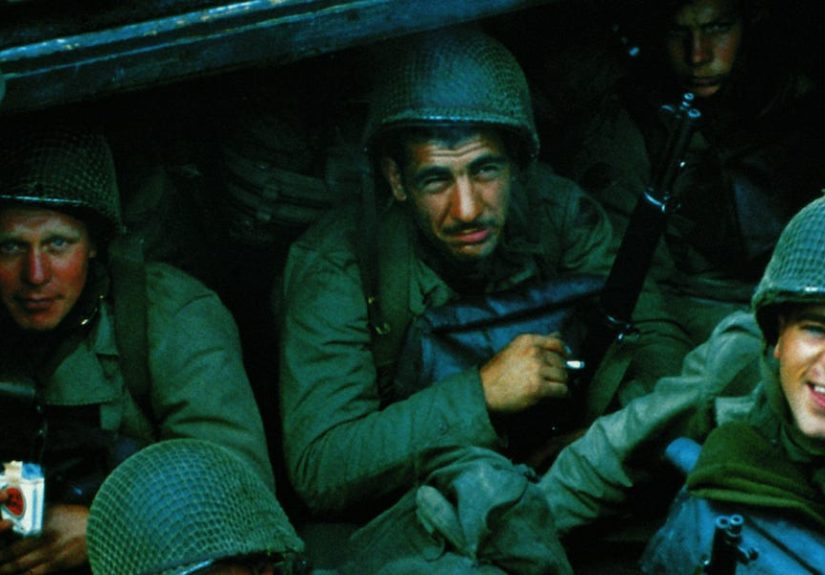
It also shaped the memory of the “Greatest Generation.” In photographs, memoirs, films, and museums, the M1 appears again and again as the companion of American soldiers in World War II and Korea. Its distinctive profile became part of the visual language of American victory.
The M16: The Lightweight Rifle That Changed the Modern Battlefield
The M16 began as a military adaptation of the AR-15 design, developed in the Cold War context and fielded during the Vietnam War era. It was lightweight, used small-caliber high-velocity ammunition, and reflected a new theory of infantry firepower. Compared with older wood-and-steel rifles, the M16 looked almost futuristiclike it had arrived from a laboratory that also designed office chairs.
Its early service was troubled by maintenance problems, ammunition issues, and controversy. Later improvements, including the M16A1 and subsequent variants, addressed many reliability concerns. Over time, the M16 family and its descendants became central to American military small arms development.
Why It Helped Shape America
The M16 marks a shift from the age of heavy full-power battle rifles to the age of lightweight, modular, small-caliber military rifles. It also became connected to larger debates about Vietnam, military procurement, technology, and trust in institutions. Unlike the M1 Garand, which entered memory with a bright World War II glow, the M16 entered American consciousness through a more divided and painful war.
Its legacy continues through later military rifles and civilian sporting designs derived from the same broad platform. That legacy is technically significant and culturally controversial. Few rifles better show how a design can move from battlefield tool to national symboland national argument.
How These Rifles Changed American Manufacturing
One of the most important lessons in this history is that rifles did not merely reflect American industry; they helped create it. Federal armories such as Springfield and Harpers Ferry became laboratories for precision manufacturing. Problems that seemed specific to firearmsconsistent dimensions, durable materials, reliable locks, repeatable productionbecame problems for American industry as a whole.
Interchangeable parts were especially important. The idea that a broken part could be replaced without hand-fitting transformed repair, logistics, and production. The pursuit of that idea pushed forward machine tools, gauges, milling, inspection systems, and skilled industrial labor. Those lessons spread into other fields, helping shape the broader American industrial revolution.
By the time of the Civil War and World War II, the United States could produce arms at staggering scale. That capacity was not accidental. It grew from decades of experiments, failures, contracts, and improvements. The rifles that made America were also made by Americaand in making them, America learned to make almost everything else better.
How These Rifles Changed American Mythology
America loves symbols, and rifles became some of its most powerful. The long rifle stood for the frontier. The Springfield rifle-musket stood for the citizen-soldier. The Winchester stood for the West. The M1 Garand stood for World War II victory. The M16 stood for modern war, controversy, and technological change.
But symbols simplify. The frontier rifle was not only about freedom; it was also tied to conquest. The Winchester was not the single tool that “won” anything by itself. The M1 Garand was an engineering triumph, but it belonged to a war of enormous suffering. The M16 was innovative, but its early failures had real human costs.
Understanding these rifles well means resisting both worship and dismissal. They are not magic objects. They are tools made by people, used by people, and remembered by people. Their meaning depends on where you stand in the story.
Field Notes: Experiences That Bring These Rifles to Life
To understand the rifles that made America, it helps to move beyond dates and model numbers. Museum cases are a good start, but the real experience comes from noticing the small human details. A Pennsylvania long rifle, for example, often surprises people with its length and elegance. It does not look like a crude frontier tool. It looks like craftsmanship stretched into a slim wooden sentence. The brass patch box, carved stock, and long barrel suggest patience. This was not disposable technology. It was personal property, working art, and survival equipment all at once.
Handling reproductions at supervised living-history demonstrations, visitors often discover how slow early muzzleloading could be. The process was deliberate, smoky, and fussy. Powder, ball, ramrod, priming, aimeach step required attention. That experience changes how people imagine the American Revolution or frontier hunting. The past suddenly becomes less like an action scene and more like a choreographed recipe where the oven occasionally explodes.
Civil War rifle-muskets create a different impression. Their weight, length, and bayonet fittings remind visitors that infantry combat was physical before it was anything else. A Springfield Model 1861 feels like a tool designed for mass armies. It is not delicate. It is long, serious, and slightly intimidating even when completely inert in a museum setting. When people learn that soldiers marched for miles carrying rifles, ammunition, blankets, food, and personal gear, the old photographs become more human. Those young faces were attached to sore shoulders.
Repeating rifles such as the Henry and Spencer tend to spark the “aha” moment. The jump from single-shot muzzleloaders to metallic-cartridge repeaters feels enormous. Even without firing anything, the concept is easy to grasp: fewer pauses, faster follow-up shots, less vulnerability while reloading. Visitors can immediately understand why soldiers wanted them and why military officials hesitated over cost, supply, and doctrine. Technology may move fast, but budgets wear heavy boots.
The M1 Garand often produces respect from people who know World War II through family stories. Veterans’ memories, old training photos, and battlefield exhibits give the rifle emotional weight. It represents industrial America, but also individual service. The M16, by contrast, often opens conversations rather than closing them. It leads to questions about Vietnam, design trade-offs, modernization, and the long afterlife of military technology in civilian culture.
The best experience, then, is not simply seeing these rifles. It is asking what each one changed. What did it make easier? What did it make deadlier? Who benefited? Who paid the price? A rifle in a glass case is quiet, but the history around it is not. Listen closely, and you hear factories, forests, battlefields, political debates, family stories, and the uneasy machinery of a nation still trying to understand itself.
Conclusion: The Rifles That Made Americaand the America That Made Them
The rifles that made America did not act alone. They were part of larger systems: settlement, war, industry, politics, commerce, and mythmaking. The Pennsylvania long rifle reflected adaptation to a new landscape. The Springfield Model 1795 and Hall rifle helped build federal manufacturing capacity. The Model 1861 rifle-musket armed mass armies in the Civil War. The Henry, Spencer, and Winchester helped usher in the age of repeaters. The M1903 Springfield marked America’s rise as a global military power. The M1 Garand showcased the industrial might of World War II. The M16 pushed the country into the modern era of lightweight military rifles and ongoing cultural debate.
Together, these rifles tell a story that is fascinating, uncomfortable, inventive, and unmistakably American. They show a nation constantly remaking its toolsand being remade by them in return.