Table of Contents >> Show >> Hide
- What Do We Mean by Belonging and Connection?
- The Brain Science Behind Belonging
- Why Belonging Matters for Learning
- Evidence-Based Strategies to Build Belonging
- Common Myths About Belonging
- Practical Starting Points for Tomorrow Morning
- Lived Experiences: What Belonging and Connection Feel Like
- Conclusion: Belonging Is the Work
Ask any adult to describe their favorite teacher, and they rarely start with test scores.
They talk about feeling seen: the math teacher who greeted them by name at the door,
the coach who checked in after a tough week, the librarian who saved a seat at the table.
That’s the science of belonging and connection in actionlong before we ever called it “social neuroscience.”
In the last decade, researchers across psychology, neuroscience, and education have been sounding
the same alarm: feeling like you belong isn’t a fluffy “extra,” it’s a core human need.
For students, a strong sense of belonging predicts better grades, higher persistence,
stronger mental health, and a lower risk of dropping out.
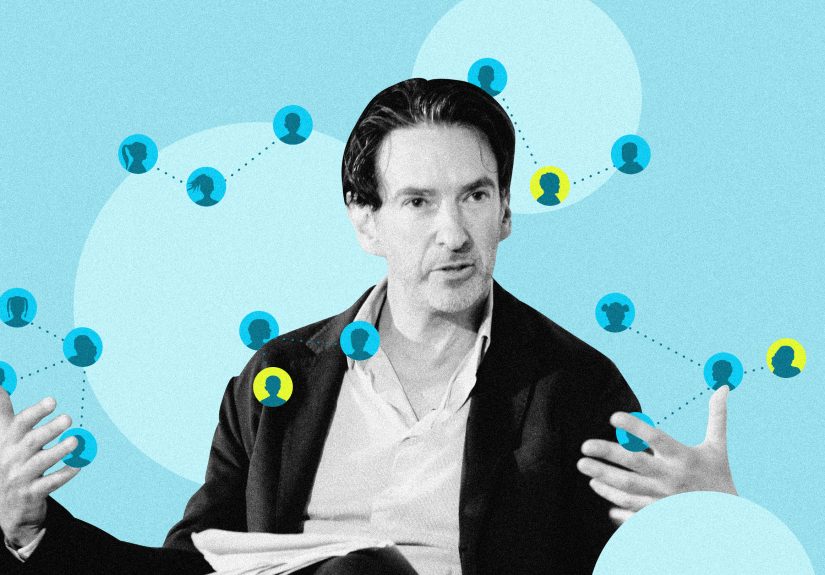
Edutopia’s work, including Daniel Leonard’s interview with Stanford psychologist Geoffrey Cohen,
has helped translate this research into real classroom strategies teachers can use right now.
Let’s unpack what belonging actually means, what’s going on in the brain, and how educators can build
classrooms where every student thinks, “These are my people. This is my place.”
What Do We Mean by Belonging and Connection?
In education, belonging is more than simply being enrolled in a school. It’s the felt sense that:
- “People like me go here.”
- “My presence is valued, not tolerated.”
- “If I struggle, people will still see me as capable.”
Research centers like MIT’s Teaching & Learning Lab and the U.S. Regional Educational Laboratories
describe belonging as a mix of relationships (with peers and adults), school experiences,
and students’ overall feelings about school.
When those are positive, students are more likely to engage, persist, and take academic risks.
Connection is the day-to-day experience that feeds belonging: the warm greeting, the running joke,
the group project that actually feels like teamwork instead of one kid doing everything. You can think of
belonging as the climate and connection as the weathersmall daily patterns that add up to something powerful.
The Brain Science Behind Belonging
Our brains are social machines. Social neuroscience studies show that isolation activates some of the same
brain regions as physical pain and that chronic loneliness is tied to increased inflammation, higher risk
of depression, and even cardiovascular disease.
Put simply, we are not built to go it alone.
When students feel connected, a different neurochemical story unfolds. Social connection and trust are
associated with the release of oxytocin, a hormone that supports bonding and can help dampen
the body’s stress response.
Lower stress means the “alarm systems” in the brain quiet down, freeing up more resources in the
prefrontal cortexthe part of the brain that handles planning, problem solving, and self-control.
Newer work on the “social brain” suggests that humans may crave connection as fundamentally as food or water.
For students, that means a classroom where you feel ignored or excluded isn’t just unpleasant; it makes it
harder to remember information, focus on tasks, and push through challenges.
Why Belonging Matters for Learning
Large-scale studies in K–12 and higher education keep finding the same pattern:
when students report a stronger sense of belonging, they show:
- Better grades and higher test scores
- Greater persistence and lower dropout rates
- Improved mental health and lower stress
- More willingness to ask questions and seek help
A recent meta-analysis of university students found that a sense of belonging was consistently,
even if modestly, associated with higher academic achievement and well-being.
National studies in the U.S. show similar trends in K–12 schools, with belonging interventions linked
to higher persistence and degree completion, particularly for students from groups historically
underrepresented in higher education.
At the same time, there’s growing concern that students’ sense of belonging is falling. International
comparisons in the last two decades show declines in students’ reported sense of safety and connection,
especially around key transitions such as the move to secondary school.
The good news: the same research that documents the problem also points to concrete solutions.
Evidence-Based Strategies to Build Belonging
1. Make Relationships the Curriculum
If students don’t feel connected to the people in the room, everything else is extra credit.
Edutopia and other teaching resources emphasize simple, consistent practices: greet students by name at the door,
host brief morning meetings, use “get to know you” surveys, and create space for students to share about
their lives.
Toolkits on relationship-building highlight activities like relationship mapping, where staff
identify which students currently do and don’t have strong adult connections. The goal is to ensure every
student has at least one adult who knows them well.
Even small, predictable gesturesweekly check-ins, quick notes of encouragement, a “we’re glad you’re here”
messagecan significantly shift students’ perception of whether they matter.
Recent guidance for teachers also stresses the importance of intentional communication: listening without
interrupting, validating students’ emotions, and clarifying expectations in ways that convey high belief in
students’ potential.
In other words: your tone, your body language, and your facial expressions all teach, long before the lesson begins.
2. Design for Cooperative Interdependence
One of the strongest research-backed ways to build belonging is to structure classes so that students
actually need one another to succeed. Geoffrey Cohen and other researchers often point to the
jigsaw classroom, where each student becomes an “expert” on one part of a topic and the group
can’t complete the task without everyone’s contribution.
When done well, cooperative learning:
- Reduces social hierarchies in the classroom
- Increases empathy and cross-group friendships
- Lets quieter students contribute in meaningful ways
- Helps students see themselves as capable, needed members of a team
Modern variations on jigsawlike collaborative “missions,” structured peer teaching, or quick
think–pair–share routineskeep the same principle: everyone’s voice matters, and the group is
stronger because of its diversity.
3. Normalize Struggle and Growth
Belonging takes a hit when students interpret difficulty as “proof” that they don’t fit.
Belonging-focused interventions often combine brief storytelling, reflective writing, or
classroom discussion to send this message:
everyone struggles at first, and struggle is a normal part of learning here.
Practical moves:
- Share your own early mistakes or stereotypes you once believed about school.
- Highlight famous “late bloomers” or scientists whose early work was rejected.
- Use language like “not yet” rather than “wrong.”
- Build in revision cycles so students expect to improve over time.
Recent teaching guides emphasize pairing growth mindset messages with predictability and clarity
clear expectations, transparent grading, and routines that make classrooms feel emotionally safe.
Students can’t take intellectual risks if they’re constantly guessing the rules of the game.
4. Make Identity and Culture Visible
A student can be physically present yet still feel invisible. Research on culturally responsive
teaching and belonging shows that students feel more connected when:
- Curriculum includes authors, histories, and examples that reflect their backgrounds.
- Teachers correctly pronounce and consistently use students’ names.
- Classroom norms are co-created rather than handed down from on high.
Regional research in the Midwest and studies on multiple minority identities suggest that
experiences of marginalization can erode belonging and authenticity if schools don’t intentionally
counteract bias.
Simple shiftssuch as inviting students to bring in community stories, celebrating multiple holidays,
or analyzing historical events from different perspectivessend the message: “All of who you are is welcome here.”
5. Use Environment and Rituals as Connection Tools
Belonging doesn’t only live in lesson plans; it lives in the environment and daily rituals.
Observational work in innovative school programs shows that hands-on, collaborative spaceslike kitchen gardens,
maker labs, or art studioscan foster a strong sense of community, especially for students who struggle with
traditional classroom formats.
You don’t need a fancy garden program to apply the lesson. Consider:
- Establishing a short opening ritual: a one-word mood check, a class chant, or a quick gratitude round.
- Creating visual evidence of community: group photos, shared norms on the wall, a “we did it” board for milestones.
- Designating “connection jobs” for students: greeter, note-writer, tech helper, new-student buddy.
These small routines become emotional anchors. When life outside school is chaotic, predictable
rituals inside school whisper, “This place is stable. You belong here.”
Common Myths About Belonging
Myth 1: Belonging Is Nice, But Academics Come First
Policy debates often frame wellbeing and achievement as oppositeseither you care about test scores
or you care about mental health. But recent policy reports and international data strongly suggest
this is a false choice. Systems that support student wellbeing tend to have stronger academic outcomes,
not weaker ones.
At the classroom level, this shows up in simple ways: students who feel safe and valued are more
willing to attend school, pay attention, and try the hard problems. A welcoming environment
isn’t a distraction from learning; it’s the precondition for it.
Myth 2: “Some Kids Just Don’t Want to Belong”
It can be tempting to label a disengaged student as “checked out” or “not interested.”
Neuroscience suggests a different story: withdrawal can be a protective response to past
experiences of exclusion or humiliation.
Rather than assuming disinterest, educators can ask, “What would this student need to feel safe enough to show up?”
Sometimes the answer is as simple as a private conversation, a chance to redo an assignment, or a signal that
one adult is firmly in their corner.
Myth 3: Belonging Work Is One Big Assembly
Schoolwide events, spirit weeks, and pep rallies can be fun, but they don’t guarantee belonging.
Research on student experience repeatedly finds that the most powerful drivers of connection are
everyday interactionsthe way teachers respond when students make mistakes, who gets called on,
how conflict is handled, and whether students feel they can be themselves in class.
Belonging is built in minutes, not in assemblies. That’s good news, because it puts real power in the
hands of classroom educators.
Practical Starting Points for Tomorrow Morning
You don’t need a grant, new curriculum, or a neuroscience degree to begin. Try starting with three moves:
-
Upgrade your welcome.
Greet students by name at the door and add one personal detail: “Good to see you, Mayahow did the robotics
meeting go?” It takes seconds and pays off all year. -
Build a quick connection ritual.
Use a one-word check-in (“One word for how you’re arriving today”), a fist-to-five stress scale,
or a short “turn and talk” prompt. Rituals turn connection into a habit rather than an accident. -
Audit who speaks and who gets credit.
Track, for one class period, who you call on and whose ideas get written on the board.
Then adjust intentionally so more students see their voices matter.
Layer in more structural changes over timecooperative learning routines, relationship mapping,
culturally responsive contentbut don’t underestimate the power of these small shifts.
The science is clear: tiny moments of recognition accumulate into a story of belonging.
Lived Experiences: What Belonging and Connection Feel Like
Research can tell us that belonging matters, but stories show us how it feels.
Here are a few composite snapshots, drawn from common experiences educators describe when they
start prioritizing connection.
The student who stopped “forgetting” their backpack.
Ms. Ramirez taught 7th grade science and had one student, Jay, who seemed to orbit the class without
ever quite landing. He came in late, sat in the back, and “forgot” materials on a suspiciously regular basis.
It was easy to read his behavior as defianceor at least apathy.
After learning more about belonging research, she made one simple change: every Friday, she set aside
the first five minutes for one-on-one check-ins while students did a quick warm-up. Her only goals:
use each student’s name, ask one non-academic question, and name one strength she’d seen that week.
When it was Jay’s turn, she asked about his favorite part of the day. It turned out he loved cooking and
took care of younger siblings after school. She built a small project around food chemistry, quietly
asked if he’d be willing to help lead a demonstration, and made a point of thanking him publicly for his ideas.
Two weeks later, the backpack stopped “disappearing.” Jay wasn’t magically transformed into a
straight-A student, but he showed up more consistently, asked more questions, and started sitting
closer to the front. Nothing in the curriculum changed. What changed was the story in his head:
maybe this class was a place where someone saw him.
The quiet student who became the group’s anchor.
In another school, a high school history teacher decided to try a jigsaw activity on civil rights movements.
One student, Amina, rarely spoke in whole-class discussions and often looked down at her notebook when
questions were asked.
For the jigsaw, Amina’s role was to become the “expert” on youth activism. She had clear guiding questions
and a small group who depended on her summary. During the expert meeting, she spoke more than usual,
and her peers thanked her for making complicated texts easier to understand. When it came time for each
expert to teach their home group, she was nervousbut prepared.
Afterward, her classmates commented on how clearly she explained things. The teacher made sure to echo that
feedback: “Your breakdown of that article helped the whole group.” In follow-up reflections, Amina wrote that
it was the first time she’d felt “useful” in class instead of “just quiet.”
That feeling is the heartbeat of belonging: not just being present, but being needed.
The teacher who stopped taking withdrawal personally.
Belonging isn’t just for students; teachers are humans with nervous systems, too. Mr. Chen, a new teacher,
found himself drained by a student who rolled their eyes at every instruction. After learning more about how
past experiences of exclusion can drive protective distancing, he set a private goal: respond to that student
with curiosity instead of defensiveness.
He started leaving short, low-pressure notes on assignments: “I can see you think deeply about this topic,”
or “You raised an important point in our debate yesterday.” He also checked in briefly at the door:
“Glad you’re here” instead of “You’re late again.”
Over monthsnot daysthe student’s posture softened. There were still eye rolls, still off days,
but also more genuine conversation. For Mr. Chen, understanding the science helped him stick with the slow work.
He stopped interpreting withdrawal as a personal attack and started seeing it as a signal of unmet belonging needs.
These stories aren’t magic tricks; they’re ordinary examples of educators leveraging what neuroscience
and psychology already tell us. Connection doesn’t fix every structural barrier, but it changes daily life
in the classroom. When students and teachers share a sense of “us,” learning stops being a solo climb and
becomes a rope team effort.
Conclusion: Belonging Is the Work
The science of belonging and connection is remarkably consistent: human brains learn best when they feel safe,
valued, and connected. For schools, that means relationship-building, cooperative learning, culturally
responsive teaching, and everyday rituals aren’t “extras” to squeeze in after the “real” work.
They are the real work, because they determine whether students show up ready to think.
The most encouraging part? Building belonging isn’t about being a perfect, endlessly energetic superhero teacher.
It’s about a series of small, intentional actionssaying names, listening carefully, sharing power,
designing tasks where everyone matters. Those moves are within reach of every classroom.
When we align what the science says with what our hearts already know, we get a clear mandate:
no student should have to earn their right to belong. Our job is to design learning spaces
where connection comes first, and achievement grows from there.