Table of Contents >> Show >> Hide
- Why “Most-Spoken” Isn’t One Simple Number
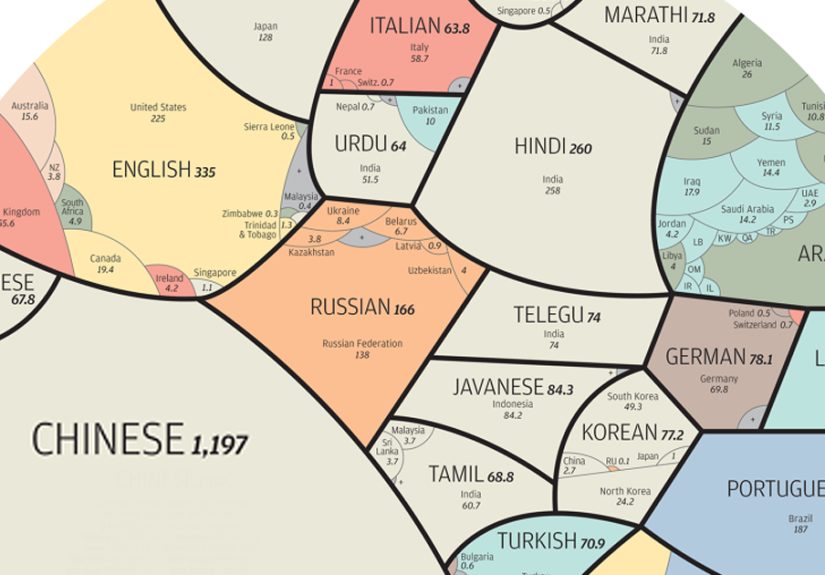
- The Single Infographic: Top 10 Most-Spoken Languages (Total Speakers)
- What the Infographic Really Tells You
- Top Languages, Quickly Explained (So You Remember More Than “#1 = English”)
- So… Which Language Should You Learn?
- The Bigger Picture: The World Is Both Globalizing and Losing Languages
- Conclusion: One Infographic, a Thousand Human Stories
- Experiences That Make These Rankings Feel Real (500+ Words)
Quick confession: language rankings are the only “top 10” list on Earth where the comments section can start a civil war over whether something is a language, a dialect, a macrolanguage, or “just my aunt’s accent.” So before we start counting speakers like we’re tallying Halloween candy, let’s set expectations: these numbers are the best available global estimates, and they’re still… estimates.
That said, if you want a clean, easy-to-read snapshot of the most spoken languages in the worldand you’d like it in one neat visual you can understand without squinting at a spreadsheetthis is your moment.
Why “Most-Spoken” Isn’t One Simple Number
When people say “most spoken language,” they usually mean one of two things:
- Most native speakers (L1): the language people grew up speaking at home.
- Most total speakers (L1 + L2): native speakers plus second-language speakers who learned it for school, work, trade, media, or survival in airport terminals.
Those two rankings don’t always match. A language can have a giant native base but fewer second-language learners (think Mandarin Chinese). Another can have a smaller native base but a massive “I learned this because the world made me” population (hello, English).
The messy parts nobody puts in the headline
Counting speakers gets complicated because:
- “Chinese” isn’t one spoken thingit’s a family of varieties that can be mutually unintelligible, even though they share writing traditions.
- Arabic is famously “two-mode” (a high, standardized form and everyday spoken varieties). Counting “Arabic speakers” without double-counting is hard.
- “How fluent counts?” There’s no universal threshold for “you’re officially a second-language speaker now.”
So: we’ll use the best widely cited global estimates, keep the structure honest, and add context so the numbers actually mean something.
The Single Infographic: Top 10 Most-Spoken Languages (Total Speakers)
This infographic focuses on total speakers (native + second language) because that’s the most useful measure for understanding global communication powerbusiness, migration, diplomacy, the internet, and that moment you accidentally order something spicy in three different countries.
Top 10 Languages by Total Speakers (L1 + L2)
Units are millions of speakers. Bars are scaled to the #1 language in this list (English).
1
2
3
4
5
6
7
8
9
10
What the Infographic Really Tells You
1) English wins total speakers because it’s everybody’s backup plan
English doesn’t top the list because it has the most native speakersit tops the list because it has the most second-language speakers. It’s the language of aviation, a big chunk of global science publishing, international business, and a lot of online culture. It’s basically the world’s “universal adapter.” Not perfect, but it fits enough sockets to be useful.
2) Mandarin dominates native speakers, but L2 is a different story
Mandarin Chinese has an enormous native speaker base, which makes sense given population scale. But globally, the second-language spread isn’t as massive as English. Translation: Mandarin is a giant at home; English is a giant everywhere else.
3) Hindi and Urdu show how politics and labels shape the leaderboard
If you’ve ever wondered why Hindi and Urdu sometimes look like twins who refuse to share a birthday party, welcome to the world of language classification. Many everyday spoken forms are mutually intelligible, but writing systems, formal registers, and national identity matter. Rankings depend on what gets grouped together and what gets split apart.
4) Indonesian is a masterclass in “national second language” success
Indonesian’s numbers are a reminder that L2 speakers aren’t just international learners; they can be citizens using a shared national language across hundreds of local languages. It’s one of the clearest examples of a language with a relatively smaller native base but a very large second-language community.
Top Languages, Quickly Explained (So You Remember More Than “#1 = English”)
Spanish: geography + culture + intergenerational momentum
Spanish spreads through large regional continuity (multiple countries, shared media ecosystems) and strong cultural exportsmusic, film, sports, and an internet presence that keeps expanding. If English is the world’s default business email, Spanish is the world’s default group chat.
French: official status is a cheat code
French punches above its “native speaker weight” because it’s used across multiple regions as an official language and as a language of schooling, government, and diplomacy. That institutional role creates large L2 populationspeople may not speak French at home, but they use it to pass exams, read official notices, and do professional life.
Arabic: one name, many realities
Arabic is a great example of why “most spoken languages” lists come with footnotes. A shared standardized form matters, but everyday speech varies widely by region. That doesn’t make Arabic less important; it makes it more interestingand more complicated to count.
Bengali and Portuguese: giant populations you feel in global cities
Bengali and Portuguese are enormous on sheer speaker numbers. Portuguese gets an especially big boost from Brazil, while Bengali’s speaker base is concentrated but massivemeaning you might not see it centered in Hollywood, but you’ll absolutely hear it in major diaspora cities.
So… Which Language Should You Learn?
If you’re picking a language for career, travel, or personal curiosity, don’t just chase the biggest number. Ask smarter questions:
Choose based on “where it opens doors”
- Work: What languages show up in your industry, clients, or region?
- Community: What languages are spoken in your city or social circles?
- Media: What language would unlock books, music, movies, and creators you actually enjoy?
- Stickiness: Which language will you keep using after the initial motivation sugar-rush wears off?
Learning a language is less like buying a treadmill and more like adopting a plant. If you don’t interact with it regularly, it will absolutely die on youbut with more guilt.
The Bigger Picture: The World Is Both Globalizing and Losing Languages
Here’s the bittersweet reality: while a handful of languages dominate global communication, thousands of smaller languages are endangered. Linguists and cultural organizations warn that a significant share of the world’s languages could disappear within this century if communities lose intergenerational transmission.
That means “most spoken” lists are only half the story. The other half is about preservation, education, and respect: a language isn’t just vocabularyit’s memory, culture, and local knowledge packaged into sounds.
Conclusion: One Infographic, a Thousand Human Stories
If you remember only one thing: the most spoken languages in the world aren’t just “big” because they’re popular. They’re big because of history, education systems, migration, economics, media, and the human habit of saying, “Fine, I’ll learn the language everyone else is using.”
Use this infographic as a snapshot. Then use the context to understand what the snapshot means. Because languages aren’t just countedthey’re lived.
Experiences That Make These Rankings Feel Real (500+ Words)
Numbers are tidy. Real life is not. And the fastest way to understand why English, Mandarin, Hindi, and Spanish keep showing up at the top is to notice how they sneak into everyday momentsoften when you least expect it.
The “airport effect”
You can travel thousands of miles and still find the same two survival tools: pictograms and English. Even in places where English isn’t widely spoken at home, airports, hotels, and tourist hubs tend to run on a kind of “global English lite”simple phrases, familiar signs, and a polite willingness to interpret wildly creative pronunciation. It’s not that everyone is fluent; it’s that enough people know enough English to keep the system moving. And when English fails, someone will try Spanish, then gestures, then the universal language of pointing at a sandwich.
The “WhatsApp neighborhood”
Spanish, Hindi, Arabic, and Portuguese aren’t just “big” in their regionsthey’re big in group chats. In multilingual communities, you’ll often see people switch languages mid-message like they’re changing lanes. A cousin texts in Hindi, another replies in English, someone adds a voice note in a regional dialect, and somehow the plan still happens. This is what “total speakers” looks like in the wild: bilingual and multilingual people using whatever works fastest.
The “restaurant menu reality check”
If you’ve ever tried to order food in a language you’re learning, you already know the true ranking system: the language that makes you less hungry is the most powerful. Spanish and French show up on menus across the world because of culinary influence, but Arabic, Mandarin, and Portuguese show up in diaspora neighborhoods in the U.S. and other countries where people built new homes and brought their food with them. The first time you recognize a word on a menuwithout translating ityou feel like you just unlocked a secret level.
The “workplace bilingual superpower”
In many workplaces, English is the formal default, but the real coordination happens in whatever language builds trust. A team might write reports in English while troubleshooting in Spanish, or do customer support in multiple languages depending on who walks in. This is why Spanish remains such a practical language in the U.S. and why languages like Chinese, Vietnamese, Tagalog, and Arabic matter so much in certain states and industries. Language becomes less about prestige and more about efficiency: the fastest way to solve a problem is the right way.
The “learning curve comedy”
Language learning humbles everyone. You can be a competent adult and still panic because someone asked you a yes-or-no question and your brain heard, “Please perform grammar in front of the class.” People often start with English because resources are everywhere, then try Spanish because it’s widely useful, then get ambitious with Mandarin or Arabic and discover the thrilling experience of being bad at something again. And oddly, that’s the point. Languages aren’t trophies; they’re relationships. The best learners are the ones who can laugh, keep going, and order coffee without accidentally proposing marriage.
When you zoom out, these experiences match the infographic: languages grow when people use them across borders, across communities, and across everyday needs. The leaderboard isn’t just about who speaks the mostit’s about which languages travel best with humans.