Table of Contents >> Show >> Hide
- Why recycling tech matters for climate (and why it’s not a side quest)
- 1) Smarter sorting: AI, robotics, and “recycling with x-ray vision”
- 2) Advanced mechanical recycling: squeezing more value out of the “dirty stream”
- 3) Chemical and molecular recycling: when plastics need a reset button
- 4) Enzymes: nature’s tiny scissors (and a big deal for PET)
- 5) Battery recycling goes high-tech (because electrification needs a circular supply chain)
- 6) Turning waste into infrastructure (with guardrails)
- 7) Data and policy: the unglamorous tech that makes tech work
- Reality check: what these technologies can (and can’t) do for climate
- Conclusion: the future of recycling is precision, not wishful thinking
- Experiences from the recycling trenches (the extra your trash asked for)
Recycling has a branding problem. We’ve treated it like a moral personality testrinse your peanut-butter jar, feel virtuous, save the planet.
Meanwhile, the real world is out there doing real-world things: packaging gets greasy, labels get weird, plastics get mixed, batteries get tossed in drawers
like they’re tiny metal gremlins waiting to cause a fire.
But here’s the good news: recycling is finally getting a glow-upless “wishful thinking in a blue bin,” more “precision manufacturing backed by sensors,
chemistry, and data.” The best new technologies won’t magically make waste disappear (sorry), but they can turn a lot more of it into high-quality feedstock,
which means less virgin extraction, less energy demand, and fewer greenhouse gas emissions.
Why recycling tech matters for climate (and why it’s not a side quest)
Climate catastrophe isn’t only about tailpipes and smokestacks. It’s also about materialsthe emissions baked into making plastics, metals, paper,
glass, textiles, and batteries from scratch. When we recycle well, we avoid some of that upstream carbon by displacing virgin production with recovered material.
When we recycle poorly, we create expensive “downcycled” stuff no one wants to buy, and it ends up in landfills anywaylike a sad boomerang.
Today’s breakthrough recycling technologies focus on one core idea: quality. Not just “did we collect it,” but “can we turn it into something
valuable enough that manufacturers actually want it?” That’s the difference between circular economy marketing and circular economy reality.
1) Smarter sorting: AI, robotics, and “recycling with x-ray vision”
The first revolution is happening before anything gets melted, dissolved, or depolymerized: sorting. If you’ve ever wondered why your recycling
program accepts a bottle but not the cap, or why your “recyclable” tub still gets trashed, it’s because mixed streams are chaos. The more precisely we sort, the
more valuable the outputand the less contamination wrecks the whole batch.
Robotic sorters that learn (and don’t get grossed out)
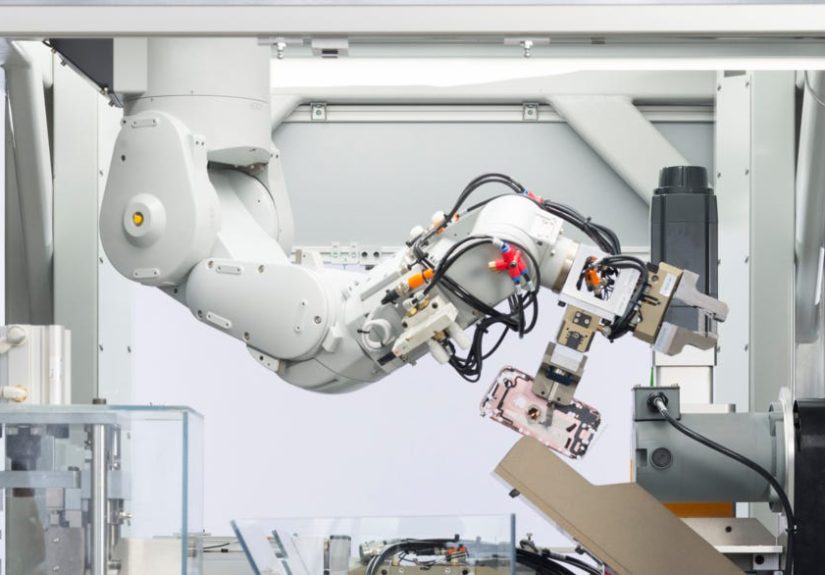
AI-driven sortation systems use cameras, scanners, and machine learning to identify objects in millisecondsby shape, color, resin type, even branding cues.
Then air jets and robotics separate items at speed. Unlike a human sorter who understandably does not want to grab mystery goo at 3 a.m., machines can run
consistently and scale.
The payoff is bigger than labor savings: AI can help capture materials that typically slip through traditional systems, including small-format packaging and
mixed plastics that used to be “too hard” to separate. The result is cleaner bales and higher-value streamsexactly what markets demand if recycled content is
going to replace virgin material at scale.
Digital watermarks and next-level identification
Now imagine packaging that tells a sorting line exactly what it islike a boarding pass at the airport, but for a shampoo bottle. Digital watermarking trials
have explored embedding imperceptible codes on packaging so scanners can sort at a much finer level than typical near-infrared methods, potentially enabling
SKU-level separation and better feedstock targeting.
This matters because “plastic” isn’t one thing. The additives, pigments, and barrier layers that make packaging functional also make it difficult to recycle.
If sorting systems can reliably identify items by product type and composition, recyclers can route materials to the right processmechanical, solvent-based,
or chemicalwithout playing polymer roulette.
2) Advanced mechanical recycling: squeezing more value out of the “dirty stream”
Mechanical recyclingcollect, shred, wash, melt, pelletizestill does a lot of the heavy lifting. The breakthrough isn’t that we’ve abandoned it; it’s that
we’re making it dramatically better. Think of it as moving from “basic laundry” to “dry cleaning, stain treatment, and fabric restoration.”
Better washing, filtration, and deodorizing
Modern systems use hot washing, friction washing, and advanced separation to remove labels, inks, and food residues. Melt filtration and degassing can pull out
fine contaminants. Some processes include deodorization steps to reduce the “recycled smell” that can limit applications (because nobody wants their new
Tupperware to smell like old onion dip).
Compatibilizers and reactive extrusion
One reason mixed plastics are hard is that different polymers don’t naturally blend well. Compatibilizersspecial additivescan help polymers bond, improving
mechanical properties of recycled blends. Reactive extrusion can also modify polymers during processing, boosting performance so recycled content can meet
stricter specs.
The climate upside: when advanced mechanical recycling creates near-virgin performance, it increases the odds manufacturers will buy recycled resin instead of
fossil-based virgin plastic. That’s where emissions reductions stop being theoretical and start showing up in supply chains.
3) Chemical and molecular recycling: when plastics need a reset button
Some plastics are too contaminated, too multi-layered, or too degraded to recycle mechanically into high-quality products. That’s where a family of processes
often grouped as “chemical recycling” (or “advanced recycling” or “molecular recycling,” depending on who’s holding the microphone) comes in.
The basic promise: break polymers down into chemicals or monomers, then rebuild them into new materials. In practice, there are multiple routesand some are
far more climate-helpful than others.
Depolymerization: back to monomers (especially for PET)
Depolymerization targets plastics that can be “unzipped” into their building blockslike PET (used in many bottles) or some nylons. Methods include
glycolysis, methanolysis, hydrolysis, and other catalytic approaches that yield monomers suitable for repolymerization. The value proposition is strong:
you can potentially create recycled resin that’s indistinguishable from virgin, which is the holy grail for food-grade and high-performance applications.
Solvent-based purification (dissolution)
Another approach is dissolution: use solvents to selectively dissolve a polymer, separate additives and contaminants, then recover the purified polymer.
This can be useful for certain films, multilayer materials, or packaging where mechanical recycling struggles. The climate question here depends heavily on
solvent recovery efficiency, energy sources, and what happens to separated additives.
Pyrolysis and gasification: promise, pitfalls, and honesty tests
Pyrolysis and gasification use heat (and sometimes limited oxygen) to break plastics into oils or syngas that can be refined into fuels or feedstocks for new
chemicals and plastics. Supporters argue this can handle mixed plastics that would otherwise be landfilled. Critics argue that too many projects end up
producing fuelsfunctionally closer to waste-to-energy than true circular recyclingand that facilities can generate pollution and hazardous byproducts.
The most climate-relevant point is simple: what is the output used for? If the output becomes new plastics or chemicals that displace virgin
production, that can provide material circularity benefits. If the output is burned as fuel, the carbon still returns to the atmosphereand calling it
“recycling” becomes a branding exercise, not a climate solution.
This is where transparent accounting matters: mass-balance approaches and certification systems aim to track how much recycled feedstock is attributed to final
products. That can be legitimate bookkeeping when done rigorouslybut it’s also an area where skepticism and scrutiny are healthy, because consumer trust is
fragile and greenwashing is real.
4) Enzymes: nature’s tiny scissors (and a big deal for PET)
If chemical recycling sounds like a refinery, enzymatic recycling sounds like a biology laband for PET, that’s exactly the point. Engineered enzymes can
depolymerize PET under relatively mild conditions, breaking it into monomers that can be purified and repolymerized into PET again.
The appeal is twofold: (1) PET is everywhere, and (2) enzymatic processes may be able to handle certain colored, opaque, or complex PET items that are tough for
mechanical recycling. The challenge is scaling, economics, enzyme performance, and making sure the overall energy and chemical inputs stay favorable.
Still, this is one of the most genuinely “new” recycling pathwaysless about brute heat, more about precision chemistry. If it scales responsibly, it could
significantly expand bottle-to-bottle (and textile-to-bottle) circularity, which is exactly the kind of materials shift that can reduce emissions over time.
5) Battery recycling goes high-tech (because electrification needs a circular supply chain)
The clean-energy transition is hungry for critical mineralslithium, nickel, cobalt, manganese, graphite. Mining and refining them can be emissions-intensive,
and geopolitically complicated. Battery recycling is the “second supply chain” that can reduce both climate and security risks.
Hydrometallurgy vs. direct recycling
Traditional recycling routes often involve pyrometallurgy (high heat) or hydrometallurgy (chemical leaching) to recover metals. But an emerging approach,
direct recycling, aims to preserve and regenerate valuable cathode materials rather than breaking everything down to elemental metals.
If direct recycling scales, it could cut energy use by keeping complex cathode structures intactthink “refurbishing a high-end component” instead of melting it
into raw ore. It also aligns with the climate goal of reducing energy intensity throughout the battery lifecycle.
Design for disassembly and safer collection
Technology alone won’t fix battery waste if collection remains chaotic. Better pack design, safer transport, and clearer consumer take-back systems are
essential. A battery that’s easy to remove, identify, and process is a battery that’s far more likely to become tomorrow’s batteryrather than tomorrow’s
landfill fire headline.
6) Turning waste into infrastructure (with guardrails)
Not every waste stream has to loop back into the same product category. Sometimes “recycling” means repurposing materials into durable uses:
plastic-modified asphalt, composite lumber, construction products, and other long-lived applications.
The climate logic is that durable applications can displace virgin materials and lock carbon into long-lived productsat least for a while. The caution is
that not all repurposing is environmentally benign. Products must be tested for safety, durability, and microplastic shedding, and infrastructure uses should
not become a loophole for dumping poorly characterized plastics into the environment.
7) Data and policy: the unglamorous tech that makes tech work
Here’s the part no one wants on a t-shirt: recycling breakthroughs require boring system upgrades. Uniform labeling, consistent accepted
materials, better consumer education, standardized bale specs, and investment in processing capacity matter just as much as the fanciest enzyme on Earth.
Policies like extended producer responsibility (EPR), recycled content standards, and procurement rules can stabilize demand for recycled materialsso
recyclers have a reason to invest, and manufacturers have a reason to design packaging that’s actually recyclable. Recycling becomes far more climate-relevant
when markets are reliable and contamination is reduced at the source.
Reality check: what these technologies can (and can’t) do for climate
Revolutionary recycling technologies can help divert climate catastrophe in three main ways:
- Displacing virgin production: High-quality recycled feedstock reduces the need for new extraction and refining.
- Reducing landfill and incineration: Keeping materials in circulation avoids methane and combustion emissions (and local pollution).
- Enabling circular design: When recycling is reliable, manufacturers can design products to be recovered, not trashed.
But they are not magic. Recycling can’t keep up with unlimited material throughput. If we keep increasing single-use packaging, the math breaks. The highest
climate returns still come from reducing material use, reusing packaging, and designing products for longevityand then
using advanced recycling to handle what remains.
In other words: recycling technology is a powerful lever, but it’s not the whole machine. The goal is a system where less waste is created, more is captured,
and what’s captured is valuable enough to replace virgin materials. That’s how recycling stops being a feel-good habit and starts being a climate strategy.
Conclusion: the future of recycling is precision, not wishful thinking
The next decade of recycling won’t look like the last. AI and robotics will keep improving capture rates. Digital identification can make sorting smarter.
Advanced mechanical recycling will produce cleaner, higher-performance resins. Molecular recycling and depolymerization can tackle streams that used to be
“unrecyclable,” while enzymes may transform PET circularity. Battery recyclingespecially direct recyclingcan shrink the footprint of electrification.
The climate crisis demands speed, scale, and honesty. The most revolutionary recycling technologies are the ones that can prove their outcomes: real diversion,
real displacement of virgin materials, and real emissions reductionswithout hiding behind vague claims. Do that, and recycling stops being a guilt-management
hobby and becomes what it always should have been: modern infrastructure for a livable planet.
Experiences from the recycling trenches (the extra your trash asked for)
If you want to understand why recycling technology matters, don’t start with a white paper. Start with a Tuesday night kitchen counter. You’ve got a pizza box
(greasy corner), a salad clamshell (label chaos), a yogurt cup (tiny, lightweight, destined to vanish in the sorting line), and a mysterious “compostable”
fork that looks exactly like plastic because it’s trying to trick you, personally.
That’s the household experience in a nutshell: good intentions meeting confusing reality. Many people do the right thing and still feel like they’re failing,
because the system is inconsistent. One city wants caps on; another wants caps off. One accepts cartons; another sends them straight to the trash. And the
result is predictable: people give up, toss it all, and move on with their livesbecause dinner exists and nobody has time to earn a PhD in “local waste rules.”
Now zoom out to the inside of a materials recovery facility, where the “blue bin” becomes a moving river of objects at industrial speed. Cardboard flaps like
migrating birds. Plastic bags wrap around spinning equipment like they’re auditioning to be the villain. A single lithium-ion batterysmall enough to fit in a
pocketcan become a major safety hazard if it’s crushed or punctured. This is why tech upgrades matter: sensors, robotics, and smarter screens don’t just
improve recycling rates; they reduce danger, downtime, and contamination.
The most eye-opening “experience” many communities report after installing advanced sortation is how much value is hiding in what used to be residue. Small
items that fell through screens, mixed plastics that were too messy, even certain fiber fractions that got rejectedsuddenly become recoverable when AI can
spot them and jets can separate them. It’s like discovering your couch has been eating loose change for years, except the loose change is usable PET and
aluminumand the couch is a sorting line.
There’s also a human experience that tech can’t replace: trust. People will happily recycle when they believe it works. They will stop when they think it’s a
scam. That’s why transparency matters. When communities share clear rules, show what’s being made from recovered materials, and invest in systems that
demonstrably increase capture, participation rises. When packaging is labeled in ways that are accurate (not vibes-based), confusion drops. When advanced
processes are used responsiblyproducing durable materials, not just fuels with a “recycling” stickerpublic confidence grows.
Finally, there’s a personal lesson many households learn the hard way: the best recycling “hack” isn’t heroic rinsingit’s buying less junk in the first place.
Refill where possible. Choose durable products. Avoid packaging that’s obviously doomed (multi-material pouches that feel like they were engineered by a team
whose mission was “make recycling impossible”). Then, for what’s left, rely on the new wave of recycling tech to do what it does best: turn a messy stream into
clean, valuable materials that can actually replace virgin production.