Table of Contents >> Show >> Hide
- What Is THX Certification, and Why Do Audio Fans Still Care?
- The Origins of THX: From Cinema Standard to Living Room Powerhouse
- How THX Certification Works for Speakers
- THX Certification Categories: Compact, Select, Ultra, and Dominus
- THX and Surround Sound: Why the Full System Matters
- THX Certified Speakers vs. Regular Speakers
- Examples of THX Certified Audio Products
- How to Build a THX-Inspired Surround Sound Setup
- Common Myths About THX Certification
- Is THX Certification Worth It?
- Practical Buying Tips for THX Certified Speakers and Surround Sound
- Real-World Experiences With THX Certification for Speakers and Surround Sound
- Conclusion: THX Certification Is a Shortcut to Serious Cinema Sound
Note: This article is based on real industry information from THX certification materials, home theater audio standards, and current speaker and AV receiver product documentation. It is written in original, publication-ready American English for web use.
What Is THX Certification, and Why Do Audio Fans Still Care?
THX certification is one of those phrases that sounds like it belongs on a spaceship control panel. For many movie lovers, it also brings back a very specific memory: sitting in a theater, hearing that legendary “Deep Note” swell from silence into a room-shaking wall of sound, and thinking, “Yes, my popcorn is now emotionally involved.”
But THX certification is not just a dramatic logo before a movie. In the world of speakers and surround sound, it is a performance standard. It tells buyers that a speaker, subwoofer, soundbar, AV receiver, or complete home theater system has been tested against strict technical requirements for output, clarity, frequency response, dispersion, distortion, and consistency.
In simple terms, THX certification helps answer a very practical question: “Will this audio gear reproduce movies the way the creators intended, or will explosions sound like someone dropping a laundry basket?”
For home theater enthusiasts, THX certified speakers and surround sound equipment can provide peace of mind. Instead of guessing whether a system can handle cinematic dynamics, dialogue clarity, and deep bass, buyers can look for a certification category that matches their room size and listening distance. It does not mean every THX product is automatically the best choice for everyone, but it does mean the product passed a serious test before wearing the badge.
The Origins of THX: From Cinema Standard to Living Room Powerhouse
THX began in the early 1980s, closely tied to George Lucas, Lucasfilm, and the desire to improve how movie soundtracks were reproduced in theaters. The goal was not to create a new sound format like Dolby Digital or DTS. Instead, THX focused on quality assurance: making sure theaters had the right acoustic environment, playback equipment, and technical setup to present a film soundtrack accurately.
This distinction matters. THX is not a surround sound codec. It is not the audio file, the disc, or the streaming format. It is more like a demanding inspector with very sensitive ears. If Dolby Atmos, DTS:X, or a 5.1 soundtrack is the recipe, THX certification is the kitchen inspection that makes sure the meal does not come out tasting like burnt HDMI cables.
Over time, THX moved beyond commercial cinemas and into home entertainment. Today, THX certification can apply to speakers, subwoofers, AV receivers, soundbars, headphones, gaming systems, displays, and even certain cables and acoustic products. For speakers and surround sound, the focus remains the same: high output, low distortion, accurate tonal balance, and reliable performance in real-world rooms.
How THX Certification Works for Speakers
THX certified speakers must meet performance benchmarks that are designed around cinematic playback. A home theater speaker is not only asked to play soft background music. It must also handle whispered dialogue, sudden gunshots, roaring engines, thunder, orchestral swells, and the occasional superhero landing that seems to violate both physics and apartment lease agreements.
Frequency Response
Frequency response measures how evenly a speaker reproduces low, mid, and high frequencies. A strong THX certified speaker should avoid sounding too boomy, too thin, too bright, or too muffled. The goal is neutrality: dialogue should sound natural, instruments should have believable texture, and effects should not feel artificially exaggerated.
Output and Dynamic Range
Movie soundtracks can be demanding. A quiet scene may suddenly jump into a high-impact action sequence. THX testing evaluates whether speakers can maintain clarity at high sound pressure levels without falling apart. In plain English: when the spaceship explodes, the speaker should not sound like it is begging for vacation time.
Low Distortion
Distortion is what happens when a speaker adds unwanted noise or harshness to the original signal. THX certification emphasizes clean playback, especially at louder volumes. This is crucial for surround sound because multiple speakers are working together. If one channel sounds strained, the illusion of immersion breaks quickly.
Dispersion and Coverage
Dispersion describes how sound spreads through the room. A good home theater speaker should not sound wonderful in one chair and terrible two seats over. THX certified speakers are tested for controlled coverage so more listeners can enjoy consistent sound. This is especially important for center channels and surround speakers, where dialogue intelligibility and spatial effects must remain stable across the seating area.
THX Certification Categories: Compact, Select, Ultra, and Dominus
One of the most useful parts of THX certification is that it separates products by intended room size and listening distance. This helps buyers avoid two classic home theater mistakes: buying speakers too small for the room or buying speakers so large that the living room starts to resemble a nightclub with throw pillows.
THX Certified Compact
THX Certified Compact products are designed for smaller rooms and shorter listening distances. These systems are often a good fit for apartments, bedrooms, gaming setups, or modest media rooms. The goal is to deliver accurate, cinematic sound without requiring giant floorstanding speakers or a dedicated theater cave.
THX Certified Select
THX Certified Select is aimed at medium-sized home theater spaces. This category is commonly associated with rooms where viewers sit around 10 feet from the screen. For many homes, this is the sweet spot: powerful enough for movie night, practical enough for normal living spaces, and less likely to make neighbors file an emotional support complaint.
THX Certified Ultra
THX Certified Ultra products are built for larger home theaters. These speakers and AV receivers are expected to deliver higher output and maintain control across bigger rooms. If you have a dedicated theater room, multiple rows of seating, or a screen large enough to make sports feel like a religious event, Ultra may be the category worth considering.
THX Certified Dominus
THX Certified Dominus is the top performance class for expansive home theater spaces. It is designed for very large rooms and long viewing distances. Dominus-level gear is not for casual background listening while folding laundry. It is for serious theater builds where reference-level performance, high output, and room-filling dynamics are the entire point.
THX and Surround Sound: Why the Full System Matters
Surround sound is not just about placing more speakers around the room. More speakers can create immersion, but only when they work together correctly. A poorly matched surround system can make a movie feel like five different audio systems arguing in public.
THX certification helps by encouraging predictable speaker behavior. In a surround sound setup, the front left, center, front right, surround channels, height channels, and subwoofer all need to blend smoothly. The center channel must anchor dialogue. The left and right speakers must provide width and musical detail. Surround speakers must create atmosphere without drawing attention to themselves. Subwoofers must deliver impact without turning every scene into a bass soup.
A THX certified surround sound system is designed around balance. That does not mean every speaker has to be identical, but it does mean the system should maintain tonal consistency and clean transitions from one channel to another. When a helicopter flies from front to back, you want to hear movement through space, not a strange tonal costume change halfway across the room.
The Importance of the Center Channel
The center channel is the workhorse of home theater. Most movie dialogue comes through this speaker, which means it needs clarity, output, and wide listening coverage. A weak center channel can make even a premium system frustrating. You should not need subtitles just because an actor whispered dramatically near a waterfall.
The Role of Surround Speakers
Surround speakers create space, tension, and realism. They carry crowd noise, rain, echoes, environmental cues, and directional effects. In THX-style surround design, these speakers should disappear into the room. The best surround sound does not scream, “Hello, I am the rear-left speaker!” It simply makes the room feel larger than it is.
Subwoofers and Bass Management
THX systems are famous for recommending an 80 Hz crossover point in many home theater setups. This means low bass is redirected from the main speakers to the subwoofer, allowing smaller speakers to play cleaner while the subwoofer handles deep impact. The result can be tighter, more controlled sound, especially when the subwoofer is properly placed and calibrated.
THX Certified Speakers vs. Regular Speakers
Does THX certification automatically mean a speaker is better than every non-certified speaker? No. There are excellent speakers without THX certification. Certification costs money, requires testing, and not every manufacturer chooses to pursue it. Some boutique or audiophile brands may perform beautifully without ever applying for the badge.
However, THX certification does offer a valuable shortcut. It confirms that a product has been evaluated for specific home theater performance goals. That is especially helpful for buyers who do not want to decode every measurement chart or argue with strangers online about whether a tweeter waveguide is “emotionally transparent.”
Regular speakers may be designed for music first, home theater second, or general lifestyle use. THX certified speakers are more explicitly connected to cinematic playback requirements. They are typically built to handle dynamics, dialogue, and multi-channel integration with confidence.
When THX Certification Matters Most
THX certification is most useful when building a serious home theater, choosing speakers for a larger room, matching multiple channels, or buying an AV receiver that needs to drive demanding surround sound layouts. It can also help shoppers compare products across brands by giving them a performance class tied to room size.
When It May Matter Less
If you mainly listen to music at moderate volume in a small room, THX certification may not be essential. A well-designed bookshelf speaker or studio monitor could be a better match. The same applies if design, wireless convenience, or smart speaker features matter more than reference-level movie playback.
Examples of THX Certified Audio Products
Several well-known home theater brands have released THX certified speakers, subwoofers, and AV receivers. Klipsch has offered THX Ultra2 in-wall and cinema-style speaker systems for custom home theater installations. Monoprice’s Monolith line includes THX certified speakers and subwoofers that appeal to enthusiasts looking for strong performance at competitive prices. Onkyo has produced THX certified AV receivers, including models designed for modern surround formats and home theater connectivity.
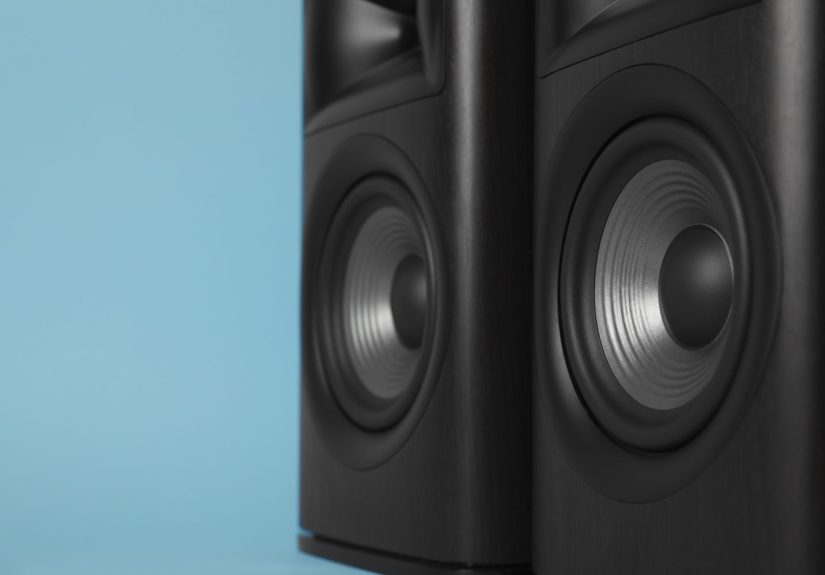
These examples show that THX certification is not limited to one type of product. It can appear on in-wall speakers, tower speakers, center channels, compact satellites, subwoofers, complete systems, and receivers. The common theme is performance verification. Whether a speaker hides behind an acoustically transparent screen or sits proudly in the room like a black rectangular monument to movie night, the certification indicates it has met a defined standard.
How to Build a THX-Inspired Surround Sound Setup
You do not need to turn your home into a commercial cinema to benefit from THX principles. Even if every component in your system is not THX certified, the ideas behind the standard can help you build better surround sound.
Start With Room Size
Before buying speakers, measure your room and estimate your main listening distance. A compact system may be perfect for a small den, while a large theater room may need Ultra-class output. Matching speaker capability to the room prevents disappointment and overspending.
Prioritize the Front Soundstage
The left, center, and right speakers create the foundation of movie sound. If your budget is limited, invest here first. A strong front soundstage improves dialogue, music, effects, and the feeling that sound is connected to the screen.
Use a Capable Subwoofer
Home theater bass is not only about volume. It is about depth, control, and placement. A good subwoofer makes action scenes exciting and gives music more weight. In many rooms, two smaller subwoofers can provide smoother bass than one giant subwoofer sitting in a corner like it owns the deed.
Calibrate the System
Calibration is where good equipment becomes a good system. Set speaker distances, levels, crossover points, and room correction carefully. Many AV receivers include automated calibration tools, but it is still worth checking the results manually. Trust, but verifyespecially when a receiver decides your center speaker is 47 feet away and possibly in another county.
Common Myths About THX Certification
Myth 1: THX Is a Sound Format
THX is not a codec like Dolby Digital, Dolby Atmos, DTS, or DTS:X. It is a certification and quality assurance standard. It works alongside audio formats rather than replacing them.
Myth 2: THX Certified Speakers Only Work With THX Receivers
THX certified speakers can work with many AV receivers, provided the receiver has enough power and the right setup options. Using THX certified speakers with a THX certified receiver can create a more standardized system, but it is not the only possible path.
Myth 3: Bigger Is Always Better
A Dominus-level system in a tiny bedroom may be impressive, but it is also deeply unnecessary unless your hobby is rearranging air molecules for sport. The right speaker is the one that fits your room, listening distance, volume needs, and budget.
Myth 4: THX Certification Guarantees Perfect Sound
Certification helps, but room acoustics, speaker placement, calibration, seating position, and source quality still matter. A great speaker in a terrible room can still sound disappointing. Your walls, floor, ceiling, and furniture are all part of the audio system, whether they asked for the job or not.
Is THX Certification Worth It?
For many home theater buyers, THX certification is worth considering because it reduces uncertainty. It tells you the product was designed and tested for demanding playback. If you are building a movie-focused system, especially in a medium or large room, the badge can be meaningful.
That said, it should not be the only factor. Listen when possible. Read measurements and reviews. Consider the room. Check amplifier power, speaker sensitivity, impedance, placement needs, and subwoofer integration. A THX badge is useful, but it is not a magic spell. It cannot fix bad setup, poor acoustics, or the decision to place a center speaker inside a cabinet behind a decorative wooden door.
The best approach is to treat THX certification as one strong signal among several. It is especially valuable for buyers who want cinema-style performance, predictable standards, and a system that can handle big dynamic soundtracks without losing control.
Practical Buying Tips for THX Certified Speakers and Surround Sound
Match the Certification Class to Your Room
Do not buy based only on the largest badge. Compact, Select, Ultra, and Dominus exist for a reason. A properly matched Select system can outperform an oversized system that is poorly placed or never calibrated.
Check the Entire Signal Chain
Speakers are only part of the equation. Your AV receiver must have enough channels, enough clean power, modern HDMI support, and good bass management. If you plan to use Dolby Atmos or DTS:X, make sure the receiver supports your desired speaker layout.
Think About Installation
In-wall THX certified speakers can look clean and professional, but they require careful planning. You may need proper back boxes, stud spacing, cable routing, and acoustic treatment. Traditional cabinet speakers are easier to reposition but may take up more room.
Do Not Ignore Acoustics
A rug, curtains, bookshelves, and acoustic panels can improve sound more than many people expect. Hard, reflective rooms can make even excellent speakers sound harsh. Good acoustics are the difference between “cinematic immersion” and “why does every clap sound like it happened in a parking garage?”
Real-World Experiences With THX Certification for Speakers and Surround Sound
The first thing many people notice when they hear a properly set up THX certified surround sound system is not just loudness. It is control. There is a feeling that the system has plenty of power in reserve. Dialogue stays centered and clear, even when music and effects become intense. Bass hits hard but does not smear into the midrange. Surround effects move around the room without turning into distracting noise.
In a typical living room, the difference often appears during action scenes. On a weaker system, a movie explosion may sound big for half a second and then collapse into distortion. On a well-matched THX certified setup, the same scene can feel layered. You hear the initial impact, the low-frequency pressure, the debris, the echo, and the soundtrack underneath. It is not just “boom.” It is “boom, texture, space, and now the dog is judging your entertainment choices.”
Dialogue is another area where THX-style system design shines. Many viewers complain that modern movies are hard to understand. Sometimes the mix is partly responsible, but home setup is often the bigger villain. A strong center channel, proper level matching, and controlled dispersion can make voices much easier to follow. In my experience with home theater layouts, moving the center speaker out of a cabinet and angling it toward ear level can make a bigger improvement than changing streaming services, buying a new remote, or blaming the actor for mumbling through three chase scenes.
Subwoofer integration is where patience pays off. A THX-inspired 80 Hz crossover can be a sensible starting point, but every room behaves differently. One seating position may have huge bass while another feels thin. Moving the subwoofer even a few feet can change the experience dramatically. In some rooms, dual subwoofers create smoother bass across the couch. The goal is not to make every movie shake the windows. The goal is to make bass feel natural, powerful, and connected to what is happening on screen.
Another useful lesson is that THX certification does not remove the need for calibration. I have heard expensive systems sound ordinary because the speakers were placed randomly, the subwoofer level was too hot, or the surrounds were aimed like tiny audio laser beams at one unlucky chair. I have also heard modest systems sound excellent because the owner took time to set distances, levels, crossover points, and seating position correctly. Setup is the great equalizer. It is not glamorous, but neither is flossing, and both prevent pain later.
For gamers, THX certified or THX-inspired surround sound can also be impressive. Directional cues in games benefit from clean speaker placement and balanced levels. Footsteps, environmental effects, and positional audio become easier to locate when the system is not overwhelmed by boomy bass or harsh treble. A good surround layout can make open-world games feel bigger and competitive games more precise.
For music, results depend on the speaker design and listener preference. Some THX certified speakers are extremely capable with music, offering clean mids, tight bass, and strong imaging. Others are clearly optimized for theater impact. That is not a flaw; it is a design priority. Buyers who split time evenly between stereo music and movies should audition carefully or read detailed reviews before choosing.
The biggest practical experience is this: THX certification is most rewarding when treated as part of a system strategy. Choose the right class for your room. Use a capable receiver. Place speakers carefully. Calibrate everything. Add acoustic improvements where possible. Do that, and THX certified speakers can deliver the kind of surround sound that makes a home feel less like a room with a television and more like a private screening space.
Conclusion: THX Certification Is a Shortcut to Serious Cinema Sound
THX certification for speakers and surround sound remains valuable because it gives buyers a clear performance benchmark. It does not replace careful shopping, smart placement, or good calibration, but it does help identify equipment built for serious home theater use. Whether you are designing a compact media room or a full dedicated cinema, THX standards can guide you toward cleaner dialogue, stronger dynamics, smoother surround effects, and more controlled bass.
The key is choosing the right THX performance class for your space. Compact, Select, Ultra, and Dominus are not just marketing labels; they help match gear to room size and listening distance. When paired with thoughtful setup and room-aware calibration, THX certified speakers can deliver a cinematic experience that feels powerful, balanced, and surprisingly close to what filmmakers intended.
In other words, the badge mattersbut the setup matters too. Get both right, and your movie nights may become so convincing that guests start checking behind the couch for helicopters, dinosaurs, and emotionally overcommitted subwoofers.