Table of Contents >> Show >> Hide
- Why the Battle of Stalingrad Still Matters
- Top 10 Facts About the Battle of Stalingrad
- 1. The battle lasted far longer than most people realize
- 2. Stalingrad mattered because of geography, industry, and propaganda
- 3. German bombing helped destroy the city, but the ruins also helped the defenders
- 4. The Volga River was the Soviet defenders’ lifeline
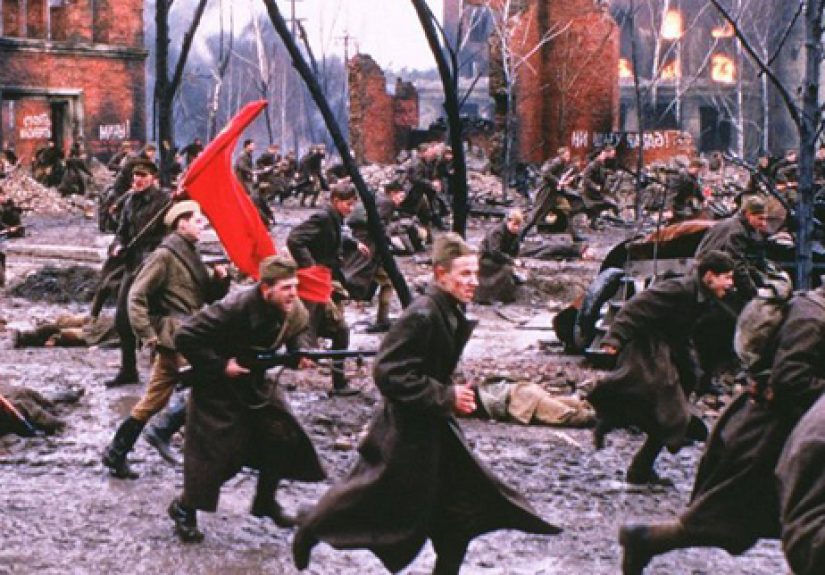
- 5. It became one of the most ferocious urban battles in military history
- 6. Operation Uranus, not just street fighting, decided the outcome
- 7. Hitler’s refusal to allow a breakout doomed the German Sixth Army
- 8. The surrender was one of the great humiliations of the war
- 9. Civilians and women defenders were central to the story
- 10. Stalingrad changed the psychological direction of World War II
- What These Facts Add Up To
- Experiences Related to the Battle of Stalingrad: Why It Still Feels So Immediate
The Battle of Stalingrad is one of those World War II events that feels less like a chapter in a textbook and more like a warning label for human ambition. It was massive, messy, stubborn, and catastrophic. It involved strategy, propaganda, industrial might, river logistics, winter, ego, and the terrible discovery that a ruined city can still fight back. For Nazi Germany, Stalingrad became the place where confidence cracked. For the Soviet Union, it became a brutal proof that the German advance could be stopped and reversed.
If you have ever heard Stalingrad described as a “turning point,” that is true, but it is also a bit too tidy. The battle was not a single dramatic moment with cinematic music swelling in the background. It was months of attrition, block-by-block fighting, collapsing assumptions, and increasingly desperate decisions. The city’s name, factories, and position on the Volga all mattered. So did the civilians trapped inside it, the soldiers ferried across the river, and the commanders who kept making choices that would echo far beyond southern Russia.
Here are the top 10 facts about the Battle of Stalingrad that explain why it remains one of the most studied, debated, and unforgettable battles in modern history.
Why the Battle of Stalingrad Still Matters
Stalingrad sits at the center of almost every serious discussion of the Eastern Front because it combined military scale with symbolic force. This was not just a contest for territory. It was a clash over transport routes, industrial production, access to the Caucasus, national morale, and the political theater of a city carrying Stalin’s name. The result reshaped the war in Europe. After Stalingrad, Germany was no longer advancing with the same aura of inevitability. The Red Army, by contrast, increasingly fought with the confidence of an army that knew the enemy could bleed, break, and retreat.
Top 10 Facts About the Battle of Stalingrad
1. The battle lasted far longer than most people realize
Many people mentally file Stalingrad under “winter battle,” which is understandable because the snowy surrender images are famous. But the wider campaign ran from July 1942 to February 1943, with the most iconic urban fighting intensifying after the German assault and bombing in late August. That long duration matters because it shows Stalingrad was not just a sudden collapse or a single failed push. It was a grinding campaign that kept consuming men, supplies, and optimism for months.
In practical terms, that meant commanders had to fight not only the enemy but also exhaustion, terrain, and logistics. Time itself became a weapon. The longer the battle dragged on, the more Germany’s position worsened. What started as an offensive designed to deliver strategic advantage slowly turned into a trap that closed week by week.
2. Stalingrad mattered because of geography, industry, and propaganda
The city was not important merely because it had Stalin’s name on it, though that certainly added fuel to the political fire. Stalingrad stretched along the Volga River, one of the Soviet Union’s critical transport arteries. Capturing it would disrupt movement between regions and help secure the northern flank of Germany’s broader southern campaign aimed toward the Caucasus oil fields. On top of that, Stalingrad was a major industrial center producing tractors and armaments.
In other words, Hitler did not choose the city for vanity alone. He chose it because it was strategically useful and symbolically irresistible. That combination is dangerous in war. Once prestige gets tangled up with planning, leaders start acting like maps are emotional-support documents. Stalingrad became exactly that kind of disaster.
3. German bombing helped destroy the city, but the ruins also helped the defenders
The Luftwaffe’s bombing campaign devastated Stalingrad and killed enormous numbers of civilians. But there was a cruel irony built into the destruction. By smashing the city, German air power also created a landscape of rubble, shattered walls, cellars, and twisted industrial structures that made rapid conquest much harder. Instead of sweeping cleanly through a functioning city, German troops had to fight through a maze of debris and fortified wreckage.
This is one of the defining lessons of the battle: urban destruction does not automatically produce easy victory. Sometimes it produces a battlefield so chaotic that every crater, staircase, and broken workshop becomes a miniature fortress. At Stalingrad, ruins were not empty. They were tactical problems with bricks.
4. The Volga River was the Soviet defenders’ lifeline
By mid-September, Soviet forces in Stalingrad were compressed into a narrow strip along the Volga. That sounds bad because it was bad. Yet the river kept the defense alive. Soviet troops, ammunition, and supplies were moved across the Volga by barge and boat under extraordinarily dangerous conditions. When German fire came close to cutting those crossings, the defense was pushed to the brink.
This fact is easy to overlook because rivers on maps can seem passive. The Volga was anything but passive. It was the artery that allowed the Soviets to keep reinforcing a city that appeared, from many German perspectives, almost captured. Stalingrad was not simply defended from within; it was continually re-fed from across the water.
5. It became one of the most ferocious urban battles in military history
Stalingrad is often remembered as the textbook example of close-quarters urban warfare. Streets, rail stations, embankments, apartment blocks, and factory buildings were fought over repeatedly. Control of places like the industrial district, the Red October Factory area, and key high ground such as Mamayev Kurgan could shift again and again. This was not elegant warfare. It was intimate, exhausting, and brutally repetitive.
The fight often broke down into small-unit combat where local initiative mattered enormously. In that kind of environment, massive strategic plans collided with the stubborn reality that one machine shop, one embankment, or one ruined building could delay an army. Stalingrad was where military theory got introduced to soot, dust, and very bad luck.
6. Operation Uranus, not just street fighting, decided the outcome
The most famous images of Stalingrad show fighting inside the city, but the decisive shift came from outside it. In November 1942, the Soviets launched Operation Uranus, a major counteroffensive planned by senior commanders including Georgy Zhukov and Aleksandr Vasilevsky. Rather than hammering the strongest German positions head-on, the Soviets struck the weaker Axis forces guarding the flanks north and south of the city.
This was smart, disciplined operational planning. The attack targeted overstretched and less well-equipped Romanian forces protecting the German salient. Within days, Soviet spearheads linked up west of Stalingrad and encircled the German Sixth Army and associated forces. The lesson here is simple: Stalingrad was won not only by stubborn defense inside the city but also by a larger strategic maneuver that turned local resistance into strategic catastrophe for Germany.
7. Hitler’s refusal to allow a breakout doomed the German Sixth Army
Once the encirclement closed, Germany still had choices, but they were rapidly shrinking and all unpleasant. Hitler refused to permit Friedrich Paulus and the trapped Sixth Army to break out. Instead, he ordered them to hold their positions. A relief attempt under Erich von Manstein came later, but because Hitler would not allow a coordinated breakout from inside the pocket, the rescue failed.
This was one of the battle’s most consequential command decisions. Food, fuel, medicine, and ammunition were all running short. Air supply proved wildly inadequate. The trapped army was asked to do what trapped armies are famously bad at doing: survive indefinitely while surrounded in winter. Stalingrad became a case study in how ideology, pride, and denial can outvote military reality, right up until reality sends the bill.
8. The surrender was one of the great humiliations of the war
By the end of January and early February 1943, the German position had collapsed. Around 91,000 surviving German soldiers surrendered after the encircled force had been reduced by combat, disease, starvation, and exhaustion. Earlier in the siege, more than 220,000 troops had been caught in the Soviet ring, and some estimates for the trapped force run even higher when associated Axis units are counted.
The symbolism of the surrender was enormous. This was not a minor withdrawal dressed up as strategic flexibility. It was the destruction of a major German field army. The aura of the invincible Wehrmacht took a devastating hit. After Stalingrad, German victories no longer looked permanent, and the Soviet Union increasingly seized the initiative on the Eastern Front.
9. Civilians and women defenders were central to the story
One of the most important facts about Stalingrad is that the battle was not fought only by uniformed men in tidy military categories. As many as half a million civilians remained in the city when the Germans approached. Many were women and children. Their survival depended on improvisation, movement through ruins, access to water, and a staggering tolerance for danger.
Women also appeared directly in the city’s defense. The 1077th Anti-Aircraft Regiment became famous for resisting German forces as they approached Stalingrad, and many of its crew members were female. Meanwhile, factories in and around the city continued producing or repairing tanks even as the battle closed in. That detail alone tells you something essential about Stalingrad: the line between front line and home front had practically dissolved.
10. Stalingrad changed the psychological direction of World War II
Military historians often call Stalingrad a turning point, and not just because the map began to move west after it. The battle also produced a psychological rupture. It ended a long string of German successes and gave the Soviet Union a victory of enormous moral and political weight. News of the German defeat rippled far beyond the battlefield, affecting morale, resistance movements, and international expectations about who could actually win the war in Europe.
Stalingrad did not end World War II by itself, of course. Berlin was still far away, and many campaigns remained. But after Stalingrad, the question was no longer whether Germany could be stopped. The question became how far the Red Army could push the reversal. That is a very different kind of war.
What These Facts Add Up To
Put all 10 facts together, and the Battle of Stalingrad becomes more than a famous military episode. It becomes a layered story about leadership, logistics, civilian endurance, propaganda, terrain, and the limits of brute force. Germany had powerful armies, experienced commanders, and early momentum. The Soviet Union had staggering losses, immense pressure, and a city under siege. Yet the battle showed that strategic overreach, weak flanks, unrealistic orders, and underestimating the defender can destroy even a formidable offensive.
Stalingrad also matters because it forces readers to hold two truths at once. It was a Soviet triumph, and it was a human catastrophe. It helped save the Soviet war effort, and it consumed immense lives to do it. That tension is part of why the battle never feels simple, even eight decades later.
Experiences Related to the Battle of Stalingrad: Why It Still Feels So Immediate
One reason Stalingrad remains so powerful is that it can be understood not only as a military campaign but also as a human experience of compression. Everything narrowed there. Space narrowed as Soviet defenders were squeezed against the Volga. Time narrowed as supplies ran late and rescue plans failed. Choices narrowed as commanders turned strategy into stubbornness and survival into endurance.
For civilians, the experience was even more haunting. Accounts preserved by later historians describe children moving through ruins, families scrambling for water, and people trying to keep some sliver of ordinary life while the city around them collapsed. The image is almost impossible to forget: a city still inhabited, still improvising, still trying to function while bombardment and street fighting turned daily life into a sequence of risks. That human dimension keeps Stalingrad from becoming a sterile map exercise.
Soldiers experienced the battle as a world reduced to fragments. A river crossing mattered more than a slogan. A workshop mattered more than a speech. A stairwell, trench, crater, or smashed factory wall could determine whether a unit held on for another hour. The Library of Congress preserves wartime imagery from Stalingrad showing Soviet soldiers in fortified positions, still cleaning weapons, still repairing the small tools of life in the middle of destruction. That kind of image says something textbooks sometimes miss: war is not only about explosions and offensives; it is also about maintenance, waiting, nerves, and the effort to stay functional in a broken place.
There is also the experience of memory. For modern readers, museum visitors, or students, Stalingrad often produces a strange mix of admiration and dread. Admiration comes from the sheer resilience involved. Dread comes from realizing how many of the battle’s worst features still feel recognizable in modern warfare: urban combat, civilians trapped in battle zones, supply lines under fire, and leaders who confuse symbolism with strategy. Stalingrad feels historical, yes, but it also feels stubbornly current.
Visiting memorials connected to the battle, even through photographs and documentary material, adds another layer. Mamayev Kurgan, the high ground that saw savage fighting, later became a monumental site of remembrance crowned by The Motherland Calls. That transformation from battlefield to memorial captures the emotional arc of Stalingrad better than almost anything else. A place once fought over meter by meter became a place where memory itself stands guard.
Studying Stalingrad can therefore be an unsettling experience, but also a clarifying one. It strips away romantic ideas about war. It shows how quickly large offensives can become logistical nightmares, how civilians pay the price for strategic vanity, and how survival can depend on ferries, factory shifts, frozen ground, and a refusal to leave. The Battle of Stalingrad does not ask for easy admiration. It asks for attention, honesty, and a willingness to see how history turns when armies collide with reality and reality refuses to blink.
Note: This article is formatted for web publication, written in original language, and intentionally excludes inline URLs and placeholder citation artifacts.