Table of Contents >> Show >> Hide
- What Is Yoga?
- Why There Are So Many Types of Yoga
- The Most Popular Types of Yoga
- 1. Hatha Yoga: Best for Beginners and Foundation Building
- 2. Vinyasa Yoga: Best for Flow, Energy, and Variety
- 3. Ashtanga Yoga: Best for Discipline and Structure
- 4. Power Yoga: Best for Fitness and Strength
- 5. Iyengar Yoga: Best for Alignment and Precision
- 6. Yin Yoga: Best for Deep Stretching and Stillness
- 7. Restorative Yoga: Best for Relaxation and Recovery
- 8. Bikram Yoga and Hot Yoga: Best for Heat Lovers
- 9. Kundalini Yoga: Best for Breath, Energy, and Meditation
- 10. Prenatal Yoga: Best for Pregnancy Support
- 11. Chair Yoga: Best for Accessibility
- 12. Yoga Nidra: Best for Guided Relaxation
- How to Choose the Right Type of Yoga
- Quick Comparison of Yoga Styles
- Common Mistakes Beginners Make
- What to Wear and Bring to Yoga
- Safety Tips for Practicing Yoga
- Personal Experiences With Different Types of Yoga
- Conclusion
- SEO Tags
Note: This guide is for general educational purposes and is based on widely accepted yoga knowledge, health guidance, and evidence-informed wellness recommendations. If you have an injury, chronic condition, pregnancy-related concern, or medical limitation, ask a qualified healthcare professional before starting a new yoga practice.
Choosing a yoga class can feel like standing in front of a smoothie menu with 47 options: refreshing, colorful, and mildly suspicious. Hatha? Vinyasa? Yin? Hot yoga? Restorative? Kundalini? Suddenly, “just stretching” has become a full academic department with incense.
The good news is that yoga is not a one-size-fits-all practice. Different types of yoga serve different goals. Some styles build strength and sweat. Some improve flexibility and balance. Some help you slow down, breathe better, and remember that your shoulders are not legally required to live next to your ears.
In this complete guide to the types of yoga, we will explore the most popular yoga styles, who they are best for, what to expect in class, and how to choose the right practice for your body, schedule, and personality. Whether you are a total beginner, a weekend warrior, a stressed-out student, a desk-job survivor, or someone who simply wants to touch their toes without negotiating with gravity, there is a yoga style that can meet you where you are.
What Is Yoga?
Yoga is a mind-body practice that combines physical postures, breathing techniques, concentration, and often meditation. While modern yoga classes may focus heavily on movement and fitness, yoga has deeper roots as a holistic system for physical, mental, and emotional well-being.
Most people in the United States meet yoga through studio classes, gym sessions, online videos, or wellness programs. In those settings, yoga usually includes poses known as asanas, breathing practices called pranayama, and a final relaxation period that may be the only time all week someone tells you to lie down and do less. Honestly, a miracle.
Research and clinical guidance often associate yoga with improved flexibility, strength, balance, stress management, sleep quality, body awareness, and general wellness. However, the benefits depend on the style, consistency, instructor quality, and whether the practice is appropriate for your needs.
Why There Are So Many Types of Yoga
Yoga developed across many traditions, teachers, lineages, and modern adaptations. Over time, different schools emphasized different goals. Some focused on discipline and structured sequences. Others highlighted breath, alignment, meditation, spiritual study, relaxation, athletic flow, or therapeutic support.
That is why one yoga class may feel like a gentle stretch in a quiet room, while another feels like a full-body workout taught by someone who thinks “just one more plank” is a love language. Neither is wrong. They are simply different tools.
The best type of yoga for you depends on your goal. Want to learn the basics? Start with Hatha. Want movement and energy? Try Vinyasa. Want precision and props? Iyengar may be your friend. Need rest? Restorative yoga is basically a permission slip from the universe. Want deep stretching? Yin yoga might be the slow burn you did not know you needed.
The Most Popular Types of Yoga
1. Hatha Yoga: Best for Beginners and Foundation Building
Hatha yoga is often used as an umbrella term for physical yoga, but in many modern studios, it refers to a slower-paced class focused on basic poses, breathing, and alignment. If yoga were a house, Hatha would be the front door, the welcome mat, and the person saying, “Come in, we have blocks.”
A typical Hatha class may include standing poses, seated stretches, gentle backbends, balance work, and relaxation. The pace is usually slower than Vinyasa, giving students time to learn proper form and understand how each posture feels.
Best for: beginners, people returning after a break, anyone who wants a balanced practice, and students who prefer steady instruction over fast transitions.
What to expect: clear guidance, moderate stretching, breathing cues, and enough time in each pose to notice whether your hamstrings are filing a formal complaint.
2. Vinyasa Yoga: Best for Flow, Energy, and Variety
Vinyasa yoga links breath with movement. Classes often flow from one pose to another in creative sequences, sometimes including sun salutations, standing poses, balance work, core exercises, and stretching. It can feel graceful, athletic, and occasionally like choreography created by a calm person with very strong arms.
Vinyasa is popular because it offers variety. One teacher’s class may be slow and smooth, while another’s may feel like cardio wearing yoga pants. Because the sequence changes, students who get bored easily often enjoy Vinyasa.
Best for: people who like movement, fitness-focused students, intermediate beginners with some body awareness, and anyone who wants a dynamic yoga workout.
What to expect: continuous movement, breath cues, transitions, light sweating, and a real chance to discover that “downward dog” is both a pose and a lifestyle challenge.
3. Ashtanga Yoga: Best for Discipline and Structure
Ashtanga yoga is a vigorous, structured style built around set sequences of poses. Students practice the same series repeatedly, gradually building strength, flexibility, stamina, and focus. It is not random. It is not casual. It is yoga with a syllabus.
Traditional Ashtanga includes synchronized breath, specific transitions, and a progressive approach. Because the sequence is physically demanding, it can be rewarding for people who enjoy consistency and measurable improvement.
Best for: disciplined students, athletic practitioners, people who like routine, and those who appreciate a challenging practice with clear progression.
What to expect: repeated sequences, strong physical work, breath-focused movement, and a class that politely but firmly reminds you that core strength is not imaginary.
4. Power Yoga: Best for Fitness and Strength
Power yoga is a modern, fitness-oriented style influenced by Ashtanga but usually less rigid in sequence. It often includes strong flows, core work, standing poses, balance challenges, and faster pacing. If Vinyasa went to the gym and bought a protein smoothie, it might become Power yoga.
Because Power yoga varies widely by teacher, one class may be moderately challenging while another may feel like a boot camp with Sanskrit vocabulary. It can build muscular endurance, body heat, and confidence, but beginners should look for classes labeled “beginner power” or “all levels.”
Best for: people seeking a workout, athletes, strength-focused students, and anyone who wants yoga with more intensity.
What to expect: sweat, strength work, faster transitions, energetic music in some studios, and probably at least one moment when your legs question your life choices.
5. Iyengar Yoga: Best for Alignment and Precision
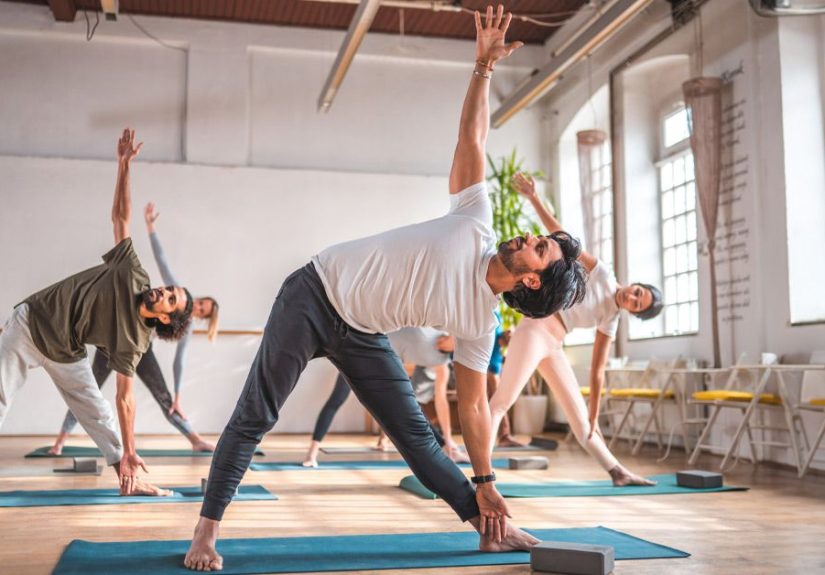
Iyengar yoga emphasizes precise alignment, careful instruction, and the use of props such as blocks, straps, blankets, chairs, and bolsters. Props are not “cheating.” They are intelligent tools that help students practice safely and effectively. In Iyengar yoga, a block is not a brick of shame; it is a tiny rectangular assistant.
Classes may move more slowly, with detailed attention to posture, body position, and modifications. This style can be especially useful for students who want to understand technique or need support adapting poses to their bodies.
Best for: beginners who want detail, people with limited mobility, students recovering from minor physical setbacks with professional guidance, and anyone who loves clear instructions.
What to expect: props, alignment cues, longer holds, careful adjustments, and a surprisingly deep relationship with your quadriceps.
6. Yin Yoga: Best for Deep Stretching and Stillness
Yin yoga is slow, quiet, and deeply focused on long-held floor poses. Instead of flowing quickly, students hold postures for several minutes, often targeting connective tissues around the hips, spine, pelvis, and legs. It looks easy until minute three, when your inner narrator starts writing dramatic poetry.
Yin yoga is not about forcing flexibility. The goal is to settle into a shape, breathe, and allow gradual release. It can be mentally challenging because stillness gives your thoughts plenty of room to perform their little circus act.
Best for: flexibility, mobility, stress relief, athletes who need recovery, desk workers with tight hips, and people who want a meditative practice.
What to expect: long holds, quiet rooms, props, deep stretching, and a practice that teaches patience faster than waiting for your phone to update.
7. Restorative Yoga: Best for Relaxation and Recovery
Restorative yoga is designed for deep rest. Students use props to fully support the body in comfortable positions, often holding poses for five to ten minutes or longer. The goal is not to stretch aggressively or build strength. The goal is to relax so thoroughly that your nervous system sends a thank-you card.
This style is excellent for stress management, recovery days, and anyone who feels tired but still wants the benefits of a guided practice. It is gentle, quiet, and deeply nourishing.
Best for: stress relief, burnout, beginners, recovery days, older adults, and anyone who needs rest but struggles to slow down.
What to expect: blankets, bolsters, dim lighting, long supported poses, slow breathing, and the possibility of accidentally becoming one with the floor.
8. Bikram Yoga and Hot Yoga: Best for Heat Lovers
Bikram yoga traditionally follows a specific sequence of 26 poses and two breathing exercises in a heated room. Hot yoga is a broader term for yoga practiced in a heated environment, and the sequence may vary depending on the studio and teacher.
Heat can make muscles feel more pliable and create an intense sweating experience. However, hot yoga is not ideal for everyone. People with heat sensitivity, dehydration risk, cardiovascular concerns, pregnancy, or certain medical conditions should get professional advice before participating.
Best for: people who enjoy sweating, experienced students who tolerate heat well, and those looking for an intense class environment.
What to expect: heat, sweat, hydration needs, strong sensations, and a towel that becomes your closest emotional support object.
9. Kundalini Yoga: Best for Breath, Energy, and Meditation
Kundalini yoga combines movement, breathwork, chanting, meditation, and repetitive practices called kriyas. It is less about perfecting a pose and more about shifting energy, focus, and awareness. For students used to purely fitness-based yoga, Kundalini may feel unusual at first, but many people find it powerful and deeply centering.
A Kundalini class may include dynamic breathing, seated movements, mantras, mudras, and meditation. It can be energizing, emotional, or calming depending on the class.
Best for: people interested in meditation, breathwork, spiritual practice, emotional awareness, and nontraditional yoga experiences.
What to expect: chanting, repeated movements, breathing exercises, meditation, and fewer concerns about whether your triangle pose belongs in a geometry textbook.
10. Prenatal Yoga: Best for Pregnancy Support
Prenatal yoga is designed for people who are pregnant and focuses on gentle movement, breathing, pelvic awareness, relaxation, and safe modifications. A good prenatal class avoids risky positions and supports the changing needs of the body during pregnancy.
Because pregnancy is different for every person, prenatal yoga should be practiced with a qualified instructor and medical guidance when needed. The goal is comfort, strength, breath awareness, and preparationnot winning a flexibility contest against your pre-pregnancy self.
Best for: pregnant students with medical clearance who want gentle movement, relaxation, and body awareness.
What to expect: modified poses, breathing practice, gentle strengthening, hip mobility, rest, and a supportive pace.
11. Chair Yoga: Best for Accessibility
Chair yoga adapts yoga poses so they can be done seated or with the support of a chair. It is a practical option for older adults, office workers, people with balance challenges, beginners, or anyone who wants gentle movement without getting up and down from the floor.
Chair yoga can include seated twists, shoulder stretches, gentle forward folds, ankle mobility, breathing exercises, and supported standing poses. It proves that yoga does not require fancy leggings, advanced flexibility, or the ability to fold yourself into a human pretzel.
Best for: seniors, beginners, office workers, people with mobility limitations, and anyone seeking a gentle accessible practice.
What to expect: supported movement, breath awareness, simple stretches, balance-friendly options, and zero pressure to perform acrobatics.
12. Yoga Nidra: Best for Guided Relaxation
Yoga Nidra, sometimes called yogic sleep, is a guided relaxation practice usually done lying down. It is not a typical movement-based class. Instead, students follow verbal cues that guide awareness through the body, breath, emotions, and inner experience.
Yoga Nidra can support relaxation, stress management, and better rest routines. It is ideal for people who want meditation but find seated silence difficult. Basically, it is meditation’s cozy cousin who brings a blanket.
Best for: stress relief, sleep support, meditation beginners, recovery days, and people who need deep rest.
What to expect: lying down, guided awareness, stillness, relaxation, and a strong chance of wondering whether you were awake, asleep, or briefly visiting another dimension.
How to Choose the Right Type of Yoga
Start With Your Goal
If your goal is flexibility, try Yin, Hatha, or Iyengar. If you want strength and sweat, consider Vinyasa, Power yoga, or Ashtanga. If you need stress relief, Restorative yoga, Yoga Nidra, Hatha, or gentle yoga may be best. If you want spiritual depth, Kundalini or traditional Hatha classes may appeal to you.
Match the Class to Your Energy Level
Some days you want to move like a warrior. Other days you want to become a blanket burrito. Both are valid. A sustainable yoga practice should support your life, not become another taskmaster wearing stretchy pants.
Read Class Descriptions Carefully
Words like “gentle,” “beginner,” “slow flow,” “all levels,” “heated,” “power,” and “advanced” matter. A beginner class and an advanced heated power flow are not the same species. When in doubt, ask the studio or instructor what the class includes.
Look for Qualified Teachers
A good instructor offers modifications, encourages safe alignment, respects individual limits, and does not treat pain as a motivational quote. Yoga should challenge you at times, but sharp pain, dizziness, or pressure to force a pose are signs to pause.
Quick Comparison of Yoga Styles
| Yoga Style | Best For | Intensity | Beginner Friendly? |
|---|---|---|---|
| Hatha | Basics, balance, flexibility | Low to moderate | Yes |
| Vinyasa | Flow, fitness, variety | Moderate to high | Sometimes |
| Ashtanga | Discipline, stamina, structure | High | Better with guidance |
| Power Yoga | Strength, sweat, endurance | High | Sometimes |
| Iyengar | Alignment, technique, props | Low to moderate | Yes |
| Yin | Deep stretching, stillness | Low | Yes |
| Restorative | Relaxation, recovery, stress relief | Very low | Yes |
| Hot Yoga | Sweat, intensity, heat lovers | Moderate to high | Use caution |
| Kundalini | Breathwork, meditation, energy | Varies | Yes, with openness |
| Chair Yoga | Accessibility, gentle movement | Low | Yes |
Common Mistakes Beginners Make
Trying the Hardest Class First
Ambition is wonderful. Starting your yoga journey with an advanced heated power class may be less wonderful. Begin with a class that matches your experience and fitness level. You can always increase intensity later.
Comparing Yourself to Others
Someone in class may fold forward like a travel umbrella. That does not mean you are failing. Bodies differ. Yoga is not a competitive sport, even if your ego occasionally brings a scoreboard.
Ignoring Props
Blocks, straps, blankets, bolsters, and chairs make yoga more accessible and more precise. Props help bring the pose to your body instead of forcing your body into the pose.
Holding Your Breath
Breath is central to yoga. If you are holding your breath, clenching your jaw, and bargaining with your hamstrings, ease up. Smooth breathing is often a sign that you are practicing at a useful level.
What to Wear and Bring to Yoga
Wear comfortable clothing that allows movement. You do not need expensive gear. A yoga mat, water bottle, and optional towel are enough for most classes. For Yin, Restorative, or gentle yoga, layers can help because the body cools down during long holds. For hot yoga, bring water, a towel, and realistic expectations about your hairstyle.
Most studios provide props, but if you practice at home, consider starting with two blocks, a strap, and a blanket. These simple tools can make poses safer and more comfortable.
Safety Tips for Practicing Yoga
Yoga is generally considered safe for many healthy people when practiced properly, but injuries can happen. Move slowly, listen to your body, and avoid forcing positions. Mild effort is normal. Sharp pain is not.
Tell your instructor about injuries or limitations before class. Choose beginner-friendly sessions when learning. Stay hydrated, especially in heated classes. If you feel dizzy, overheated, numb, or unusually uncomfortable, stop and rest.
People with medical conditions, recent surgeries, pregnancy, severe joint issues, uncontrolled blood pressure, or balance concerns should seek professional guidance before beginning or modifying a practice.
Personal Experiences With Different Types of Yoga
One of the funniest things about yoga is that the class you think you need is not always the class your body quietly votes for. Many people start yoga expecting either a workout or a stretch, then discover that each style teaches a different lesson.
For example, a first Hatha class often feels like learning the alphabet of movement. The poses may look simple, but simple does not mean empty. Standing in Mountain Pose can reveal posture habits you never noticed. Warrior II can make your legs wake up like they just heard breaking news. Hatha teaches patience, breath, and the basic map of the body.
Vinyasa, on the other hand, can feel like dancing with instructions. At first, the transitions may seem confusing: inhale up, exhale fold, step back, lower down, upward dog, downward dog. It is normal to feel like everyone else received a secret manual. But after a few classes, the rhythm starts to make sense. The breath becomes the music, and the body learns the route.
Yin yoga creates a completely different experience. The room is quiet. The poses are low to the ground. Nothing dramatic appears to be happening. Then, two minutes into a hip stretch, your brain begins planning dinner, reviewing old conversations, and wondering why time has slowed to the speed of cold honey. That is the hidden challenge of Yin: it asks you to stay present when there is nowhere to rush.
Restorative yoga may be the biggest surprise for busy people. Many students assume resting will be easy. Then they lie down with three blankets, a bolster, an eye pillow, and enough support to impress an architectand still struggle to relax. Restorative yoga shows how deeply the body can hold tension and how healing it can feel to stop performing for a while.
Power yoga and Ashtanga often appeal to people who like structure, sweat, and progress. These styles can build confidence because improvements are noticeable. A pose that once felt impossible becomes possible. A transition that felt awkward becomes smoother. The body gets stronger, but so does discipline.
Iyengar yoga offers another kind of satisfaction. Instead of rushing, it invites investigation. Where is the foot pointing? Is the spine long? Can the shoulder soften? The details may seem tiny, but they change everything. Iyengar teaches that alignment is not about looking perfect; it is about creating space, stability, and awareness.
Chair yoga proves that yoga belongs to everyone. A short chair practice during a workday can release tight shoulders, calm breathing, and refresh focus. You do not need a studio, fancy mat, or heroic flexibility. Sometimes the most useful yoga practice is five quiet minutes between emails.
The real experience of yoga is not only about choosing one perfect style. It is about learning what supports you in different seasons of life. Some weeks call for movement. Some call for rest. Some call for strength. Some call for lying on the floor and admitting that being human is a full-time job.
The best yoga style is the one you can practice consistently, safely, and honestly. It should help you feel more connected to your body, not more critical of it. It should leave you with more awareness, not more pressure. And ideally, it should make everyday life feel a little easierwhether that means stronger legs, calmer breathing, better sleep, or simply the ability to pick something up from the floor without making dramatic sound effects.
Conclusion
There are many types of yoga because people need different paths into movement, breath, strength, flexibility, rest, and self-awareness. Hatha yoga gives beginners a strong foundation. Vinyasa and Power yoga bring energy and flow. Ashtanga offers discipline. Iyengar focuses on alignment. Yin and Restorative yoga slow everything down. Hot yoga turns up the temperature. Kundalini explores breath, sound, and energy. Chair yoga makes the practice more accessible, while Yoga Nidra guides the body into deep relaxation.
You do not have to choose one style forever. Your yoga practice can change as your body, schedule, mood, and goals change. Start where you are, use props proudly, breathe often, and remember: the goal is not to become a human pretzel. The goal is to feel more at home in your own body.