Table of Contents >> Show >> Hide
- What Exactly Was Found Under Massachusetts?
- Why Is It Called a Giant Virus?
- Why Harvard Forest Soil Is a Big Deal
- The Gorgon Shape: Weird, Beautiful, and Still Mysterious
- Should People Be Worried About the Gorgon Virus?
- How Scientists Found It
- Why Giant Viruses Challenge Old Ideas
- What This Discovery Means for Soil Science
- The Headline Sounds Like Science Fiction, But the Science Is Real
- What Scientists Still Need to Learn
- Examples That Make the Discovery Easier to Understand
- Why the Public Finds Stories Like Gorgon So Fascinating
- Practical Lessons From the Gorgon Discovery
- Experience-Based Reflections: What Gorgon Teaches Us About Curiosity
- Conclusion
Somewhere beneath the quiet, leaf-littered soil of Massachusetts, science found something that sounds as if it escaped from a fantasy novel: a giant virus-like particle nicknamed Gorgon. Before anyone starts building a bunker or side-eyeing the compost pile, let’s clear the fog. This is not a confirmed new plague, not a horror-movie pathogen, and not a creature slithering under Boston with a grudge. It is a strange microscopic structure discovered in soil from Harvard Forest in Petersham, Massachusetts, and it has scientists very excited for a much better reason: it shows that the hidden world of soil viruses is far more diverse, weird, and biologically creative than we once imagined.
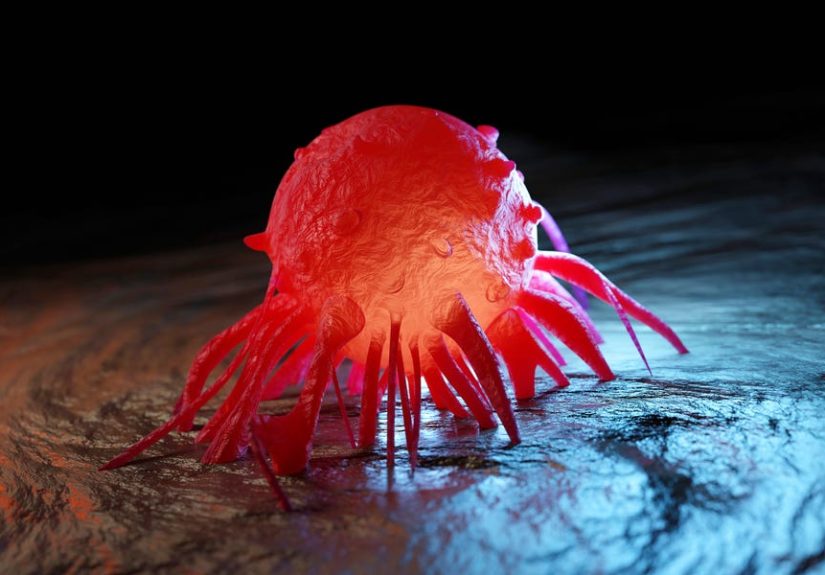
The “Gorgon” name comes from Greek mythology, where Gorgons were famously associated with snake-like hair. Under the microscope, this particle appeared to have long tubular appendages extending from a central shell, giving researchers a visual reason to reach for myth instead of another dry laboratory label. It belongs to a broader group of giant virus-like particles observed in forest soil, alongside shapes nicknamed “haircut,” “turtle,” “Christmas star,” “supernova,” and “plumber.” Apparently, once scientists stare long enough into the microbial universe, even the soil starts naming things like a quirky art-school portfolio.
What Exactly Was Found Under Massachusetts?
The discovery is tied to Harvard Forest, a long-running ecological research site in central Massachusetts. The area is famous among scientists for studying forests, climate change, soil warming, microbial communities, and carbon cycling. In earlier work, researchers from the University of Massachusetts Amherst and the U.S. Department of Energy’s Joint Genome Institute found new giant virus genomes in Harvard Forest soil. Later, another team used transmission electron microscopy to directly visualize giant virus-like particles from the same general research environment. That microscope work revealed astonishing shapes, including the Gorgon morphotype.
The key phrase is virus-like particles. Researchers saw particles that strongly resemble giant viruses, but seeing a shape under an electron microscope is not the same as fully isolating a virus, proving its host, sequencing its complete genome, and demonstrating its infection cycle. In plain English: scientists found something that looks very much like part of the giant-virus world, but the cautious scientific label matters. It is exciting, not apocalyptic.
Why Is It Called a Giant Virus?
Most people hear the word “virus” and imagine something impossibly tiny, invisible even compared with bacteria. That is usually fair. Many familiar viruses are far smaller than bacterial cells. Giant viruses, however, broke that mental model. Some are large enough to be mistaken for bacteria, and some carry enormous DNA genomes compared with ordinary viruses. This does not make them “giant” like a hamster-sized microbe marching across the forest floor; it means giant on the nanometer and genome scale. Microbiology is dramatic, but it still uses a very tiny stage.
Giant viruses gained major scientific attention after the discovery and study of mimivirus, an amoeba-infecting virus so unusually large and genetically complex that it forced researchers to rethink old assumptions about what viruses can be. Since then, scientists have found many giant-virus relatives in oceans, lakes, wastewater, permafrost, and soils. The Massachusetts Gorgon story fits into this expanding field: giant viruses may be everywhere, but we are only beginning to understand what they do.
Why Harvard Forest Soil Is a Big Deal
Soil is not dirt in the boring sense. It is a living, breathing, chemical, microbial metropolis. One gram of soil can contain enormous numbers of bacteria, fungi, archaea, protists, viruses, organic matter, minerals, and microscopic food webs busier than a downtown coffee shop during finals week. Harvard Forest is especially valuable because researchers have studied it for decades, including experiments that warm soil plots to understand how climate change may affect forest ecosystems.
In 2018, scientists reported 16 new giant virus genomes from Harvard Forest soil. That was already remarkable because giant-virus research had historically leaned heavily toward aquatic environments. Finding such diversity in a forest ecosystem suggested that soils may be a major, underexplored home for giant viruses. The later microscope images added a new layer: not only are giant-virus genes hiding in soil, but the particles themselves may come in forms that look wildly different from the neat, textbook virus illustrations many of us remember from school.
The Gorgon Shape: Weird, Beautiful, and Still Mysterious
The Gorgon morphotype appears as a central particle with long tube-like structures radiating outward. That image naturally raises questions. Are the tubes used to attach to a host? Could they help the particle move through water films in soil? Are they involved in injecting genetic material? Or are they something else entirely? At this stage, scientists are careful. The structure is visible, but its function is not yet proven.
That uncertainty is part of the thrill. Science is not only about answers; it is also about finding better questions. Gorgon does not matter because it is scary. It matters because it suggests that viral architecture may be more inventive than expected. If a few handfuls of forest soil can hold particles shaped like mythological monsters, stars, turtles, and tiny punk haircuts, then the microbial world has clearly been running a design department without telling us.
Should People Be Worried About the Gorgon Virus?
No, not based on current evidence. There is no evidence that the Gorgon morphotype infects humans, causes disease, or represents a public health threat. Many giant viruses are known or suspected to infect single-celled organisms such as amoebae, protists, or algae. In ecosystems, viruses often influence microbial populations, nutrient cycles, and energy flow. They are not automatically villains. In fact, viruses are part of how ecosystems function, even if their public relations team has been having a rough century.
The alarming headline version of this story can make it sound as though an ancient monster virus was unearthed from beneath Massachusetts and is now stretching its tentacles toward civilization. The real story is more subtle and more interesting. Scientists found visually unusual giant virus-like particles in forest soil. Those particles may help reveal how viruses interact with microbial hosts, how soil ecosystems operate, and how much biodiversity remains invisible until someone uses the right tool to look.
How Scientists Found It
The Gorgon discovery depended on transmission electron microscopy, a method that uses beams of electrons rather than visible light to reveal structures far smaller than ordinary microscopes can resolve. This matters because genetic sequencing can tell researchers that viral DNA is present, but it cannot always show what the particles look like. Electron microscopy brings morphology back into the conversation. It lets scientists ask not only “What genes are here?” but also “What shape is this thing?”
That shape-based information can be surprisingly valuable. A virus’s external structure may help it attach to a host, survive environmental stress, avoid degradation, or deliver genetic material. Surface fibers, shells, tails, and tubes are not decorative accessories. They are biological tools shaped by evolution. The Gorgon tubes may eventually turn out to have a specific function, or they may represent a structure researchers have not yet learned how to interpret.
Why Giant Viruses Challenge Old Ideas
For decades, viruses were often described as simple packages of genetic material wrapped in protein. That description still works for many viruses, but giant viruses complicate the picture. Some have large genomes, unusual genes, complex particle structures, and life cycles that blur neat classroom categories. They do not erase the definition of a virus, but they definitely scribble in the margins.
Giant viruses have pushed scientists to reconsider viral evolution, host-virus relationships, and the boundary between living and nonliving systems. They can carry genes involved in processes once thought to be mostly outside the viral toolkit. They also appear to be globally widespread. The more researchers look, the more giant-virus diversity they find. The Massachusetts Gorgon story is another reminder that nature rarely asks permission before becoming more complicated.
What This Discovery Means for Soil Science
Soil viruses may influence which microbes thrive, which decline, and how nutrients move through ecosystems. If viruses infect protists, algae, fungi, or other soil organisms, they may indirectly affect carbon cycling, nitrogen cycling, and microbial food webs. That matters because forests store carbon, regulate water, support biodiversity, and help buffer climate change. Tiny particles can have big ecological consequences when they interact with the organisms that drive soil chemistry.
Harvard Forest’s long-term experiments make this context even more important. Scientists are trying to understand how warming changes microbial communities and soil carbon. If giant viruses are part of those communities, then they may be part of the climate story too. We do not yet know the full role of Gorgon-like particles, but ignoring viruses in soil ecology would be like reviewing a movie while pretending half the cast never showed up.
The Headline Sounds Like Science Fiction, But the Science Is Real
The phrase “Unimaginable Virus Named Gorgon Found Buried Under Massachusetts” is built for clicks. It has everything: mystery, monsters, geography, and a little end-times seasoning. But the real scientific value is not in panic. It is in discovery. Researchers found that forest soil contains a surprising variety of giant virus-like structures, many unlike the familiar shapes described in older virology textbooks.
Some particles had hair-like fibers. Some resembled stars. Some seemed to have flaps. Some carried tail structures. The Gorgon group stood out because of its long tubular appendages. Together, these forms suggest that giant viruses may have evolved many different strategies for surviving, attaching, infecting, or moving through complex environments. Soil is full of tiny spaces, moisture films, organic fragments, roots, and microbial hosts. In that crowded world, shape may matter a lot.
What Scientists Still Need to Learn
1. What Organisms Do These Particles Infect?
A major unanswered question is host identity. Many giant viruses infect amoebae or other protists, but researchers cannot assume the same for every soil particle. To prove infection, scientists need to connect a virus-like particle with a living host and observe its replication cycle. That work is difficult because many soil microbes are hard to grow in the lab.
2. What Do the Tubes Actually Do?
The Gorgon appendages look dramatic, but their purpose is unknown. They might be involved in host attachment, environmental stability, movement, genetic delivery, or something no one has guessed yet. Biology has a habit of making human guesses look adorable in hindsight.
3. How Common Are Gorgon-Like Particles?
Scientists found these forms in Harvard Forest soil, but that does not mean they are unique to Massachusetts. Similar particles may exist in forests, wetlands, agricultural soils, or other environments around the world. More sampling and imaging could reveal whether Gorgon-like morphologies are rare oddities or part of a broader hidden pattern.
4. How Do Giant Viruses Affect Ecosystems?
If giant viruses infect key microbial players, they could influence decomposition, nutrient recycling, microbial competition, and soil carbon dynamics. That would make them ecologically important, even if most people never notice them. The forest does not need us to see every actor for the play to continue.
Examples That Make the Discovery Easier to Understand
Imagine walking into a library and discovering an entire secret wing behind a shelf. You knew the building was big, but now you realize the map was incomplete. That is what soil virology feels like right now. Researchers knew viruses were abundant, but giant virus-like particles in shapes such as Gorgon, turtle, haircut, and Christmas star suggest that the “library” of viral forms is much larger than expected.
Another example: think of the difference between reading a recipe and seeing the finished dish. Genetic sequencing is like reading the recipe. Electron microscopy is like seeing the meal on the plate. In the case of Gorgon, the plate arrived with tentacles, tubes, and a mythological name tag. Sequencing helps identify viral ingredients, but imaging reveals the visual architecture that genes alone cannot fully explain.
Why the Public Finds Stories Like Gorgon So Fascinating
People are naturally drawn to discoveries that make Earth feel alien. Deep-sea vents, glowing fungi, tardigrades, ancient permafrost microbes, and giant viruses all remind us that our planet is not fully explored. We may have satellites, smartphones, and heated arguments about coffee orders, but a spoonful of soil can still humble us.
Gorgon is fascinating because it lives at the intersection of fear and wonder. The word “virus” triggers anxiety, especially after years of pandemic headlines. But this discovery is not mainly about danger. It is about hidden biodiversity. It shows that the natural world contains forms and relationships we have barely begun to catalog.
Practical Lessons From the Gorgon Discovery
First, sensational headlines need careful reading. A “virus found buried under Massachusetts” sounds like an emergency; a “giant virus-like particle morphology observed in Harvard Forest soil” sounds like a research paper. Both can point to the same discovery, but only one is likely to make your aunt text the family group chat in all caps.
Second, basic research matters. No one studying Harvard Forest soil set out to create a monster headline. Researchers were investigating microbial life, soil warming, and ecosystem change. Yet that patient work revealed new viral diversity. Big discoveries often come from asking careful questions in places that look ordinary.
Third, soil deserves respect. It is easy to treat soil as background scenery, but it is one of the most biologically rich systems on Earth. It feeds plants, stores carbon, filters water, supports fungi and microbes, and apparently hides virus-like particles with names fit for a mythological creature catalog.
Experience-Based Reflections: What Gorgon Teaches Us About Curiosity
Anyone who has spent time in a forest knows that the ground is never really still. Leaves soften into humus. Mushrooms appear after rain. Roots stitch the earth together. Insects move through the litter like tiny maintenance crews. What the Gorgon story adds is a deeper layer of imagination: below the visible forest is another forest, one built from microbes, particles, genes, and interactions too small for human eyes.
The experience of learning about Gorgon feels a little like lifting a rock as a kid and discovering an entire miniature city underneath. At first, there is surprise. Then comes curiosity. Then comes the realization that the world was always more active than you thought; you just had not looked closely enough. That feeling is one of the best parts of science. It does not simply give us facts. It changes the scale at which we feel wonder.
For writers, educators, students, and science lovers, the Gorgon discovery is a perfect reminder that good science communication must balance drama with accuracy. The name is dramatic. The images are dramatic. The idea of giant virus-like particles beneath Massachusetts is dramatic. But the responsible takeaway is not “run for your life.” It is “look how much remains unknown.” That is a better kind of thrill, because it invites learning instead of panic.
There is also a personal lesson in humility. Humans often assume that familiar places are fully understood. A Massachusetts forest does not sound exotic in the way a deep-sea trench or Antarctic ice core might. It has trees, trails, soil, snow, birds, and mosquitoes with questionable manners. Yet beneath that familiar surface, researchers found forms that look almost alien. The exotic was not far away. It was local, quiet, and waiting underfoot.
This changes how we might experience ordinary nature. A walk through the woods becomes less ordinary when you remember that every step passes over a hidden world of microbial negotiations. The soil is not just supporting the forest; it is participating in it. Viruses may shape microbial communities. Microbes may influence carbon storage. Carbon storage affects climate. Climate affects forests. Suddenly, a handful of soil feels connected to the planet’s larger systems.
Gorgon also teaches patience. Discoveries like this do not instantly answer every question. Scientists still need to identify hosts, understand functions, confirm infection cycles, and compare samples from other environments. In a culture that loves instant conclusions, that uncertainty can feel unsatisfying. But uncertainty is not failure. It is the honest beginning of the next experiment.
Finally, the Gorgon story is a reminder that naming matters. A strange particle with tubular appendages could have remained a technical figure in a preprint. Calling the shape “Gorgon” gave the public a doorway into the discovery. The name sparks curiosity, and curiosity leads people toward the real science. That is not a bad thing, as long as the mythological sparkle does not bury the facts. The monster under Massachusetts is not a monster at all. It is a microscopic clue that Earth’s hidden biodiversity is still larger, stranger, and more wonderful than our maps.
Conclusion
The unimaginable virus named Gorgon is best understood as a fascinating giant virus-like particle morphology found in Massachusetts forest soil, not as a confirmed threat to human health. Its long tubular structures and mythological nickname make it memorable, but its deeper importance lies in what it reveals about soil biodiversity. Harvard Forest has already helped scientists uncover new giant virus genomes, and the electron microscopy work adds a visual shock: the viral world beneath our feet may be far more structurally diverse than anyone expected.
Gorgon is not a reason to fear the forest. It is a reason to respect it. Beneath the leaves and roots is a microscopic universe still full of unanswered questions. And sometimes, when scientists look closely enough, that universe looks back wearing the name of a Greek monster.
Note: This article uses the popular title phrase while clarifying the science: “Gorgon” refers to a giant virus-like particle morphology observed in Harvard Forest soil, not a confirmed disease-causing human virus.