Table of Contents >> Show >> Hide
- What a Party Food Calculator Actually Does (and Why It Works)
- Step 1: Pick Your Party Type (This Sets the Bite Target)
- Step 2: Apply Two Quick Multipliers (Appetite + Timing)
- Step 3: Do the Calculator Math (It’s One Line)
- Step 4: Build a Balanced Appetizer Menu (So It Doesn’t Feel Random)
- Step 5: Decide How Many Appetizer “Selections” You Need
- Step 6: Convert Bites Into Real Quantities (The Part Everyone Wants)
- Putting It All Together: Two Sample Appetizer Menus (With Numbers)
- Don’t Forget Food Safety (Aka: The “Please Don’t Let This Party Become a Group Text” Section)
- Quick Hosting Strategy: Make the First 30 Minutes Feel Abundant
- of Real-World Party Experience (The Stuff You Learn After You’ve Hosted a Few)
- Conclusion
Hosting is basically a magic show. You want guests to feel delighted, fed, and slightly impressed… without realizing you just did spreadsheet math on your phone while hiding in the pantry.
That’s where a party food calculator comes in. Not the boring kind that tells you “make more food” (thank you, Captain Obvious). A good appetizer calculator helps you answer the real questions:
- How many appetizers per person is enough?
- How does the answer change if it’s a cocktail party vs. pre-dinner snacks?
- How many dips is “fun variety” and how many is “I panicked in the chip aisle”?
- How do you turn “bites” into an actual shopping list?
Below is a practical, real-world system you can use like a calculator. Plug in your guest count, party length, and vibeand you’ll get a menu plan that feels generous (not wasteful), balanced (not random), and easy to execute (not a culinary endurance sport).
What a Party Food Calculator Actually Does (and Why It Works)
Appetizer planning gets tricky because people don’t eat in neat “servings.” They graze. They double back. They camp out near the meatballs like it’s a concert barricade. A calculator works because it gives you a baseline (how much people typically eat) and then helps you adjust for the variables that change everything:
- Timing: afternoon snacky hang vs. dinner hour
- Duration: one-hour pop-in vs. three-hour linger-fest
- Food role: appetizers before a meal vs. appetizers as the meal
- Serving style: passed bites vs. buffet/stations
- Guest mix: kids, teens, big eaters, dietary needs
Once you decide the “job” your appetizers are doing, the math gets surprisingly simple.
Step 1: Pick Your Party Type (This Sets the Bite Target)
Use this as your core “bites per person” calculator. Choose the row that matches your event best.
Bites-Per-Person Cheat Sheet
- Pre-dinner nibbles (about 1 hour, meal follows soon): 3–5 bites per person
- Light social snacks (1–2 hours, not a full meal): 5–7 bites per person
- Cocktail party (2–3 hours, drinks + bites, dinner not guaranteed): 8–10 bites per person
- Appetizers-only dinner (during dinner hours, “this is the meal”): 12–15 bites per person
- Long events (4+ hours): add ~2 extra bites per person for each additional hour
Shortcut rule: If you’d be annoyed to find out “there’s no dinner,” plan like it’s a meal. Your guests will forgive many things. Hunger is not one of them.
Step 2: Apply Two Quick Multipliers (Appetite + Timing)
Now adjust your bite target with two tiny reality checks.
A. Appetite Multiplier
- Mostly kids / light nibblers: × 0.8
- Average mixed crowd: × 1.0
- Hungry crowd (teens, athletes, “we skipped lunch”): × 1.2
B. Timing Multiplier
- Afternoon (2–5 p.m.): × 0.9
- Evening (6–10 p.m.): × 1.1
These are intentionally small adjustmentsbut they prevent the classic mistake of planning “light snacks” for a group that arrives at 7 p.m. with dinner expectations and Olympic-level chip motivation.
Step 3: Do the Calculator Math (It’s One Line)
Here’s the core calculation:
Total bites needed = Guests × Bites per person × Appetite multiplier × Timing multiplier
Round up to something you can shop for without crying. (Food planning is math, but it’s also vibes.)
Example 1: Pre-dinner snacks for 16 guests
- Party type: pre-dinner (choose 4 bites/person)
- Guests: 16
- Appetite: average (×1.0)
- Timing: evening (×1.1)
Total bites = 16 × 4 × 1.0 × 1.1 = 70.4 → round to 75 bites
That could be: one dip + chips, one veggie/crunch, one warm bite, one protein-forward bite. Easy.
Example 2: Cocktail party for 35 guests (3 hours)
- Party type: cocktail (choose 9 bites/person)
- Guests: 35
- Appetite: hungry crowd (×1.2)
- Timing: evening (×1.1)
Total bites = 35 × 9 × 1.2 × 1.1 = 415.8 → round to 420–430 bites
Now you’re planning stations + warm items + solid protein bites. Which brings us to the next step: turning “bites” into a balanced menu.
Step 4: Build a Balanced Appetizer Menu (So It Doesn’t Feel Random)
People feel satisfied when you hit variety by texture, not just “a lot of food.” Use this simple menu mix:
The 5-Part Appetizer Mix
- Crunchy + fresh: crudité, pickles, fruit, nuts
- Creamy + dippable: hummus, guacamole, queso, spinach-artichoke
- Warm + savory: meatballs, wings, skewers, stuffed mushrooms
- Hearty bite: sliders, mini tacos, flatbread squares
- One surprise: something spicy, something fancy, or something sweet
Portion planning tip: If appetizers are the meal, make sure at least half your total bites are “hearty” (protein and/or carbs). Veggies are wonderful, but nobody wants to leave a party thinking, “I had 14 carrots and an emotional support cracker.”
Step 5: Decide How Many Appetizer “Selections” You Need
More items isn’t automatically better. Too many choices can actually slow eating (people hover and debate), and it increases cost and prep stress. A smarter approach is enough variety to feel abundant, but not so much you’re running a small restaurant.
Quick Guide to Number of Appetizer Options
- Up to 10 guests: ~3 appetizer selections
- 10–20 guests: ~5 selections
- 20–40 guests: ~7 selections
- 40+ guests: ~9 selections
Within those selections, aim for a mix of two warm items (if possible), two dips/stations, and the rest as easy grab-and-go.
Step 6: Convert Bites Into Real Quantities (The Part Everyone Wants)
This is where most hosts guessand guessing is how you end up with either (A) three lonely meatballs left at 8:12 p.m. or (B) enough leftover hummus to qualify as a side hustle.
Use these quantity conversions as your “shopping list translator.”
Dips, Queso, and Spreads
- Dip/spread: about 1/4 cup per person as a general party serving
- If you have multiple dips: reduce each to 2–3 tablespoons per person and let variety do the work
Example: 24 guests, two dips → plan ~24 × 3 tbsp = 72 tbsp per dip → about 4.5 cups each. (Round to 5 cups because someone will “taste test” with enthusiasm.)
Cocktail Meatballs
- Meatballs: roughly 4 per person when they’re one of several options
Example: 30 guests → 120 meatballs. If meatballs are the star, plan closer to 5–6 per person.
Stuffed Mushrooms (or Similar One-Bite Items)
- Stuffed mushrooms: about 3 per person when offered as a main warm bite
Sliders
- As an appetizer: 1–2 sliders per person
- As a main (or very hearty option): 2–3 per person
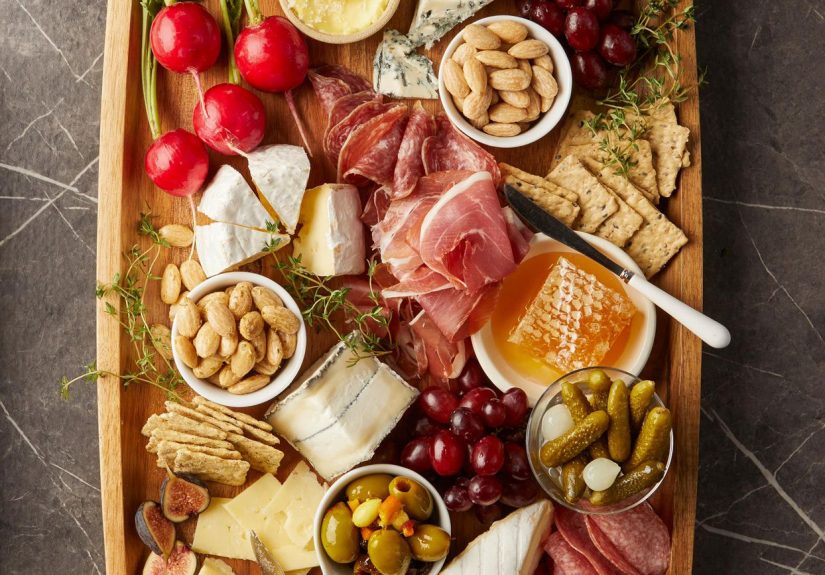
Cheese and Charcuterie Boards
- Meat + cheese combined: about 2–4 ounces per person (lower end if it’s a side station, higher end if it’s the main event)
- Cheese specifically: a common planning range is ~1 to 1.5 ounces of each cheese per person if you’re offering a few varieties
- Meats: often plan ~2–3 ounces per person for charcuterie-focused boards
Board-building trick: Slice meats and cheeses before guests arrive. People eat more when it’s easyand less when they have to wrestle a salami like it’s a medieval contest.
Shrimp Cocktail
- Typical appetizer estimate: plan around 3–4 shrimp per person if it’s one of several bites
- If shrimp is a headline item: plan more, especially for seafood-loving crowds
Crudité and Fresh Snacks
- Vegetables: roughly 2–4 ounces per person depending on how snacky your crowd is
- Fruit: about 1/2 cup per person works well for mixed platters
Chips and Crunchy Scoopers
- Chips/crackers: plan enough that no one is scraping the bottom while there’s still dip on the table (a universal party tragedy)
- Practical baseline: roughly 1/2 to 1 cup per person, adjusted up if chips are the main dip vehicle
Putting It All Together: Two Sample Appetizer Menus (With Numbers)
Menu A: 20 Guests, Pre-Dinner (About 1 Hour)
Target: 20 × 4 bites = ~80 bites
- Dip: spinach-artichoke (about 1/4 cup per person) + chips
- Crunch: crudité (2–3 oz per person) + ranch
- Warm bite: stuffed mushrooms (3 per person = ~60 mushrooms)
- Bonus: nuts/olives bowl for “drive-by snacking”
This feels abundant without spoiling dinner. Also: nobody leaves hungry, and you didn’t have to assemble 400 tiny skewers.
Menu B: 35 Guests, Cocktail Party (3 Hours)
Target: ~420 bites
- Station 1: charcuterie + cheese board (2–4 oz per person)
- Station 2: queso (2–3 tbsp per person if paired with other dips) + chips
- Warm 1: meatballs (4 per person = ~140)
- Warm 2: mini skewers or wings (plan as a major “bite bucket”)
- Hearty: sliders (1 per person = ~35; go 50 if people are especially hungry)
- Fresh: veggie tray (2–4 oz per person)
Pro hosting move: Put out about 70% of shelf-stable items at the start (chips, crackers), but only 40–50% of perishable items. Refill in smaller waves so everything stays fresh and safe.
Don’t Forget Food Safety (Aka: The “Please Don’t Let This Party Become a Group Text” Section)
Buffets and grazing tables are fun, but perishable foods need boundaries. The safest approach is simple:
- Follow the two-hour rule: don’t leave perishables out longer than 2 hours (or 1 hour if it’s very hot outside)
- Hold hot foods hot: keep hot items above 140°F (slow cookers, warming trays, chafing dishes)
- Hold cold foods cold: keep cold items below 40°F (ice trays, smaller platters swapped from the fridge)
- Serve in smaller batches: refill instead of leaving everything out at once
This protects your guests and improves quality. Nobody’s dream appetizer is “lukewarm mystery dip that’s been meditating under a ceiling fan.”
Quick Hosting Strategy: Make the First 30 Minutes Feel Abundant
Here’s the secret: guests judge “enough food” early. If the spread looks full at the start, people relax. If it looks sparse, people panic-eat (and you’ll run out faster).
- Front-load the crunch: chips, crackers, nuts, olives, bread
- Stage the warm items: keep a second batch ready so the table “refreshes” mid-party
- Place food in multiple spots: one table creates a traffic jam; two stations creates flow
And yes, this is also how you prevent your most social guests from accidentally forming a human wall in front of the guacamole.
of Real-World Party Experience (The Stuff You Learn After You’ve Hosted a Few)
If you’ve ever hosted a party, you already know the math is only half the story. The other half is human behaviorspecifically, the fascinating phenomenon of perfectly reasonable adults turning into competitive snack strategists the moment they hear the crinkle of a chip bag.
The “Appetizer Cliff” is real. The first 30–45 minutes are when people eat the most aggressively. They’re arriving hungry, they’re holding a drink, and they want something immediate. If your warm appetizers aren’t ready until an hour in, your guests won’t politely wait. They’ll improvise… using the only available tool: crackers. This is how you end up with someone eating twelve crackers in a row and then looking around like, “So is dinner happening or are we doing a crunchy pilgrimage?” Your calculator plan should assume a strong early waveso put out something satisfying right away, even if it’s simple.
Dips disappear in weird patterns. The “best” dip (often queso, spinach-artichoke, or anything involving cheese and confidence) will vanish first, but not necessarily because it’s the most popular. It’s because it’s the easiest. People can scoop without committing to a full bite, and it feels casual. Meanwhile, your beautifully arranged charcuterie can sit untouched for 10 minutes because nobody wants to be the first person to “mess it up.” Pre-slicing and placing little tongs is not just elegantit’s permission. When guests feel allowed to grab, they actually eat more evenly across the spread.
One guest will accidentally become the “slider influencer.” You know this person: they pick up a slider, say “Oh wow,” and suddenly three other people are also holding sliders. This is why the hearty item needs a solid count. If you plan one slider per person, consider a small bufferbecause the slider is the appetizer equivalent of a trending video. It spreads quickly.
Dietary needs aren’t just a courtesythey’re traffic control. When you offer one or two clearly labeled options that work for vegetarian or gluten-free guests, people redistribute naturally. Without those options, everyone crowds the same foods, and the “popular” platters empty faster. A simple hummus + veggies station or corn chips + salsa can quietly keep the whole system balanced.
Leftovers are a feature, not a failureif you plan them. The smartest hosts build in “next day value.” Extra meatballs become subs. Extra cheese becomes grilled cheese. Extra veggie trays become stir-fry. When you choose appetizers that transform well, you can be generous without feeling wasteful. That’s the sweet spot: guests feel taken care of, you feel calm, and nobody’s calculating whether they can stop for fast food on the way home.
In other words: the best party food calculator doesn’t just prevent hunger. It helps you host with confidenceso you can actually enjoy the party you planned.
Conclusion
Planning the perfect appetizer menu doesn’t require mind-reading or a catering degreejust a smart baseline and a few practical adjustments. Use the calculator method above, build a balanced menu mix, and translate “bites” into real quantities with confidence. Your guests will feel spoiled (in a good way), and you’ll finish the night with the rarest hosting achievement of all: no panic grocery run.