Table of Contents >> Show >> Hide
- Why “Vintage Bistrot” Flatware Feels Different
- Materials & Build Quality: The Stuff That Determines Whether You’ll Love It in 6 Months
- What Usually Comes in a Vintage Bistrot Grey Flatware Set
- How to Choose the Right Set (Without Overthinking Yourself Into a Drawer of Regret)
- Styling Ideas: Making Grey Bistro Flatware Look Like You Meant It
- Care & Cleaning: Keep the “Vintage” Look Charming, Not Crusty
- Is a Vintage Bistrot Grey Flatware Set a Good Gift?
- FAQ
- of Real-Life Table Experiences with a Vintage Bistrot Grey Flatware Set
- SEO Tags
Some kitchen upgrades shout for attention (hello, neon air fryer). A Vintage Bistrot Grey Flatware Set is the opposite:
it quietly makes everything you eat feel more “I have my life together” and less “I’m using the free takeout fork again.”
With its French café-inspired shape, neutral grey handles, and a slightly time-worn vibe, this style of bistro flatware is designed to
look good on a Tuesday night and still hold its own when you light a candle and pretend you planned dinner on purpose.
This guide breaks down what “vintage bistrot” actually means, what materials to look for, how to choose the right set size, how to keep it
looking sharp (without babying it), and how to style it so your table feels intentionaleven if the main course is cereal.
Why “Vintage Bistrot” Flatware Feels Different
It’s built around that classic café silhouette
Bistro-style flatware usually has a comfortable, slightly rounded profile with pieces that feel “familiar” in the hand.
The shapes tend to be simple and practicalmore Paris sidewalk table than formal ballroom banquet. Translation: it’s easy to like and even easier
to mix with whatever plates you already own.
Grey is the ultimate “plays well with others” color
Grey handles are a sweet spot: neutral, modern, and forgiving. They pair with white porcelain, rustic stoneware, patterned vintage plates,
and the “I bought these bowls because they were on sale” collection. Grey also hides the everyday scuffs of real life better than
ultra-light handles (which can show stains more easily if you treat your cutlery like it’s a tiny shovel).
“Vintage” usually means a finish that looks lived-in (in a good way)
In flatware-land, “vintage” often refers to a slightly softened finishlike a gentle patina effect, brushed shine, or a less mirror-perfect look.
You still get the clean, modern practicality of stainless steel, but with a bit of character. Think: “charming,” not “found in a shipwreck.”
Materials & Build Quality: The Stuff That Determines Whether You’ll Love It in 6 Months
Stainless steel grades: 18/10 vs. 18/0 (and why it matters)
Stainless steel flatware is often labeled with numbers like 18/10 or 18/0.
These refer to the alloy blendcommonly explained as percentages of chromium and nickelwhere higher nickel content (like 18/10) is generally associated
with better corrosion resistance and a brighter shine. Many quality sets use 18/10 for forks and spoons.
Some manufacturers use different stainless blends for knives than for spoons and forks. It’s not automatically a red flagit can be a design choice for
performance (blade strength, edge retention) or cost. The key is overall durability, comfort, and how the pieces hold up to your actual routine.
Weight & balance: the “hidden luxury” factor
Flatware can be technically “fine” and still feel flimsy. The pieces you end up loving tend to have a satisfying weight and balance:
forks that don’t feel like they’ll bend when you stab a roasted potato, spoons with a comfortable bowl, and knives that feel steady as you cut.
If you’re shopping online, look for words like “substantial,” “restaurant feel,” “balanced,” “forged,” or “heavyweight.”
Those terms don’t guarantee perfection, but they usually signal that the maker cares about how the pieces feel in your hand, not just how they photograph.
Handles: why grey “bistrot” sets often use resin or acrylic
Many “bistrot” designs feature grey handles made from resin or acrylic (sometimes described as high-grade plastic). This material choice is practical:
it’s durable, comfortable to hold, and lets brands offer rich colors (like charcoal, slate, or smoky grey) that don’t fade into blandness.
The tradeoff is simple: metal can handle higher heat and harsher cleaning, while resin/acrylic prefers a gentler approach.
You don’t need to hand-wash it like heirloom crystalbut treating it like a cast-iron skillet in a dishwasher inferno is… not the vibe.
What Usually Comes in a Vintage Bistrot Grey Flatware Set
Most sets are sold either as a single place setting or as a multi-setting set.
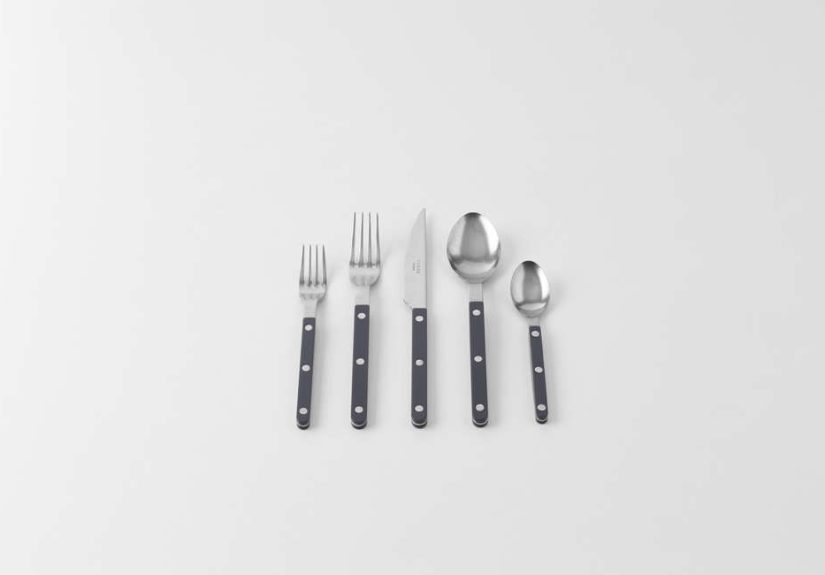
A classic 5-piece place setting often includes:
- Dinner fork
- Salad fork (or dessert fork)
- Dinner knife
- Soup spoon
- Teaspoon
Some sets go minimalist (4-piece) and skip the salad fork; others add serving pieces (serving spoon, serving fork, butter knife, sugar spoon).
If you host even occasionally, serving utensils are the difference between “effortlessly elegant” and “we’re using a spatula to serve salad.”
How to Choose the Right Set (Without Overthinking Yourself Into a Drawer of Regret)
1) Choose based on your real life, not your fantasy dinner party
If you eat 80% of meals at home, prioritize comfort and durability over anything fussy. A Vintage Bistrot Grey Flatware Set is already a
style-forward choice, so your practical goal is: “Will I enjoy using this every day?”
If you entertain a lot, consider buying one extra place setting beyond your typical headcount. Flatware has legs. It disappears into lunch bags,
couch cushions, and that mysterious pocket dimension behind the dishwasher.
2) Pick a finish that matches your tolerance for fingerprints
Mirror-polished stainless looks crisp and classic but can show fingerprints and water spots more easily.
Satin or brushed finishes often hide smudges better and lean into the “vintage” look. If you want the set to feel calm and effortless,
satin/brushed is usually the low-maintenance winner.
3) Buy the right number of pieces (and save your future self)
A common baseline is one place setting per person plus a little buffer. In many households, that means:
- 4 settings for a couple who cooks at home (but likes a clean dishwasher run)
- 6–8 settings for families, roommates, or anyone who hosts occasionally
- 8–12 settings if you entertain often or want a “set it and forget it” stash
If you’re buying a 20-piece set for four people and you don’t run the dishwasher daily, you may end up reusing teaspoons like they’re a limited edition drop.
Consider your dishwashing rhythmflatware is the first thing you run out of when life gets busy.
4) Confirm “dishwasher safe” and then read what it actually means
Many stainless steel flatware sets are dishwasher safe, but the details matterespecially with resin or acrylic handles.
“Dishwasher safe” often assumes you’re using a reasonable cycle, not blasting the cutlery with high heat for three hours like you’re preparing it for space travel.
If the brand recommends low-temperature cycles or air-dry settings, take that seriously. Your handles will stay prettier longer.
Styling Ideas: Making Grey Bistro Flatware Look Like You Meant It
The easy formula: grey + texture + one accent
Grey is a neutral anchor. To keep the table from feeling flat, add texture:
stoneware plates, linen napkins, woven placemats, or a wood board in the center. Then choose one accent color
muted olive, terracotta, inky navy, or classic black-and-white.
Mix vintage plates with modern cutlery (or vice versa)
If your dinnerware leans vintage (floral china, thrifted mismatched dessert plates), grey bistrot flatware acts like a visual “translator” that
keeps the table from feeling chaotic. If your dinnerware is modern and minimalist, the “vintage” flatware finish adds warmth and personality.
Turn weeknight food into “bistro night”
A simple trick: serve one thing family-style. Pasta in a big bowl. Salad in a wooden bowl. Bread on a cutting board.
The flatware does the styling heavy lifting, and suddenly your kitchen feels like the cozy corner table at a caféminus the waiter who forgets your water.
Care & Cleaning: Keep the “Vintage” Look Charming, Not Crusty
Everyday rule: rinse first, relax later
A quick rinse before loading the dishwasher helps prevent dried-on food, staining, and spotty finishesespecially after acidic foods
(tomato sauce, citrus, vinaigrette). It’s a tiny habit that makes your set look newer for longer.
Dishwasher do’s (the kind that actually work)
- Don’t overcrowd the basketpieces rubbing together can scratch.
- Separate forks and spoons so they don’t “spoon” their way into a stuck-together clump.
- Use mild detergent and avoid harsh additives (especially chlorine/chlorides). Strong formulas can cause spotting or dullness over time.
- Remove promptly after the cycle, and consider towel-drying if your water leaves spots.
- Skip high-heat drying if your set has resin/acrylic handlesair-dry is your friend.
What not to do (unless you enjoy tiny scratches)
Avoid abrasive pads and steel wool on stainless steel finishes. They can scratch, dull shine, and make the surface more prone to showing wear.
For stubborn gunk, soak briefly in warm soapy water and use a soft sponge.
How to handle spots, rainbow sheen, and “mystery rings”
Stainless steel sometimes develops water spots or a faint rainbow tint (often from minerals, heat, or residue).
Gentle fixes typically include buffing with a soft cloth and a small amount of white vinegar, then rinsing and drying.
For extra shine, some cleaning guides suggest a light wipe with oil (like olive oil) on a soft clothuse sparingly, then buff.
If you ever notice faint marks on knife blades, they’re often removable with gentle polishing (again: soft cloth, mild approach).
The goal is simple: clean, dry, and keep the finish smooth.
Storage tips so your set stays gorgeous
- Store in a dry drawer or organizer (moisture is the enemy of shine).
- Don’t toss everything into one bin unless you like the “audible scratch soundtrack.”
- If your set includes serving pieces, store them near serving bowls so you actually use them.
Is a Vintage Bistrot Grey Flatware Set a Good Gift?
Yesbecause it’s both practical and personal. Flatware is something people use every day, but most folks don’t buy the “nice” set for themselves.
Grey bistrot style feels stylish without being risky. It’s not “here is my opinionated neon cutlery taste,” it’s “here is a timeless upgrade.”
Gift idea: pair the set with linen napkins, a simple serving bowl, or a cookbook that matches the bistro vibe (pasta, salads, French home cooking).
You’re basically gifting a whole mood.
FAQ
Does “vintage” mean it’s antique?
Not usually. In this context, “vintage” is typically a design cuefinish, shape, or stylingrather than the cutlery being old. You get the look without
inheriting someone else’s mysterious drawer smells.
Will stainless steel flatware rust?
Quality stainless steel is designed to resist corrosion, but it can still develop spots or surface discoloration if exposed to harsh detergents,
left wet for long periods, or washed with corrosive cleaners. Good care habits (rinse, mild detergent, dry promptly) make a big difference.
Can I put grey-handled flatware in the dishwasher?
Often yesbut follow the maker’s care instructions. If handles are resin/acrylic, avoid high-heat cycles and high-heat drying when possible.
Air-dry and prompt unloading help preserve both handle color and steel finish.
How do I keep it looking “vintage” but not dull?
“Vintage” should read as intentional softness, not neglect. Clean thoroughly, avoid abrasives, and buff occasionally with a soft cloth.
If you want extra shine, gentle vinegar buffing (then rinse and dry) is a common trick.
of Real-Life Table Experiences with a Vintage Bistrot Grey Flatware Set
The Tuesday-Night Test: This is the moment flatware reveals its true personality. You’re standing in the kitchen eating leftover pasta
(directly from the bowl, because dishes are optional), and the fork has one job: be comfortable, sturdy, and not annoying. A good bistrot-style fork feels
confidenttines that don’t flex, a handle that sits naturally in your hand, and enough weight that it doesn’t feel like it came free with a hotel muffin.
Grey handles also pass the “real life” aesthetic check: they look good against a mismatched bowl, a wood table, and even the questionable plate you bought
in college and refuse to throw out on principle.
The Brunch Test: Brunch is deceptively hard on cutlery. You’ve got eggs (soft), bacon (greasy), toast (crumbs everywhere), and maybe fruit.
A Vintage Bistrot Grey Flatware Set tends to shine here because it looks intentional without being precious. Grey reads modern, but the café silhouette keeps
it warm and inviting. The spoons feel right for yogurt and jam. The knives handle bagels without making you wrestle like you’re in a medieval duel.
The best part? The table looks styled even if the centerpiece is literally “a jar of coffee beans.”
The Dishwasher Reality Check: This is where good habits pay off. Load the pieces with breathing room, use a mild detergent, and unload soon
after the cycle ends. If your water is hard, you’ll notice spots fasterso a quick towel-dry becomes the easiest “maintenance plan” you’ll ever follow.
Over time, the set starts to feel like the baseline standard for your kitchen. You stop thinking about it, which is the point: your flatware should support
your day, not become a project. If you do notice a little haze or a few marks, it’s usually fixable with gentle buffing rather than panic.
The “Company’s Coming” Moment: Someone texts, “We’re nearbycan we swing by?” and suddenly you’re hosting. Bistro flatware is perfect for this
because it feels elevated without trying too hard. Pair it with cloth napkins (even if they’re wrinkled) and a big salad bowl, and people will assume you’re
the kind of person who owns matching storage containers. Grey handles look especially good under warm lightingcandlelight, pendant lights, holiday string
lights you forgot to take down. The flatware quietly upgrades everything: soup tastes fancier, bread feels more intentional, and dessert somehow becomes an
“experience” instead of “we ate cookies over the sink.”
The Long-Haul Feeling: The real win of a Vintage Bistrot Grey Flatware Set is that it becomes part of your home’s rhythm.
It’s sturdy enough for everyday use and stylish enough that you don’t feel the need to hide it for “special occasions.”
Over months, you’ll notice the details you didn’t shop for on purpose: the way the handle shape fits your grip, how the finish hides fingerprints,
and how the grey stays neutral while your plates, napkins, and seasonal décor change around it. It’s not just cutlery. It’s a small daily upgrade that
makes ordinary meals feel a little more cared forand that’s the kind of vintage charm worth keeping.