Table of Contents >> Show >> Hide
- Quick Answer: Vinyl vs. Laminate Flooring
- What Is Vinyl Flooring?
- What Is Laminate Flooring?
- Vinyl vs. Laminate Flooring: The Biggest Differences
- Which Flooring Is Best for Each Room?
- How to Choose Between Vinyl and Laminate
- Common Mistakes Homeowners Make
- Real-World Experience: What Living With Vinyl vs. Laminate Actually Feels Like
- Final Verdict
Choosing between vinyl and laminate flooring sounds simple until you are standing in a showroom, staring at two planks that both claim to be durable, stylish, affordable, family-friendly, and possibly capable of fixing your life. Spoiler: they cannot fix your life. They can, however, dramatically change how your home looks, feels, and handles daily chaos.
If you are comparing vinyl vs. laminate flooring, the short version is this: vinyl is usually the better pick for moisture-prone areas, while laminate often appeals to homeowners who want a more wood-like look and a firm, realistic feel underfoot. But that neat little summary barely scratches the surface. The real answer depends on where the floor is going, how messy your household gets, what your budget looks like, and how much patience you have for maintenance.
In this guide, we will break down the key differences between vinyl flooring and laminate flooring, including water resistance, durability, cost, appearance, comfort, installation, and best-room use. By the end, you should have a much clearer sense of which floor belongs in your home and which one deserves a polite “thanks, but no thanks.”
Quick Answer: Vinyl vs. Laminate Flooring
Both vinyl and laminate are layered, budget-conscious alternatives to hardwood. Both can mimic wood or stone. Both are popular with DIYers. But they are not built the same way, and that one detail affects almost everything else.
- Vinyl flooring is fully synthetic and typically better at handling water, spills, humidity, and wet rooms.
- Laminate flooring usually contains a wood-fiber core, which helps give it a sturdy, wood-adjacent feel but also makes it less forgiving when moisture sticks around.
- Vinyl is often the safer choice for bathrooms, laundry rooms, basements, mudrooms, and busy kitchens.
- Laminate can be a great choice for living rooms, bedrooms, home offices, and other dry spaces where appearance and scratch resistance matter.
If your house includes wet shoes, spilled dog bowls, mystery kitchen drips, or children who treat juice boxes like performance art, vinyl usually comes out ahead. If your priority is a classic wood look in a lower-moisture room, laminate deserves a serious look.
What Is Vinyl Flooring?
Vinyl flooring is a synthetic flooring product designed to imitate natural materials like hardwood, tile, or stone. In today’s market, the most popular versions are luxury vinyl plank (LVP) and luxury vinyl tile (LVT). These products usually include a core layer, a printed design layer, and a protective wear layer on top.
That wear layer matters more than many shoppers realize. It helps protect the floor from scratches, stains, and everyday wear. In practical terms, a thicker wear layer is usually better for homes with pets, kids, guests, rolling furniture, and the general mayhem of normal life. Some vinyl products also come in SPC or WPC constructions. SPC tends to be more rigid and dent-resistant, while WPC often feels a bit softer and quieter underfoot.
One of vinyl flooring’s biggest selling points is water performance. Many products are marketed as waterproof, which makes them attractive for kitchens, bathrooms, basements, laundry rooms, and entryways. That does not mean every single vinyl floor is indestructible, but it does mean vinyl is generally much more comfortable living around moisture than laminate.
Vinyl also tends to be easy to clean, low maintenance, and available in a huge range of colors, finishes, plank widths, and styles. You can find everything from pale Scandinavian oak looks to deep rustic walnut visuals without paying hardwood prices.
What Is Laminate Flooring?
Laminate flooring is also a layered product, but its construction is different. Instead of being fully synthetic, laminate usually includes a high-density fiberboard or particleboard core, topped with a printed image layer and a protective wear layer. That wood-based core is a major reason laminate often feels solid and convincing in dry rooms.
Laminate became popular because it offers the look of wood without the cost, maintenance, or installation headaches of solid hardwood. Modern laminate has come a long way from the shiny, obviously fake stuff people mocked twenty years ago. Higher-quality options can look impressively realistic, with textured surfaces and better imaging that help mimic actual wood grain.
Laminate also uses an AC rating, which measures abrasion resistance. For homeowners, that rating can be a useful shortcut. A higher AC rating generally means better resistance to traffic, scratches, and surface wear. That is why laminate often gets strong marks for busy living rooms, hallways, and family areas.
Where laminate gets nervous is moisture. Some newer laminate lines advertise waterproof or highly water-resistant performance, and those products are definitely more capable than older generations. Still, the core remains wood-based, so standing water and repeated moisture exposure are more risky here than with vinyl. In other words, laminate can handle normal life. It just does not want to move into a swamp.
Vinyl vs. Laminate Flooring: The Biggest Differences
1. Water Resistance
This is the headline matchup, and vinyl usually wins it cleanly.
Because vinyl is synthetic, it is generally the better choice for moisture-prone spaces. If you are flooring a bathroom, basement, laundry room, or mudroom, vinyl usually gives you more peace of mind. Spills, splashes, damp shoes, pet water bowls, and humidity are less likely to turn into a flooring disaster.
Laminate is better described as moisture-resistant than moisture-proof in most cases. Yes, some modern laminate products offer stronger water protection than older ones. But if water sneaks into the seams or sits too long, the core can swell or warp. That risk is exactly why laminate is usually better in drier rooms.
Best for water resistance: Vinyl flooring
2. Durability and Everyday Wear
This category is more interesting because both materials can perform well, just in different ways.
Laminate is often praised for scratch resistance, especially in high-traffic homes. If you have kids racing through the hallway, office chairs rolling around, or a dog that believes corners should be taken at Formula 1 speed, laminate can hold up impressively well when you choose a good AC rating.
Vinyl, meanwhile, is durable in a different way. It tends to handle moisture better and many rigid-core products are built to resist scratches and dents. Still, not all vinyl is created equal. Cheap vinyl can feel thinner, show dents more easily, or look tired faster. Premium vinyl, on the other hand, can be a beast in a busy household.
So which is tougher? If your biggest enemy is water, vinyl. If your biggest enemy is surface abrasion in a dry room, laminate can be extremely competitive.
3. Appearance and Realism
This used to be an easy win for laminate, but the gap has narrowed.
Laminate has long been known for delivering a convincing wood look, especially in living spaces. Because the category developed around mimicking hardwood, many laminate products still do an excellent job of recreating grain patterns, plank variation, and a more classic wood-floor appearance.
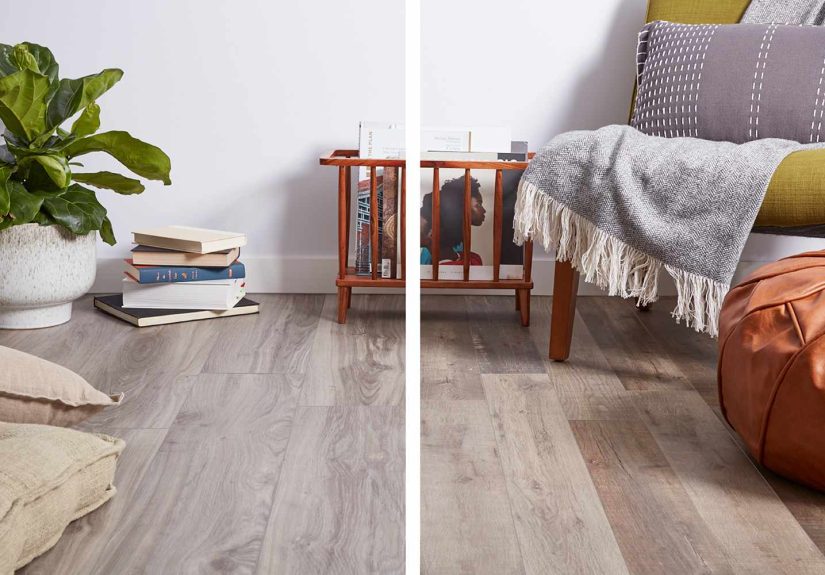
Vinyl has improved enormously. Luxury vinyl plank can now look surprisingly sophisticated, and many lines offer embossed textures, matte finishes, and realistic color variation. Still, in side-by-side comparisons, some homeowners feel laminate looks slightly more like “real wood,” while vinyl often wins on versatility and room-to-room practicality.
Best for traditional wood style in dry rooms: Laminate flooring
Best for style plus flexibility across the whole house: Vinyl flooring
4. Comfort and Sound
Neither material feels exactly like solid hardwood, but they do not feel identical either.
Laminate often feels firm and substantial, which some people love because it reads as more wood-like. But if installed over an uneven subfloor or without the right underlayment, laminate can produce a hollow or clicky sound that announces your footsteps like a tiny drum solo.
Vinyl, especially WPC or products with attached padding, can feel a bit softer and quieter. That can make a real difference in kitchens, upstairs rooms, and households where you would prefer your footsteps not sound like an emotional entrance in a legal drama.
Underlayment matters for both flooring types. It can improve sound control, comfort, and subfloor performance. In some cases, a moisture barrier may also be needed, especially over concrete or in damp-prone areas.
5. Installation
Both vinyl and laminate are often sold as DIY-friendly click-lock flooring. That is one reason they are so popular. If your subfloor is level, your cuts are simple, and your measuring skills are better than “close enough,” either product can be a satisfying weekend project.
Laminate usually requires careful attention to expansion gaps and moisture conditions. Vinyl is also not foolproof, but many homeowners like it because it is relatively easy to cut and install, particularly in floating plank formats.
One important detail: flooring success depends as much on subfloor prep as on the product itself. Even a great floor can disappoint if installed over a surface that is uneven, damp, dirty, or unstable. That is how you end up blaming the flooring when the real villain was the subfloor all along.
6. Cost
Budget is one reason both options remain so popular. In general, laminate and vinyl are both less expensive than hardwood or natural stone. Material and installation costs vary widely by product quality, room shape, and labor market, but the overall picture is pretty clear: both are relatively budget-friendly, though vinyl often has a wider price range because it spans everything from basic sheet products to premium rigid-core planks.
If you want the broad-strokes comparison, laminate materials commonly land in the lower-to-middle budget range, while vinyl can start low and climb higher depending on thickness, wear layer, core type, and brand. Professional installation for either one can increase the total cost substantially, so DIY potential is a real money saver when the room is straightforward.
7. Maintenance
Neither option is high-maintenance, and that is part of the appeal.
Vinyl is generally easy to sweep, vacuum, and damp mop according to manufacturer recommendations. Laminate is also easy to maintain, but it is usually smarter to use less water and avoid anything that leaves excess moisture sitting on the surface. In both cases, the golden rule is simple: clean up spills promptly, use furniture pads, and do not treat your floor like an experimental testing lab for harsh chemicals.
Which Flooring Is Best for Each Room?
Best Rooms for Vinyl Flooring
- Bathrooms
- Kitchens
- Laundry rooms
- Basements
- Mudrooms
- Entryways
- Homes with pets or frequent spills
Vinyl makes sense when water, humidity, and easy cleanup are major priorities. It is the practical, roll-up-its-sleeves option.
Best Rooms for Laminate Flooring
- Living rooms
- Bedrooms
- Dining rooms
- Home offices
- Hallways in dry areas
- Homes where a wood-style look is the top priority
Laminate shines where moisture is less of a threat and you want a polished, wood-inspired look without hardwood pricing.
How to Choose Between Vinyl and Laminate
If you are still stuck, ask yourself these five questions:
- Will this room deal with water often? Choose vinyl.
- Do I want the most wood-like visual for a dry room? Laminate may win.
- Do I have pets, kids, or heavy traffic? Either can work, but compare wear layer and AC rating carefully.
- Am I installing it myself? Both are DIY-friendly, but room conditions and subfloor quality matter more than optimism.
- Am I buying for the whole house or one problem room? For whole-house consistency, vinyl is often easier to use across more spaces.
The most expensive mistake is choosing flooring based only on the showroom sample. A floor can look gorgeous under perfect lighting and still be wrong for your daily life. A beautiful laminate in a basement with humidity issues is like wearing suede shoes in a thunderstorm: bold, stylish, and deeply unwise.
Common Mistakes Homeowners Make
- Ignoring moisture conditions: A floor that looks great on day one may fail early if the room is too damp.
- Buying the cheapest version: Thin wear layers and bargain-bin construction can disappoint fast.
- Skipping underlayment details: Sound, comfort, and floor stability often depend on what is underneath.
- Forgetting about subfloor prep: Uneven or damaged subfloors can ruin the finished result.
- Choosing by appearance alone: The right look matters, but performance matters more once you actually live on the floor.
Real-World Experience: What Living With Vinyl vs. Laminate Actually Feels Like
Here is where the vinyl vs. laminate flooring decision gets personal. On paper, the two categories can seem annoyingly close. In real life, they start to separate pretty quickly.
Imagine a busy weekday morning. Someone is making coffee, someone else is looking for one shoe, the dog has sloshed half a bowl of water across the kitchen, and the weather outside has transformed every entrance into a damp obstacle course. In that kind of house, vinyl feels reassuring. You wipe, move on, and continue your day. There is less hovering, less panic, and fewer dramatic speeches about “respecting the floor.”
Now picture a quiet home office or living room where you care more about the visual warmth of the floor than its ability to survive a monsoon. Laminate often feels right there. It can give the room a crisp, polished look that reads more like traditional wood than many budget floors. In spaces where the atmosphere matters and the threat level from moisture is low, laminate can feel like a clever upgrade rather than a compromise.
There is also the matter of sound. Some homeowners notice laminate more when they walk across it, especially if the subfloor is not perfectly level or the installation is less than stellar. You hear footsteps, chair movement, and the occasional click that makes you look around like the house is trying to tell you something. Vinyl, particularly cushioned or padded products, can feel a bit more forgiving and less echo-prone in everyday use.
Cleaning habits change too. With vinyl, many people become pleasantly relaxed. Spills are annoying, not terrifying. Wet boots are inconvenient, not an existential flooring threat. That psychological difference is real. A floor that fits your actual life can make your home feel easier to manage.
Laminate tends to inspire a different kind of appreciation. Owners often like the look, the texture, and the way it sharpens up a room without the price of hardwood. It can feel like a style-forward choice, especially in bedrooms and living spaces where comfort, design, and scratch resistance matter more than waterproof performance.
And then there are pets. A calm older cat may not care what you install. A large dog with zoomies, however, is basically unpaid product testing. In homes with pets, vinyl often earns points for cleanup and moisture resistance, while laminate can still appeal if claw marks and surface wear are your bigger concern in a dry space.
Over time, most homeowners do not regret choosing vinyl or laminate because of color. They regret choosing the wrong material for the room. That is the lesson people learn after living with the floor for a year. The smartest flooring decision is rarely about what looked best in a four-inch sample. It is about what still feels smart after muddy shoes, spilled drinks, chair legs, pet accidents, holiday traffic, and one dropped saucepan that scared everyone in the house.
So the lived experience is simple: vinyl usually feels like the practical survivor, while laminate often feels like the stylish bargain that works beautifully in the right place. Neither is universally better. But one of them is almost certainly better for your room.
Final Verdict
When comparing vinyl vs. laminate flooring, the biggest difference comes down to construction and moisture performance. Vinyl is synthetic, more water-friendly, and often the better all-around pick for busy, spill-prone, or below-grade spaces. Laminate uses a wood-based core, which can deliver a convincing wood look and strong scratch resistance in dry rooms.
If you want the safer, more flexible option for kitchens, bathrooms, basements, and everyday family chaos, vinyl flooring is usually the smarter buy. If you want a handsome wood-style floor for a dry living space and you value surface durability and appearance, laminate flooring can be a very satisfying choice.
The winner is not the trendiest floor. It is the one that matches your home, your habits, and your tolerance for surprise puddles.