Table of Contents >> Show >> Hide
- Why Autumn and a Husky Are Basically a Creative Cheat Code
- Before the Camera Came Out, the Husky Came First
- Choosing the Location and Props Without Turning Fall Into a Safety Hazard
- How We Actually Shot the Photos
- And This Is How The Photos Turned Out
- What Worked Better Than Expected
- What We Would Do Again for Future Fall Dog Photoshoots
- Extra Experience Notes From Our Autumn Husky Photoshoot
- Conclusion
There are two kinds of people in the fall: the ones who light a pumpkin candle and quietly enjoy the season, and the ones who look at a pile of orange leaves and think, “You know what this needs? A dramatic husky.” We proudly belong to the second group. And honestly, if you have ever seen a Siberian Husky standing in front of fiery fall foliage like a furry woodland monarch, you already know why. Autumn and huskies go together like flannel and coffee, except one of them sheds on your black jeans and occasionally ignores you for artistic reasons.
So yes, we did an autumn inspired photoshoot with our husky, and the photos turned out far better than we deserved. Not because we are photography geniuses. Not because our dog suddenly developed the patience of a Renaissance portrait sitter. The real reason is simpler: we planned around what makes huskies look amazing and what helps dogs stay comfortable, curious, and safe during a photo session. That combination is where the magic lives.
If you want dreamy fall dog portraits, action shots with leaves flying, and those close-ups that make your dog look like a mythical creature from a Scandinavian bedtime story, this guide walks through exactly what worked for us. It also covers what almost ruined the vibe, what props are worth using, what fall hazards are not remotely charming, and how to make the entire experience feel like a fun outing instead of a canine hostage negotiation.
Why Autumn and a Husky Are Basically a Creative Cheat Code
Let’s start with the obvious: huskies are outrageously photogenic. Their expressive faces, thick double coats, almond-shaped eyes, upright ears, and athletic build already give them a cinematic look. Add the copper, rust, gold, and deep red tones of autumn, and suddenly your backyard starts feeling suspiciously like a movie set.
Part of the appeal is contrast. Huskies often have cool-toned coats in gray, black, white, sable, or red-and-white patterns, and those shades pop against warm seasonal backgrounds. The crisp air also tends to work in their favor. Many huskies are more comfortable in cooler weather, which means they are often more energetic, alert, and willing to move through a shoot without looking like they are melting into the earth.
But this is also where people get fooled. A husky may look effortlessly majestic, but that “effortless” part usually comes after brushing, exercise, patience, and about 87 attempts to get a leaf crown to stay on for more than three seconds. Beautiful photos rarely happen by accident. They happen when the dog’s needs come first and the aesthetic follows naturally.
Before the Camera Came Out, the Husky Came First
We brushed the coat, not the personality away
One of the smartest things we did before the shoot was a grooming session. Huskies have thick double coats and seasonal shedding is part of the deal, so a good brushing makes a huge difference. It helps remove loose undercoat, tidies the outline of the dog, and keeps every photo from looking like the scene was recently hit by a small fur storm. The goal is not to make a husky look overly polished. The goal is to make the coat look healthy, fluffy, and intentional rather than “windswept by chaos.”
We also skipped anything fussy. No shaving, no weird trimming, no costume that turned our dog into a reluctant woodland barista. Huskies already have striking features. The best move is usually to clean them up, wipe the eyes if needed, check the ears and paws, and let the dog still look like a dog.
We let exercise do half the job
A high-energy breed and a standing-still activity are not exactly natural best friends. So before the photoshoot, we gave our husky time to move. Not enough to create a noodle made of exhaustion, but enough to take the edge off the excitement. A brisk walk, a little sniffing time, and a quick play session made a huge difference in focus.
This is one of those underrated pet photography truths: the best pose is often on the other side of a bit of physical and mental activity. Huskies are intelligent, active, and independent. If they are bored, under-stimulated, or wildly overexcited, they are not going to suddenly become cooperative because you waved a plaid blanket at them.
We treated the shoot like training, not a command performance
Instead of demanding perfection, we built the session around simple cues our dog already knew: sit, stay, watch me, come, and leave it. Positive reinforcement did the heavy lifting. Praise mattered. Tiny treats mattered. A cheerful tone mattered. Short bursts mattered most of all.
The mistake many people make is thinking they need one long, serious shoot. Dogs usually do better with several brief moments of success than one endless session where everyone gets cranky. We aimed for progress, not a magazine cover in the first five minutes. Ironically, that mindset is what gets you closer to the magazine cover.
Choosing the Location and Props Without Turning Fall Into a Safety Hazard
Autumn is gorgeous, but it also has a sneaky side. A blanket of leaves may look romantic, yet the season can come with mushrooms, dropped food, rodenticides, coolants, school supplies, and random debris that curious dogs love to inspect with their mouths. Our rule was simple: if the location looked pretty but felt unpredictable, it did not make the cut.
We chose a quiet spot with good foliage, solid footing, and enough distance from traffic, crowds, and off-leash chaos. Huskies are smart, quick, and famously interested in going wherever the plan is not. So a secure leash and a calm environment were non-negotiable. If you are aiming for action shots, fenced spaces are worth their weight in pumpkin pie.
As for props, we kept them light and natural. A cozy blanket in muted plaid, a few mini pumpkins placed nearby instead of stacked on the dog, and a woven basket for scene-setting. We avoided anything sharp, breakable, heavily scented, or edible-looking enough to tempt a snack theft. The best props should frame the dog, not annoy the dog. That is a line worth respecting.
And yes, leaves can be fun. But moldy leaf piles, hidden sticks, and soggy ground are less “storybook autumn” and more “surprise vet bill.” We raked a clean patch and checked the area first. Glamour with common sense is still glamour.
How We Actually Shot the Photos
Golden hour did most of the flattering work
We shot in soft, low-angle light near sunset, and it changed everything. Harsh midday sun can create ugly shadows, blown highlights, and the universal dog expression of “please stop.” Soft light is kinder to fur texture, easier on the eyes, and much better for warm fall color. Even cloudy weather can be a gift if it gives you even light without hard contrast.
The husky’s coat looked richer, the background looked more painterly, and we did not have to fight the light every two seconds. In other words, the season already provided the set design, and the hour gave us the filter.
We got down to eye level
This may be the single most important visual upgrade in the whole process. Shooting from human standing height often makes dogs look smaller, flatter, and less emotionally present. The moment we got down to eye level, the photos became more intimate and more alive. Suddenly our husky looked less like “dog in park” and more like “hero of an indie film who definitely has opinions.”
Eye-level shots bring out expression, make the viewer feel closer, and capture that very specific husky mix of elegance, mischief, and theatrical judgment.
We focused on the eyes and let the background melt away
For portraits, we prioritized sharp eyes and a softer background. That blurred backdrop made the fall colors feel creamy and rich instead of busy. A husky already has a strong face, so once the eyes are crisp, the image starts pulling people in fast.
We also mixed wide environmental portraits with tight detail shots. One frame showed our dog small against a sea of gold leaves. Another zoomed in on the nose, whiskers, and frost-colored fur around the face. Those detail images ended up being some of our favorites because they felt personal instead of generic.
Burst mode and a fast shutter saved our dignity
Dogs move. Huskies especially move like they have been hired to ruin your first attempt. So for action shots, burst mode was our best friend. We used it while tossing leaves, jogging toward the camera, and letting our dog trot naturally across the frame. A faster shutter speed helped freeze the motion without turning every image into a tasteful blur of fluff and ambition.
Some of the best photos were not technically “posed” at all. They came from the half-second after a cue, the moment before a treat, or the split second when our husky noticed a squirrel but had not yet acted on that personal calling.
And This Is How The Photos Turned Out
The short answer: ridiculously cute, slightly majestic, and just chaotic enough to feel real.
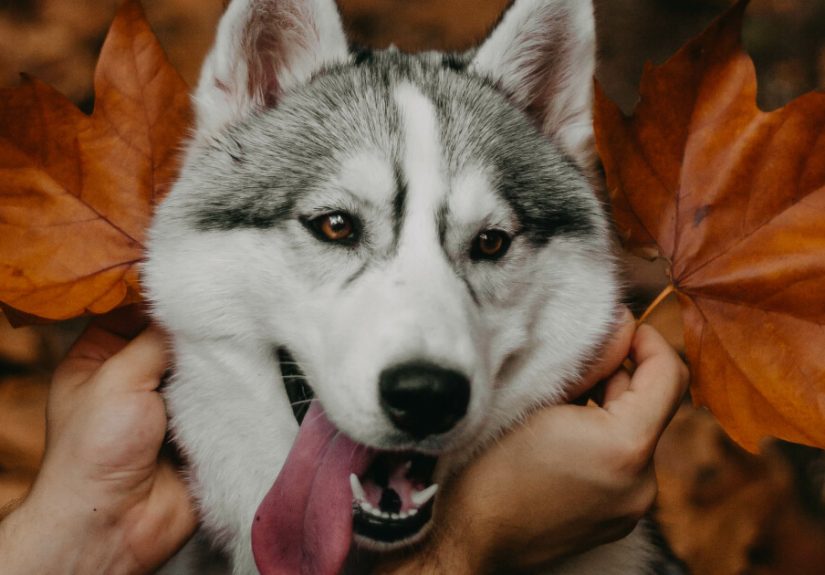
The portrait shots turned out soft and rich, with our husky framed by amber leaves and looking like the official ambassador of autumn. The close-ups were even better than expected. That thick ruff caught the light beautifully, the eyes stayed sharp, and the background faded into buttery fall color. One image in particular looked like a greeting card designed by someone who drinks oat milk and owns twelve knit blankets.
The action shots had the most personality. In one frame, our husky burst through a drift of leaves with ears up and tail flying, looking thrilled with life and mildly offended by gravity. In another, we caught a sideways glance that perfectly summed up the breed: intelligent, dramatic, and one step away from filing a formal complaint.
Not every image was a masterpiece, obviously. We got plenty of outtakes too. Tongue mid-lick. Eyes half-blinked. Head turned at the exact wrong second. One photo featured an impeccable pose plus a stray leaf stuck to the lip, which somehow made it better. That is the secret sauce of pet photography: perfection is nice, but personality is unforgettable.
What Worked Better Than Expected
Letting the dog be a husky
The strongest photos happened when we stopped trying to force a mood and started following our dog’s natural behavior. Huskies are expressive, alert, and a little theatrical by default. When we leaned into that, the images felt authentic. The curious head tilt, the proud stance, the sudden trot toward a sound in the trees, all of it looked more compelling than any over-managed pose.
Using treats strategically, not constantly
Treats absolutely helped, but we did not wave food in front of the lens the entire time. Too many treats too early can make some dogs lose interest, get overly fixated, or start drooling like tiny fuzzy food critics. We used rewards after a successful pose, between setups, and for recalls or resets. That kept the energy upbeat without turning every frame into “staring intensely at snack.”
Stopping when the dog said stop
This is the part that matters most. We watched body language the whole time. Loose posture, soft eyes, engaged expression, and easy movement meant we could continue. Lip licking, looking away, tension, pinned ears, excessive yawning, or that “I am done with this nonsense” stare meant we backed off. Dogs communicate early and often if we pay attention. Reading those signals kept the session positive and made our husky more willing to participate again.
What We Would Do Again for Future Fall Dog Photoshoots
We would absolutely schedule around cool weather and soft light again. We would brush first, pack better rewards, bring water, and keep the location simple. We would also take more behind-the-scenes pictures, because some of the funniest memories came from the in-between moments: the leaf-sniffing, the dramatic flops, the suspicious pumpkin inspection, and the expression that clearly said, “I will cooperate, but only because I am generous.”
Most importantly, we would keep the entire experience rooted in comfort and connection. The reason the photos worked is not just that they looked seasonal. They looked like our dog. That is the standard worth chasing. Anyone can create a cute autumn setup. The memorable part is capturing the actual animal in front of you.
Extra Experience Notes From Our Autumn Husky Photoshoot
Looking back, the funniest part of the entire autumn husky photoshoot was how seriously we took the preparation compared with how unseriously our dog took the assignment. We packed the blanket, treats, brush, leash, wipes, water, and a carefully chosen set of props like we were heading into a high-budget production. Our husky arrived with exactly one goal: investigate every smell within a 40-foot radius and evaluate whether the leaves could be sprinted through at maximum speed. In a weird way, that was the perfect reminder. The best pet photos are never built on total control. They are built on collaboration, timing, and a willingness to laugh when your “vision board moment” becomes a leaf explosion and a side-eye.
One experience that really stayed with us was how much the mood changed when we slowed down. At first, we were trying too hard. We kept adjusting the blanket, moving the pumpkins, repositioning the leash, and making that classic human mistake of turning a cute idea into a project management crisis. The second we relaxed, our husky relaxed too. We gave a few easy cues, rewarded quickly, and then just observed. That is when we got the best frame of the day: our dog sitting naturally, chest up, ears forward, eyes bright, with a background full of glowing leaves. It did not look forced because it wasn’t.
Another thing we learned is that autumn naturally gives you variety without needing a dozen locations. In one little area, we got close-up portraits near a tree line, wider shots on a leaf-covered path, and action photos in an open patch of grass. The changing colors and textures did the visual heavy lifting for us. If you are planning your own fall dog photo session, you do not need a fancy destination. You need a comfortable dog, good light, and enough patience to wait for real moments.
We also came away appreciating how expressive huskies really are on camera. Every tilt of the head, every squint, every alert pause reads clearly in a photograph. That means your job is less about manufacturing emotion and more about catching it when it appears. Some of our favorite images were not the “perfect” ones. They were the ones where our husky looked curious, proud, amused, or slightly over it. That emotional honesty gave the pictures charm.
In the end, the photos turned out beautifully, but the bigger win was the memory itself. The session felt less like content creation and more like a seasonal ritual with our dog. We got outside, laughed a lot, brushed leaves off everyone, and came home with images that feel warm, funny, and real. And honestly, that is the dream. A good autumn inspired husky photoshoot should not just produce pretty pictures. It should capture the bond, the weirdness, and the joy of loving a dog who looks like a snow wolf but behaves like a furry improv comedian.
Conclusion
If you are thinking about doing an autumn inspired photoshoot with your husky, take this as your sign. Fall gives you the color. Your husky brings the drama. All you need to add is a little preparation, a lot of patience, and the wisdom to treat the dog as a participant rather than a prop. Brush the coat, choose a safe location, keep the session short, use soft light, get low, shoot plenty, and let personality lead the story.
That is how our photos turned out so well. Not because every frame was flawless, but because the best ones felt alive. They captured the season, yes, but they also captured our husky being unmistakably, gloriously, hilariously himself. And that is the kind of autumn magic no filter can fake.