Table of Contents >> Show >> Hide
- What Was AIM?
- How AIM Worked
- The Features That Made AIM Iconic
- Why AIM Became So Popular
- AIM and Early Internet Culture
- The Rise of Competitors
- Why Did AIM Decline?
- When Did AIM Shut Down?
- What Replaced AIM?
- Why AIM Still Matters
- Experiences Related to AIM: What It Felt Like to Use AOL Instant Messenger
- Conclusion
If you grew up anywhere near a family computer in the late 1990s or early 2000s, there is a good chance you remember the sound of a door opening, a tiny yellow running man, and the emotional pressure of choosing the perfect screen name. That was AIM, short for AOL Instant Messenger, one of the most important communication tools of the early internet era.
AIM was more than a chat program. It was a social universe before social media had fully formed. It gave millions of people a way to talk instantly, flirt awkwardly, coordinate homework, share jokes, avoid phone calls, and announce their mood to the world through dramatic away messages. Long before people worried about read receipts, typing indicators, and group chat etiquette, AIM was teaching everyone the rules of digital conversation one “BRB” at a time.
So, what was AIM exactly? AOL Instant Messenger was a free instant messaging service created by America Online. Launched in 1997, it allowed users to send real-time text messages to friends, family, classmates, coworkers, and anyone else who knew their screen name. It became one of the defining apps of the early web and helped shape the way people communicate online today.
What Was AIM?
AIM, or AOL Instant Messenger, was a desktop instant messaging client that let users chat in real time over the internet. Instead of sending an email and waiting for a reply, you could open AIM, see which friends were online, click their screen name, and start a conversation immediately. At the time, that felt futuristic. Today it sounds normal because nearly every messaging app copied some part of the AIM experience.
The service was developed by AOL, a company that helped introduce millions of Americans to the internet through dial-up access, email, chat rooms, and its famous “You’ve got mail” notification. AIM originally grew out of AOL’s internal messaging features but became especially powerful because people did not need to be AOL subscribers to use it. Anyone could download the software, create a screen name, and start chatting.
That openness mattered. AIM spread through schools, colleges, offices, and homes because it was free, simple, and social. A user could create a Buddy List, add friends, and instantly know who was available. That ideapresence, or the ability to see whether someone is onlinewas one of AIM’s biggest innovations for everyday users.
How AIM Worked
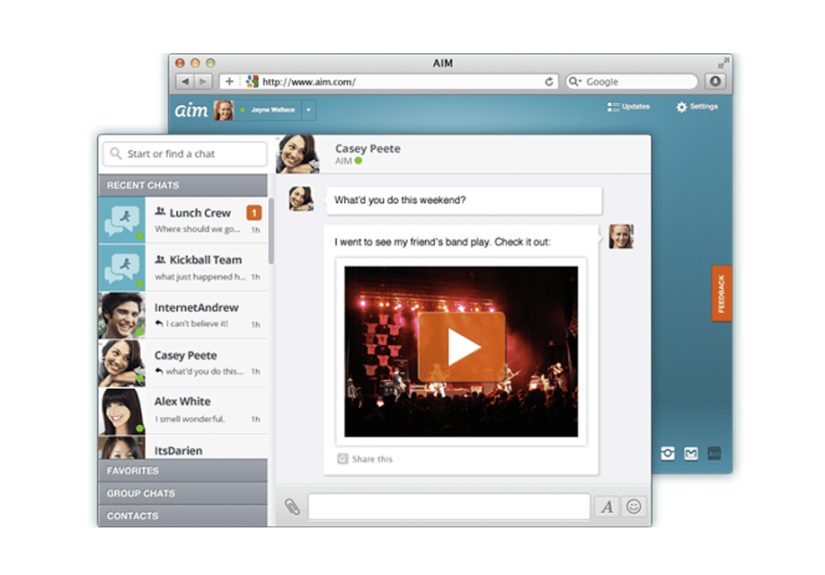
AIM worked through a standalone application installed on a computer. Once users signed in with a screen name and password, they could manage a Buddy List, send instant messages, set status updates, customize icons, and organize contacts into groups. The basic interface was not fancy, but it was incredibly effective.
Screen Names
Your AIM screen name was your identity. It was not just a login; it was a tiny personal brand. People chose names based on favorite bands, sports teams, inside jokes, birth years, initials, pets, crushes, and questionable spelling decisions they would later regret deeply. A screen name could be mysterious, funny, chaotic, or painfully early-2000s.
Unlike modern platforms that encourage real names, AIM let people create handles. That made the service feel playful and personal. It also helped shape online identity culture, paving the way for usernames on forums, gaming platforms, social networks, and messaging apps.
The Buddy List
The Buddy List was the heart of AIM. It showed which of your contacts were online, away, idle, or offline. You could organize people into categories like “Friends,” “School,” “Family,” “Work,” or highly emotional custom groups that probably should have stayed private.
For many users, the Buddy List was the first version of a digital social graph. Before Facebook friends, Instagram followers, or Snapchat streaks, there was the simple thrill of seeing a friend’s screen name pop online. That little moment could launch an entire evening of conversation.
Instant Messages
The main feature of AIM was one-on-one instant messaging. You typed a message, pressed send, and the other person received it almost immediately. Conversations happened in small chat windows, often while users were doing homework, browsing the web, listening to music, or pretending not to be online.
AIM helped popularize the casual, fast, abbreviation-heavy language of online chat. Terms like “LOL,” “BRB,” “GTG,” and “TTYL” became part of everyday internet vocabulary. The style was informal, direct, and full of personality. It was texting before texting became affordable and universal.
The Features That Made AIM Iconic
AIM was not the only instant messaging service of its era, but it had a mix of features that made it especially memorable. It was easy to use, widely adopted, and packed with small social details that made online communication feel alive.
Away Messages
Away messages may have been AIM’s greatest cultural contribution. When users stepped away from the computer, they could set a custom message explaining where they were, what they were doing, or what emotional weather system was currently passing through their teenage soul.
Some away messages were practical: “At dinner, be back later.” Others were cryptic: “Don’t ask.” Many were song lyrics aimed at one specific person who absolutely knew who they were. Away messages were part status update, part diary entry, part performance art. They anticipated the social media status, the Instagram caption, and the vague post all at once.
Buddy Icons
Buddy icons were small profile images that appeared in chat windows. Users could choose cartoons, celebrities, band logos, inside jokes, or tiny pixelated graphics that looked amazing on a bulky monitor and confusing everywhere else. These icons helped users personalize their identity before profile pictures became standard across the web.
Sound Effects
AIM had unforgettable sound effects. The opening and closing door sounds told you when someone signed on or off. Message alerts made the program feel active and alive. These sounds were so recognizable that many former users can still hear them in their heads years later. That is either nostalgia or mild internet haunting.
File Sharing and Direct Connections
AIM also supported file transfers and direct connections between users. This made it possible to send photos, documents, and other files before cloud storage and smartphone sharing became common. It was not always fast, and it was definitely not always smooth, but for the time, it felt convenient.
Chat Rooms and Group Conversations
Although AIM is best remembered for one-on-one messaging, AOL’s broader ecosystem included chat rooms and community spaces. AIM also supported group chats, allowing several users to participate in the same conversation. These features helped users experience the internet as a social place rather than just a library of web pages.
Why AIM Became So Popular
AIM arrived at the right moment. In the late 1990s, more households were getting internet access, personal computers were becoming common, and people were excited to experiment with online life. Email was useful, but it was not immediate. Phone calls were personal, but they could be awkward or inconvenient. AIM landed perfectly in between.
For teenagers and college students, AIM was especially powerful. It allowed private conversations without tying up the family phone line once broadband became more common. It gave shy people an easier way to start conversations. It let friend groups stay connected after school. It also created a whole new category of social suspense: waiting for someone to sign on.
In offices, AIM and other instant messaging tools showed how real-time chat could speed up communication. Instead of walking across the office or sending a formal email, coworkers could send a quick message. That workplace behavior later evolved into modern business chat platforms.
AIM and Early Internet Culture
AIM was not just software; it was a cultural landmark. It influenced how people wrote, joked, flirted, argued, and maintained relationships online. The platform was part of a larger shift from the internet as a destination to the internet as a place where people lived socially.
Before feeds dominated online life, AIM was intimate. You did not post to everyone. You talked to one person or a small group. The Buddy List was not about public performance in the same way modern social media often is. It was about availability, attention, and direct connection.
That does not mean AIM was drama-free. Far from it. Users could block people, warn people, read too much into response times, and panic when a crush signed off mid-conversation. In many ways, AIM introduced the emotional mathematics of online communication: Why did they reply with “k” instead of “okay”? Why are they idle? Are they actually away? Why did the door sound just play and ruin my concentration?
The Rise of Competitors
AIM was part of a larger instant messaging boom. Other major services included ICQ, Yahoo Messenger, MSN Messenger, and later Google Talk. Each had its own audience and features, but AIM became especially dominant in North America during the late 1990s and early 2000s.
Competition was intense because instant messaging was clearly valuable. If a company controlled the messaging platform, it controlled user attention. AOL tried to protect AIM’s network, while competitors looked for ways to connect users across services. This era foreshadowed modern debates about interoperability, closed platforms, and whether users should be able to message across different apps.
Over time, however, the center of gravity shifted. Social networks, smartphones, SMS plans, and mobile-first messaging apps changed user expectations. People no longer wanted to be tied to a desktop computer. They wanted conversations to follow them everywhere.
Why Did AIM Decline?
AIM declined because communication habits changed faster than the platform could adapt. In its prime, AIM was built around the desktop computer. You sat down, logged in, and chatted. But the internet moved into pockets. Smartphones made messaging constant, mobile, and integrated with contacts, photos, cameras, and notifications.
Facebook Messenger, WhatsApp, iMessage, Snapchat, Skype, and other services offered communication that felt more natural for the mobile era. They connected to phone numbers, social profiles, or existing networks. They also made sharing images, videos, stickers, voice notes, and group conversations easier.
AIM added features over the years, including mobile support, SMS-related functions, and integrations, but it could not regain its central place in daily communication. For many users, AIM became something they remembered fondly but no longer used regularly.
When Did AIM Shut Down?
AOL announced in 2017 that AIM would be discontinued after 20 years of service. The platform officially shut down on December 15, 2017. Users could no longer sign in, and the service became part of internet history.
The shutdown felt emotional for people who had grown up with AIM. Even users who had not logged in for years reacted with nostalgia. AIM represented a specific chapter of online life: family computers, dial-up sounds, shared screen names, late-night chats, and the thrill of being online when the web still felt small enough to recognize.
What Replaced AIM?
No single app replaced AIM completely. Instead, its features spread across many platforms. The Buddy List became the online friends list. Away messages became status updates. Screen names became usernames. Instant messages became texts, DMs, chats, and notifications. Buddy icons became profile photos. AIM did not disappear so much as dissolve into the DNA of modern communication.
Today, people use iMessage, WhatsApp, Messenger, Telegram, Discord, Slack, Instagram DMs, Snapchat, and many other tools for the kinds of conversations AIM once handled. Each of these platforms owes something to the early instant messaging era. AIM helped prove that real-time digital conversation was not a novelty. It was the future.
Why AIM Still Matters
AIM matters because it trained a generation to be online together. It normalized real-time chat, visible availability, casual digital language, and personal online identity. It showed that communication could be fast without being formal and personal without being face-to-face.
It also created habits that still shape the internet. People still check whether someone is online. They still think carefully about profile pictures. They still use status messages to signal mood, availability, humor, or mystery. They still experience the tiny emotional earthquake of seeing “typing…” and waiting for what comes next.
In that sense, AIM was not just a product. It was a rehearsal for the social internet. It helped users practice the behaviors that would later define texting, social media, group chats, workplace messaging, and online communities.
Experiences Related to AIM: What It Felt Like to Use AOL Instant Messenger
To understand AIM, you have to imagine a time when going online felt like an event. You did not casually glance at a smartphone 200 times a day. You sat at a computer, often in a shared room, and logged into the internet with intention. AIM opened like a small social control panel. Suddenly, you knew who was around, who was away, who was idle, and who might be willing to talk.
One of the most memorable experiences was choosing a screen name. This could take serious thought. A good screen name had to be cool, original, and available. Many people combined nicknames, favorite numbers, music references, sports terms, or random words that seemed brilliant at the time. Years later, those same names might look like digital fossils from a very dramatic civilization.
Then came the Buddy List. Seeing someone sign on could change the mood of an entire evening. If it was your best friend, you could start chatting instantly. If it was your crush, you might stare at the screen for several minutes, open a message window, close it, reopen it, type “hey,” delete it, and then finally send something deeply poetic like “sup.” AIM turned ordinary conversations into tiny emotional adventures.
Away messages were another huge part of the experience. People used them creatively, strategically, and sometimes theatrically. A simple away message could say, “Doing homework.” A more advanced one might include song lyrics, inside jokes, ASCII art, or a quote that was clearly directed at one person but publicly visible to everyone. It was social signaling before social media made social signaling a full-time sport.
There was also a strange etiquette to AIM. Responding too quickly could seem eager. Waiting too long could seem rude. Signing off suddenly could feel suspicious. Blocking someone was serious business. Warning someone, a feature that could affect a user’s warning level, felt like pressing a tiny drama button. Even the idle status could be analyzed like evidence in a detective case.
For students, AIM often became the unofficial homework hotline. Someone would ask what pages were assigned, another person would complain about math, and someone else would claim they were “almost done” while clearly not being almost anything. Group chats helped friends coordinate plans, gossip, study, or simply avoid boredom.
For families and long-distance friends, AIM made the internet feel warmer. It allowed people to stay connected without expensive long-distance calls or slow email exchanges. Grandparents, cousins, college friends, and online communities could keep in touch in a way that felt immediate and personal.
Of course, AIM was not perfect. Conversations could be interrupted by connection problems. File transfers sometimes failed. Security and privacy standards were not what users expect today. People shared too much, trusted suspicious links, or forgot that digital messages could have consequences. But those flaws were part of the learning curve of early internet life.
The most powerful AIM experience was probably its simplicity. You opened the app, saw your people, and talked. There were no endless feeds, no algorithmic recommendations, no public like counts, and no pressure to create polished content. AIM was built around conversation. That made it feel smaller, more direct, and in many ways more human.
Looking back, AIM feels both ancient and oddly modern. The design belongs to another era, but the social behaviors are completely familiar. We still manage availability. We still curate identity. We still use short messages to build friendships, relationships, jokes, and communities. AIM was the place where many people first learned that a small chat window could hold a very big part of life.
Conclusion
AOL Instant Messenger was one of the defining communication tools of the early internet. Launched in 1997 and discontinued in 2017, AIM gave millions of users a simple way to talk in real time, build online identities, manage Buddy Lists, write unforgettable away messages, and experience the internet as a social space.
Its technology may be gone, but its influence is everywhere. Modern messaging apps, workplace chat tools, social media profiles, status indicators, and online usernames all carry traces of the AIM era. AIM taught people that digital communication could be instant, expressive, casual, and deeply personal. Not bad for a little yellow running man.
Note: This article is based on verified historical information about AOL Instant Messenger, its launch, major features, cultural impact, decline, and shutdown, rewritten in original language for web publication.