Table of Contents >> Show >> Hide
- First, a reality check: your retirement number is a range, not a magic digit
- Step 1: Start with spending (because retirement is not a vibe, it’s a budget)
- Step 2: Count your “steady income” first (the boring money that does the heavy lifting)
- Step 3: The gap is your retirement problem (and also your roadmap)
- Step 4: Convert the gap into a retirement number (the multiplier method)
- Step 5: Don’t ignore sequence-of-returns risk (a fancy term for “bad luck early on”)
- Step 6: Your biggest retirement-number drivers (the knobs you can turn)
- Step 7: A practical “retirement number worksheet” (no finance jargon required)
- How to raise your chances of hitting your number (without turning into a financial robot)
- Common retirement-number mistakes (and how to avoid them)
- So… what’s your retirement number, really?
- Experiences People Commonly Have When Finding Their Retirement Number (and what they learn)
- Experience #1: The first number feels either terrifying or suspiciously easy
- Experience #2: Health care becomes the “oh right” line item
- Experience #3: The market doesn’t cooperate on your retirement date
- Experience #4: The retirement number often drops when people get specific
- Experience #5: People who “win” retirement planning talk about peace, not perfection
- Conclusion
If you’ve ever googled “How much do I need to retire?” and immediately felt like your brain tried to retire first,
welcome to the club. The “retirement number” sounds like it should be a clean, confident answerlike the price of a
movie ticket or the number of fries you definitely won’t eat in the car. But retirement math doesn’t work like
that. It’s closer to a recipe: a handful of assumptions, a dash of reality, and one surprise ingredient called
“life.”
The good news: you don’t need a perfect number. You need a useful onesomething that guides your saving,
investing, and decision-making without pretending the future is a spreadsheet that always behaves. In the spirit of
A Wealth of Common Sense, the goal here is to keep it practical, honest, and surprisingly doable.
First, a reality check: your retirement number is a range, not a magic digit
People often chase a single “target” because it feels comforting. But your retirement number depends on variables you
can’t fully lock down today: market returns, inflation, taxes, health care, longevity, family needs, and whether your
future self becomes a minimalist… or starts collecting vintage surfboards like they’re Pokémon.
So instead of hunting for one perfect number, build a retirement range:
a “baseline” number that works in normal conditions, plus a “sleep-well” number with extra cushion for weird years.
Retirement planning works best when it’s a little humble.
Step 1: Start with spending (because retirement is not a vibe, it’s a budget)
Your retirement number begins with one question: How much will you spend each year? Not your neighbor.
Not a YouTuber who “retired at 32” but still sells five courses and three merch drops. You.
Build your “retirement paycheck”
A clean way to estimate spending is to split it into essentials and lifestyle:
- Essentials: housing, utilities, groceries, insurance, transportation, medical costs
- Lifestyle: travel, hobbies, gifts, eating out, subscriptions you forgot you had
- Big-ticket surprises: home repairs, family support, long-term care, “we need a new roof” moments
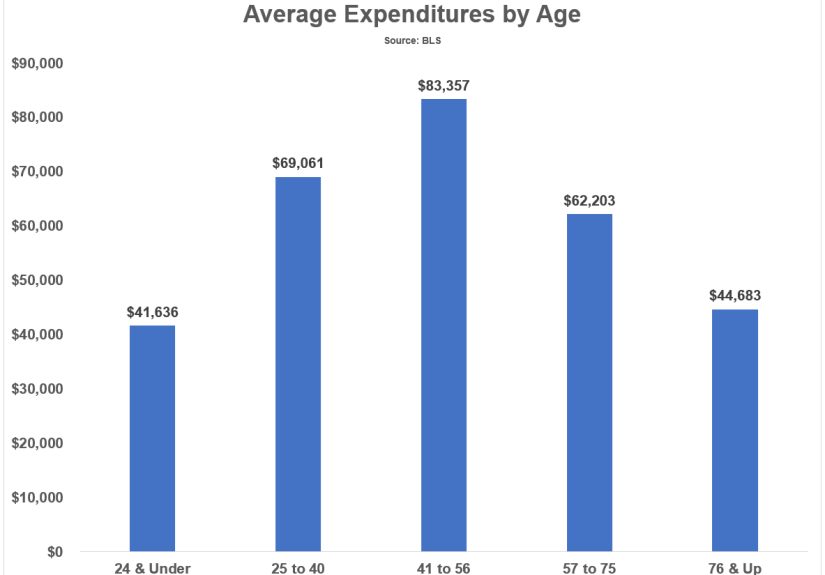
Many planners use an income replacement rule of thumb (often around 70%–80% of pre-retirement income) as a starting
point. That can be helpful, but spending-based planning is more accurate because retirement expenses aren’t evenly
distributed. Early retirement might include travel and fun. Later retirement might include more health costs.
A simple spending estimate you can do today
If you want a quick baseline:
- Take your current annual spending (or estimate it from bank/credit card totals).
- Subtract work costs you won’t have (commuting, work wardrobe, lunch out five days a week).
- Add retirement costs you will have (health care gaps, more travel, hobbies, taxes).
This gets you to a realistic annual numberyour retirement spending target. That’s the engine that
drives everything else.
Step 2: Count your “steady income” first (the boring money that does the heavy lifting)
Retirement income usually comes from a mix of sources. Some are relatively predictable; some depend on markets. Start
with the predictable stuff because it reduces how much your portfolio needs to cover.
Common steady-income sources
- Social Security: typically designed to replace a portion of pre-retirement income, not all of it
- Pensions: less common than they used to be, but powerful if you have one
- Annuities: optional tools that can create guaranteed income (with trade-offs)
- Part-time work: the “semi-retired” phase that many people enjoy more than they expected
- Rental income: if it’s truly net income after costs, vacancies, and repairs
Think of this as building a “floor.” The bigger your floor, the smaller your portfolio stress.
Step 3: The gap is your retirement problem (and also your roadmap)
Once you have annual spending and steady income, calculate the gap:
Annual spending need − steady annual income = portfolio income gap
That gap is what your investments need to fundyear after yearthrough good markets, bad markets, and “what even is
this market doing?” markets.
Step 4: Convert the gap into a retirement number (the multiplier method)
Here’s the classic approach: use a withdrawal-rate multiplier. The most famous is the 4% rule, which
roughly translates to saving about 25× your annual portfolio spending gap.
The core formula
- 4% rule: Retirement number ≈ gap × 25
- 3.5% spending rate: Retirement number ≈ gap × 28.6
- 3.0% spending rate: Retirement number ≈ gap × 33.3
Why the range? Because different research and market assumptions can support different starting spending rates. Some
recent retirement research has suggested that a starting rate lower than 4% may be more conservative depending on
market valuations, inflation assumptions, and portfolio mix. You don’t need to memorize the debatesyou just need to
understand that small percentage changes create big dollar differences.
Example 1: The “classic retirement” scenario
Let’s say you want to spend $80,000/year. You expect $30,000/year from Social Security and
other steady sources. Your portfolio gap is $50,000/year.
- At 4%: $50,000 × 25 = $1.25 million
- At 3.5%: $50,000 × 28.6 = about $1.43 million
- At 3.0%: $50,000 × 33.3 = about $1.67 million
Same lifestyle. Same gap. Different “comfort levels.” This is why your retirement number should be a range.
Example 2: Early retirement is a different sport
Retiring at 45 is not the same as retiring at 67. The longer your time horizon, the more you need to think about
inflation, market volatility, and sequence-of-returns risk (more on that in a second). That often pushes people
toward a more conservative starting spending rate or a plan that includes flexible spending and/or part-time income.
Step 5: Don’t ignore sequence-of-returns risk (a fancy term for “bad luck early on”)
One of the scariest retirement questions is: “What if the market crashes right after I retire?” That’s not drama.
It’s math.
If you’re withdrawing money during a downturn, you may be forced to sell more shares at low prices, reducing what’s
left to recover when markets bounce back. This is called sequence-of-returns risk, and it’s why two
retirees with the same average return can end up with wildly different outcomes depending on the timing.
Ways people manage sequence risk
- Keep a cash buffer: 1–3 years of spending needs so you’re not selling stocks in a crash
- Flexible spending rules: reduce withdrawals after bad market years
- Delay retirement or phase out: even 1–2 more earning years can help a lot
- Delay Social Security when possible: a higher guaranteed benefit can reduce portfolio pressure later
Step 6: Your biggest retirement-number drivers (the knobs you can turn)
1) Retirement lifestyle
This is the obvious one, but it’s also the most powerful. Cutting annual spending by $10,000 can reduce your portfolio
need by roughly $250,000 at a 4% rule framework. That’s not “skip lattes.” That’s “choose the version of retirement
that actually fits you.”
2) Housing choices
Housing is often the largest expense. A paid-off home can lower required income. Downsizing can reduce taxes,
insurance, maintenance, and utilities. Relocating can change the whole cost-of-living equation (and sometimes your
happiness equationchoose wisely).
3) Health care and Medicare timing
Health care is a major wildcardespecially before Medicare eligibility. Even after Medicare starts, premiums,
deductibles, prescriptions, dental/vision needs, and long-term care risks can be meaningful. Many retirees are
surprised not by one giant medical bill, but by the steady drip of costs that never makes headlines.
4) Taxes (the silent partner in your retirement plan)
Withdrawals from traditional retirement accounts are often taxable. Social Security may be partially taxable depending
on your overall income. Capital gains and dividends can change your tax picture. A retirement plan that ignores taxes
is like planning a road trip while ignoring gas prices: you can do it, but it gets weird fast.
5) Longevity
Planning for a 30-year retirement isn’t pessimismit’s prudence. Outliving money is a bigger risk than dying with “too
much,” especially because aging can increase care needs. Your retirement number should respect that reality.
Step 7: A practical “retirement number worksheet” (no finance jargon required)
Part A: Estimate annual spending
- Essentials: ________
- Lifestyle: ________
- Buffer for surprises: ________
- Total annual spending target: ________
Part B: Estimate steady income
- Social Security (estimate): ________
- Pension/annuity: ________
- Other steady income: ________
- Total steady income: ________
Part C: Calculate the gap and your range
- Portfolio gap: spending − steady income = ________
- Baseline number (4%): gap × 25 = ________
- Sleep-well number (3.5%): gap × 28.6 = ________
Now you have a range that is actually usable. Next comes the strategy: how to get there.
How to raise your chances of hitting your number (without turning into a financial robot)
Increase your saving rate (but keep it livable)
If you’re early in your career, saving consistently matters more than chasing perfect investments. Some large
institutions suggest saving rates (often around the mid-teens of income when including employer match) and provide
age-based benchmarks like saving multiples of salary by certain ages. Use these as guide rails, not as a report card.
Invest with a plan, not with vibes
Retirement investing is usually a mix of growth (stocks) and stability (bonds/cash). The “right” mix depends on your
timeline, temperament, and the size of your income floor. The key is to choose an allocation you can stick with when
markets do what markets do: surprise you.
Make spending flexible
Flexibility is a retirement superpower. If you can trim discretionary spending in bad market yearstravel less, delay a
car purchase, pause big giftsyou can dramatically improve your plan’s durability without needing a massive extra
portfolio.
Consider a “two-phase” retirement
Many people find they don’t want to slam the door on work forever. A few years of part-time work can:
- reduce withdrawals from your portfolio early on
- allow investments more time to grow
- help cover health insurance costs before Medicare
- make retirement feel more social and structured
Common retirement-number mistakes (and how to avoid them)
Mistake #1: Using one return number and calling it a plan
Markets don’t pay you in averages. They pay you in a chaotic series of years. A plan needs stress testing: “What if
inflation is higher?” “What if we get a recession early?” “What if I live longer than expected?”
Mistake #2: Forgetting the “boring” costs
Home maintenance, insurance, property taxes, and medical spending aren’t glamorous, but they’re real. When people blow
up their retirement plan, it’s often death by a thousand paper cuts, not one dramatic event.
Mistake #3: Treating Social Security like a footnote
Claiming decisions can materially affect lifetime income. For many households, Social Security is the closest thing to
an inflation-adjusted pension. Treat it as part of the strategy, not an afterthought.
Mistake #4: Not updating the number
Your retirement number should change when your life changes: marriage, kids, moving, paying off debt, career changes,
or a new health reality. Planning isn’t a one-and-done event. It’s routine maintenancelike changing the oil, but for
your future.
So… what’s your retirement number, really?
Your retirement number is the amount that gives your lifestyle a high probability of lasting as long as you do, with
enough flexibility to handle the inevitable surprises. It’s not a bragging-rights figure. It’s a tool.
If you want a “wealth of common sense” approach: build a spending-based plan, estimate your steady income, translate
the gap into a range using conservative spending rates, and then focus on the few levers that matter mostsaving,
investing, spending flexibility, and timing decisions.
Experiences People Commonly Have When Finding Their Retirement Number (and what they learn)
Retirement planning isn’t just mathit’s behavior. And the “retirement number” journey tends to follow a few
surprisingly consistent real-world patterns. Here are experiences people often report (and the lessons they pull from
them), which can help you avoid learning everything the hard way.
Experience #1: The first number feels either terrifying or suspiciously easy
Many people do the quick “25× spending” calculation and react in one of two ways: “That’s impossible” or “Wait… that’s
it?” Both reactions make sense. If you’re early in your career, the number looks huge because it’s supposed toit’s a
long-term goal. If you’re a high saver with low spending, the number can look smaller than expected because your
lifestyle requires less fuel.
The lesson: the retirement number is less about your salary and more about your spending gap.
Two households can earn the same income and need radically different portfolios because one spends $60,000 a year and
the other spends $120,000. The number isn’t judging you; it’s just doing the math you asked it to do.
Experience #2: Health care becomes the “oh right” line item
People often underestimate health-related costs, especially in the early years before Medicare eligibility or in later
years when prescriptions, procedures, and care needs become more frequent. Even retirees in good health say the
planning value comes from expecting some level of ongoing cost rather than hoping for none.
The lesson: build a buffer. Not a panic bufferjust a realistic one. A retirement plan that includes “medical: $0”
is basically a plan that says “I never get older.” Which is bold. And also not how time works.
Experience #3: The market doesn’t cooperate on your retirement date
A common story: someone plans to retire in a certain year, and then markets get volatile. It doesn’t even need to be a
crash; it could be a choppy year with weak returns. That’s when people discover the emotional side of retirement
planningbecause the spreadsheet doesn’t feel nervous, but humans do.
The lesson: flexibility beats prediction. People who feel most confident tend to have at least one of these:
(1) a cash buffer, (2) the ability to reduce discretionary spending, (3) the option to work part-time, or (4) a larger
cushion between “baseline” and “sleep-well” numbers. In other words: you don’t need to forecast markets. You need a
plan that can survive being wrong.
Experience #4: The retirement number often drops when people get specific
At first, retirement can feel like a vague concept: “We’ll travel a lot!” “We’ll buy a place near the water!” “We’ll
finally have time for everything!” When people get specifichow often they’ll travel, where they’ll live, what their
weekly routine looks likethey often realize they don’t need as much as their imagination originally demanded.
Sometimes they also realize they need more (hello, expensive hobbies).
The lesson: clarity is cost control. The more detail you have about your ideal retirement, the easier it is to put real
price tags on it and decide what’s worth it.
Experience #5: People who “win” retirement planning talk about peace, not perfection
The most satisfying outcome people describe isn’t hitting an exact number on a specific date. It’s confidence:
“We can handle a bad year.” “We won’t panic-sell.” “We have options.” That peace comes from building a range,
stress-testing assumptions, and focusing on controllables.
The lesson: your retirement number is a compass, not a finish line ribbon. Use it to make better decisions today, and
let it evolve as your life evolves.
Conclusion
Your retirement number doesn’t need to be a mystical secret locked inside a calculator. It’s simply the portfolio size
that can sustainably cover your spending gap after accounting for steady income sources. Start with spending, build an
income floor, convert the gap into a range using conservative spending rates, and protect the plan with flexibility.
That’s the common-sense approachand it works because it respects real life, not fantasy spreadsheets.