Table of Contents >> Show >> Hide
- What “When You Know You Know” Actually Means
- Why the Phrase Is So Popular in Love and Dating
- What the Phrase Does Not Mean
- Healthy Intuition vs. Anxiety: How to Tell the Difference
- Examples of “When You Know You Know” in Real Life
- Signs Your “Knowing” May Be Grounded in Something Real
- When “When You Know You Know” Can Be Misleading
- How to Test the Feeling Before You Build a Whole Life Around It
- Experiences People Commonly Describe When They Say “When You Know You Know”
- Final Thoughts
Some phrases survive because they do a lot of work in very few words, and “when you know, you know” is one of them. It shows up in dating conversations, wedding speeches, group chats, and suspiciously confident coffee dates. Usually, people say it when they want to describe a feeling of certainty that arrived before a spreadsheet, before a pro-and-con list, and definitely before their best friend finished interrogating the situation like a true detective.
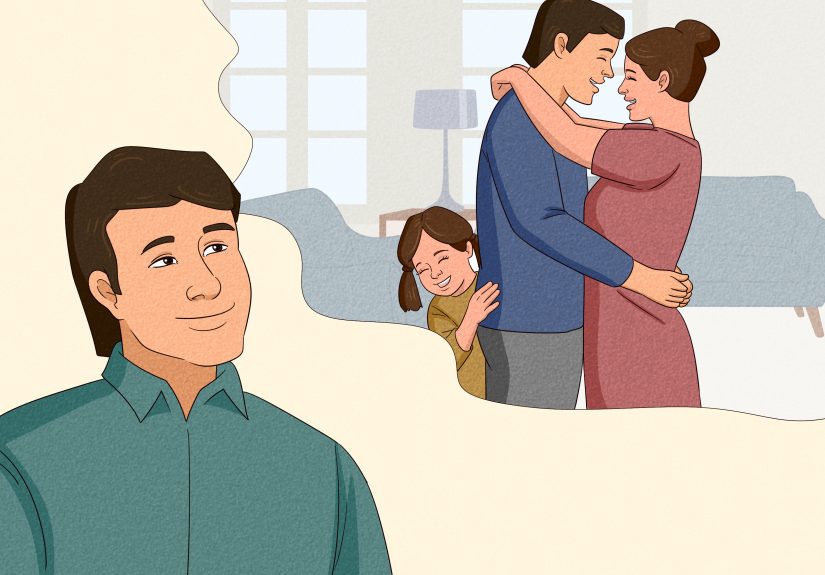
Most often, the phrase is used about romance. Someone meets a person, spends time with them, and at some point realizes, Oh. This feels different. But the expression can also apply to friendship, creative work, career choices, or any decision where logic matters yet something deeper seems to click first. The key idea is not magic. It is clarity. It is the moment when your internal alarm clock stops blaring random opinions and starts saying, in a surprisingly calm voice, “Yes, this fits.”
That said, “when you know, you know” can be both useful and misleading. Sometimes it reflects healthy intuition. Sometimes it is chemistry wearing a fake mustache and pretending to be destiny. And sometimes it is anxiety doing somersaults in a trench coat. So let’s unpack what the phrase really means, why people use it, where it can help, where it can fool you, and what real-life examples look like.
What “When You Know You Know” Actually Means
At its core, “when you know, you know” means you feel a strong internal sense of certainty without needing every detail explained out loud. In everyday language, it points to intuition: a quick, almost immediate understanding that comes from your mind processing patterns faster than your conscious thoughts can narrate them.
That is why the phrase often feels so powerful. People are not always reacting to one grand cinematic moment. More often, they are responding to a steady pile of small signals: this person is consistent, kind, emotionally safe, honest, and easy to be around. Their words match their actions. You do not feel like you are auditioning for a role in your own life. You feel known, respected, and oddly peaceful.
In relationships, that peaceful part matters. Many people assume certainty should feel like fireworks, dramatic music, and the emotional equivalent of running through an airport. But in healthy situations, certainty often feels quieter than that. It can feel like relief. Like exhaling. Like realizing you are not trying to decode twelve mixed signals and a cryptic “u up?” text sent at 11:47 p.m.
Why the Phrase Is So Popular in Love and Dating
Romantic relationships are full of uncertainty, which is probably why people love a phrase that sounds so wonderfully final. Dating can feel like a game show designed by a sleep-deprived philosopher. Are we exclusive? Are we casual? Are we “seeing where this goes”? Is “seeing where this goes” a plan or just a decorative sentence?
Against all that confusion, “when you know, you know” offers a shortcut. It suggests that the right connection becomes obvious. Not because the relationship is perfect, but because the foundation feels solid. You are not forcing compatibility. You are discovering it.
People often use the phrase when they notice some combination of the following:
- You can be fully yourself without performing.
- Communication feels open instead of exhausting.
- Trust grows through consistency, not fantasy.
- Conflict does not immediately turn into fear, silence, or chaos.
- Your values and future goals are not living on separate planets.
- There is attraction, but also emotional safety and mutual respect.
That is why the phrase resonates. It is not supposed to mean, “I felt sparks, therefore I have located my soulmate.” It is closer to, “This connection keeps making sense in ways that matter.”
What the Phrase Does Not Mean
This is where things get interesting. “When you know, you know” sounds charming, but it should not be treated like a universal truth serum.
It does not mean instant chemistry equals long-term compatibility.
Attraction matters, of course. Nobody is writing sonnets about tax documents. But chemistry alone cannot carry a relationship very far if trust, communication, accountability, and emotional maturity are missing. A relationship can feel intense very quickly and still be unstable.
It does not mean there will never be conflict.
Healthy relationships are not conflict-free museums where everyone whispers politely and agrees about everything forever. Real closeness includes disagreement. The difference is in how conflict is handled. In a good relationship, people listen, repair, and work through problems without constant contempt, manipulation, or retaliation.
It does not mean you should ignore red flags.
If someone is inconsistent, controlling, pushy, dishonest, or suspiciously committed after knowing you for nine minutes, your “knowing” may need a fact-check. Grand gestures and fast intensity can sometimes signal manipulation, not devotion. Love bombing is not the same thing as genuine intimacy.
It does not mean certainty arrives on a strict deadline.
Some people know quickly. Others need time. Some relationships start with a spark; others build like a campfire that gets better the longer it burns. There is no gold medal for emotional speed.
Healthy Intuition vs. Anxiety: How to Tell the Difference
This is the part people really want help with. If “when you know, you know” is about intuition, how do you tell intuition apart from fear, overthinking, wishful thinking, or unresolved baggage in a fancy jacket?
A useful rule of thumb is this: healthy intuition usually feels clear, grounded, and steady. Anxiety tends to feel noisy, urgent, repetitive, and full of worst-case scenarios. Intuition often says, “Something here matters.” Anxiety says, “Solve everything right now or the universe will collapse by dinner.”
Here are a few clues:
- Intuition is calm. It may be strong, but it is usually not screaming.
- Anxiety is repetitive. It loops, spirals, and keeps asking the same question in seventeen different outfits.
- Intuition notices patterns. It responds to what is consistently happening.
- Anxiety often jumps ahead. It reacts to imagined disaster before enough evidence exists.
- Intuition can coexist with patience. Anxiety demands immediate certainty.
If you are unsure which one is talking, slow down and test the feeling. Look at the facts. Do this person’s actions match their words? Do you feel respected? Can you express discomfort without fear? Does the relationship get steadier with time, or just louder?
Examples of “When You Know You Know” in Real Life
Example 1: The relationship that feels easy, not empty
Emma had dated plenty of charismatic people who made her feel excited and confused in equal measure. Then she met David. He was not a dramatic texter. He did not vanish for two days and reappear with a moon emoji and a half-apology. He simply showed up, followed through, remembered what mattered to her, and handled difficult conversations like an adult with access to emotional vocabulary. After a few months, Emma realized she was waiting for the usual chaos and it never arrived. That was her version of “knowing.” Not fireworks. Stability.
Example 2: The friendship that never feels transactional
Marcus met a new friend at work and noticed something unusual: every interaction felt reciprocal. He was not always the one reaching out. He did not feel drained after talking. There was humor, honesty, and support without scorekeeping. He trusted the friendship because it was consistent. “When you know, you know” can absolutely apply outside romance.
Example 3: The job that fits your values
Lena interviewed for a role that was not the flashiest option. It did not come with a glamorous title or a suspiciously cool office with neon signs and beanbags. But the team communicated clearly, respected boundaries, and described success in ways that matched her goals. She left the interview feeling calm rather than dazzled. That calm told her more than hype ever could.
Example 4: The relationship that looks good on paper but feels wrong
This works in reverse too. You can meet someone who seems perfect by every visible standard and still feel off. Maybe conversations stay shallow. Maybe affection feels performative. Maybe your body keeps tensing up even when your brain is trying to file the person under “great catch.” Sometimes “when you know, you know” is your signal to leave, not stay.
Signs Your “Knowing” May Be Grounded in Something Real
Because the phrase gets tossed around so casually, it helps to anchor it in something observable. A grounded sense of certainty often grows from repeated experiences like these:
- You feel emotionally safe enough to be honest.
- You are respected even during disagreement.
- The other person is consistent over time.
- Your needs do not get mocked, minimized, or treated like an inconvenience.
- You can imagine a future together without needing to ignore major incompatibilities.
- The relationship adds peace to your life more often than confusion.
- You are not trying to “fix” the person into becoming who you wish they were.
Notice the pattern: these signs are less about fantasy and more about function. “Knowing” is strongest when it is backed by evidence your nervous system can trust.
When “When You Know You Know” Can Be Misleading
Sometimes the phrase gets used to justify decisions that have not been examined carefully. That can be risky. A few situations deserve extra caution.
Fast intensity
If everything feels incredibly serious immediately, pause. Speed is not proof. Some people rush emotional intimacy to create attachment before trust is earned.
Old patterns dressed as fate
What feels familiar is not always what is healthy. If you grew up around inconsistency, criticism, or emotional unpredictability, you may mistake those dynamics for passion because your system recognizes them. Familiarity can impersonate destiny.
Ignoring outside reality
If every friend who loves you is worried, every boundary becomes a battle, and every conversation leaves you doubting yourself, that is not a romantic sign from the universe. That is data.
How to Test the Feeling Before You Build a Whole Life Around It
You do not have to choose between intuition and logic. The healthiest decisions usually let both sit at the table.
Ask yourself:
- Do I feel calm, respected, and like myself around this person?
- Have I seen enough consistency to trust what I’m feeling?
- Do our values align where it matters most?
- How does this person handle disappointment, conflict, and boundaries?
- Am I drawn to who they really are, or to who I hope they might become?
If your answers are solid, your “knowing” may be grounded. If your answers rely mostly on imagination, projection, or adrenaline, you may need more time and less dramatic background music.
Experiences People Commonly Describe When They Say “When You Know You Know”
One of the most fascinating things about this phrase is that people often describe the same emotional experience in different words. Some say they felt peaceful. Others say things suddenly made sense. Others describe a strange absence of drama, as if their heart and brain stopped arguing in separate group chats and finally agreed on a plan.
A common experience is feeling more like yourself, not less. In uncertain relationships, people often become performers. They over-edit texts, monitor reactions, rehearse conversations, and shape-shift into whatever seems most lovable. But when a connection is healthy, that performance pressure tends to ease up. People say they laugh more naturally, speak more honestly, and stop feeling like they need to earn basic affection. That shift can be subtle, but it is powerful. It is hard to overstate how persuasive peace can feel after chaos.
Another experience people mention is consistency. Not the flashy kind. The ordinary kind. Calls happen when promised. Apologies are real. Plans do not feel like hostage negotiations. Affection does not disappear every time life gets inconvenient. Over time, those small steady moments can create a deep internal certainty. You do not “know” because one grand romantic gesture changed everything. You know because nothing important feels slippery.
Some people also describe “knowing” as a reduction in confusion. That does not mean every question is answered. It means the big questions become less murky. You understand where you stand. You do not have to decode mixed signals like a detective in a crime show who has had far too much espresso. The relationship may still be new, but it does not feel foggy. There is room for curiosity without chronic uncertainty.
For others, the experience is physical. Their body feels calmer. Their shoulders are less tense. Their stomach is not doing gymnastics every time a message arrives. That matters, because our bodies often register safety and stress before our thoughts catch up. A grounded relationship can create a sense of ease that is surprisingly noticeable once you realize how much tension you had accepted as normal.
There is also a quieter emotional experience many people report: they stop trying to win. They are no longer chasing validation, trying to be chosen, or proving their worth every other Tuesday. Instead, mutual care becomes more obvious. The connection feels collaborative rather than competitive. The question changes from “How do I make this person want me?” to “Do we treat each other well enough to build something real?” That is a much healthier question, and it usually leads to much better decisions.
Of course, not every story is romantic. Some people “know” a friendship is right because it feels reciprocal for the first time in years. Some “know” a job is right because the environment matches their values. Some “know” they need to leave a situation because their peace disappears whenever they are in it. The phrase can describe recognition in any form: this works, this matters, this is safe, this is not for me.
So when people say, “when you know, you know,” they are often talking about an experience that combines intuition, evidence, and emotional clarity. It is not always dramatic. In fact, it is often the opposite. It is the deeply underrated feeling of not having to fight reality in order to believe in it.
Final Thoughts
“When you know, you know” is a catchy phrase, but it becomes meaningful only when you understand what is underneath it. At its best, it describes grounded certainty that grows from trust, emotional safety, consistency, aligned values, and a connection that feels honest rather than confusing. At its worst, it can be used to romanticize intensity, excuse red flags, or rush decisions that need more time.
The sweet spot is balance. Respect your intuition, but let it shake hands with reality. Notice how you feel, but also notice what is actually happening. If the connection keeps showing up with clarity, kindness, and steadiness, your inner sense of “knowing” may be worth trusting. And if it does not, that knowing matters too.
In other words, the real version of “when you know, you know” is not blind faith. It is pattern recognition with better lighting.