Table of Contents >> Show >> Hide
- Why This Wedding Drama Feels So Familiar
- No, She Is Not Entitled To A “Special” Wedding Role
- Bullying Does Not Expire Just Because The Photos Will Be Pretty
- Forgiveness And Inclusion Are Not The Same Thing
- Why The Husband’s Position Matters So Much
- What A Healthy Alternative Could Look Like
- The Bigger Lesson About Family, Memory, And Consequences
- Experiences Related To This Kind Of Wedding Conflict
- Conclusion
Weddings have a funny way of turning old family issues into fresh, frosted drama. Add flowers, a seating chart, one stressed-out bride, and a relative who suddenly believes she deserves a featured role, and boom: you do not have a wedding, you have a prestige television episode with nicer table linens.
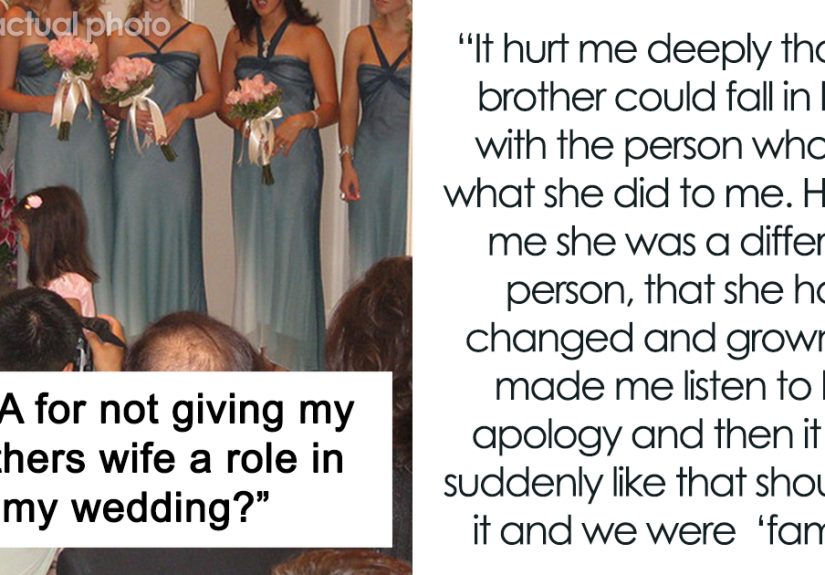
That is exactly why this story hits such a nerve. A woman is reportedly upset because she does not get to do anything “special” in her husband’s sister’s wedding. On paper, that sounds like a minor family disappointment. In context, though, it becomes much messier: this same woman allegedly bullied the bride years ago. Now she is shocked, shocked, that the person she treated badly is not handing her a ribboned title, a microphone, and a front-row badge to the emotional center of the day.
Here is the uncomfortable truth wearing a very sensible bridesmaid dress: nobody is automatically owed a starring role in someone else’s wedding. Not a sister. Not a sister-in-law. Not a cousin. Not the person who once decided she looked amazing in sage green and therefore should clearly be maid of honor material. A wedding party is supposed to be made up of trusted, supportive people who reduce stress rather than personally manufacture it. If a bride has a painful history with someone, choosing distance is not cruelty. It is discernment with better hair.
Why This Wedding Drama Feels So Familiar
Stories like this spread because they combine three things people understand instantly: family memory, wedding expectations, and the world’s oldest shocker, which is that past behavior has consequences. Many people grow up being told to “move on,” “keep the peace,” or “be the bigger person.” Then a major family milestone arrives, and suddenly the person who caused the hurt wants a ceremonial role, public recognition, or a cute getting-ready robe.
The problem is that weddings do not erase history. They magnify it. If someone was dismissive, mean, or openly cruel in the past, the injured person may not feel emotionally safe letting that individual into the inner circle of wedding planning. And honestly? That is reasonable. A bridal party is not a rehabilitation program for people who peaked in the Mean Era.
The bride’s decision in this case is less about revenge and more about trust. Trust is the real currency of a wedding party. The people closest to the couple usually help with communication, calm nerves, logistics, last-minute problems, budget stress, pre-wedding events, and emotional support. Those are intimate jobs. They are not consolation prizes handed out to relatives who happen to share a last name by marriage.
No, She Is Not Entitled To A “Special” Wedding Role
One of the biggest myths in wedding culture is that family members are guaranteed special jobs simply because they are family. That is not how modern wedding etiquette works. Couples choose attendants and helpers based on closeness, reliability, comfort, and fit. Sometimes that means a bride picks her best friend over a sister. Sometimes it means a future sister-in-law is included. Sometimes it means she is not. None of those choices are inherently rude.
What matters is the relationship. If the bride and her husband’s sister were close, supportive, and genuinely warm toward each other, then yes, involving her in a meaningful way could make sense. But when there is a history of bullying, exclusion, or humiliation, the emotional math changes fast. The wedding is not the moment to pretend a painful dynamic never happened just because a neutral-colored invitation suite has entered the chat.
There is also a difference between being invited and being centered. A person can be welcome at the wedding without being elevated inside it. That distinction matters. Attending is participation. Being assigned a speech, shower, toast, reading, planning task, or honored title is intimacy. If the bride does not feel safe offering intimacy, that boundary is not petty. It is protective.
Bullying Does Not Expire Just Because The Photos Will Be Pretty
People often talk about bullying as if it belongs only in school hallways and teen movies, but the effects can last much longer. The emotional residue of being mocked, excluded, belittled, or targeted does not vanish because everyone is now old enough to own formalwear. Even when people “move on,” the body and mind can remember who made them feel small. That memory matters during a high-stress event like a wedding.
If the sister-in-law really was a huge bully to the bride in the past, it makes perfect sense that the bride would not want to hand her any role involving vulnerability, access, or authority. Weddings are emotionally loaded. They often bring out anxiety, family pressure, and old roles people thought they had outgrown. The last thing many brides want is to spend the weekend wondering whether an old tormentor is going to criticize, compete, dominate, or somehow make the moment about herself.
And here is a point people miss: the bride does not need courtroom-level proof to protect her peace. She only needs enough lived experience to know what feels safe and what does not. If someone spent years teaching you not to trust them, you are not required to suddenly rebrand them as “supportive family” because there is a florist involved.
Forgiveness And Inclusion Are Not The Same Thing
One reason these conflicts get so heated is that people confuse forgiveness with access. They assume that if the bride has matured, healed, or chosen not to fight, then she should also offer a visible role in the wedding. That is not how healthy reconciliation works.
You can forgive someone privately and still keep strong boundaries. You can be cordial at family gatherings and still decide they are not your maid of honor, bridesmaid, shower host, or pre-wedding confidante. You can accept an apology and still say, “I do not want this person managing anything important on one of the biggest days of my life.” Those positions are not contradictory. They are called emotional intelligence.
Real repair also requires accountability. A sincere apology is not just “sorry you felt that way” wearing lipstick. It usually includes honesty, ownership, changed behavior, respect for new boundaries, and patience. If the woman in this story is mainly upset about not being treated as special, that suggests she may still be focused on status rather than repair. That is not a great sign. People who genuinely regret hurting someone usually understand that trust may return slowly, if at all.
Why The Husband’s Position Matters So Much
In family wedding drama, the spouse connected to both sides often becomes the human bridge, and that is not always a fun place to stand. In this case, the husband is both the bride’s brother and the upset woman’s husband. His role is delicate but important.
Ideally, he should not pressure his sister to include his wife for the sake of appearances. A united marriage is valuable, but not when it is built on forcing someone else to ignore their own history. If he knows his wife treated his sister badly in the past, then the most mature response is not lobbying for a bigger role. It is acknowledging that past harm has present consequences.
He can still support his wife emotionally without endorsing her expectations. That might sound like: “I understand you feel left out, but my sister gets to choose who is in her inner circle on her wedding day.” Not glamorous. Not viral. Very adult.
He can also encourage the one thing that actually helps: humility. If his wife wants a better long-term relationship with his sister, the route is not demanding a ceremonial task. The route is respectful behavior, consistency, and maybe a sincere effort to repair what was broken. Family trust is rebuilt slowly, one boringly decent interaction at a time.
What A Healthy Alternative Could Look Like
Not every difficult family relationship needs to end in total exile. Sometimes there is room for a smaller, lower-stakes role if the bride wants that and only if she wants that. Maybe the person simply attends as a guest. Maybe she is included in family photos. Maybe she gets a polite welcome and nothing more. Maybe, if the relationship has genuinely improved, she is given a very limited task that does not require emotional closeness.
But there is a key word there: given. Not demanded. Not hinted at. Not extracted through guilt. Not negotiated like a hostage exchange over brunch.
Healthy inclusion is thoughtful, voluntary, and proportionate to the relationship. If the bride chooses not to offer anything special, the respectful response is to accept that decision gracefully. A wedding invitation is not a contract promising prestige, visibility, or a personalized subplot.
The Bigger Lesson About Family, Memory, And Consequences
This story lands because it exposes a common fantasy: that time alone should wipe the slate clean. But time does not do all the work. People do. If someone was cruel in the past, they do not become trustworthy just because the family calendar reached “wedding season.” Growth has receipts. It looks like changed behavior, sincere accountability, empathy, and respect for the injured person’s boundaries.
The bride in this situation is not being dramatic for refusing to turn her wedding into an emotional trust fall with someone who once made her life harder. She is making a choice many people wish they had felt brave enough to make sooner. Not every family member gets VIP access to your major life events. Some people earn closeness. Some people forfeit it. Some people may eventually rebuild it. But nobody gets to skip the middle part and jump straight to the spotlight.
And for the woman who is upset? The best move now is not to campaign for a role. It is to take a long, honest look at why being passed over hurts so much. Is it embarrassment? Ego? Genuine grief over a damaged relationship? Those answers matter. If the goal is healing, she should stop chasing symbolism and start practicing substance.
Because in the end, the most special thing she could do in this wedding may be the one thing she apparently has not done yet: respect the bride.
Experiences Related To This Kind Of Wedding Conflict
Family wedding conflicts like this are more common than people admit, mostly because they are wrapped in politeness, expensive paper, and the phrase “let’s not make a big deal out of it,” which is usually followed by everyone making a very big deal out of it. In many families, the real issue is not the role itself. It is what the role represents. Being in the bridal party can feel like proof that you are forgiven, chosen, valued, or publicly approved. When someone with a messy history does not get that role, the disappointment is often less about the bouquet and more about the social meaning attached to it.
One common experience is the “forced reset” expectation. A former bully, controlling relative, or difficult in-law assumes that because several years have passed, the relationship should now be good by default. But the injured person may remember years of snide comments, public embarrassment, exclusion, or emotional intimidation. They may have become civil for family peace, but civil is not the same as close. Weddings tend to expose that gap. The former aggressor sees friendliness and mistakes it for full trust. The bride sees basic politeness and knows exactly where the line is.
Another experience shows up when the excluded person tries to recruit sympathy from the wider family. Suddenly the conversation is not about old bullying at all. It becomes, “Can you believe she didn’t ask me to help?” That shift is powerful because it makes the current boundary look rude while erasing the past harm that made the boundary necessary. In real life, families often fall for this because the present slight is easier to discuss than the old wound. It is much simpler to debate bridesmaid etiquette than to admit someone spent years being nasty.
There is also the spouse-in-the-middle problem. A husband or wife may feel torn between loyalty to their partner and loyalty to a sibling. The healthiest outcomes usually happen when that spouse does not minimize history. Families tend to calm down faster when one person says, clearly and kindly, “I understand why this boundary exists.” That sentence will not win any awards for glamour, but it can save a wedding weekend from becoming a reunion tour for unresolved trauma.
Some families do find a workable middle ground. The formerly difficult relative attends, behaves well, and does not push for extra status. Over time, that restraint can actually improve trust. In other cases, the person keeps demanding reassurance, special duties, or public inclusion, which only confirms why the bride kept her distance in the first place. That is the irony in so many of these situations: the reaction to the boundary often proves the boundary was necessary.
The most useful lesson from experiences like this is simple. Weddings do not create healthy relationships. They reveal them. If there is genuine care, people can handle limits with maturity. If there is entitlement, old bullying, or a need to dominate the narrative, even a tiny wedding decision can explode into a full family drama. And that is why the bride’s instinct matters. She is not choosing table settings. She is choosing emotional safety. For many people with difficult family histories, that is not selfish. It is overdue.
Conclusion
The outrage in this story is not really about wedding jobs, speeches, or matching outfits. It is about whether a person who caused harm gets to act offended when the person they hurt refuses to hand them a place of honor. The answer, in plain English, is no. A wedding is not a public-relations makeover for a former bully. It is a deeply personal event, and the couple gets to decide who stands closest.
If someone wants to be treated like a trusted part of the inner circle, there is no shortcut. No amount of family pressure, etiquette talk, or dramatic sighing can replace the slow work of repair. Until then, an invitation to attend should be received with gratitude, not a complaint that the spotlight is too dim.