Table of Contents >> Show >> Hide
- Quick Context: Who Was Zoya Kosmodemyanskaya?
- The Rankings: A Scorecard of Zoya’s Legacy
- Where She Fits Among WWII Resistance Stories (and Why Comparisons Get Tricky)
- Opinions About Zoya Kosmodemyanskaya: Five Lenses People Use
- What’s Solid History vs. What’s Storytelling?
- Case Study: “Tanya,” the Speed-Run of a Wartime Legend
- So… Hero, Pawn, or Both?
- Conclusion: Why Zoya Still Matters
- Experiences Related to “Zoya Kosmodemyanskaya Rankings And Opinions”
- The classroom experience: the moment propaganda becomes visible
- The museum experience: a life becomes an object in a display case
- The family-story experience: “My grandparents talked about her”
- The writer/researcher experience: the frustrating joy of “mixed certainty”
- The internet experience: where nuance goes to do battle
If history were a yearbook, Zoya Kosmodemyanskaya would be the student everybody rememberseven if they can’t agree on
why they remember her. To some, she’s the Soviet Union’s most iconic teenage partisan heroine of World War II.
To others, she’s a cautionary tale about how states turn real people into symbols so powerful they become almost immune
to nuance. And to almost everyone who studies wartime memory, she’s a case study in how hero stories are built:
fast, emotional, and designed to stick.
This article tackles “rankings and opinions” in a practical way: not a silly “top ten martyrs” list, but a clear-eyed
scorecard of how Zoya is ranked across culture, education, politics, and historical debate. We’ll look at what’s broadly
supported by evidence, what’s disputed, and why her legacy still sparks big feelingsespecially in discussions about
WWII resistance, Soviet propaganda, and the Battle of Moscow.
Quick Context: Who Was Zoya Kosmodemyanskaya?
The 90-second biography (no cape required)
Zoya Kosmodemyanskaya (born September 13, 1923) was a Soviet teenager who joined the Communist youth organization
(Komsomol) before volunteering for wartime service in 1941, when Nazi Germany’s invasion pushed toward Moscow.
She served with a Soviet partisan/sabotage unit operating behind enemy lines during the winter fighting near the capital.
She was captured during a sabotage mission in a village in the Moscow region and executed by German forces on
November 29, 1941, at age 18. Within weeks, a major Soviet newspaper story popularized her as a fearless partisan known
initially by a pseudonym (“Tanya”), and in early 1942 she was posthumously awarded the title “Hero of the Soviet Union.”
Why her name echoes beyond Russia
Zoya’s story traveled because it hit three “sticky” elements at once: youth, defiance, and a high-stakes turning point
(Moscow in late 1941). Western readers encountered her through reference works, Cold War-era commentary on Soviet
society, and later academic writing about memory and propaganda. Even if you’ve never read her biography, you’ve
probably seen the broader pattern: a wartime nation elevates a single figure into a moral headline.
The Rankings: A Scorecard of Zoya’s Legacy
Here’s a pragmatic way to handle “Zoya Kosmodemyanskaya rankings” without pretending there’s a universal scoreboard.
Think of this as a “how often she shows up, and how intensely people react” index.
| Category | How she ranks | Why it matters |
|---|---|---|
| Icon status in Soviet WWII memory | Top-tier (near the very top) |
She became one of the best-known wartime heroines, used as a model for youth and national endurance during the “Great Patriotic War” narrative. |
| Symbolic power (martyr-hero effect) | Extremely high | Her story is built to teach courage under pressureso it’s durable, emotional, and easy to retell. |
| Historical certainty of the core facts | High on basics, mixed on details | Date, place, general mission type, capture, execution, and later honor are widely attested; finer points vary by source. |
| Controversy level | Medium-to-high | Post-Soviet debates raised questions about mission framing, propaganda embellishment, and the village-level human cost. |
| Academic attention (memory studies & propaganda) | High | Scholars use her as a “textbook example” of how war memory is produced, taught, and rebuilt across generations. |
| Global recognition compared with non-Soviet resistance icons | Moderate |
In many English-language contexts, she’s less instantly recognized than some Western European resistance figures, but she’s increasingly discussed in broader WWII narratives. |
Where She Fits Among WWII Resistance Stories (and Why Comparisons Get Tricky)
Readers sometimes try to “rank” Zoya beside other resistance figureslike European anti-Nazi activists or underground
couriers. The comparison can be illuminating, but only if you respect the differences:
-
Different missions: Zoya’s story is tied to sabotage in a frontline emergency near Moscow, not a long-term
underground network in a relatively stable occupied city. -
Different narrative machines: The Soviet state rapidly amplified her as an official symbol; many other
resistance heroes were recognized later or more locally. -
Different moral tension: Sabotage can involve harsh tradeoffsespecially when “enemy use” and “civilian harm”
are entangled in the same physical space.
So, if you’re looking for “rankings,” it’s more honest to rank the type of legacy she has:
as a youth icon, she ranks incredibly high; as a globally universal household name, she ranks more mid-pack.
Opinions About Zoya Kosmodemyanskaya: Five Lenses People Use
1) The “heroic defiance” lens
This is the classic view: Zoya as a courageous teenage partisan who chose risk and resistance. In this telling, her
refusal to cooperate under interrogation becomes the pointproof that a young person can hold a moral line even when
the world is on fire. It’s also why she’s frequently compared (in spirit, not as a perfect match) to figures like a “Joan of Arc”
archetype: youthful, symbolic, and remembered for bravery rather than for a long list of battlefield statistics.
2) The “wartime necessity” lens
Military history discussions often emphasize the context: late 1941 near Moscow was a crisis. Soviet forces used partisan
sabotage to disrupt occupiers’ logistics and communications. In this view, Zoya is part of a broader strategyone that may
not look neat in a moral scrapbook, but is framed as a desperate defensive effort when a capital is threatened.
3) The “propaganda and myth-making” lens
This lens doesn’t deny Zoya’s death or her role; it questions how her story was packaged. The famous press narrative
emerged quickly, presenting her as an almost perfectly scripted martyr-hero. Scholars who study Soviet wartime culture
argue that her image was intentionally shaped for mobilization: teachable, repeatable, and emotionally activating.
Under this view, the key question becomes: how much of what people “know” about Zoya comes from documentationand
how much comes from a state-built storytelling engine?
4) The “civilian cost and ethical friction” lens
Zoya’s mission is commonly described as arson/sabotage against buildings used by German forces. That framing matters,
because it distinguishes “attack the occupier’s infrastructure” from “harm civilians.” But wartime villages blur boundaries:
local homes can be commandeered; civilians can be forced into impossible roles; and sabotage may rebound onto the same
communities it’s meant to defend. This lens asks uncomfortable questions without turning them into cheap cynicism:
What did resistance look like on the ground? Who paid which costs, and when?
5) The “memory politics” lens
After the Soviet Union fell, public debate intensified. Some critics argued her story had been overly sanctified, while
others defended her as a real person whose suffering was being “re-litigated” for modern political arguments. This lens
focuses less on 1941 and more on what later generations do with 1941: which version of the past a society wants, and
what it feels threatened by when that version is challenged.
What’s Solid History vs. What’s Storytelling?
If you’re writing, teaching, or simply trying to form a fair opinion, it helps to separate the “core” from the “cinematic.”
Here’s a practical breakdown:
Widely supported core elements
- Zoya was born in 1923 and was a Soviet youth involved with wartime service in 1941.
- She operated as part of a partisan/sabotage effort near Moscow during the German advance.
- She was captured during a sabotage mission and executed by German forces on November 29, 1941.
-
Her story became widely known after a major wartime press account in early 1942, and she received the “Hero of the Soviet Union”
honor posthumously soon after. -
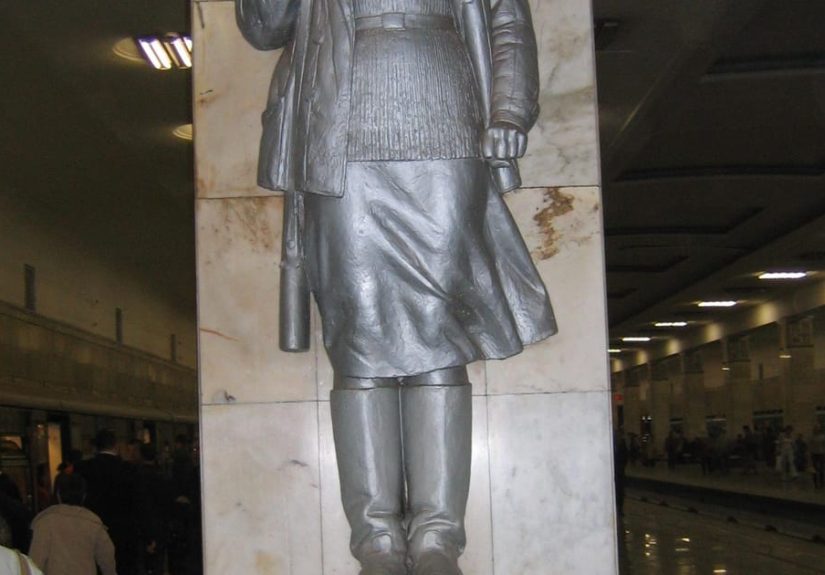
Her image and narrative became central in Soviet commemoration, education, film, and public monumentscontinuing, in modified form,
into post-Soviet memory.
Elements that vary by source (where you should be careful)
-
The precise operational details: which structures were targeted, the exact military value, and how villagers described
occupier presence or use of buildings. -
The exact words attributed to her: many retellings include dramatic lines; the broader “defiant posture” is consistent,
but exact phrasing can be slippery. - The moral framing: “pure heroism” vs. “tragic consequence of policy” often reflects the storyteller’s era and agenda.
None of this requires you to “pick a side” like it’s a sports rivalry. It just means you can honor a life without swallowing
every polished slogan whole.
Case Study: “Tanya,” the Speed-Run of a Wartime Legend
One reason Zoya ranks so high in Soviet war memory is how quickly her story was converted into a public narrative.
A press account in January 1942 popularized her as an unknown partisan girl identified first by a pseudonym (“Tanya”).
The story’s emotional architecture was powerful: a young person, a public execution meant to intimidate, and a refusal to
surrender psychologically. That structure turns an individual event into a national lesson.
After that, the “distribution channels” multiplied. Schools and youth organizations used her as a model of courage.
Artists and filmmakers created works that reinforced the legend (including a notable wartime-era film portrayal).
Monuments embedded her into public spacemaking her memory literally unavoidable, the way street names and statues
keep a story in circulation long after witnesses are gone.
If you’re analyzing Zoya Kosmodemyanskaya rankings and opinions, this is the main takeaway: her “rank” is not only about
what she did, but about how effectively her story was taught, repeated, and ritualized. In other words, she became a
headline that never fully stopped printing.
So… Hero, Pawn, or Both?
The most responsible answer is: she can be both. Zoya was a real teenager caught in an unreal moment. She volunteered
into a brutal conflict and became a symbol others usedsometimes with care, sometimes with political intent.
You can recognize bravery and still analyze the machinery that turned bravery into a standardized national myth.
If your goal is a balanced opinion, focus on three questions:
- What can we say with confidence? (Core timeline, role, recognition.)
- What’s disputed? (Operational specifics, later retellings, moral framing.)
- Why do people argue? (Because her story sits at the intersection of war, youth, and national identity.)
Conclusion: Why Zoya Still Matters
Zoya Kosmodemyanskaya remains a lightning rod because she is a mirror. People look at her story and see what they’re
already wrestling with: what resistance costs, how propaganda works, how nations teach children about war, and whether a
“perfect hero” can exist in an imperfect reality. In the rankings of Soviet WWII icons, she’s elite. In the rankings of global
recognition, she’s rising. In the rankings of “stories that reveal how history gets turned into memory,” she’s practically
a masterclass.
And if you ever catch yourself arguing about Zoya like you’re debating the best pizza topping, pause. This isn’t pepperoni
vs. pineapple. It’s a human lifeand a reminder that the loudest stories are often the ones built to carry the heaviest load.
Experiences Related to “Zoya Kosmodemyanskaya Rankings And Opinions”
Even when people don’t realize it, many “opinions about Zoya Kosmodemyanskaya” are shaped less by a single document
and more by how they first encounter her story. The experience changes the conclusionsometimes dramatically.
The classroom experience: the moment propaganda becomes visible
In many history or media-literacy classrooms, Zoya is introduced as a case study in narrative construction. Students read a
short biography, then compare it to an analysis of Soviet wartime messaging. The “aha” moment usually isn’t
“she was real” (most students accept that quickly). It’s noticing the storytelling choices: the focus on youth, the emphasis
on moral certainty, the tidy structure of courage-versus-evil. The conversation often shifts from “Did she matter?” to
“How did the story teach people what to feel?” That’s where rankings start to make sense: she ranks high not only as a person,
but as a reusable moral lesson.
The museum experience: a life becomes an object in a display case
Museum visitors often describe a different emotional arc. They might see a statue, a plaque, or a commemorative objectsomething
that turns “Zoya” from a paragraph into a physical presence. People don’t necessarily walk away with more details, but they
walk away with a stronger sense of weight. The experience is less about debating the mission and more about confronting how
states memorialize sacrifice. Visitors frequently notice that memorials don’t just preserve memory; they organize it. They guide you
toward a feelingpride, grief, resolveand they do it efficiently. For some, that confirms the heroic view. For others, it raises new
questions about what’s emphasized and what’s left out.
The family-story experience: “My grandparents talked about her”
Another common pathway is intergenerational memory. People who grew up in families shaped by Soviet-era education sometimes
recall Zoya as a name that hovered in the background of childhood: a standard reference point for courage, like a cultural shortcut.
In these experiences, Zoya isn’t debatedshe’s assumed. Later, when those same people encounter post-Soviet critiques or academic
analyses, the reaction can be intense. It can feel personal, like someone is arguing with a family member rather than a historical
narrative. That emotional intensity is one reason her “controversy ranking” is relatively high: challenging the story can feel like
challenging identity.
The writer/researcher experience: the frustrating joy of “mixed certainty”
Writers and researchers often describe a more complicated experience: the core timeline is clear, but the surrounding details
are messy. They might find multiple retellings that agree on the basics yet differ in specifics, tone, and moral framing. That’s where
serious analysis begins. A careful writer learns to separate “core facts” from “narrative decoration,” and to say, honestly,
“Here’s what we know, and here’s what later storytellers shaped.” Oddly, this process can increase respect rather than reduce it.
Stripping away myth doesn’t erase courageit makes the courage belong to a real person again.
The internet experience: where nuance goes to do battle
Online, Zoya’s story often gets flattened into extremes: either saintly hero or cynical pawn. People quote punchy lines, share
simplified summaries, and argue as if the goal is to win rather than understand. But there’s also a positive side: the internet pushes
curious readers toward deeper sourcesacademic writing on memory, reference entries, and broader studies of partisan warfare.
For many, Zoya becomes a gateway topic. They arrive searching for “Zoya Kosmodemyanskaya rankings,” and leave realizing the
real ranking question is this: Which stories survive, and who helps them survive?
Taken together, these experiences explain why opinions vary so much. People aren’t only responding to Zoya’s wartime role;
they’re responding to the way her story has been taught, displayed, inherited, and argued about. That’s the real engine behind
her lasting legacyand why she still ranks near the top of WWII memory debates.