Table of Contents >> Show >> Hide
- Why cultures keep giving death a face
- 1. The Grim Reaper
- 2. Thanatos
- 3. Hel
- 4. Anubis
- 5. Yama
- 6. Mictlantecuhtli
- 7. Santa Muerte
- 8. Azrael
- 9. Bawon Samdi (Baron Samedi)
- 10. The Dullahan
- What these death figures really reveal
- Experiences related to “10 Relentless Personifications Of Death”
- Final thoughts
- SEO Tags
Death has never been content to stay abstract. Across cultures, centuries, and belief systems, people have given it a face, a job description, a wardrobe, and, in some cases, a truly unforgettable attitude problem. Sometimes death appears as a hooded skeleton with a scythe. Sometimes it arrives as a jackal-headed guide, a stern cosmic judge, a skull-faced ruler of the underworld, or a headless rider who makes “bad commute” sound like the understatement of the century.
That instinct makes sense. Human beings are not great at staring into the void and saying, “Yes, this seems manageable.” We prefer stories. We prefer symbols. We prefer death with cheekbones, a title, and maybe a dramatic entrance. Personifying death turns the unknowable into something we can describe, fear, bargain with, pray to, mock, paint, carve, and write about at 2 a.m. when sleep has left the building.
In this guide, we are looking at 10 relentless personifications of death from mythology, religion, and folklore. Some are literal embodiments of death itself. Others are rulers of the dead, escorts of souls, judges of the afterlife, or omens that announce mortality with all the subtlety of a thunderclap. Together, they reveal something fascinating: no matter where people live, death rarely stays faceless for long.
Why cultures keep giving death a face
The most memorable personifications of death do more than frighten people. They organize fear. They explain ritual. They help communities talk about grief, burial, fate, justice, and the afterlife. In one tradition, death is a harvest. In another, it is a bureaucratic judgment. Elsewhere, it is a guardian, a guide, a saint, or a terrifying rider with the energy of a nightmare and the punctuality of a tax bill.
That is what makes death figures so compelling for readers, viewers, and storytellers today. They are never just spooky decorations. They are cultural mirrors. They show what a society feared most, what it honored, and what it hoped might happen after the final curtain dropped. Some personifications of death are cruel. Some are neutral. Some are protective. A few are even oddly practical, which is honestly the least expected twist in the whole category.
1. The Grim Reaper
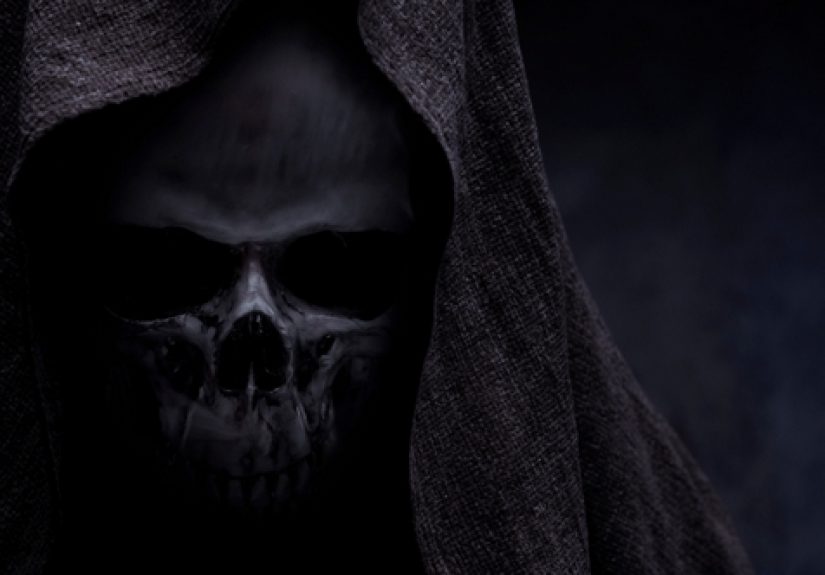
If death had a press agent in the Western world, the Grim Reaper would be it. Hooded, skeletal, and carrying a scythe like he just walked off the world’s bleakest farm, the Reaper is the classic image of death in European and American culture. His look took shape in medieval Europe and became especially powerful during and after plague years, when mass death was no longer theoretical but painfully visible.
The symbolism is brutally efficient. The skeleton says the body does not win. The cloak says mystery. The scythe says harvest, because lives can be cut down like grain. It is agricultural imagery with a side of existential dread. No wonder the figure stuck. Even people who know next to nothing about medieval symbolism can identify the Reaper in about half a second.
What makes the Grim Reaper relentless is not speed or rage. It is inevitability. The Reaper does not need to chase hard when every road eventually bends in his direction. In literature, art, tarot, cartoons, and horror films, he survives because he captures the most durable truth about death: it comes for kings, peasants, influencers, and people who still have 47 unread emails.
2. Thanatos
In Greek mythology, Thanatos is death in its pure, distilled form. He is not just connected to death; he is its personification. A son of Night and a brother of Sleep, Thanatos belongs to a family tree that feels like it was drafted by a very moody poet. Unlike the Grim Reaper’s late-medieval theatricality, Thanatos is quieter, older, and somehow colder.
Greek myth does not always treat him like the biggest star on Olympus. He is often less flashy than gods of thunder, love, or war. But that low-key presence is part of what makes him unnerving. Thanatos represents the end that arrives when the thread has run out. No speeches. No bargaining. No dramatic plot twist where somebody suddenly “finds themselves.”
Artists in ancient Greece linked Thanatos with funeral imagery, and myths sometimes pair him with Hypnos, sleep, to underline the eerie closeness between rest and finality. If the Grim Reaper is death with branding, Thanatos is death as principle: clean, solemn, and impossible to sweet-talk. He is the mythological equivalent of a door closing softly and forever.
3. Hel
Hel is one of the most haunting figures in Norse mythology, and she carries the kind of name that needed exactly zero help becoming memorable. Originally associated with the underworld itself, Hel also became the name of its female ruler. She presides over a realm of the dead connected with cold, darkness, and descent, which is about as cheerful as it sounds.
Daughter of Loki, Hel is not usually portrayed as a simple villain. That is what makes her more interesting. She is a sovereign. She rules a domain. She receives the dead who do not go to the warrior’s afterlife of Valhalla. In other words, she embodies a less glamorous but far more common end: not heroic battlefield glory, but the ordinary destination of mortality.
Hel’s relentlessness lies in her atmosphere. She does not storm the gates; she waits below them. Her world is not a jump scare. It is a cold inevitability. In the Norse imagination, death was not always a dramatic blaze of swords and destiny. Sometimes it was simply the downward road, the northern dark, and the ruler who had already prepared the room.
4. Anubis
Anubis proves that a personification of death does not have to be cruel to be formidable. In ancient Egyptian belief, Anubis is the jackal-headed god associated with embalming, burial, protection of the dead, and guidance through funerary ritual. He is not death as chaos. He is death as sacred procedure.
The jackal imagery was not random. Jackals were associated with cemeteries and burial grounds, which made them powerful symbolic guardians. Egyptian artists and ritual specialists turned that natural association into one of the ancient world’s most iconic divine forms. Anubis watches, protects, prepares, and escorts. He is the reason death in Egypt often feels ceremonial rather than merely destructive.
That does not make him soft. Anubis is relentless in a more dignified way. He stands at the threshold between body and afterlife, overseeing processes that could not be skipped or faked. He reminds us that death is not only an event but a transition, and transitions require guardians. If the Grim Reaper is a cosmic collector, Anubis is the eternal professional who already has the paperwork organized and the hallway lit.
5. Yama
Yama is one of the great death figures of South Asian religious tradition, especially in Hinduism and Buddhism. In many accounts, he is the first mortal to die, which then places him in a profound position: the first to cross the boundary becomes the lord or judge on the other side. That is mythology with real narrative efficiency.
As a ruler of the dead and a judge connected to moral order, Yama does more than represent death. He helps define what death means in systems deeply concerned with justice, consequence, and rebirth. In Buddhist imagery, he can also symbolize impermanence itself. That makes him especially compelling because he is not just about dying; he is about the law that nothing lasts.
Yama feels relentless because he is not emotional. He is judicial. He appears in stories as a figure who cannot simply be charmed into forgetting the rules. If the Grim Reaper is a symbol of life’s end, Yama is a reminder that endings may also involve reckoning. He brings order to mortality, which is somehow both comforting and terrifying. Think less slasher villain, more cosmic magistrate with a very long memory.
6. Mictlantecuhtli
Mictlantecuhtli, the Nahua ruler of Mictlan, is one of the most visually striking personifications of death in world mythology. Often depicted with skeletal or skull-like features, he governs the land of the dead alongside Mictecacíhuatl. This is not a vague underworld concept. It is a deeply structured afterlife destination with trials, distance, and rulers who make it clear that death is a journey, not a disappearing act.
In Aztec belief, many of the dead traveled through multiple dangers before reaching rest in Mictlan. That detail matters because it gives death texture. It is not a snap of the fingers. It is endurance. It is passage through hardship. And waiting at the end is Mictlantecuhtli, whose very image broadcasts the stripped-down reality of the grave.
He is relentless because he rules not only over the dead but over the process of arriving there. His iconography is bold, severe, and unforgettable. If some death figures comfort the living by managing the crossing, Mictlantecuhtli emphasizes the stark majesty of what lies beyond life’s last breath. No soft-focus clouds. No motivational poster energy. Just bones, depth, and the long road down.
7. Santa Muerte
Santa Muerte is one of the most modern and most misunderstood death figures on this list. Usually represented as a robed skeleton, she is a Mexican folk saint associated with protection, petitions, healing, justice, and help in desperate situations. Her image clearly echoes older death symbolism, but her devotion also draws from a layered blend of Catholic imagery, folk practice, and indigenous traditions.
What makes Santa Muerte fascinating is that she does not function only as a threat. For many devotees, she is protective precisely because death is the one power that does not play favorites. In that way, she can seem radically honest. Rich or poor, legal or outlaw, polished or messy, everyone answers to mortality eventually. Santa Muerte reflects that universal reach.
Her relentlessness is democratic. She is not selective. She is not fooled by status. And unlike sanitized modern conversations about death, her devotion often refuses euphemism. She looks like death because she is meant to. That bluntness makes some observers uncomfortable, but it also explains her enduring magnetism. Santa Muerte does not pretend mortality is negotiable. She simply stands there, candlelit and skeletal, saying what most people spend their lives trying not to hear.
8. Azrael
Azrael, often known as the angel of death in Islamic tradition and later Jewish and broader Abrahamic storytelling, represents a very different kind of death figure. He is not a chaos monster or a cackling graveyard ghoul. He is a messenger and separator, the being who removes the soul from the body at the appointed time.
That role gives Azrael a solemn gravity. He is terrifying not because he is savage, but because he is exact. In many traditions, the angel of death serves divine order rather than personal appetite. That distinction matters. Azrael is not death run wild. He is death on assignment.
This makes him one of the most spiritually weighty personifications of death. He stands at the precise moment when earthly life ends and something else begins. There is almost no room for melodrama in that job. Azrael does not need a scythe, skull paint, or thunder effects. His power lies in inevitability and authority. He is relentless because the command he carries is not his own to change.
9. Bawon Samdi (Baron Samedi)
Bawon Samdi, often rendered Baron Samedi, is one of the most unforgettable death figures in Haitian Vodou. Linked to cemeteries, graves, the dead, and the boundary between life and afterlife, he is often depicted in dark glasses, formal dress, and skeletal styling. He has presence. He has flair. He has the unsettling charisma of someone who can tell a dirty joke at a funeral and somehow still be the most spiritually significant person in the room.
But reducing him to style would miss the point. Bawon Samdi is a guardian of the dead and a powerful figure in matters of burial, healing, and passage. He is associated with the Gede spirits and with the world of the dead more broadly. That means his character can blend mortality, sexuality, laughter, irreverence, and spiritual authority in ways that challenge neat Western categories.
He is relentless because he rules a border no one keeps forever. Yet he is not always grim. That combination is what makes him remarkable. Bawon Samdi reminds us that death is not always imagined as silent, black-cloaked misery. In some traditions, death laughs loudly, dresses sharply, and still gets the final word.
10. The Dullahan
The Dullahan storms in from Irish folklore like a nightmare that forgot to lower its voice. This headless rider, often carrying his own severed head, is a supernatural herald of death. Mounted on a dark horse and associated with ominous appearances, the Dullahan does not merely symbolize mortality from a distance. He announces it.
Strictly speaking, the Dullahan is more omen than theological administrator. But that still makes him one of folklore’s most potent personifications of death. He transforms the fact of dying into a pursuing image: death on horseback, death with a face in its hand, death that rides roads and names names.
What makes the Dullahan relentless is motion. Unlike Hel, who waits below, or Anubis, who guides ceremonially, the Dullahan arrives. He invades the world of the living. He is death as interruption, death as sudden appearance, death as the thundering sound outside when everyone in the house suddenly gets very quiet. If the Grim Reaper walks, the Dullahan gallops.
What these death figures really reveal
Put these figures side by side and a pattern emerges. Humans do not imagine death in only one mood. Sometimes death is a judge. Sometimes it is a ferryman, saint, ruler, guardian, collector, or omen. Sometimes it is cold and impersonal. Sometimes it is richly ceremonial. Sometimes it is rowdy, even funny, without becoming any less serious.
That range matters for SEO-minded readers and curious humans alike because the topic is bigger than mythology trivia. Personifications of death reveal how cultures process fear, grief, morality, and the afterlife. They also explain why death remains such a durable character in fiction, gaming, film, art history, and religious symbolism. Death with a face is easier to paint, easier to narrate, and, oddly enough, easier to survive thinking about.
Experiences related to “10 Relentless Personifications Of Death”
What is striking about these death figures is how often people experience them long before they study them. Most of us do not meet the Grim Reaper in a textbook first. We meet him on a Halloween decoration, a tarot card, a movie poster, or a cartoon that jokes about dying while quietly keeping the old symbol intact. The image lands immediately. You do not need a medieval history degree to understand what a skeleton with a scythe is trying to say. That instant readability is part of the power of death personification. It bypasses explanation and goes straight for recognition.
Museum experiences can make that even more vivid. Seeing an Anubis statue, funerary mask, or painted burial scene in person does something the internet cannot quite replicate. The figure stops feeling like a trivia answer and starts feeling like evidence that real people, thousands of years ago, stood where we stand now and worried about the same final question. The same is true when viewers encounter Greek vessels showing Thanatos, or Mesoamerican imagery tied to the underworld. Suddenly death is no longer a vague concept. It becomes cultural design, memory, ritual, and craft.
There is also the emotional experience of encountering these figures during grief. Many people find that personified death becomes more meaningful after a funeral, a serious illness, or the loss of someone close. The symbols that once felt theatrical can begin to feel oddly practical. A guide like Anubis, a judge like Yama, or a saint like Santa Muerte may offer a language for mourning that modern life often lacks. Even for people who do not believe literally in these beings, the idea that death can be escorted, witnessed, or given a face can make sorrow feel less shapeless.
Storytelling experiences matter too. Readers who meet Hel in Norse myth, the Dullahan in folklore, or Bawon Samdi in modern pop culture quickly notice that death figures are rarely one-note villains. They are often witty, formal, seductive, bureaucratic, protective, seductive again, and occasionally dressed better than everybody else in the room. That variety changes the emotional experience of death in narrative. Instead of a faceless stop sign, death becomes a character with motive, tone, and symbolic weight. It can terrify, comfort, or challenge the audience depending on the story being told.
And then there is the deeply human experience of using humor around death, which cultures have done forever. That is why some death figures are grim while others are theatrical or bawdy. Humor does not cancel fear; it helps people carry it. A laughing cemetery spirit, a sharply dressed guardian of graves, or even a sarcastic modern Reaper character in film and television shows how people cope with mortality by talking back to it. Not winning, exactly. Just refusing to go speechless.
In the end, experiences tied to personifications of death are rarely only about dying. They are about how people live while knowing death exists. They are about memory, ritual, art, fear, reverence, and the strange comfort of giving the unknown a face. That is why these figures keep returning. We do not just inherit them from the past. We keep remaking them because every generation wants a way to look at death without blinking first.
Final thoughts
The most relentless personifications of death endure because they speak to something permanent. Empires fall, religions evolve, and aesthetics change, but mortality keeps excellent attendance. Whether death appears as the Grim Reaper, Thanatos, Hel, Anubis, Yama, Mictlantecuhtli, Santa Muerte, Azrael, Bawon Samdi, or the Dullahan, the message underneath is the same: human beings refuse to leave death unimagined.
We turn it into character, ritual, art, and myth not because we understand it fully, but because we do not. And maybe that is the real secret. Death personified is not just about endings. It is about the living mind doing what it does best when confronted with mystery: building stories strong enough to stare back.