Table of Contents >> Show >> Hide
- What Is an M1 Configuration Desk?
- Why the M1 Mac Is Great for a Desk Setup
- The Core Layout of an M1 Configuration Desk
- Choosing the Right Desk for an M1 Setup
- Ergonomics: Make the Desk Fit You
- Best Accessories for an M1 Configuration Desk
- Lighting and Visual Comfort
- M1 Desk Setup Examples
- Common M1 Configuration Desk Mistakes
- How to Build Your M1 Configuration Desk Step by Step
- Experience Notes: Living With an M1 Configuration Desk
- Conclusion: Build a Desk That Works as Hard as Your M1 Mac
- SEO Tags
A complete guide to building a smarter, cleaner, more ergonomic desk setup around an M1 MacBook or M1-powered workstation.
What Is an M1 Configuration Desk?
An M1 Configuration Desk is not just a desk with a shiny Apple laptop sitting on it while a half-empty coffee mug slowly becomes a science experiment. It is a thoughtfully arranged workstation built around an Apple M1 device, usually a MacBook Air M1, MacBook Pro M1, or Mac mini M1. The goal is simple: create a desk setup that feels fast, organized, comfortable, and ready for real work without turning your workspace into a cable jungle.
The Apple M1 chip changed how many people think about compact workstations. A lightweight MacBook Air M1 can handle writing, browsing, video calls, light editing, coding, spreadsheets, presentations, and daily business tasks with impressive efficiency. But even a great computer can feel awkward if the desk setup is wrong. A laptop placed too low can lead to neck strain. A monitor placed too far away can make you squint like you are trying to read a restaurant menu from across the street. A keyboard sitting at the wrong angle can make your wrists file a formal complaint.
That is where the M1 Configuration Desk comes in. It combines the right desk height, monitor placement, docking setup, storage, lighting, accessories, and cable management into one practical workstation. Whether you are working from home, studying, creating content, managing a small business, or building a minimalist Apple desk setup, the right configuration can make your M1 Mac feel even more capable.
Why the M1 Mac Is Great for a Desk Setup
The M1 Mac lineup is popular because it offers strong performance in a compact, quiet, energy-efficient package. The MacBook Air M1, for example, has a slim body, silent fanless design, excellent battery life, and enough power for most everyday productivity tasks. The MacBook Pro M1 adds active cooling and longer sustained performance, while the Mac mini M1 gives desktop users a small but capable machine that can live quietly under a monitor.
For desk configuration, the M1 platform works especially well because it reduces clutter. You do not need a giant tower, a loud fan system, or a complicated collection of parts just to get through a normal workday. A single USB-C hub or Thunderbolt dock can connect power, monitor, keyboard, mouse, storage, speakers, and other accessories. In other words, the computer does not need to dominate the desk. It can quietly do its job while your workspace remains clean, calm, and suspiciously adult-looking.
Important M1 Display Consideration
One practical detail matters: most M1 MacBook Air and 13-inch M1 MacBook Pro models natively support one external display up to 6K at 60Hz. That is plenty for many users, but it matters if you dream of a three-monitor command center that looks like mission control. For multiple external displays, users often explore DisplayLink-based docks or choose a different Mac model that supports more displays natively. For most writers, students, designers, remote workers, and business users, one high-quality external monitor plus the laptop screen is already a strong setup.
The Core Layout of an M1 Configuration Desk
A strong M1 desk setup begins with the layout. Think of your desk as a small productivity kitchen. The tools you use every minute should be within easy reach. The things you use occasionally should stay nearby but not in the way. The things you never use should not be on the desk at all, no matter how emotionally attached you are to that mysterious adapter from 2014.
Primary Zone: Keyboard, Mouse, and Trackpad
Your keyboard and mouse should sit directly in front of you. Your elbows should stay close to your body, your shoulders relaxed, and your wrists as straight as possible. If you use the MacBook as a laptop on a stand, add an external keyboard and mouse or trackpad. This lets you raise the screen without raising your hands into an uncomfortable typing position.
Secondary Zone: Dock, Notebook, Phone, and Small Tools
The secondary zone includes items you use often but not constantly: a notebook, pen, phone stand, USB-C hub, external SSD, headphones, or desk lamp controls. Keep them within arm’s reach but outside the keyboard area. This helps preserve a clean typing zone and reduces the tiny distractions that quietly eat your focus like a raccoon in a snack cabinet.
Storage Zone: Everything Else
Charging bricks, spare cables, backup drives, paper clips, sticky notes, and other accessories should live in a drawer, shelf, cable box, or organizer. The best desk setups are not empty; they are intentional. Minimalism does not mean owning nothing. It means not having your HDMI cable perform interpretive dance across the desk.
Choosing the Right Desk for an M1 Setup
The desk itself is the foundation. A beautiful M1 MacBook deserves a stable surface, not a wobbly table that shakes every time you type the letter “E.” Look for a desk that fits your room, supports your equipment, and allows comfortable posture.
Desk Size
For a compact M1 Configuration Desk, a 48-inch-wide desk can work well for one monitor, a laptop stand, keyboard, mouse, and small accessories. For more breathing room, a 55- to 60-inch desk is more comfortable. If you use speakers, a large monitor, drawing tablet, or paperwork, go wider if your room allows.
Desk Depth
Depth is often more important than width. A desk around 24 inches deep can work for a simple laptop setup, but 27 to 30 inches is better for an external monitor. More depth helps keep the screen at a comfortable viewing distance and gives your arms room to rest naturally.
Fixed Desk vs. Standing Desk
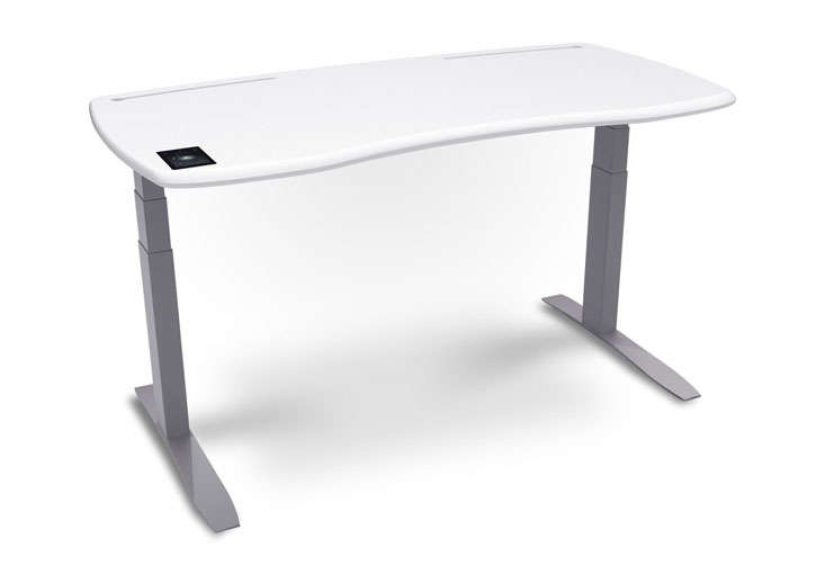
A fixed desk is affordable and reliable, especially if paired with a good chair. A sit-stand desk adds flexibility because you can alternate between sitting and standing. The key word is alternate. Standing all day is not magic. Your body likes movement, not punishment. A good sit-stand routine might involve sitting for focused work, standing during calls, and taking short movement breaks throughout the day.
Ergonomics: Make the Desk Fit You
An M1 Configuration Desk should look good, but comfort comes first. A desk that photographs beautifully but makes your neck hurt is not a setup; it is furniture with betrayal issues.
Monitor Height
The top of your external monitor should generally be at or slightly below eye level. Your eyes should look slightly downward toward the center of the screen. If the monitor is too low, use a monitor arm, riser, or stand. If you use the MacBook screen, place it on a laptop stand and use external input devices.
Keyboard and Mouse Position
Your keyboard and mouse should be on the same surface and close enough that your elbows remain near your sides. Your wrists should stay neutral, not bent upward like they are trying to wave goodbye to comfort. Low-profile keyboards, compact layouts, and ergonomic mice can help, but proper height matters more than buying another gadget at midnight.
Chair and Foot Support
Use a chair that supports your lower back and lets your feet rest flat on the floor. If your feet do not reach comfortably, use a footrest. Your knees should be around hip level, and you should have enough space under the desk to move your legs. Do not store boxes under your desk if they force you into strange sitting positions. Your future spine will appreciate the real estate.
Best Accessories for an M1 Configuration Desk
The right accessories can turn a basic M1 workstation into a polished productivity zone. The wrong accessories can turn it into an expensive museum of things you thought would change your life. Choose practical tools first.
USB-C Hub or Thunderbolt Dock
Because M1 MacBooks use USB-C and Thunderbolt ports, a good hub or dock is often the center of the setup. Look for ports you actually need: HDMI or DisplayPort, USB-A for older devices, USB-C power delivery, Ethernet if you want stable internet, SD card slots for photo or video work, and audio support if needed.
External Monitor
A 24-inch monitor is fine for basic office work. A 27-inch monitor is a sweet spot for productivity, writing, spreadsheets, research, design, and multitasking. Many M1 users enjoy 4K monitors because text looks sharp and macOS scaling feels clean. If you work with color-sensitive content, consider a monitor with strong color accuracy rather than choosing only by size.
Laptop Stand
A laptop stand raises the M1 MacBook screen closer to eye level. This is one of the simplest upgrades with the biggest comfort payoff. It also improves airflow around the machine and frees desk space beneath the laptop.
External Keyboard and Mouse
If your MacBook is on a stand, an external keyboard and mouse are essential. Apple’s Magic Keyboard and Magic Trackpad are popular for a clean Apple-style desk setup, while mechanical keyboards and ergonomic mice may suit users who type heavily or want more tactile feedback.
Cable Management
Cable trays, Velcro ties, adhesive clips, under-desk channels, and a power strip mounted under the desk can dramatically improve the look and feel of the workspace. The goal is not to eliminate cables. The goal is to stop them from looking like they are planning a rebellion.
Lighting and Visual Comfort
Lighting is often ignored until your eyes feel tired at 3:00 p.m. A good M1 Configuration Desk should have soft, balanced lighting. Avoid placing a bright window directly behind your monitor because glare can make the screen harder to read. Avoid facing a bright window if it causes eye strain. Side lighting is usually more comfortable.
A desk lamp with adjustable brightness can help during evening work. Warm light is relaxing, while cooler light may feel better for focus during the day. The best lighting setup depends on your room, but the rule is simple: your screen should not be the brightest object in a dark cave. That is how you become the villain in your own eye-strain story.
M1 Desk Setup Examples
Minimalist Student Setup
A MacBook Air M1, laptop stand, compact keyboard, wireless mouse, small USB-C hub, and a 24-inch monitor can create an affordable and clean study desk. Add a small desk lamp and a notebook tray. This setup is ideal for essays, research, online classes, presentations, and daily browsing.
Remote Work Setup
For remote workers, a 27-inch monitor, quality webcam, USB-C dock, external keyboard, ergonomic mouse, noise-canceling headphones, and a comfortable chair make a major difference. Add Ethernet through the dock if video calls are important. Nothing says “professional” like stable audio, clean lighting, and not freezing mid-sentence with your face stuck in an accidental Renaissance pose.
Creative Setup
For light photo editing, design, music, or video work, pair the M1 Mac with a color-accurate monitor, external SSD, good speakers or headphones, and a larger desk surface. Keep frequently used tools close, but leave open space for sketching, note-taking, or using a drawing tablet.
Compact Apartment Setup
If space is limited, use a narrow standing desk or wall-facing desk with a monitor arm. A vertical laptop stand can hold the MacBook in clamshell mode if you use an external monitor, keyboard, and mouse. Add a small drawer unit or cable box to keep accessories contained.
Common M1 Configuration Desk Mistakes
The first mistake is using the MacBook flat on the desk for long work sessions. This forces the screen low and encourages neck bending. The second mistake is buying a large monitor but placing it too close. Big screens need proper distance. The third mistake is ignoring cables until the setup looks like a robot sneezed.
Another common issue is over-accessorizing. You do not need every shiny desk gadget on the internet. A good desk setup should support your work, not distract from it. Start with the basics: comfortable chair, correct screen height, external keyboard and mouse, reliable dock, clear lighting, and tidy cables. Add extras only when they solve a real problem.
How to Build Your M1 Configuration Desk Step by Step
Step 1: Choose Your Main Working Position
Decide whether your M1 MacBook will stay open beside an external monitor, sit on a stand as a second screen, or run in clamshell mode with the lid closed. If you use a Mac mini M1, decide where the device will sit and how you will access ports.
Step 2: Set the Monitor First
Place your monitor directly in front of you if it is your main screen. Raise it until the top edge is near eye level. Keep it about an arm’s length away, then adjust based on screen size and text comfort.
Step 3: Add Keyboard and Mouse
Place the keyboard centered with your body. Keep the mouse or trackpad close to the keyboard. Avoid reaching forward constantly. Small reaches become big discomfort when repeated for hours.
Step 4: Connect the Dock
Use one main cable from the dock to the MacBook whenever possible. Connect power, display, storage, and accessories to the dock. This makes it easy to unplug the laptop when you need to go mobile.
Step 5: Manage Cables
Route power and display cables behind the monitor arm or down the back of the desk. Bundle extra cable length with Velcro ties. Keep chargers off the floor if possible. Future you, vacuuming under the desk, will be grateful.
Step 6: Test for One Full Workday
Do not judge your setup after five minutes. Use it for a full day. Notice your neck, shoulders, wrists, eyes, and lower back. Adjust one thing at a time. Ergonomics is less about perfection and more about continuous tuning.
Experience Notes: Living With an M1 Configuration Desk
After using an M1 Configuration Desk for daily work, the biggest improvement is not only speed. The real upgrade is rhythm. When the MacBook connects through one cable, the external monitor wakes up, the keyboard is ready, the mouse is in place, and the charger is already handled. There is no morning treasure hunt for adapters. There is no dramatic cable untangling ceremony. You sit down, open the work, and begin.
The second noticeable improvement is posture. A MacBook Air M1 on a laptop stand with an external keyboard feels completely different from typing on the laptop while looking downward. The raised screen encourages a more natural head position. The external keyboard lets the arms relax. The mouse stays close. It is a small change, but after a few hours, the body notices. The neck feels less compressed, the shoulders stay calmer, and the desk stops feeling like a tiny punishment platform.
Another practical experience is that one good monitor is often better than two mediocre ones. Because many M1 MacBook models natively support one external display, choosing a sharp 27-inch monitor can be smarter than fighting for a complicated multi-monitor arrangement. A single large screen can hold a browser on one side, notes on the other, and a video call window tucked politely in the corner. It is not as dramatic as a stock trader setup, but it is cleaner and easier to manage.
Cable management also changes the emotional tone of the workspace. That may sound dramatic, but a clean desk genuinely feels easier to approach. When power cables, monitor cables, and USB accessories are routed behind the desk, the surface feels open. You can place a notebook beside the keyboard. You can drink coffee without performing a risk assessment. You can wipe the desk in ten seconds instead of lifting seven mystery cords and wondering which one powers reality.
The M1 chip’s quiet performance is another daily benefit. A fanless MacBook Air M1 on a desk is almost invisible acoustically. It does not roar during writing, browsing, or general office work. This makes the workspace feel calmer, especially in small rooms. When paired with a quiet keyboard, soft lighting, and a stable chair, the desk becomes less of a computer station and more of a focused work corner.
There are still lessons learned. Cheap monitor arms can wobble. Tiny desks can become crowded fast. A beautiful desk mat is nice, but it will not fix a monitor that is too low. A dock with the wrong ports becomes an expensive paperweight with ambition. And yes, you should label cables if you have several similar black cords under the desk. Otherwise, troubleshooting becomes a guessing game called “What Did I Just Unplug?”
Overall, the best M1 Configuration Desk is not the most expensive one. It is the one that disappears into your routine. It supports work, protects comfort, keeps tools close, and gives the M1 Mac room to do what it does best: deliver fast, quiet, reliable performance without making the desk feel complicated.
Conclusion: Build a Desk That Works as Hard as Your M1 Mac
An M1 Configuration Desk is about more than matching accessories and a clean desktop photo. It is about building a workstation that supports your body, your workflow, and your attention. Start with the fundamentals: correct monitor height, comfortable keyboard and mouse placement, a stable desk, a supportive chair, practical lighting, and smart cable management.
From there, customize the setup based on how you actually work. A student may need a compact desk with simple accessories. A remote worker may need a dock, webcam, and better audio. A creative professional may need color accuracy, external storage, and a larger surface. The M1 Mac is flexible enough for many workflows, but the desk configuration determines how pleasant those workflows feel hour after hour.
The perfect setup is not the one with the most gadgets. It is the one that helps you sit down, focus faster, feel better, and finish the day without your shoulders asking for legal representation. Build it carefully, adjust it honestly, and your M1 Configuration Desk can become one of the most useful upgrades in your work life.