Table of Contents >> Show >> Hide
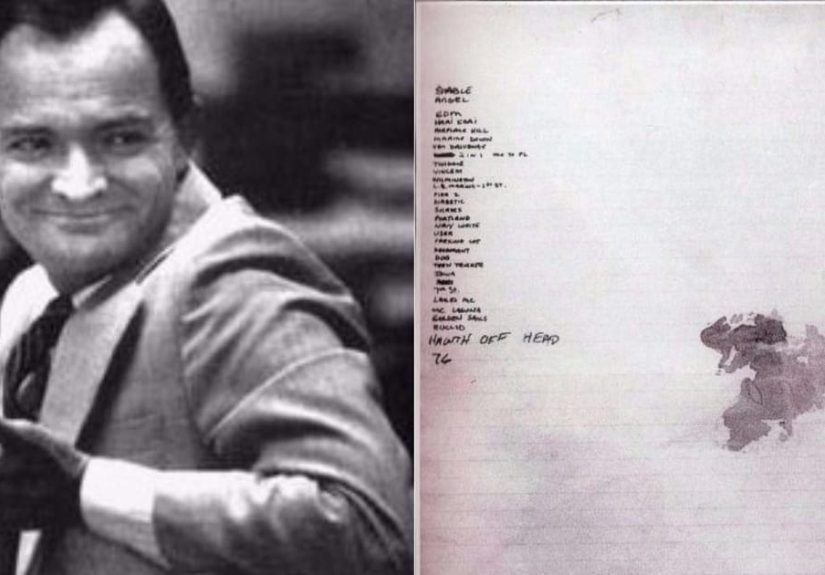
- 1) The “scorecard” wasn’t a nicknameinvestigators found a coded death list
- 2) The case blew open after a routine DUI stop on Interstate 5
- 3) Kraft was convicted of 16 murdersand the court record is explicit about the scope
- 4) Prosecutors described a recurring method: alcohol, drugs, restraint, strangulation
- 5) Several victims were Marinesan eerie overlap that kept repeating
- 6) The “Freeway Killer” label points to where victims were found, not where they vanished
- 7) The trial became infamous for scalelong, complex, and costly
- 8) The California Supreme Court upheld the death judgment (and discussed why the crimes could be tried together)
- 9) The case didn’t stay in California: Oregon (and beyond) appears in the record
- 10) The “scorecard” kept haunting investigators because many entries may map to unidentified victims
- 11) In 2023, investigators identified a John Doe from 1974 as Michael Ray Schlicht
- 12) A decades-old Oregon case gained new clarity when “John Doe Oregon” was identified as Larry Eugene Parks
- 13) As of late 2025, Kraft remained on California’s condemned inmate list
- What to take away (without turning tragedy into trivia)
- Experiences Related to the Scorecard Killer Case (A 500-Word Reality Check)
Content warning: This article discusses serial homicide and sexual violence in a non-graphic, informational way. If you’re not in the headspace for that today, consider bookmarking it for later and doing literally anything elselike reorganizing your spice drawer or arguing about the best donut glaze.
Randy Kraft is one of those names that sits in the darker corner of American true-crime historypartly because of the number of murders he was convicted of, and partly because of the chilling “paper trail” prosecutors say he carried. He became known as the Scorecard Killer after investigators found a coded list that appeared to log victims like a sick set of stats. Not the kind of “scorecard” anyone wants to see outside a baseball stadium.
This story matters for more than shock value. It’s a case about how patterns get recognized, how forensic science evolves, how long grief can stretch, and how a single traffic stop can crack open years of violence. Below are 13 fact-based, deeply unsettling realities about Randy Kraft and the case that still ripples through investigations decades later.
1) The “scorecard” wasn’t a nicknameinvestigators found a coded death list
The name “Scorecard Killer” comes from a handwritten list recovered during the investigationoften described as a coded “death list.” Authorities have said it contained 61 entries, written in shorthand-like phrases that prosecutors argued corresponded to victims. The logic was grim: locations, clues, or word fragments that could be matched to missing persons or discovered bodies.
Why it’s grisly (and why it mattered)
Serial cases often rely on patterns and circumstantial links. A document that appears to catalog victims can become a roadmapboth for building a prosecution and for reopening cold cases. Even when the codes aren’t fully “solved,” a list like that can steer detectives toward identifications and comparisons that otherwise wouldn’t happen.
2) The case blew open after a routine DUI stop on Interstate 5
Sometimes justice begins with something boring. In Kraft’s case, a late-night traffic stop for suspected impaired driving became pivotal. Officers stopped a weaving vehicle near Interstate 5 in Orange County. Kraft was arrested for DUI, and when officers tried to rouse the passenger, they discovered the passenger was dead. That victim was later identified as U.S. Marine Terry Lee Gambrel.
The uncomfortable truth
Many major investigations start with luck, timing, and an observant officer who doesn’t shrug off “weird” details. Without that stop, the trail might have stayed cold much longerand additional victims might never have been identified.
3) Kraft was convicted of 16 murdersand the court record is explicit about the scope
Kraft was convicted in Orange County of 16 first-degree murders spanning roughly the early 1970s through 1983. Court records describe the victims as young white men, with multiple murders linked to similar circumstances and evidence. The conviction wasn’t a “single case,” but a stitched-together portrait of repeated behaviorsupported by physical evidence in some instances and by pattern-based arguments in others.
In other words, the prosecution’s story wasn’t “one incident.” It was a long, repeating cycleone that the jury believed the evidence supported.
4) Prosecutors described a recurring method: alcohol, drugs, restraint, strangulation
Court findings describe a recurring pattern: many victims had alcohol and prescription sedatives in their systemsfrequently diazepam (Valium). Victims were often restrained, commonly with ligatures such as shoelaces, and many died from ligature strangulation. This matters because serial cases frequently hinge on whether a “signature” existsdetails consistent enough to indicate one offender rather than coincidence.
What that suggests
If multiple victims show similar intoxication patterns and similar restraint marks, investigators may view it as evidence of a deliberate approachone designed to overpower and control.
5) Several victims were Marinesan eerie overlap that kept repeating
Among the 16 victims Kraft was convicted of murdering, six were U.S. Marines. That doesn’t mean the Marine Corps was “targeted” in an organized way, but the repeated appearance of service members added urgency and visibility to the case. It also reflects something practical and tragic: young men stationed away from home may be more likely to hitchhike, accept rides, or socialize far from their support networks.
The overlap became one more pattern investigators couldn’t ignoreand one more reason the case hit harder than a typical local homicide file.
6) The “Freeway Killer” label points to where victims were found, not where they vanished
Kraft is also associated with the “Freeway Killer” era because many victims were found on or near roads and freeways. Dump sites can be part of an offender’s routine: quick access, easy escape routes, and a high chance the body will be discoveredsometimes intentionally, sometimes as a byproduct of convenience.
A detail that shaped the investigation
Freeway-adjacent scenes can create jurisdiction nightmares (multiple counties, multiple agencies), but they also create pattern opportunities: similar locations, similar timing, similar victim profiles, and similar evidence handling.
7) The trial became infamous for scalelong, complex, and costly
By the late 1980s, reporting described the Kraft case as potentially among the longest and costliest murder trials in California, fueled by the number of counts, the volume of evidence, and the complexity of linking crimes across years. When prosecutors try multiple murders together, they must show why a single trial is fair and legally appropriateespecially when the defense argues that each case should stand alone.
This wasn’t courtroom theater. It was a high-stakes argument about whether pattern evidence and cross-case similarities were strong enough to justify one massive proceeding.
8) The California Supreme Court upheld the death judgment (and discussed why the crimes could be tried together)
On direct appeal, the California Supreme Court affirmed the judgment in full. Among the issues raised: whether the murders should have been severed into separate trials, whether evidence (including the “death list”) was properly admitted, and whether searches and seizures were lawful. The court’s analysis is a reminder that major convictions aren’t just decided by a jurythey get re-litigated for years in appellate briefs, procedural challenges, and evidentiary arguments.
For readers, it’s also a sobering look at how the legal system handles large serial cases: slowly, meticulously, and with an obsession for processbecause process is what keeps verdicts standing.
9) The case didn’t stay in California: Oregon (and beyond) appears in the record
Court records discuss out-of-state murders that prosecutors argued were connected to Kraft, including victims found in Oregon along Interstate 5. The details echo the California pattern: bodies near roads, signs of restraint, and toxicology findings that included alcohol and diazepam in at least some cases. Investigators also noted Kraft’s business travel, including extensive mileage during short work tripsan investigative detail prosecutors used to argue opportunity and movement consistent with the timeline.
This multi-state dimension is part of why the “scorecard” idea remains so disturbing: it implies that the known convictions may represent only a portion of a much larger story.
10) The “scorecard” kept haunting investigators because many entries may map to unidentified victims
Even when a defendant is convicted, an investigation doesn’t always “end.” A coded list with dozens of entries is like a locked drawer full of unanswered questions. If an entry matches a discovery site, a date window, or a missing person’s travel route, detectives may treat it as a leadeven decades later.
Why it still matters today
Modern toolsDNA databases, improved lab methods, and investigative genetic genealogycan turn an old “unknown” into a named person. And once a victim is identified, everything changes: families can be notified, timelines can be refined, and other entries can be tested against reality.
11) In 2023, investigators identified a John Doe from 1974 as Michael Ray Schlicht
Nearly 50 years after a teenage homicide victim was found in Orange County, investigators announced they had identified him as Michael Ray Schlicht, a 17-year-old from Iowa. Authorities described him as a presumed victim connected to the Kraft investigation. Identification mattered not only as a scientific winbut as a human one. A person who had existed in records as “John Doe” became a son, a teenager with a name, and someone whose absence finally had a clearer narrative.
That announcement also underscored something uncomfortable: serial cases can leave victims “stuck” in limbo for generationsuntil technology catches up.
12) A decades-old Oregon case gained new clarity when “John Doe Oregon” was identified as Larry Eugene Parks
Another long-unknown victim found near Interstate 5 outside Woodburn, Oregonpreviously known publicly as “John Doe Oregon”was later identified as Larry Eugene Parks. Investigators connected that identification to ongoing work reviewing potential Kraft-linked cases. Reports and agency statements describe how DNA technology and cross-agency cooperation can revive cases that once had little more than a body, a location, and a few missing pieces of clothing.
It’s one of the bleak paradoxes of modern forensics: we can name the dead more effectively than ever, but we can’t rewind the years their families lived without answers.
13) As of late 2025, Kraft remained on California’s condemned inmate list
Decades after the trial, Kraft’s name still appears on California’s official condemned inmate listing, reflecting the reality that capital cases can persist through years of appellate litigation and procedural reviews. Whatever your views on the death penalty, the timeline itself is revealing: the legal system treats executions as the final, slowest stepone that often takes decades, especially in states with extensive safeguards and complex appeals.
In practical terms, it means the “Scorecard Killer” case remains a living file in the system, not just a closed chapter in a paperback true-crime aisle.
What to take away (without turning tragedy into trivia)
It’s temptingespecially onlineto reduce cases like this into “facts you won’t believe” lists. But the most important truths are quieter:
- Patterns save livesand also solve cases that would otherwise be random noise.
- Names matterevery John Doe identification is a return of personhood, not just data.
- Forensics evolvesand what was impossible in 1983 can become routine in 2025.
- Ethics mattersthe goal is understanding and accountability, not entertainment.
If there’s one “score” worth keeping, it’s this: how many victims can be identified, how many families can get answers, and how consistently we can tell the truth without glamorizing the person who caused the harm.
Experiences Related to the Scorecard Killer Case (A 500-Word Reality Check)
Spending time with a case like Randy Kraft’s is a strange experience, even for people who “like true crime.” At first, it feels like research: dates, names, agencies, court opinions, old news reports. Thenalmost without warningit stops feeling like information and starts feeling like weight. That shift happens because serial cases aren’t puzzles in a vacuum. They’re a stack of real lives interrupted, and the longer you look, the more you realize how many people carried the consequences.
For investigators, the experience often begins as frustration. Early files from the 1970s and 1980s can be thin by modern standards: incomplete DNA collection, limited databases, jurisdiction boundaries that slow down collaboration. Detectives and analysts describe the grind of building link after linktiny consistencies like a ligature mark, a familiar dump-site pattern, or a recurring toxicology finding. In Kraft’s era, simply recognizing a pattern across counties could feel like trying to stitch a quilt while someone keeps moving the fabric.
For forensic teams today, the experience can be both hopeful and heartbreaking. Hopeful because modern tools can do what older tools couldn’t: generate DNA profiles from limited samples, compare across larger databases, and use investigative genetic genealogy to turn an unknown victim into a named person. Heartbreaking because the moment of success is also a moment of grief. Imagine making the phone call that tells a family: “We found him.” Closure is realbut it’s not cheerful. It’s the end of one kind of pain and the beginning of another kind of truth.
For families, the experience is often defined by time. Not the dramatic time of a crime scene, but the slow time of decades: birthdays that keep arriving, missing-person posters that become faded memories, relatives who pass away before answers come. When a John Doe becomes Michael Ray Schlicht, or when a long-unnamed Oregon victim is identified as Larry Eugene Parks, it changes history for the people who loved them. The story becomes specific again: not “someone,” but my brother, my son, our family member.
And for readers, writers, and the general public, the most honest experience is discomfortespecially when you realize how easy it is to consume tragedy like content. A nickname like “Scorecard Killer” has a headline punch, but the lived reality behind it is brutal: a person who allegedly treated human beings like entries on a list. The responsible way to sit with that discomfort is to keep redirecting your attention where it belongs: the victims, the investigation, the evidence, the societal conditions that made predation easier, and the long work of identification.
Ultimately, the “experience” of this case isn’t a thrill. It’s a reminder that justice can begin with a traffic stop, take decades to unfold, and still leave unanswered questionsunless we keep doing the careful, unglamorous work of naming the dead and learning from the patterns that history tried to bury.