Table of Contents >> Show >> Hide
- What Makes a “Quit Episode” So Powerful?
- The 21 Episodes That Made Viewers Tap Out
- 1) Happy Days “Hollywood: Part 3”
- 2) Dallas “Blast from the Past”
- 3) The Simpsons “The Principal and the Pauper”
- 4) Lost “Stranger in a Strange Land”
- 5) The Walking Dead “The Day Will Come When You Won’t Be”
- 6) Game of Thrones “The Iron Throne”
- 7) How I Met Your Mother “Last Forever”
- 8) Dexter “Remember the Monsters?”
- 9) The X-Files “My Struggle IV”
- 10) Star Trek: Voyager “Threshold”
- 11) Star Trek: The Next Generation “Sub Rosa”
- 12) Star Trek: Enterprise “These Are the Voyages…”
- 13) Community “Intro to Felt Surrogacy”
- 14) The Office “Scott’s Tots”
- 15) Seinfeld “The Finale”
- 16) St. Elsewhere “The Last One”
- 17) Roseanne “Into That Good Night”
- 18) True Blood “Thank You”
- 19) Veronica Mars “Years, Continents, Bloodshed”
- 20) Pretty Little Liars “Til DeAth Do Us Part”
- 21) House of Cards “Chapter 73”
- Why These Episodes Hurt More Than a Normal “Bad One”
- Viewer Experiences: The Psychology of Rage-Quitting a Show (500+ Words)
- Final Takeaway
Every TV fan has that moment: you’re comfy, snacks deployed, autoplay locked in… and then an episode happens that makes you pause,
stare into the middle distance, and whisper, “I think I’m done.”
To be fair, “bad” is subjective. Some episodes are objectively messy; others are bold swings that land like a trampoline on a Lego pile.
But the episodes below are frequently cited as quit pointsthe installments that broke trust, shredded momentum,
or made viewers feel like the show was gaslighting them for sport.
What Makes a “Quit Episode” So Powerful?
A normal bad episode is forgettable. A deal-breaker episode is personal. It’s the moment the show violates its own rules:
characters act like strangers, big choices come out of nowhere, or the story hits the narrative equivalent of “Oops, spilled the plot.”
These episodes tend to fall into a few patterns:
- The Retcon Hammer: A twist rewrites years of character history, and not in a fun “mystery solved” way.
- The Shock-Value Shortcut: A huge moment is staged for outrage rather than story, leaving viewers exhausted instead of intrigued.
- The Filler That Forgot It’s Filler: An hour of wheel-spinning arrives at exactly the moment people needed payoff.
- The Finale Fumble: Endings don’t need to please everyonebut they do need to feel earned.
With that in mind, here are 21 infamous episodes that made plenty of people slam the remote like it owed them money.
The 21 Episodes That Made Viewers Tap Out
1) Happy Days “Hollywood: Part 3”
This is the episode that launched the phrase “jump the shark,” and it’s not subtle: Fonzie literally water-skis and jumps a shark.
For many viewers, it symbolized a show trading relatable charm for stunt-first storytellingbig spectacle, smaller heart.
2) Dallas “Blast from the Past”
The notorious “it was all a dream” move arrives with soap-opera confidence and a shower scene that rewrites an entire season.
Some fans felt cheated: if the show can erase a year of events, why invest emotionally in anything that happens next?
3) The Simpsons “The Principal and the Pauper”
Long-running shows thrive on familiarity, and this episode detonates it by reworking Principal Skinner’s identity.
Many viewers didn’t mind weird stories; they minded rewriting a core character in a way that felt like continuity didn’t matter anymore.
4) Lost “Stranger in a Strange Land”
When fans wanted answers, they got… Jack’s tattoos. The episode became a shorthand example of momentum-killing detours:
an hour that feels disconnected from the central mystery right when the audience is most impatient for forward motion.
5) The Walking Dead “The Day Will Come When You Won’t Be”
A season premiere built around brutality can be a narrative statementor a viewer endurance test. For a chunk of the audience,
this one crossed from “intense” to “I’m not enjoying this anymore,” prompting many to step away rather than keep bracing for impact.
6) Game of Thrones “The Iron Throne”
Ending a cultural juggernaut is hard; ending it in a way that feels rushed is how you create group therapy threads.
Critics and fans argued about pacing, character turns, and whether the final moves earned the emotional weight the show asked us to feel.
7) How I Met Your Mother “Last Forever”
Sitcom finales are delicate: you’re closing a comedy while honoring years of romantic buildup. This finale’s major reveals
landed like a plot ambush for some viewers, who felt the show undercut its own long-term storytellingespecially the emotional promise in the title.
8) Dexter “Remember the Monsters?”
The finale that made “lumberjack ending” a pop-culture punchline. Some saw tragedy and exile; others saw narrative avoidance.
After eight seasons of consequences circling closer, many viewers wanted a final reckoningand felt the episode dodged it.
9) The X-Files “My Struggle IV”
Revivals carry extra pressure: you’re not just telling a story, you’re reactivating nostalgia. This episode drew criticism for frantic plotting
and big mythology swings that didn’t feel cleanly resolvedleaving some fans wishing the revival had stayed a memory instead.
10) Star Trek: Voyager “Threshold”
It’s famous for going full sci-fi fever dream. Some episodes expand a universe; this one left viewers asking if the writers lost a bet.
When a show’s internal logic bends too far, even devoted fans can feel like they’re watching a different series wearing the same costume.
11) Star Trek: The Next Generation “Sub Rosa”
An episode so tonally odd it’s become an enduring “what were they thinking?” reference point.
Instead of the thoughtful sci-fi drama fans expected, the story veers into uncomfortable melodramaone of those hours that can make
a viewer reconsider their whole binge plan.
12) Star Trek: Enterprise “These Are the Voyages…”
Series finales are supposed to celebrate a show’s identity; this one is often criticized for shifting focus away from the main cast.
When a goodbye feels like it belongs to someone else’s story, fans can experience it as a final insult rather than a sendoff.
13) Community “Intro to Felt Surrogacy”
“Experimental” is part of Community’s DNA, but not every experiment hits. The puppet format and musical framing divided fans,
and for some viewers it felt like the show’s cleverness was on autopilotquirky without the usual emotional or comedic payoff.
14) The Office “Scott’s Tots”
Not “bad” in the traditional sensemore like a cringe endurance marathon. Even fans who love the series often skip it on rewatch.
For first-time viewers, the secondhand embarrassment can be so intense it breaks the comfort-food spell that keeps people binging.
15) Seinfeld “The Finale”
A courtroom clip-show finale is a risky way to say goodbye. Many viewers wanted the ending to feel like a final great episode,
not a retrospective lecture. For some, it didn’t ruin the showbut it did kill the urge to rewatch with the same affection.
16) St. Elsewhere “The Last One”
The snow globe ending is legendary: mind-bending for some, infuriating for others. The twist reframes the series in a way that can feel either
brilliant or dismissive, depending on how you feel about stories that pull the rug out from under years of investment.
17) Roseanne “Into That Good Night”
A finale twist can be powerful when it deepens the story; it can also feel like it invalidates what viewers just watched.
This ending’s big reveal and tonal swing left many fans arguing over whether the show honored its own grounded rootsor abandoned them.
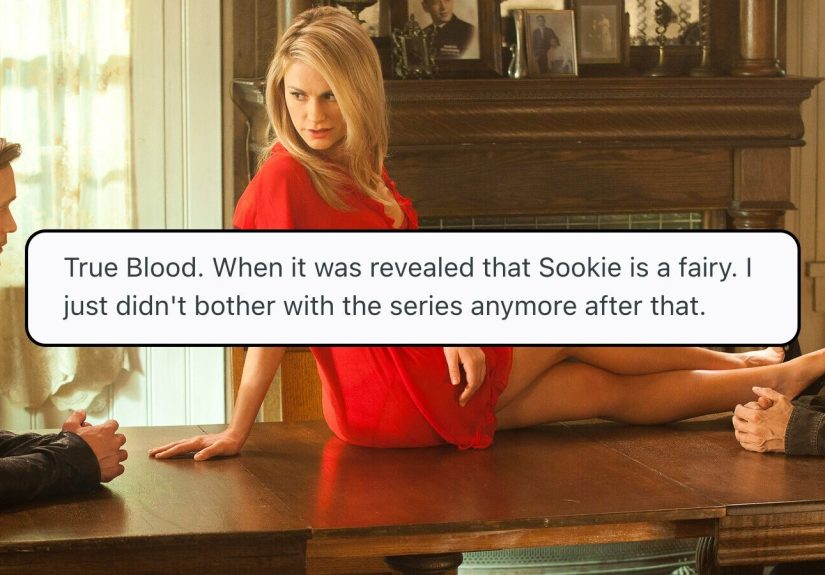
18) True Blood “Thank You”
When a show runs on heightened drama, the finale has to land the emotional plane without crashing into melodrama.
Many viewers found this ending underwhelming, especially given the series’ wild peakslike a fireworks show ending with a sparkler and an apology.
19) Veronica Mars “Years, Continents, Bloodshed”
Revival seasons often try to “grow up” the toneand that can collide with what fans came back for.
This finale’s controversial choice split the audience hard, with backlash centered on whether the show earned its shock and what it meant for the series’ soul.
20) Pretty Little Liars “Til DeAth Do Us Part”
A mystery show promises answers. When the final reveal feels overly complicated, under-explained, or simply unsatisfying, it can sour the entire ride.
For many viewers, the finale didn’t deliver the clean closure they wanted after years of twists, clues, and conspiracy corkboards.
21) House of Cards “Chapter 73”
Late-stage prestige dramas can lose their grip when the power dynamics that once felt sharp become repetitive or abruptly reconfigured.
This finale landed with a thud for many, leaving viewers feeling like the show’s political bite had dulledand that the ending arrived because it had to, not because it was ready.
Why These Episodes Hurt More Than a Normal “Bad One”
The common thread isn’t just weak writing or odd choices. It’s trust. TV is a long relationship: you give a show hours of your life,
it gives you meaning, momentum, and characters who feel real enough to argue about at lunch.
A quit episode is the moment you feel the show is taking you for grantedasking you to accept a twist without groundwork,
to endure misery without payoff, or to clap for a finale that feels like it skipped the middle chapter of its own conclusion.
And yes, sometimes people keep watching anyway. Hate-watching is still watching. But the emotional transaction changes:
you’re no longer excitedyou’re investigating.
Viewer Experiences: The Psychology of Rage-Quitting a Show (500+ Words)
If you’ve ever stopped watching a show because of one terrible episode, congratulationsyou’ve participated in a proud human tradition:
protecting your joy with the strength of your “Exit” button. The experience is weirdly physical. Your shoulders tense.
You start bargaining (“Maybe next week is better?”). Then comes the sudden clarity: I don’t have to do this.
It’s the same feeling as realizing you can leave a party where nobody offered you snacks, except the party is inside your television and the host is plot armor.
The first stage is disbelief. You rewind a scene like the remote can fix it. You check if you accidentally skipped an episode.
You look up from your couch as if the writers are hiding behind a plant, ready to yell “Pranked!” and restore character motivation.
This is especially true with retcons and finales. A retcon doesn’t just change factsit changes your memories of the show.
It’s like someone opened your old photo album and drew a mustache on every picture, then asked why you’re being “so dramatic.”
The second stage is group processing. Even if you watch alone, you immediately seek witnesses. You text a friend.
You open a recap. You lurk in comment sections to confirm you didn’t hallucinate the plot. There’s comfort in collective confusion:
“Oh good, it wasn’t just me.” This is why quit episodes become famous. They turn private disappointment into a shared cultural moment
a little online campfire where everyone roasts marshmallows and the narrative choices simultaneously.
Then comes the fork in the road: stop, or continue out of stubbornness. Some viewers peace out immediately because TV is entertainment,
not homework. Others keep going because they’ve already invested seasons, and quitting feels like wasting the time they’ve spent.
(This is also how people end up bingeing seven more episodes while complaining the entire time. It’s not a contradictionit’s a lifestyle.)
The most complicated version is when a show is still “good” in places, but an episode changes how you interpret everything after it.
You keep watching, but you’re watching with squinted eyes.
The healthiest part? Realizing it’s okay to stop. There’s no medal for finishing a series that makes you miserable.
If a show’s tone shifts into something you didn’t sign up foror if the storytelling stops rewarding attentionyour exit is not a failure.
It’s taste. It’s time management. It’s self-care with commercials removed. And if you ever return later (because nostalgia is powerful and trailers are persuasive),
you’ll know exactly where the danger zone islike emotional GPS: “In 0.2 miles, you will reach the episode that made you quit. Proceed with caution.”