Table of Contents >> Show >> Hide
- What Makes a Kitchen Paint Color Work?
- 27 Kitchen Paint Color Ideas Designers Swear By
- 1. Creamy White
- 2. Buttery Off-White
- 3. Soft Greige
- 4. Mushroom Taupe
- 5. Sand Beige
- 6. Stone Beige
- 7. Cocoa Brown
- 8. Clay
- 9. Sage Green
- 10. Olive Green
- 11. Forest Green
- 12. Smoky Green
- 13. Blue-Green
- 14. Dusty Blue
- 15. Slate Blue
- 16. Smoky Blue-Gray
- 17. Navy Blue
- 18. Inky Blue
- 19. Aubergine
- 20. Rich Red
- 21. Coral
- 22. Soft Pink
- 23. Buttery Yellow
- 24. Charcoal
- 25. Soft Black
- 26. Espresso Brown-Black
- 27. Lavender-Taupe
- How to Choose the Right Kitchen Paint Color Without Regretting Everything
- Real-World Experiences With Kitchen Paint Colors That Changed Everything
- Final Thoughts
- SEO Tags
If your kitchen still looks like it’s waiting for a flip-and-flop-wearing house flipper from 2016 to come back and finish the job, paint may be the easiest fix. The right kitchen paint color can warm up a sterile space, make a small room feel more intentional, and give basic cabinets enough personality to stop apologizing for being basic. It can also save you from the dreaded “I wanted timeless, but somehow got dentist-office break room” effect.
These days, designers are leaning into kitchens that feel layered, inviting, and a little more alive. Translation: warm whites instead of blinding whites, earthy greens instead of generic gray, and rich blues, reds, and browns that make a kitchen feel collected rather than copied from the internet at 2 a.m. This guide rounds up 27 kitchen paint color ideas worth stealing, whether you want a full cabinet makeover, a softer wall color, or just one island shade that makes the whole room look more expensive.
What Makes a Kitchen Paint Color Work?
The best kitchen paint color ideas do three jobs at once: they flatter your lighting, they work with your countertops and flooring, and they make the room feel like a place where people actually want to linger. That last part matters. Kitchens are not just where dinner happens; they’re where homework lands, coffee gets reheated, and someone always stands directly in front of the drawer you need.
In other words, the best designer kitchen colors are not just trendy. They are livable. They have enough depth to look good in morning light, enough flexibility to play nicely with wood, stone, tile, and metal, and enough staying power to keep you from repainting the whole thing six months later out of spite.
27 Kitchen Paint Color Ideas Designers Swear By
1. Creamy White
A creamy white is the easiest way to brighten a kitchen without making it feel cold. It works beautifully on walls, cabinets, or trim and looks especially good with brass hardware, honed stone, and warm wood floors. Think “fresh bakery with expensive butter,” not “hospital hallway with a backsplash.”
2. Buttery Off-White
If plain white feels too sharp, a buttery off-white gives you softness with a little sunshine built in. It is ideal for kitchens that get limited natural light because it reflects brightness while still feeling cozy. Pair it with unlacquered brass, oak shelving, or creamy zellige tile for a space that feels quietly luxurious.
3. Soft Greige
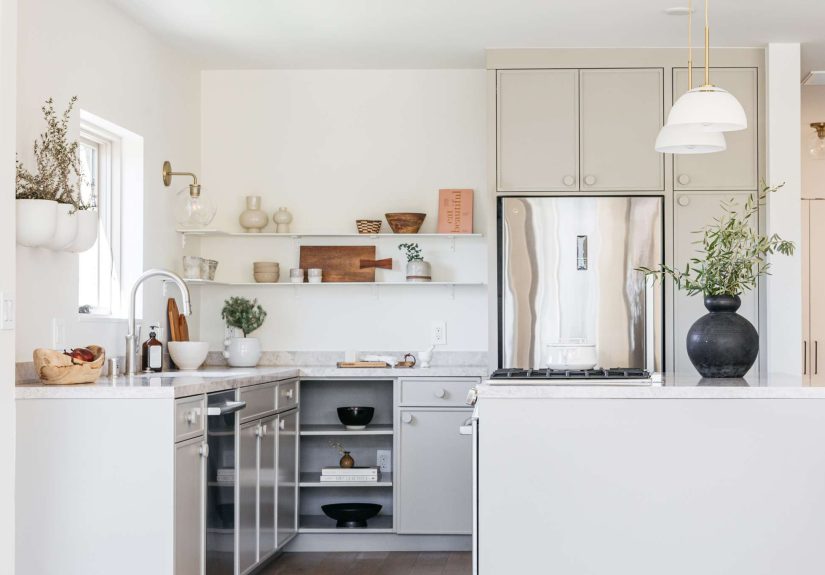
Greige still earns its place when it leans warm instead of flat. A soft greige is one of those kitchen wall colors that behaves like a peacemaker: it ties together white counters, stainless appliances, and wood accents without demanding applause. It is especially useful if you want a neutral kitchen that still looks current.
4. Mushroom Taupe
Mushroom taupe has that designer-approved ability to feel earthy, elevated, and hard to pin down in the best way. It carries enough gray to stay sophisticated and enough brown to feel warm. Use it on lower cabinets or a pantry wall when you want something subtle that still looks intentional.
5. Sand Beige
Sand beige is the comeback neutral nobody saw coming, mostly because beige had to survive years of unfair insults first. In a kitchen, it feels grounded and calm, especially when paired with stone countertops, woven textures, and creamy trim. It is great for homes that want warmth without going fully rustic.
6. Stone Beige
Stone beige is slightly deeper and more architectural than standard beige. It works well on cabinetry in kitchens with lots of natural materials because it complements wood grain instead of fighting it. If your style leans European farmhouse, quiet luxury, or “I own exactly one beautiful ceramic bowl,” this shade makes sense.
7. Cocoa Brown
Brown is back, and kitchen cabinet paint colors are better for it. Cocoa brown feels rich, cocooning, and surprisingly modern when used with creamy walls and lighter counters. In a large kitchen, it brings intimacy. In a smaller one, it can look dramatic and tailored rather than cramped, provided the lighting is decent.
8. Clay
Clay sits somewhere between beige, blush, and terracotta, which is exactly why it looks so good. It adds warmth without screaming for attention and flatters both modern and traditional cabinetry. If you want a kitchen paint color idea that feels earthy and fresh at the same time, clay is a strong contender.
9. Sage Green
Sage green remains a favorite because it is practically impossible to hate. It is soft, soothing, and easy to pair with white quartz, butcher block, or antique brass. Sage works beautifully on cabinets, walls, or even an island, especially if your goal is to make the kitchen feel calm instead of chaotic.
10. Olive Green
Olive green has more depth than sage and a more collected feel than brighter greens. It is especially strong in kitchens with warm metals, terracotta accents, or vintage-inspired details. On cabinets, olive reads confident but not flashy. On walls, it can make a plain kitchen feel instantly more curated.
11. Forest Green
Forest green is for people who like color but still want the room to feel classic. It brings drama to lower cabinets and full-height cabinetry, especially when balanced with light counters and natural wood. It is moody, but in a “tailored wool coat” kind of way, not in a “teen vampire bedroom” way.
12. Smoky Green
A smoky green has gray undertones that keep it from feeling too lively or too literal. This is the green for someone who likes nature-inspired color but wants it filtered through a designer lens. It looks particularly beautiful with marble veining, matte black hardware, and old-house architectural details.
13. Blue-Green
Blue-green sits right in the sweet spot between breezy and grounded. It works well if you want more personality than gray but less seriousness than navy. This shade shines on islands and built-ins, where it can act like a color accent while still feeling sophisticated enough for everyday use.
14. Dusty Blue
Dusty blue is softer than a coastal sky blue and less formal than navy, which makes it wildly useful. It gives kitchens a relaxed, welcoming mood and pairs well with white walls, pale oak floors, and brushed nickel or brass hardware. It is also a smart choice if you want color without visual noise.
15. Slate Blue
Slate blue brings depth without the heaviness of a nearly-black shade. It feels calm, polished, and slightly moody, making it a favorite for cabinetry in transitional kitchens. If your countertops are cool-toned, slate blue can bridge the gap between warm decorative accents and cooler fixed finishes.
16. Smoky Blue-Gray
This shade is basically the adult version of blue. Smoky blue-gray feels timeless because it is restrained, but it still has enough color to keep the kitchen from fading into the background. It is especially effective in spaces with marble, soapstone, or white oak, where the undertones can quietly echo one another.
17. Navy Blue
Navy is one of the most dependable kitchen cabinet paint colors because it plays like a neutral while still bringing depth. It looks sharp with white counters, brass fixtures, and crisp trim, but it can also feel cozy next to warm woods. If you want drama without risk, navy is the overachiever of the group.
18. Inky Blue
Inky blue is deeper, moodier, and a little more complex than standard navy. Depending on the light, it can read blue, gray, or almost green, which gives it that designer-loved layered effect. Use it on cabinetry or a single feature wall if you want the kitchen to feel bold, refined, and slightly mysterious.
19. Aubergine
Aubergine is not for the timid, but it is gorgeous in the right kitchen. It reads like a deep purple-brown with a moody richness that feels luxe rather than loud. On an island or lower cabinets, it pairs surprisingly well with creamy whites, walnut, and aged brass. It is dramatic, yes, but very grown-up drama.
20. Rich Red
Muted, earthy red can make a kitchen feel warm, historic, and completely unforgettable. This is not fire-engine red. It is the kind of shade that looks best with natural stone, dark wood, and handmade tile. Used sparingly on an island, pantry door, or lower cabinets, it can make a room feel full of character.
21. Coral
Coral sounds risky until you see it done well. In the right kitchen, especially one with lots of natural light, coral feels lively, welcoming, and more sophisticated than you might expect. The key is to keep the rest of the palette restrained. Let coral be the fun friend, not the whole dinner party.
22. Soft Pink
Soft pink works best when it is dusty, muted, and almost neutral. It can bring warmth to a kitchen with cool stone or hard industrial finishes and pairs beautifully with cream, brown, olive, and brass. Think of it less as “pink kitchen” and more as “the room somehow looks flattering all the time.”
23. Buttery Yellow
Buttery yellow brings cheer without the aggressive energy of bright lemon. It is lovely in older homes, breakfast nooks, or kitchens that need a little warmth during gray winter months. Used on walls or a pantry cabinet, it can make the entire room feel sunnier, even when the weather is doing absolutely nothing helpful.
24. Charcoal
Charcoal is a great option if black feels too harsh but you still want depth and contrast. It works beautifully on islands, lower cabinets, and even vent hoods, especially when balanced with lighter walls and warm finishes. A soft charcoal can make a kitchen feel sleek while still leaving room for texture and warmth.
25. Soft Black
Soft black is one of the boldest kitchen paint color ideas on this list, but when it has blue, brown, or green undertones, it becomes surprisingly livable. It creates a dramatic backdrop for art, brass, and marble, and it can make inexpensive cabinetry look custom. The trick is to avoid pairing it with a room that has zero light.
26. Espresso Brown-Black
If you cannot decide between black and brown, espresso gives you the best of both worlds. It reads dark and tailored but has more warmth than true black, which makes it easier to live with. This is a strong choice for kitchen islands or shaker cabinets in homes that want classic structure with softer edges.
27. Lavender-Taupe
Lavender-taupe may sound suspiciously like a candle you were gifted and never lit, but on cabinets it can be stunning. Because it mixes purple with brown-gray undertones, it reads as an unusual neutral rather than a novelty color. If you want something distinctive without going cartoonish, this is the stealth statement shade.
How to Choose the Right Kitchen Paint Color Without Regretting Everything
Pay Attention to Undertones
The difference between a warm white and a cold white can be the difference between “cozy and polished” and “why does my kitchen look annoyed?” Always compare samples against your counters, backsplash, and flooring. Whites, greiges, greens, and blues all shift depending on surrounding materials and time of day.
Think About Where the Color Goes
Not every shade needs to cover every cabinet door in the room. Some colors are better on walls, some look best on lower cabinets, and some are practically begging to become an island moment. If you love a bold color but fear commitment, use it in one zone and keep the rest of the palette more grounded.
Balance Warm and Cool Finishes
One of the smartest designer moves is pairing warm cabinet colors with brass, bronze, or champagne hardware and cooler paint colors with nickel, chrome, or matte black. It is not a rigid rule, but it helps the room feel considered. The same goes for wood tones, stone, and tile. Color works better when it has friends.
Sample First, Paint Second, Panic Never
Paint swatches are not optional in a kitchen. A color that looks soft online may turn muddy in a north-facing room, and a “perfect neutral” can suddenly flash pink, green, or blue once it lands next to your backsplash. Sample boards save money, time, and the deeply humbling experience of repainting cabinets you just finished painting.
Real-World Experiences With Kitchen Paint Colors That Changed Everything
In real homes, the experience of choosing kitchen paint color ideas is usually less “instant design genius” and more “three sample boards, one lighting crisis, and a sudden emotional attachment to beige.” That is why the best results usually come from seeing how colors behave in everyday life, not just in perfect magazine photos.
Take the classic white kitchen dilemma. A lot of homeowners start by saying they want bright white because it feels safe. Then the sample goes up, and in certain light it looks chilly, sharp, or weirdly blue. The moment they switch to a creamy white or buttery off-white, the entire room relaxes. The cabinets look softer, the counters look more expensive, and suddenly the space feels less like a showroom and more like a home where someone might actually make pancakes.
Small kitchens tell a similar story. People often assume they need the palest possible shade to make the room feel larger. Sometimes that works, but not always. In one common scenario, a soft greige or stone beige ends up performing better than a bright white because it creates warmth and cohesion, especially when the kitchen opens into a dining or living area. Instead of making the space feel smaller, it makes it feel more intentional. That psychological difference matters more than a technical one-inch illusion.
Green is another category that changes minds fast. Sage tends to win over cautious decorators because it feels gentle and easy. Olive and forest green, though, are the shades that often create the biggest before-and-after effect. Once they are paired with wood accents and warm metal hardware, the kitchen stops looking generic. It gets depth. It gets mood. It gets compliments from people who normally notice nothing except whether there are snacks.
Blue paints have their own learning curve. Navy is beloved for a reason: it is bold, but it behaves. Homeowners who try it on an island often end up wishing they had been braver sooner. Dusty blue and smoky blue-gray are more subtle, yet they can be just as transformative, especially in kitchens with marble, stainless steel, or cooler light. They bring color without chaos, which is a pretty great quality in a room already full of knives, deadlines, and a refrigerator that beeps for attention.
Then there are the surprise winners. Soft pink, clay, aubergine, and lavender-taupe sound like they should be difficult, but in the right kitchen they can look incredibly sophisticated. Usually the magic happens when these shades are used strategically rather than everywhere. A pantry wall, island base, coffee station, or lower cabinet run is often enough to introduce personality without making the whole room feel theatrical.
The biggest lesson from real kitchens is simple: the best paint color is not just the one that looks pretty on a swatch. It is the one that still looks good at 7 a.m., at 5 p.m., under pendant lights, next to your toaster, and during the exact moment you spill coffee and question your life choices. Good kitchen color should feel forgiving, flattering, and easy to live with. That is what designers are really chasing, and that is why these shades keep coming up again and again.
Final Thoughts
The smartest kitchen paint color ideas do not chase trends blindly. They borrow what works: warmer neutrals, grounded greens, moody blues, softened reds, and richer, more lived-in shades that make a kitchen feel personal. Whether you go all in with olive cabinets, play it safe with creamy white walls, or test the waters with a slate blue island, the goal is the same: choose a color that makes your kitchen feel better to live in every single day.
And that is really the secret. A designer-worthy kitchen is not only about the fanciest finishes or the most expensive range. Sometimes it is just about picking a paint color that makes the room finally click. Which, as home upgrades go, is a lot cheaper than knocking down a wall and a lot more fun than shopping for grout.