Table of Contents >> Show >> Hide
- What Does “3D Printing Anywhere” Really Mean?
- Could You Actually 3D Print on the Subway?
- The Real Places Where Portable 3D Printing Makes Sense
- Choosing the Right “Anywhere” Printer
- Safety: The Unsexy Part That Saves the Day
- Materials: What Should You Print With?
- What Can You Print Anywhere?
- From Subway Idea to Real Innovation
- Tips for 3D Printing Anywhere Without Becoming “That Person”
- The Future of Printing Wherever Ideas Happen
- Conclusion: Print Anywhere, But Think First
- Personal Experiences and Real-World Lessons From “3D Printing Anywhere”
- SEO Tags
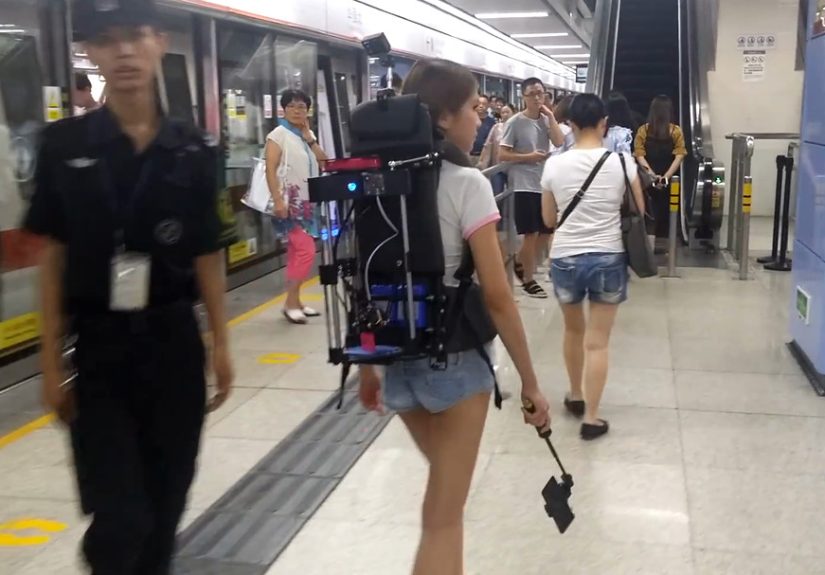
Imagine this: you are standing on a crowded subway platform, coffee in one hand, backpack in the other, and a tiny machine beside you is calmly building a replacement headphone clip layer by layer. A commuter glances over. A child points. Someone asks, “Is that a toaster?” Welcome to the wonderfully odd idea of 3D printing on the subwayor, more realistically, 3D printing wherever modern life decides to drop you.
Now, before anyone tries to set up a full-size filament printer between Times Square and Grand Central, let’s be clear: active 3D printing inside a subway car is usually a terrible idea. Vibration, limited ventilation, hot nozzles, curious elbows, public transit rules, and the general chaos of rush hour all make it less “future of manufacturing” and more “sir, please move your robot lunchbox.” But the phrase captures something important: 3D printing has escaped the lab. It now belongs in homes, schools, libraries, offices, makerspaces, repair benches, mobile workshops, and yes, even in backpacksthough preferably turned off while riding underground.
The bigger story is not that we should print a phone stand during a commute. It is that portable 3D printing, mobile design tools, compact printers, 3D pens, cloud slicing, and on-demand manufacturing are changing where ideas become objects. The distance between “I need a thing” and “I made the thing” is getting shorter. Sometimes it is measured in hours. Sometimes in minutes. Sometimes in one dramatic plastic spaghetti failure that teaches humility.
What Does “3D Printing Anywhere” Really Mean?
3D printing, also called additive manufacturing, creates objects from digital files by building material layer by layer. Instead of carving a shape out of a block, the printer adds material only where the object needs it. That simple shift explains why 3D printing is so powerful: it can produce complex shapes, customized parts, rapid prototypes, small batches, repair components, educational models, and creative objects without traditional tooling.
“Anywhere” does not mean ignoring physics, safety, or common sense. It means the workflow has become mobile. You can sketch a part on a laptop during a train ride, scan an object with a phone, send the file to a printer at home, check progress remotely, or carry a compact printer to a classroom, pop-up repair event, trade show, or field site. The printer itself still needs a stable surface, power, ventilation, and supervision. The creativity, however, can travel.
The New Mobile 3D Printing Workflow
The modern workflow often looks like this: design on the go, slice in the cloud or on a laptop, print in a controlled space, then test and improve. A designer can model a broken bracket before lunch, print a prototype in the afternoon, and revise it before dinner. A teacher can bring a small printer into a classroom to demonstrate geometry. A repair volunteer can measure a missing knob and produce a replacement at a community workshop. A hobbyist can design miniatures on a tablet while commuting and print them later at home.
This is why the subway idea is useful, even if the actual subway car is not. It reminds us that 3D printing is no longer chained to an industrial facility. The most important part of the processthe ideacan happen anywhere.
Could You Actually 3D Print on the Subway?
Technically, with a small enough printer, a battery pack, and a very optimistic attitude, you might imagine it. Practically, please do not. A desktop FDM printer melts plastic filament through a heated nozzle, often at temperatures high enough to cause burns. The machine moves along multiple axes, needs calibration, dislikes vibration, and may release particles or odors depending on material, temperature, and enclosure design. Subway cars are crowded, moving, shared public spacesnot miniature factories with wheels.
Public transit systems also care about safety and unobstructed movement. A machine with hot components, moving parts, loose filament, batteries, cables, and possible fumes is not exactly the ideal seatmate. Even if it fits in your tote bag, that does not mean it belongs on the floor between commuters’ shoes and someone’s rolling suitcase.
Better Subway-Friendly 3D Printing Activities
Instead of printing on the subway, use the commute for the parts of 3D printing that are actually commuter-friendly. Review a CAD model. Watch a slicing preview. Check dimensions. Organize STL files. Read printer maintenance notes. Brainstorm useful objects to print later. If you use a 3D scanning app, save reference photos while out in the world, but respect privacy and property rules. The subway can be your idea lab, not your hot-end testing facility.
The Real Places Where Portable 3D Printing Makes Sense
Portable 3D printing shines when the environment is controlled but flexible. A compact printer in a library, classroom, office, garage, or field station can turn digital designs into real objects without requiring a full manufacturing floor. The key is to match the printer, material, and space to the job.
Libraries and Makerspaces
Public libraries and makerspaces have become some of the most welcoming gateways into 3D printing. They often provide access to printers, trained staff, beginner workshops, and community rules that keep the experience safe and organized. For beginners, this is far better than buying a printer first and discovering later that “auto-leveling” does not mean “never learning anything.”
Classrooms and STEM Labs
3D printing is a natural fit for education because it turns abstract ideas into objects students can hold. Geometry becomes a puzzle piece. Biology becomes a cell model. Engineering becomes a bridge that either holds weight or collapses with great educational drama. Students learn design thinking, measurement, iteration, material behavior, and the valuable life lesson that the first version is often not the final version.
Repair Cafes and Community Workshops
Small plastic parts break constantly: clips, knobs, caps, brackets, spacers, cable guides, battery covers, and mysterious little pieces nobody can name but everyone needs. A 3D printer can help extend the life of household items by replacing small components that manufacturers may no longer sell. This does not make every repair easy or legalsome parts carry safety requirementsbut it can reduce waste and encourage a more repair-friendly culture.
Job Sites and Field Work
For engineers, technicians, researchers, and product teams, portable 3D printing can support fast iteration in the field. Need a sensor mount, cable clip, test fixture, or protective cap? Print a prototype near the place where the problem exists. That saves time because the designer can test the object immediately in the environment where it will be used. The printer becomes less of a gadget and more of a problem-solving tool.
Choosing the Right “Anywhere” Printer
Not every 3D printer wants to travel. Some machines are large, delicate, messy, or loud. Others are compact enough to move between rooms or transport to events. Before buying a portable 3D printer, think about the work you actually want to do.
FDM Printers: Practical and Beginner-Friendly
FDM, or fused deposition modeling, is the most common desktop 3D printing method. It uses plastic filament such as PLA, PETG, TPU, or ABS-like materials. FDM printers are popular because they are relatively affordable, easy to understand, and useful for brackets, toys, organizers, prototypes, fixtures, and decorative objects. For portable use, look for a sturdy frame, reliable bed leveling, enclosed or semi-enclosed design when appropriate, quiet operation, and easy filament handling.
Resin Printers: Beautiful Detail, Less Travel-Friendly
Resin printers can produce highly detailed miniatures, jewelry models, dental models, and fine prototypes. But they require liquid resin, gloves, washing, curing, odor control, and careful cleanup. They are not ideal for casual mobile use. A resin printer on a subway would be a disaster movie with better lighting. For most “print anywhere” situations, resin belongs in a dedicated, ventilated workspace.
3D Pens: Portable, Fun, and Limited
3D pens are the most portable form of 3D printing, but they are closer to drawing with melted plastic than automated manufacturing. They are great for art, quick repairs, classroom demonstrations, and understanding how melted filament behaves. However, hot-tip pens can cause burns, and children need close supervision. Low-temperature materials may be better for younger users, but even then, the tool is not a toy to abandon next to the crayons.
Safety: The Unsexy Part That Saves the Day
The future is exciting, but melted plastic still deserves respect. Desktop 3D printers can involve hot nozzles, heated beds, moving parts, electrical components, and material emissions. The goal is not to panic. The goal is to print smart.
Ventilation Matters
FDM printers can release ultrafine particles and volatile organic compounds, especially with certain filaments and higher print temperatures. PLA is often considered more beginner-friendly, while materials like ABS typically require more ventilation and enclosure control. Good practice includes using printers in well-ventilated areas, following manufacturer recommendations, avoiding unknown bargain-bin materials, and considering enclosed printers with filtration when printing frequently indoors.
Heat and Fire Awareness
A 3D printer is not a candle, but it is also not a paperweight. Keep it on a stable, non-flammable surface. Do not leave questionable machines unattended. Inspect wiring, power supplies, connectors, and hot ends. Use quality components. Keep loose filament, paper, fabric, and curious pets away from moving and heated parts. If a printer smells wrong, sounds wrong, or behaves like it is auditioning for a disaster documentary, stop the print.
Battery-Powered Printing Needs Extra Caution
Battery-powered devices make portable printing possible, but lithium batteries require care. Use batteries and power supplies within the printer’s specifications. Protect spare battery terminals during travel. Do not use damaged or swollen batteries. If traveling by air, check airline and government rules for lithium batteries before packing. Portable does not mean “plug anything into anything and hope the smoke stays inside.”
Materials: What Should You Print With?
The right material depends on the job. PLA is popular for beginners because it prints easily, works well for models and light-duty items, and has a lower printing temperature than many engineering materials. PETG offers better toughness and temperature resistance for functional parts. TPU is flexible and useful for grips, bumpers, and bendy components. ABS and ASA can be stronger and more heat-resistant, but they demand better ventilation and printer control.
For portable or shared spaces, PLA and PETG are usually more practical than high-temperature or odor-heavy materials. For anything that touches food, skin, children, electricity, machinery, vehicles, or medical use, be careful. A shape that looks right is not automatically safe. Layer lines can trap bacteria, printed plastics can degrade, and consumer-grade printers are not certified factories.
What Can You Print Anywhere?
Here is where things get fun. The best portable 3D printing projects are small, useful, and easy to test. Think cable clips, drawer dividers, custom hooks, phone stands, tripod adapters, board game pieces, plant labels, measuring jigs, replacement knobs, classroom models, cosplay details, small tool holders, and prototype enclosures. These objects do not require aerospace certification or a philosophical debate with your insurance company.
Great Starter Projects
A phone stand is a classic because it teaches angles, support, and load-bearing without risking much. A keychain teaches text embossing and tolerances. A cable organizer teaches flexible design constraints. A drawer divider teaches measurement. A replacement knob teaches reverse engineering. Each project builds skill while producing something useful enough to avoid becoming “just another plastic benchy staring at you from the shelf.”
Projects to Avoid in Casual Spaces
Avoid printing safety-critical items without proper expertise and testing. Do not casually print car parts, medical devices, load-bearing hardware, electrical enclosures, children’s toys for sale, food-contact items, or anything that could hurt someone if it fails. 3D printing makes objects accessible, but it does not magically remove engineering responsibility.
From Subway Idea to Real Innovation
The “3D printing on the subway” concept is funny because it exaggerates the dream of total mobility. But the serious version is already here. NASA has studied and used additive manufacturing for space applications. Medical device companies use carefully controlled 3D printing for patient-specific designs. Manufacturers use it for tooling, prototypes, fixtures, and low-volume production. Schools use it to teach design. Artists use it to make impossible shapes. Home users use it to replace the one plastic clip that somehow costs $38 online.
The magic is not that a printer can sit anywhere. The magic is that digital design can move everywhere. A file can travel from a student’s laptop to a library printer, from an engineer’s tablet to a workshop, from a repair forum to a home machine, or from a hospital design team to a regulated manufacturing process. Physical production is becoming more local, flexible, and personal.
Tips for 3D Printing Anywhere Without Becoming “That Person”
First, respect the space. If you are in a shared room, ask permission before running a printer. Consider noise, odor, heat, and foot traffic. Second, print small. Portable printing is best for compact objects with short print times. Third, prepare your files before arriving. Nothing kills the mood like spending 45 minutes discovering your model is floating three millimeters above the build plate. Fourth, bring basics: filament, scraper, glue stick if your printer uses it, spare nozzle, small tools, power cable, extension cord if allowed, and a container for scraps. Fifth, clean up. Nobody wants to find filament confetti in the carpet.
Finally, manage expectations. 3D printing is not instant. It is not magic. It is a tool. Sometimes it produces a beautiful finished part. Sometimes it produces modern art that only its maker could love. Either way, the process teaches design, patience, and problem-solving.
The Future of Printing Wherever Ideas Happen
As printers become smaller, smarter, safer, quieter, and easier to use, the idea of making objects near the point of need will keep growing. Better sensors can detect failures. Improved enclosures can manage temperature and emissions. Cloud platforms can simplify slicing and monitoring. AI-assisted design tools can help beginners create printable models faster. Recycled and bio-based materials may reduce waste. Local print networks could make replacement parts easier to obtain without shipping a tiny plastic piece across the country in a box large enough to house a sandwich.
But the future still needs judgment. Not every place is a print shop. Not every file should become a product. Not every plastic part is safe, durable, or sustainable. The best version of portable 3D printing combines creativity with responsibility: print where it makes sense, with the right material, in the right environment, for the right reason.
Conclusion: Print Anywhere, But Think First
3D Printing On The Subway; Or Anywhere Else! is less a literal instruction and more a cheerful challenge. It asks us to imagine a world where making is more immediate, local, and creative. We may not be printing replacement umbrella clips between subway stops tomorrow, but we are already designing on phones, printing in libraries, prototyping in classrooms, repairing at community workshops, and manufacturing specialized parts in places that once seemed impossible.
The smartest approach is simple: let ideas travel freely, but let printers work safely. Use the subway for sketches, measurements, inspiration, and maybe a little daydreaming. Use a stable, ventilated, supervised space for the actual printing. That way, you get the best of both worlds: mobile creativity and responsible making. Also, fewer confused looks from commuters wondering why your backpack is extruding spaghetti.
Personal Experiences and Real-World Lessons From “3D Printing Anywhere”
The first time someone sees a 3D printer working outside a traditional workshop, the reaction is usually a mix of fascination and suspicion. The machine hums, the nozzle dances, and a flat digital idea slowly becomes an object. People lean closer. Someone asks what it costs. Someone else asks whether it can print a new car. There is always one person who asks if it can print pizza. Technically, food printers exist, but no, your desktop filament printer should not become a mozzarella cannon.
One of the most useful lessons from portable 3D printing is that location changes behavior. In a home office, a printer can become a quiet helper. You notice small annoyances and solve them: a cable clip for the desk, a hook for headphones, a spacer for a wobbly shelf, a label holder for storage bins. These are not glamorous objects, but they make daily life smoother. The beauty is not in printing something huge. It is in printing something oddly specific that no store would ever carry.
In a classroom or library, the experience becomes social. People learn by watching failures as much as successes. A warped corner explains bed adhesion better than a lecture ever could. A support structure that refuses to come off teaches design orientation. A print that looks perfect but does not fit teaches tolerance. Students quickly understand that design is not only about imagination; it is about measurement, testing, and revision. The printer becomes a patient teacher, though occasionally a dramatic one.
At community repair events, 3D printing feels almost heroic. A broken appliance may be useless because of one missing plastic button. A board game may be incomplete because one tiny piece vanished into the same alternate dimension as lost socks. A lamp may need a custom spacer. In these moments, a 3D printer turns into a small act of resistance against throwaway culture. Not every part can or should be printed, but when it works, it feels like winning a tiny battle for common sense.
Traveling with 3D printing gear also teaches restraint. The fantasy is to carry everything: printer, filament, tools, spare parts, scanner, laptop, calipers, and enough accessories to open a very nerdy airport kiosk. Reality says to pack only what the project needs. A compact printer is useful only when the environment supports it. A stable table matters. Ventilation matters. Power matters. Time matters. Most of all, people around you matter. A successful mobile printing session is one nobody regrets sharing space with.
The subway, then, becomes the perfect metaphor. It is movement, noise, constraint, and possibility all at once. You may not print on the train, but you can think there. You can notice a broken clip, sketch a better one, measure it later, print it tonight, and improve it tomorrow. That is the real promise of 3D printing anywhere: not machines invading every public space, but creativity following us through ordinary life and turning small problems into printable solutions.
SEO Tags
Note: This article is written for informational and editorial publishing purposes. Always follow local rules, manufacturer instructions, ventilation guidance, and safety practices before operating any 3D printer in a shared or mobile environment.