Table of Contents >> Show >> Hide
- Why Staying Busy at Home Matters
- 1. Build a Simple Daily Routine That Does Not Feel Like a Prison Schedule
- 2. Learn Something New Before Your Brain Turns Into Mashed Potatoes
- 3. Turn Your Home Into a Project Playground
- 4. Stay Connected, Rest Well, and Make Fun Feel Intentional
- A Simple One-Day Plan for Staying Busy at Home
- of Real-Life Experience: What Actually Works When You Are Stuck at Home
- Conclusion
Editorial note: This article is written in standard American English and synthesized from reputable U.S. health, education, and lifestyle guidance, including public-health recommendations on movement, stress management, hobbies, routines, social connection, sleep hygiene, home organization, and learning activities.
Being stuck at home can feel cozy for the first ten minutes. You make tea. You find your softest socks. You announce to absolutely no one that you are “embracing slow living.” Then hour three arrives, the couch begins to look suspiciously like a trap, and your phone starts suggesting videos you would never admit to watching in public.
The good news? Home does not have to become a boredom cave with Wi-Fi. Whether you are staying indoors because of weather, illness, transportation issues, a tight budget, remote work, school breaks, or a schedule that has decided to wear pajama pants, there are practical ways to keep your mind active, your body moving, and your mood from sliding under the refrigerator with the missing crumbs.
This guide covers 4 ways to keep busy when you’re stuck at home without turning your living room into a productivity boot camp. The goal is not to become a perfect human by Tuesday. The goal is to create enough structure, creativity, movement, and connection that your day feels useful, balanced, and maybe even fun.
Why Staying Busy at Home Matters
When people talk about being “busy,” they often mean cramming every minute with tasks. That is not what we are doing here. Healthy busyness is different. It gives your day shape. It reduces the foggy feeling that happens when breakfast, lunch, and dinner all somehow merge into one long snack. It also helps protect your emotional well-being by giving you small wins, predictable routines, and meaningful activities.
Public-health and mental-health experts often recommend a few simple habits for stressful or isolating periods: stay physically active, keep a daily routine, do enjoyable activities, connect with supportive people, and make time for rest. In other words, the cure for cabin fever is not one heroic life makeover. It is a collection of small, repeatable choices that make the day feel less like a waiting room.
Here are four grounded, realistic, and surprisingly enjoyable ways to stay occupied at home.
1. Build a Simple Daily Routine That Does Not Feel Like a Prison Schedule
A routine is one of the most underrated tools for staying busy at home. Without one, the day can become a slippery noodle. You wake up, check your phone, blink twice, and suddenly it is 4:37 p.m. and you are eating cereal from a mug because all the bowls are “emotionally unavailable.”
A good home routine does not need to be strict. It simply gives your day a beginning, middle, and end. Think of it as a friendly road map, not a military command center.
Start with three anchor points
Instead of planning every minute, choose three anchor points for the day:
- Morning anchor: Wake up, open curtains, drink water, make your bed, and do one small movement activity.
- Afternoon anchor: Complete one useful task, one learning activity, or one creative project.
- Evening anchor: Tidy one area, prepare for tomorrow, and do something relaxing before sleep.
These anchors create rhythm. They also prevent the classic stuck-at-home mistake: letting the day become one endless scroll session with occasional trips to the kitchen.
Use a “today list,” not a fantasy list
When you are home all day, it is tempting to write a heroic to-do list: clean the closet, learn Spanish, reorganize tax documents, start yoga, bake bread, call Grandma, and finally understand what all those cables in the drawer belong to. By noon, the list has become so dramatic it deserves its own movie trailer.
Instead, make a “today list” with only five items:
- One body task, such as stretching or walking indoors
- One home task, such as laundry or dishes
- One brain task, such as reading or taking an online lesson
- One connection task, such as texting a friend
- One fun task, such as music, a hobby, or a movie night
This keeps your schedule balanced. It also makes success realistic. You are not trying to become a productivity influencer with color-coded pens and suspiciously perfect lighting. You are simply giving yourself a day that has direction.
Move your body in small, realistic ways
Physical activity is one of the best ways to stay busy when stuck at home because it helps break up long sitting periods, supports mood, and gives your brain a reset. You do not need a home gym, a treadmill, or a motivational poster of someone sprinting at sunrise while looking weirdly happy.
Try simple indoor movement:
- Walk around the house during phone calls
- Do ten minutes of stretching
- Dance to three songs
- Try beginner yoga or mobility exercises
- Use stairs carefully if you have them
- Do bodyweight exercises like wall push-ups, squats, or calf raises
A practical rule: move for five minutes every hour you are awake and mostly sitting. It sounds tiny, but tiny habits are sneaky. They add up while pretending not to.
2. Learn Something New Before Your Brain Turns Into Mashed Potatoes
When you are stuck at home, your brain still wants novelty. It wants challenge. It wants something more exciting than checking the fridge again to see if new snacks have magically appeared. Learning something new is a powerful way to stay busy because it gives you progress, curiosity, and a sense of control.
The best part? You do not have to enroll in a full degree program or become an expert in ancient pottery by Friday. Learning can be casual, useful, and fun.
Pick a “mini skill” you can practice in short sessions
A mini skill is something small enough to begin today and interesting enough to keep practicing. Examples include:
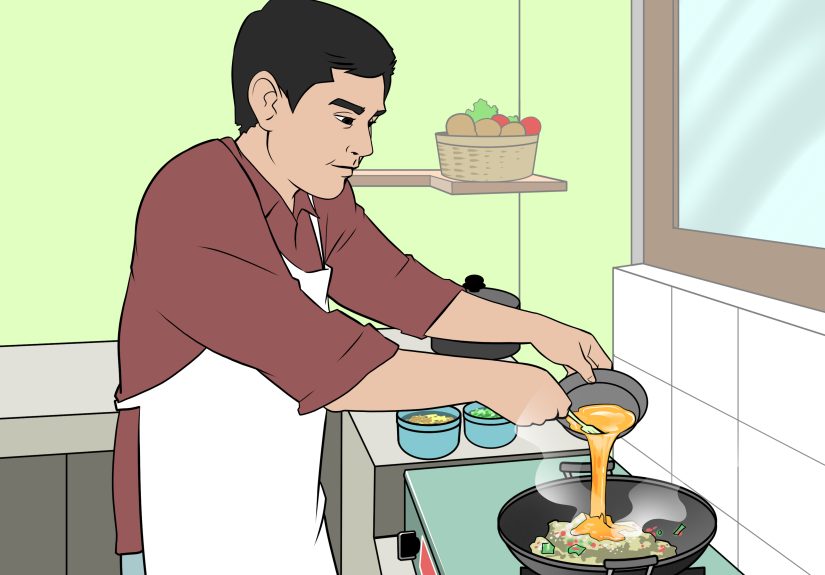
- Cooking one new recipe
- Learning basic photo editing
- Practicing a new language for 15 minutes
- Learning keyboard shortcuts for work or school
- Trying basic drawing techniques
- Reading about personal finance basics
- Learning how to care for houseplants
The trick is to avoid turning learning into another source of pressure. Choose something that makes your life better or your day more interesting. If you hate knitting, do not knit just because the internet told you it is wholesome. Wholesome misery is still misery, just with yarn.
Create a home learning challenge
Challenges work because they add structure and a tiny sprinkle of game energy. Try one of these:
- The 7-day recipe challenge: Cook or prepare one new dish each day using ingredients you already have.
- The 30-minute reading challenge: Read for half an hour daily and write down one useful idea.
- The documentary-and-notes challenge: Watch one educational video or documentary and summarize it in five bullet points.
- The one-room history tour: Pick one object in your home and research its origin, design, or cultural history.
Free educational resources from museums, libraries, universities, and public institutions can make staying home feel less like being trapped and more like having a quiet pass to the world’s knowledge pantry. Digital museum collections, online library materials, virtual exhibitions, and educational toolkits can turn an ordinary afternoon into something surprisingly rich.
Use learning to solve small real-life problems
One of the best ways to make learning stick is to connect it to your actual life. For example, do not just “learn cooking.” Learn how to make three affordable lunches. Do not just “learn organization.” Learn how to create a better study corner. Do not just “learn fitness.” Learn how to stretch your back after sitting too long.
Useful learning gives you an immediate reward. You learn something, then your life becomes one percent less chaotic. That may not sound glamorous, but one percent less chaos is still a beautiful thing. Ask anyone who has ever found the matching lid for a food container.
3. Turn Your Home Into a Project Playground
Being stuck at home is a perfect excuse to tackle small projectsnot giant, terrifying projects that require a hardware store, a permit, and a calm adult with a measuring tape. We are talking about manageable projects that make your space cleaner, more comfortable, or more personal.
Your environment affects how you feel. A cluttered room can make it harder to focus, relax, and enjoy your time indoors. Meanwhile, a tidy and intentional space can make home feel less like a storage unit with lamps and more like somewhere you actually want to be.
Start with a 20-minute decluttering sprint
Decluttering works best when it is short and specific. Do not begin with “organize the whole house,” because that sentence has defeated stronger people than all of us. Begin with one drawer, one shelf, one bag, or one corner.
Set a timer for 20 minutes and choose one target:
- A messy desk
- A bathroom cabinet
- A kitchen drawer
- Your backpack or work bag
- Your closet floor
- Your phone photo gallery
- Your email inbox
Use three categories: keep, donate, and toss. For digital clutter, use save, archive, and delete. The goal is not perfection. The goal is momentum. Once you start, you often discover that a small clean area gives you a surprising sense of accomplishment. It is like giving your brain a freshly vacuumed carpet.
Make your space more enjoyable
Home projects do not need to be expensive. Try rearranging furniture, creating a reading corner, labeling storage bins, cleaning windows, rotating decorations, or setting up a small workout area. Even changing the lighting in a room can make it feel new.
Here are easy home upgrades that cost little or nothing:
- Move a chair near natural light for reading
- Create a “charging station” for devices
- Use a basket for items that always wander around the room
- Put frequently used items where they are easiest to reach
- Make a small hobby box with supplies for drawing, journaling, crafts, or puzzles
- Clear your nightstand so bedtime feels calmer
A comfortable home setup can make other activities easier. If your desk is clean, studying feels less painful. If your kitchen counter is clear, cooking feels less like entering a battle scene. If your couch area is tidy, movie night feels intentional instead of “I gave up and live here now.”
Try creative projects with your hands
Creative hobbies are excellent for staying busy at home because they combine focus, relaxation, and visible progress. They also give your brain a break from screens. That matters, especially when your laptop, phone, and TV have started to feel like three glowing roommates who never pay rent.
Try hands-on activities such as:
- Sketching objects around the house
- Making a scrapbook or photo album
- Writing short stories or personal essays
- Painting simple designs
- Doing puzzles
- Building models
- Learning basic sewing repairs
- Starting a small indoor herb garden
Creative projects do not have to be “good” to be valuable. The point is to make something, not to impress a panel of invisible judges. A lopsided drawing, a funny poem, or a slightly questionable homemade bookmark still counts. Creativity is not a talent reserved for people in dramatic scarves. It is a human habit, and home is a great place to practice it.
4. Stay Connected, Rest Well, and Make Fun Feel Intentional
Keeping busy at home should not mean filling every second with chores and self-improvement. That is how you accidentally turn your house into a wellness-themed office. Staying connected and making time for fun are just as important as productivity.
Humans are social creatures. Even introverts need some form of connection, though many prefer it in carefully measured doses, like hot sauce. When you are stuck indoors, it helps to plan connection instead of waiting until loneliness taps you on the shoulder wearing fuzzy slippers.
Create low-pressure social moments
Social connection does not have to mean a three-hour video call where everyone says, “Can you hear me?” twelve times. Keep it simple:
- Send a voice message to a friend
- Have a ten-minute check-in call
- Play an online game with family
- Watch the same movie and text reactions
- Start a tiny book club with one other person
- Cook the same recipe as a friend and compare results
Connection gives your day emotional texture. It reminds you that the world is bigger than your walls, your laundry pile, and whatever mystery item is frozen in the back of the freezer.
Plan fun instead of waiting for it
Fun often disappears when we assume it will happen naturally. At home, fun needs a little planning. Choose something to look forward to each day, even if it is small.
Try creating themed blocks:
- Music hour: Make a playlist for a specific mood or decade.
- Movie café night: Make popcorn, dim the lights, and treat it like an event.
- Home spa evening: Take a warm shower, use lotion, wear comfortable clothes, and relax.
- Game night: Play cards, board games, word games, or trivia.
- Memory lane session: Organize old photos and share funny ones with family.
Intentional fun makes being stuck at home feel less passive. Instead of “I guess I watched four episodes,” it becomes “I planned a cozy show night.” Same screen, better energy.
Protect your sleep and downtime
When you are home all day, bedtime can drift. Suddenly midnight becomes “early,” and your brain decides 1:16 a.m. is the ideal time to research whether penguins have knees. They do, by the way, but that is not the point.
A steady sleep routine helps your day feel more stable. Try to wake up and go to bed at consistent times, reduce bright-screen use close to bedtime when possible, and create a relaxing wind-down ritual. That might mean reading, stretching, journaling, listening to calm music, or preparing tomorrow’s clothes.
Good rest makes it easier to stay active, learn, organize, and connect the next day. Without sleep, every task becomes harder, including deciding what to eat for breakfast. That is how cookies become “morning toast with personality.”
A Simple One-Day Plan for Staying Busy at Home
Here is a realistic sample schedule you can adapt:
Morning
- Open curtains and make your bed
- Drink water and eat breakfast
- Stretch or walk indoors for ten minutes
- Write a five-item today list
Afternoon
- Complete one home project, such as organizing a drawer
- Spend 30 minutes learning a mini skill
- Prepare a simple lunch or snack
- Take a screen break and move around
Evening
- Connect with a friend or family member
- Do something creative or fun
- Tidy one small area
- Wind down without turning bedtime into a social media safari
This plan is flexible. Swap activities based on your energy, responsibilities, and mood. The important thing is balance: body, brain, space, connection, and rest.
of Real-Life Experience: What Actually Works When You Are Stuck at Home
From personal experience, the hardest part of being stuck at home is not always boredom. It is the strange lack of edges. Normal days have built-in transitions: leaving the house, commuting, entering school or work, meeting people, coming back home, changing clothes, and shifting into evening mode. When you stay home, those edges blur. Suddenly your bed is a desk, your desk is a dining table, and your dining table is a place where unopened mail comes to retire.
What helps most is creating small transitions on purpose. For example, changing clothes in the morningeven into comfortable clothescan signal that the day has started. Making the bed can signal that sleep time is over. Taking a short walk around the house or stepping outside for fresh air, if possible, can act like a mini commute. It sounds silly until it works, and then it feels like discovering a secret button for your brain.
Another helpful experience is separating “busy” from “productive.” Some days, the most useful thing you can do is clean the kitchen, answer messages, and stretch. Other days, you may have the energy to take an online class, cook something new, and reorganize a closet. Both count. The mistake is expecting every stuck-at-home day to become a masterpiece of personal development. That expectation usually leads to frustration, followed by dramatic sighing, followed by snacks.
I have also found that projects need to be smaller than you think. “Clean the room” can feel heavy. “Clear the chair” is doable. “Get fit” is vague. “Do ten squats and stretch your shoulders” is clear. “Learn photography” sounds huge. “Take five better pictures of ordinary objects” feels playful. The smaller the task, the easier it is to begin. Beginning is the magic part. Once you start, motivation often shows up late, wearing sunglasses, acting like it was invited all along.
Connection matters more than people admit. A short message can change the mood of the day. A shared playlist, a funny photo, or a quick call can remind you that you are not floating alone in a sea of laundry and dishes. You do not need constant conversation. You just need enough contact to keep your social battery from going completely flat.
Finally, fun should be treated like a real part of the schedule. When fun is only what happens after every task is finished, it rarely happens. There is always another dish, another email, another pile, another mysterious sock. Planning funmovie night, music time, a puzzle, a craft, a special dessert, or an hour with a good bookmakes home feel alive again. Being stuck at home may not be your first choice, but with a little structure and imagination, it can become more than waiting. It can become a day you actually lived.
Conclusion
Learning how to keep busy when stuck at home is really about building a day that supports your body, mind, space, and relationships. Start with a simple routine. Move in small ways. Learn something useful or fun. Turn your home into a project playground. Stay connected, protect your rest, and plan enjoyable moments instead of hoping they magically appear between chores.
You do not need to do all four strategies perfectly. Pick one and begin. Open the curtains. Stretch for five minutes. Clear one drawer. Text one friend. Read one chapter. Cook one new recipe. The small stuff counts, especially when you repeat it. And if your first attempt is messy? Congratulations. That means you are doing real life, not a staged commercial for matching storage bins.