Table of Contents >> Show >> Hide
- Why Pigeon Toe Ceramics’ Lab Vessels Still Feel Special
- The Porcelain Advantage
- Slip-Cast Precision, Handmade Soul
- How to Style Porcelain Lab Vessels at Home
- Best Accessories to Pair With Pigeon Toe Ceramics Porcelain Lab Vessels
- Why the Lab Aesthetic Works So Well in Modern Decor
- Shopping Tips: What to Look For
- Experience: What It’s Like to Live With Porcelain Lab Vessels
- Conclusion
If you have ever looked at a chemistry flask and thought, “You know what this needs? Flowers,” congratulations: you and great design are already friends. Pigeon Toe Ceramics’ porcelain lab vessels live in that delicious little overlap between science-class precision and home-decor poetry. They borrow the silhouettes of filtering flasks, volumetric flasks, and test-tube forms, then soften the whole mood with porcelain, hand-finishing, and a distinctly modern sense of calm.
That combination is exactly what makes these accessories so memorable. They are not loud. They are not fussy. They do not beg for attention with glitter, fringe, or a dramatic backstory involving a Tuscan villa and twelve deeply emotional olives. Instead, they win with shape, restraint, and material. The result is a collection of accessories that feels smart, sculptural, and surprisingly warm.
For design lovers, the appeal is immediate: clean lines, tactile surfaces, and forms that look equally good holding a stem of ranunculus, a clipped branch from the backyard, or absolutely nothing at all. For SEO purposes, sure, these are “porcelain accessories” and “decorative ceramic vessels.” In real life, though, they are the kind of objects that make a shelf look more intentional in under thirty seconds.
Why Pigeon Toe Ceramics’ Lab Vessels Still Feel Special
The magic starts with the concept. Early Pigeon Toe lab vessels were inspired by vintage laboratory glassware, but translated into porcelain. That move matters. Glass lab equipment can feel clinical, fragile, and a bit cold. Porcelain, by contrast, keeps the disciplined silhouette while adding softness, opacity, and a handmade presence. Suddenly, the language of the lab becomes domestic, stylish, and a touch playful.
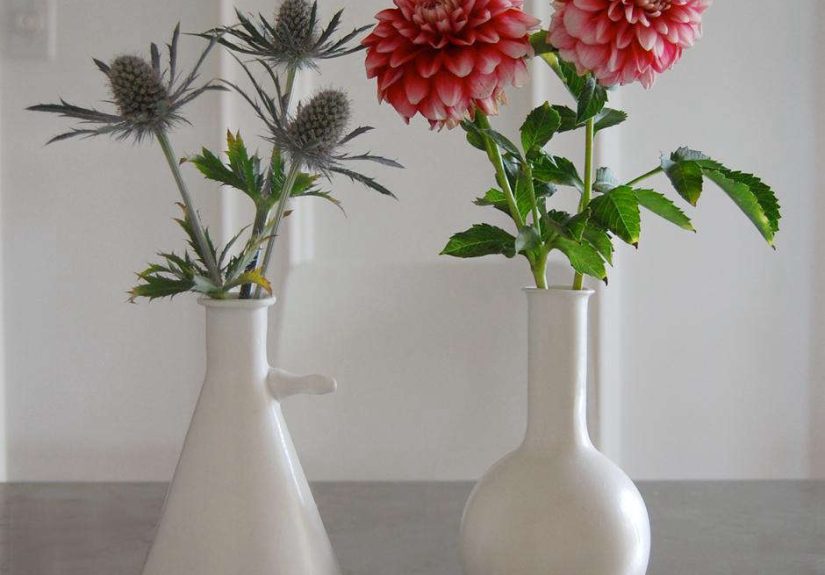
That tension is what makes the collection so effective as home accessories. The shapes feel precise, but the finish feels human. The profiles are familiar, but the context is new. A filtering flask becomes a flower vessel. A volumetric flask becomes a tiny sculpture for a windowsill. A wall-mounted test tube vase turns a blank patch of wall into a minimalist floral moment. It is functional design with a wink, which is honestly the best kind of design.
Pigeon Toe Ceramics also stands out because the brand has long leaned into that sweet spot between utility and art. The company’s work often feels practical enough for everyday use and refined enough to count as visual punctuation in a room. In other words, these pieces do not merely sit there looking pretty. They earn their keep.
The Porcelain Advantage
Porcelain is doing a lot of heavy lifting here, and it deserves a little applause. As a material, porcelain carries a reputation for delicacy, but good porcelain is also impressively durable, dense, and dimensionally stable. That means it can hold crisp edges, smooth curves, and refined forms without looking clunky. For accessories based on laboratory silhouettes, that precision is part of the whole charm.
There is also the visual contrast. Many Pigeon Toe pieces play with matte exteriors and glazed interiors, a combination that creates depth without needing ornament. The unglazed outer surface feels quiet, chalky, and modern. The glazed inner surface adds a flash of polish and color. Think of it as the ceramic version of wearing a tailored coat with a silk lining: understated on the outside, delightful on the inside.
This contrast is especially effective in small accessories because it rewards close looking. From across the room, the vessel reads as minimal. Up close, it reveals more personality through color, finish, and proportion. That is sophisticated design behavior from an object that might be holding three stems of eucalyptus and minding its own business.
Slip-Cast Precision, Handmade Soul
Another reason these porcelain lab vessels have such a strong visual identity is the production method behind them. Slip casting allows for highly controlled shapes, which makes perfect sense for objects inspired by scientific equipment. You get the clean necks, balanced shoulders, and elegant geometry that make flasks and test-tube forms so recognizable in the first place.
But Pigeon Toe’s work never feels machine-flat. The beauty is in the balance. The shapes are controlled, yet the finished objects still retain the subtle evidence of making: the soft variation in surface, the slightly lived-in character of hand-finishing, the sense that a personnot a soulless factory goblinhelped bring the piece into being.
That balance matters in modern interiors. Too much perfection can make a room feel sterile. Too much rusticity can make it feel like you are one distressed wood sign away from a design intervention. Porcelain lab vessels split the difference beautifully. They are orderly, but not rigid. Minimal, but not boring. Crafted, but not chaotic.
How to Style Porcelain Lab Vessels at Home
1. On a shelf, treat them like punctuation marks
These vessels work best when you let them breathe. On an open shelf, place one beside a stack of books, a small framed print, or a low bowl. Their narrow necks and sculptural shoulders create vertical contrast, which helps a shelf feel layered without looking overcrowded. One single stem is often enough. No need to turn the thing into a floral parade float.
2. On a desk, use them to soften the work zone
A porcelain lab vessel on a desk introduces shape and calm without adding clutter. A wall-mount test tube vase or slim vessel can hold one clipped bloom, a sprig of rosemary, or even a pencil if you want to get cheeky. The point is not volume. The point is presence. These pieces make a workspace feel edited and personal rather than purely functional.
3. In the bathroom, they look oddly perfect
Bathrooms love accessories that feel clean and architectural, and these vessels absolutely understand the assignment. Set one near the sink with a small branch, dried lavender, or nothing at all. The lab reference feels subtle in a bathroom setting, almost like a private joke between modernism and skincare.
4. In the kitchen, they shine without trying too hard
Because the original design language nods to science and utility, these accessories look right at home in kitchens. A small flask-shaped vessel on a counter or windowsill feels intentional, especially when paired with a carafe, a ceramic fruit bowl, or matte stoneware mugs. It gives the room that “someone here owns olive oil and opinions” energy.
5. Hanging versions add airiness
If you can find the hanging or wall-mounted test-tube styles, use them where you want decor without bulk. They are especially effective in small apartments, breakfast nooks, and narrow entryways. A hanging vessel gives you vertical interest while keeping surfaces clear, which is basically the design equivalent of being charming and useful at the same time.
Best Accessories to Pair With Pigeon Toe Ceramics Porcelain Lab Vessels
If you are styling around these vessels, material pairing matters. The best companions are natural, tactile, and slightly restrained. Think brass, leather, linen, walnut, smoked oak, matte paint finishes, and handwoven textiles. These materials echo the vessels’ mix of refinement and honesty without fighting for the spotlight.
Color-wise, muted tones work beautifully: bone, chalk white, soft gray, dusty blue, clay pink, moss, and faded mustard. Because many Pigeon Toe designs rely on subtle form and finish rather than busy pattern, loud competing colors can make the arrangement feel less intentional. You want harmony, not a decorating cage match.
That said, a single bold accent can be great. A cobalt bloom in a white porcelain flask? Gorgeous. A copper tray beneath a group of matte vessels? Also gorgeous. A neon faux orchid in three different containers while a leopard-print runner screams for attention? That is a conversation between you and your own bravery.
Why the Lab Aesthetic Works So Well in Modern Decor
There is a larger design lesson here: people love objects that borrow from functional worlds and give them emotional warmth. Industrial lights became beloved at home. Apothecary jars became bathroom staples. Utility carts rolled out of workplaces and into kitchens. Lab-inspired vessels belong in that same story.
Scientific forms are appealing because they are inherently purposeful. Their shapes are not random. A volumetric flask narrows at the neck for a reason. A filtering flask has a silhouette that feels engineered rather than decorative. When those forms are reimagined in porcelain, they retain that sense of logic while shedding the clinical edge. What remains is beautifully useful geometry.
That is why these accessories continue to feel fresh. They do not chase trend cycles. They are rooted in function, elevated by craftsmanship, and softened by thoughtful styling. Trendy objects often age like milk left in a parked car. Smart, well-made vessels tend to age like your favorite leather chair: slowly, gracefully, and with increasing character.
Shopping Tips: What to Look For
If you are hunting for vintage or older Pigeon Toe Ceramics porcelain lab vessels, start with shape and finish. Look for the signature lab-inspired outlines, the unglazed porcelain exterior, and the glazed interior detail. Pieces with original hanging straps or wall-mount features can be especially appealing if you want a more collectible accessory.
Condition matters, of course. Check for chips around the rim, hairline cracks, glaze crazing, or repairs. Because porcelain can look deceptively pristine in photos, good close-ups are your friend. If buying secondhand, ask for measurements too. The smaller vessels can seem larger in styled photos because flowers are basically tiny liars.
Also think about how you will actually use the piece. Do you want a sculptural object for a shelf? A functional bud vase? A hanging accent for a small wall? The best ceramic accessories are the ones that fit naturally into your home rather than becoming a noble but slightly confusing purchase you move from room to room for six months.
Experience: What It’s Like to Live With Porcelain Lab Vessels
Living with porcelain lab vessels is a quieter experience than buying them might suggest. They are not dramatic in the way a giant abstract lamp or a wildly patterned rug is dramatic. They do not enter the room with jazz hands. Instead, they change the atmosphere a little at a time. You notice the curve of the shoulder when morning light hits it. You notice how the matte surface makes a single stem look more intentional. You notice that even empty, the vessel still feels complete. That is the sneaky brilliance of a well-designed accessory: it earns your attention without demanding it.
There is also something unusually satisfying about using an object that references science but behaves like poetry. A flask shape suggests accuracy, control, and systems. Then you tuck in one lopsided garden clipping, and suddenly the whole thing feels tender and human. That contrast keeps the piece interesting. It is polished, but not precious. Orderly, but never uptight. It gives your home a sense of intelligence without turning your shelf into a museum label.
In day-to-day life, these vessels are especially good at making small rituals feel more considered. Snipping one stem from the yard, filling a vessel with water, and placing it beside the bed becomes a tiny design habit instead of a random act of flower relocation. Setting one near the sink with eucalyptus makes the bathroom feel styled without looking staged. Even moving a vessel from a bookshelf to a dining table can subtly shift the mood of a room. They are small objects, but they carry a lot of atmosphere.
Another part of the experience is tactile. Porcelain has that cool, smooth, almost chalky feel that immediately signals care and craftsmanship. The matte exterior invites your hand. The glazed interior catches light in a different way. You end up appreciating the vessel not just as decor, but as an object-objectsomething made with material intelligence. In a world stuffed with disposable accessories that feel engineered for six weeks of social media attention, that kind of physical integrity is refreshing.
These pieces also age well emotionally. Some decor burns bright and fast. You love it on day one, tolerate it on day sixty, and quietly relocate it to a closet by Thanksgiving. Porcelain lab vessels tend to do the opposite. The more you live with them, the more they settle into the rhythm of your home. They become part of your visual memory: the white flask on the kitchen shelf, the tiny hanging vase by the window, the vessel that looks best with one branch of rosemary in winter and one cosmos stem in summer. Their usefulness changes with the seasons, but their identity stays stable.
Perhaps that is the best argument for them as accessories. They are flexible without being vague, artistic without being impractical, and distinctive without hijacking the whole room. They support the larger story of a home instead of trying to become the only chapter worth reading. And honestly, that is rare. Plenty of accessories look good in a product photo. Fewer continue to feel smart, calm, and relevant once you have lived beside them for months. Porcelain lab vessels do. They bring a little structure, a little softness, and just enough personality to make everyday spaces feel more composed. No beakers of mystery liquid required.
Conclusion
Pigeon Toe Ceramics porcelain lab vessels prove that the best accessories often come from unexpected references. By translating vintage laboratory forms into handmade porcelain, they turn scientific silhouettes into decor that feels elegant, useful, and quietly original. The appeal is not just in the flask-like shapes or the matte-and-gloss contrast. It is in the balance of precision and warmth, utility and beauty, restraint and personality.
Whether you style one on a shelf, hang one in a narrow corner, or use a small vessel to hold a single branch on your kitchen counter, these pieces bring a refined calm that many trend-driven accessories cannot match. They feel intelligent without being stiff, artistic without being impractical, and modern without feeling temporary. That is a strong résumé for any accessory, and a very strong one for a ceramic vessel that started life inspired by the lab.