Table of Contents >> Show >> Hide
- What ADHD actually is (and what it isn’t)
- The ADHD brain in one sentence: regulation beats willpower
- Meet the brain regions involved in ADHD
- Brain chemistry: dopamine and norepinephrine (the focus-and-go duo)
- Executive function: the “air traffic control” problem
- Attention isn’t missingit’s misallocated (hello, hyperfocus)
- Can brain scans diagnose ADHD?
- Why ADHD meds can help (and why “stimulant” doesn’t mean “bouncing off the walls”)
- Therapy and skills: changing the brain’s “environment” can change outcomes
- Common myths that deserve to retire
- When to seek help
- Conclusion: understanding the brain changes the story
- Experiences: what living with an ADHD brain can feel like
Disclaimer: This article is for education, not diagnosis or medical advice. If you think you or your child may have ADHD, talk with a qualified clinician.
If your brain had a customer support line, ADHD would be the reason you’re calling at 2:13 a.m. asking,
“Hi, yeswhy does my attention have a mind of its own, and can I return it for store credit?”
The short version: ADHD isn’t a character flaw, a motivation shortage, or a “just try harder” situation.
It’s a neurodevelopmental condition that changes how the brain regulates attention, impulses, activity level,
emotions, and motivation.
Let’s take a friendly (not scary) tour of what researchers and clinicians mean when they say “the ADHD brain”
what’s different, what’s not different, and why this matters for real life at school, work, and home.
Expect science, practical examples, and the occasional jokebecause if your brain is already juggling flaming torches,
the least we can do is provide a safety net made of humor.
What ADHD actually is (and what it isn’t)
ADHD (attention-deficit/hyperactivity disorder) is typically described through three clusters of symptoms:
inattention, hyperactivity, and impulsivity.
People may show mostly inattentive symptoms, mostly hyperactive-impulsive symptoms, or a combined presentation.
The key point is that these symptoms are persistent, show up across settings, and interfere with daily functioning
not just “I got bored during a meeting once.”
What ADHD isn’t: laziness, low intelligence, bad parenting, or a moral failure. Many people with ADHD are bright,
creative, and hardworking. The struggle is less about knowing what to do and more about reliably
getting the brain to do it on cue.
The ADHD brain in one sentence: regulation beats willpower
A useful way to think about ADHD is that it’s a difference in self-regulation:
the brain’s ability to aim attention, inhibit impulses, manage emotions, track time, and persist through tasks
that are boring, slow, or unrewarding. In other words, the issue often isn’t “attention” as a single resource
it’s attention control.
That’s why someone with ADHD can feel painfully unable to start a simple chore… and then accidentally
hyperfocus for three hours reorganizing a drawer like it’s a museum exhibit. The brain is not underpowered;
it’s more like a high-performance engine with a touchy steering wheel.
Meet the brain regions involved in ADHD
There’s no single “ADHD spot” in the brain. ADHD is associated with differences across networksgroups of brain
regions that communicate to manage focus, planning, reward, movement, and emotion. Think of it as a team sport:
if the passing isn’t smooth, performance looks inconsistent even if the players are talented.
The prefrontal cortex: your brain’s CEO (and sometimes an exhausted intern)
The prefrontal cortex (PFC)located behind your foreheadis heavily involved in executive functions:
planning, organizing, prioritizing, holding information in mind, resisting distractions, and choosing actions
based on goals instead of impulses. Research often links ADHD symptoms to differences in how PFC circuits develop
and function, especially for tasks that require sustained “top-down” control (like staying focused on something
that isn’t immediately interesting).
Practical example: You sit down to answer one email. Your brain notices a notification, remembers you’re out of
dish soap, wonders what dish soap is made of, then thinks about bubbles, then remembers a childhood birthday party,
thenwaitwhat was the email again? That’s the PFC trying to keep the spotlight steady while the rest of the brain
keeps offering “helpful” suggestions.
The basal ganglia and reward pathways: motivation’s “worth it” meter
ADHD is also commonly discussed in terms of reward processing and motivation. Networks that involve
dopamine signaling help the brain tag actions as “worth doing,” especially when rewards are delayed. When that system
runs differently, it can be harder to persist through tasks with low immediate payoff (paperwork, studying,
cleaning the fridgeaka society’s least glamorous side quests).
This helps explain why deadlines can feel like magic spells. When the due date approaches, urgency increases the
brain’s interest and arousal. It’s not that the person “suddenly decided to care.” It’s that the brain finally got
a strong enough signal that the task matters right now.
The cerebellum: not just for balance
The cerebellum is famous for coordinating movement, but it also plays roles in timing,
prediction, and some cognitive processes. Many ADHD discussions include cerebellar involvement as part of broader
fronto-striatal-cerebellar circuitsnetworks that support attention, inhibition, and smooth, coordinated behavior.
The amygdala and emotion systems: the volume knob
ADHD isn’t only about focus. Many people experience emotional dysregulation: faster emotional
reactions, bigger feelings, and slower “return to baseline.” Brain systems involved in emotion and stress responses
(including connections between the PFC and the amygdala) can contribute to this.
Real-life example: A small criticism at work lands like a mic drop. Or a minor delay in traffic feels like the
universe personally insulted you. The emotion is real; the challenge is adjusting the brain’s “volume knob” quickly.
Brain chemistry: dopamine and norepinephrine (the focus-and-go duo)
Two neurotransmitters come up constantly in ADHD conversations: dopamine and
norepinephrine. They’re involved in attention, motivation, alertness, working memory, and the
brain’s ability to filter noise and stick with a goal. The point isn’t that ADHD equals “low dopamine” in a simple,
one-size-fits-all way; it’s that dopamine and norepinephrine signaling is closely tied to the circuits that
regulate attention and behavior.
A helpful metaphor: dopamine is like the brain’s “this is worth it” sticker, and norepinephrine is like the
“stay awake and engaged” setting. When those signals aren’t tuned optimally in key circuits, attention may drift,
impulses may jump the line, and motivation may show up late like a rideshare that took the scenic route.
Executive function: the “air traffic control” problem
Executive functions are the skills that help you manage yourself in time. A well-known analogy describes them as
an air traffic control systemcoordinating multiple streams of information, prioritizing what
matters, and preventing collisions (like “I meant to pay the bill” crashing into “I forgot bills exist”).
Common executive function challenges in ADHD include:
- Working memory: holding information in mind long enough to use it (steps, instructions, plans).
- Inhibitory control: pausing before acting or speaking; resisting distractions.
- Cognitive flexibility: switching tasks, adapting when plans change, recovering from setbacks.
- Planning and time management: estimating time, sequencing steps, starting early enough.
- Self-monitoring: noticing you’ve drifted off-task and gently steering back.
If you’ve ever watched someone with ADHD create a brilliant plan… and then fail to start it because the first step
felt weirdly impossible, you’ve seen the difference between intention and execution.
ADHD often disrupts the execution side.
Attention isn’t missingit’s misallocated (hello, hyperfocus)
“Attention deficit” is a slightly misleading phrase. Many people with ADHD can focus intenselysometimes
too intenselyon tasks that are novel, urgent, highly interesting, or emotionally engaging.
That’s hyperfocus: a state where shifting attention away feels like trying to stop a train with a sticky note.
Meanwhile, tasks that are routine, slow, or delayed-reward can feel like pushing a shopping cart with one wobbly
wheel. The energy it takes to keep attention steady can be massive, and the effort may be invisible to others.
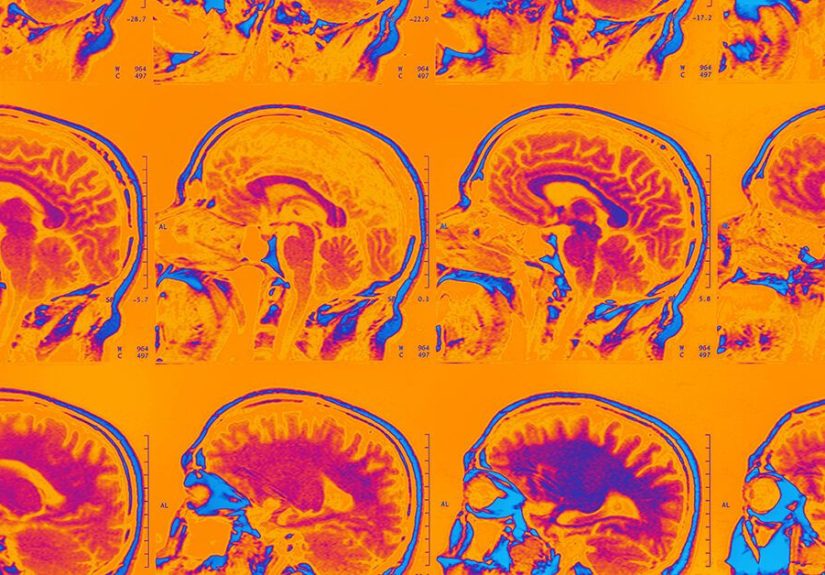
Can brain scans diagnose ADHD?
Not in routine clinical practice. Brain imaging is valuable for research and helps us understand patterns across
groups, but ADHD diagnosis is still based on a careful clinical evaluation: history, symptom patterns, impairment
in daily life, and (often) reports from multiple settings. If someone tries to sell you a “one-scan ADHD test,”
treat it like a late-night infomercial: impressive graphics, questionable usefulness.
Why ADHD meds can help (and why “stimulant” doesn’t mean “bouncing off the walls”)
ADHD medications don’t “cure” ADHD, but they can significantly reduce symptoms for many people.
Broadly, medications aim to improve communication in the circuits that regulate attention and behavioroften by
affecting dopamine and norepinephrine signaling.
Stimulants
Stimulants (like methylphenidate- and amphetamine-based medications) are commonly used and have a long research
history. Despite the name, they don’t simply “amp you up.” For many people with ADHD, stimulants can improve
focus, reduce impulsivity, and calm the feeling of internal chaosmore like putting glasses on the brain than
flooring the gas pedal.
Non-stimulants
Non-stimulant options (such as certain norepinephrine-focused medications) may be helpful when stimulants aren’t
tolerated, aren’t effective, or aren’t preferred. Some people do best with medication plus behavioral strategies,
coaching, and environmental supports.
Important: medication decisions should be individualized and made with a licensed prescriber, especially because
side effects, medical history, and co-occurring conditions matter.
Therapy and skills: changing the brain’s “environment” can change outcomes
ADHD management isn’t just about neurochemistry; it’s also about designing life so your brain can win more often.
Many effective strategies work by externalizing executive functionmoving the burden from the mind
into tools, routines, and supports.
Evidence-informed supports that often help
- Cognitive behavioral therapy (CBT): especially helpful for adults with ADHD, anxiety, or depression.
- ADHD coaching: practical systems for planning, prioritizing, and follow-through.
- Parent training and school supports: for kids, consistent routines and accommodations can be game-changing.
- Sleep: poor sleep can mimic or worsen ADHD symptoms; protecting sleep is a performance upgrade.
- Exercise: movement supports attention and mood; think of it as “updating your brain’s operating system.”
- Mindfulness skills: not to “fix” ADHD, but to improve noticing and redirecting attention.
- Nutrition basics: regular meals and protein/fiber can stabilize energy and attention swings for many people.
The goal isn’t perfection. It’s reducing frictionso the right action is easier than the wrong one.
(Yes, this includes putting your keys in the same place every day, even if your brain claims that’s “too boring to be legal.”)
Common myths that deserve to retire
Myth: “ADHD is just a childhood phase.”
ADHD often continues into adulthood, though symptoms can change in how they show up. Hyperactivity may look more
like restlessness, racing thoughts, or “I can’t relax even on vacation” energy.
Myth: “If you can focus on video games, you can focus on anything.”
ADHD tends to involve interest- and reward-based attention. High-stimulation activities provide immediate feedback
and noveltyexactly what the brain’s focus system loves. That doesn’t automatically transfer to long, low-reward tasks.
Myth: “ADHD is a willpower problem.”
Willpower is helpful, but it’s not a replacement for brain regulation. ADHD is about how the brain manages
attention, impulse control, and executive functionnot about how much a person cares.
When to seek help
Consider a professional evaluation if symptoms:
(1) started in childhood (even if they were missed),
(2) appear in more than one setting,
(3) cause impairment (school, work, relationships, safety), and
(4) aren’t better explained by something else (sleep disorders, anxiety, depression, trauma, substance use, thyroid issues, etc.).
A good evaluation looks at the full picture: strengths, challenges, co-occurring conditions, and what supports are
already working. The best outcomes usually come from a plan that matches the personnot a one-size-fits-all protocol.
Conclusion: understanding the brain changes the story
ADHD is not a lack of intelligence or effort. It’s a difference in brain development and regulation that affects
executive function, reward processing, attention control, and emotional management. When you understand that,
the goal shifts from “Why can’t you just do it?” to “What does your brain need to do it reliably?”
The most hopeful part: ADHD is highly manageable. With the right combination of education, tools, supports,
and (for some people) medication, the ADHD brain can be not only functionalbut genuinely powerful.
It’s often the same brain that struggles with boredom that also excels at creativity, pattern recognition,
humor, curiosity, and big-picture thinking. That’s not a consolation prize. That’s a different operating style.
Experiences: what living with an ADHD brain can feel like
The science matters, but experiences make it real. Below are composite snapshots based on common
reports from people with ADHD (not any one individual). If you recognize yourself in these, you’re in extremely
good companyand no, you’re not “broken.” Your brain is just playing the game on a harder difficulty setting.
1) “I’m staring at the task… and my body won’t start it.”
This is the classic “ADHD paralysis” moment. The task might be smallreply to a message, start a worksheet, fold
laundrybut initiation feels like trying to lift a couch with one finger. People often describe it as
invisible resistance: you want to do it, you intend to do it, and yet you’re stuck.
What helps: shrinking the first step until it’s almost silly (open the laptop, title the document, fold one shirt),
adding a timer (“just 5 minutes”), or pairing the start with something stimulating (music, body doubling, a coffee,
a “before I scroll” rule). Initiation often needs an external spark.
2) “Time is either ‘now’ or ‘not now.’”
Many people with ADHD describe time as slippery. A deadline two weeks away can feel like it’s basically in another
galaxyuntil suddenly it’s tomorrow and your nervous system lights up like a Christmas tree.
This isn’t immaturity; it’s a real challenge with time perception and planning.
What helps: putting time outside your headvisible calendars, alarms that mean something, reminders with context
(“leave in 15 minutes to beat traffic”), and breaking projects into mini-deadlines. Also: build in “transition time.”
If you think it takes 10 minutes, it takes 17. That’s not pessimism; that’s math for humans.
3) “I can’t tune out the world… but I can’t tune in either.”
Some days, everything feels equally loud: the buzzing light, the conversation across the room, your own thoughts,
the feeling of your sock seam (why is it there?). When the brain struggles to filter input, focusing isn’t
just hardit’s exhausting. Other days, hyperfocus kicks in and you forget to eat because your brain is deep in a
project like it’s digging for treasure.
What helps: controlling the environment (noise-canceling headphones, fewer visual distractions), using structured
focus blocks, and planning for hyperfocus by setting “interrupt alarms” for water, food, and transitions.
Hyperfocus is a superpowerjust one that needs guardrails.
4) “My emotions arrive first class. My logic is in basic economy.”
Emotional intensity is a quiet but common part of ADHD. A small rejection can feel massive. A minor inconvenience
can spark outsized frustration. Then, later, you wonder why your reaction was so bigand you feel guilty on top of it.
That guilt spiral is not a required feature; it’s a side effect of misunderstanding yourself.
What helps: naming the emotion (“this is disappointment”), giving it a short window (“I’ll feel this for 10 minutes
and then reassess”), and building a pause habitlike stepping away, breathing, or using a grounding cue.
Many people also benefit from therapy skills for emotion regulation and self-compassion.
The through-line across these experiences is simple: ADHD is not a lack of caring. It’s a brain that responds best
to the right signalsclarity, immediacy, structure, and supportive environments. When those signals are present,
performance improves. When they’re absent, the struggle is real, even for someone who’s smart and trying hard.
Understanding that can replace shame with strategyand that’s where change starts.