Table of Contents >> Show >> Hide
- What France Is Sending (and Why It Matters)
- How Ukraine Can Use Mirage Jets: The Real Mission Menu
- The Hidden Heavy Lift: Training, Maintenance, and “Everything That Isn’t the Jet”
- How France’s Mirage Move Fits the Bigger Ukraine Airpower Picture
- The Geopolitical Signal: France’s Role and Europe’s Message
- What to Watch Next
- Conclusion
- Experiences Related to “France Is Sending Sophisticated Fighter Jets to Ukraine” (Extended)
If you’ve ever watched someone try to upgrade their phone mid–video call, you already understand the vibe of modern air warfare: you don’t just need shiny hardwareyou need the chargers, the updates, the compatible apps, and a friend who knows why it’s not working. That’s basically what’s happening as France sends fighter jets to Ukraine: a serious capability boost, paired with a serious “now let’s make it all work together” engineering marathon.
The headline sounds simpleFrance is sending sophisticated fighter jetsbut the real story is bigger than a delivery flight. It’s about training pipelines, weapons integration, maintenance ecosystems, and a strategic bet that a smaller number of capable Western aircraft can punch above their weight in air defense and precision strike. And yes: it’s also about France stepping deeper into a leadership role in Europe’s support for Ukraine.
What France Is Sending (and Why It Matters)
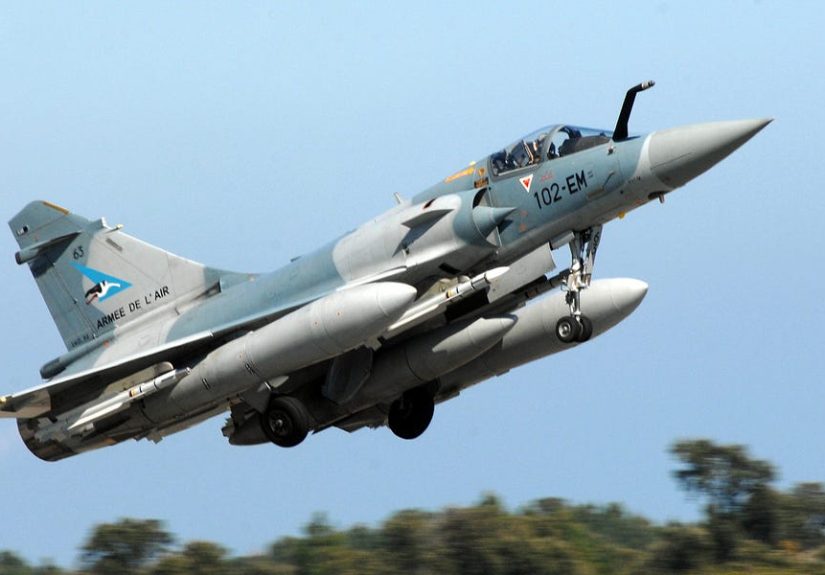
France’s contribution centers on the Dassault Mirage 2000 familyspecifically the Mirage 2000-5 variant associated with air-to-air performance and modernized avionics compared with earlier Mirage models. While the Mirage 2000 design dates back to the Cold War era, “older” does not mean “irrelevant.” In a war where cruise missiles, drones, and fast-moving aircraft are constant threats, a well-supported fighter with the right missiles, radar, and electronic countermeasures can still be a very sharp tool.
France publicly committed to providing Mirage 2000-5 jets and training Ukrainian pilots in 2024, and by early 2025 French officials announced that the first Mirages had arrived in Ukraine with Ukrainian pilots who had completed training in France. Reporting around the program has consistently emphasized two things: the exact numbers are limited and the “support package” matters as much as the jets themselves. A fighter that can’t be maintained, armed, and turned around quickly becomes an expensive lawn ornament (aerodynamic, but still an ornament).
“Sophisticated” Doesn’t Always Mean “Newest”
When people hear “sophisticated fighter jet,” they picture a brand-new stealth aircraft rolling out of a hangar with dramatic lighting and a soundtrack. In reality, sophistication often means the ability to integrate: modern sensors, encrypted communications, precision-guided weapons, and electronic warfare upgrades that help an aircraft survive and contribute in a contested environment.
France’s Mirages are widely described as being adapted for Ukrainian needsnotably with attention to strike missions and compatibility with certain Western munitions. In several U.S.-based defense and national security outlets, analysts have highlighted the practical benefit of giving Ukraine an additional Western aircraft type that can complement F-16s and legacy Soviet platforms, rather than replacing them overnight.
How Ukraine Can Use Mirage Jets: The Real Mission Menu
Ukraine’s air force has a brutally pragmatic job: defend cities and infrastructure from missile and drone attacks, support troops on the front, and strike high-value targets when opportunities appear. The Mirage 2000-5 can contribute most realistically in three areas:
- Air defense and interception against drones and cruise missiles (and select aircraft threats when conditions allow)
- Precision strike with guided munitions against logistics nodes, command posts, and hardened positions
- Flexible “gap-filling” roles that reduce pressure on Ukraine’s other aircraft fleets
1) Intercepting Drones and Missiles: The Unsexy, Essential Work
Air defense is often portrayed as ground-based systems onlyPatriot, NASAMS, IRIS-T, SAMP/Tyet fighters can be a crucial extra layer, especially when an enemy launches large mixed salvos. Intercepting drones and cruise missiles isn’t glamorous, but it’s the difference between “lights stayed on” and “welcome back to 19th-century candle technology.”
Reports in U.S. media have described Ukrainian Mirage operations as being focused heavily on this defensive mission set. That aligns with what the Mirage is good at when supported correctly: fast reaction, radar-guided engagements, and a weapons loadout optimized for aerial threats.
2) Precision Strike: A Jet Is Only as Useful as Its Ordnance
Here’s the reality: the jet is the delivery truck. The real “capability” is the combined systemaircraft + targeting + planning + munitions. Multiple reports in U.S.-based outlets have discussed the Mirage’s potential compatibility with French and European weapons such as AASM “Hammer” guided bombs and the SCALP-EG long-range cruise missile family (where integration is reported and/or assessed). If those integrations are sustained and resupplied, the Mirage becomes more than an interceptor; it becomes a tool for deep precision effects.
Precision strike also changes the chessboard psychologically. Even a small number of aircraft that can reliably deliver modern weapons forces an opponent to disperse logistics, harden facilities, and devote more resources to air defensesnone of which is free.
3) The “Mixed Fleet” Advantage: More Options, More Dilemmas for Russia
Ukraine is effectively building a patchwork air force in wartime: Soviet-era jets that are still flying, Western aircraft arriving in small batches, and a growing ecosystem of drones and ground-based air defense. Adding Mirages increases complexitybut it also increases options. Different aircraft types can be assigned to different tasks, reducing wear on any single fleet and complicating Russian planning.
The Hidden Heavy Lift: Training, Maintenance, and “Everything That Isn’t the Jet”
Delivering a fighter jet is the visible part. The invisible part is the real project plan: pilot conversion training, ground crew training, spare parts supply, maintenance tooling, weapons stocks, mission planning software, secure communications, and the procedures that keep pilots alive.
Pilot Training: Fast-Tracked, Not Magical
Public reporting around the program has consistently framed training as a matter of months, not yearsan accelerated conversion pipeline designed for already-experienced pilots. But “accelerated” doesn’t mean “easy.” Ukrainian pilots have to adapt to a different cockpit philosophy, different avionics, different emergency procedures, and different weapons employment. Meanwhile, ground crews learn maintenance routines that can make or break availability rates.
Several defense-focused outlets have noted the importance of training not only pilots but also maintainersbecause sortie generation is the true currency of air power. One jet that flies once a week is less useful than a smaller number of jets that can fly reliably, be repaired quickly, and be protected on the ground.
Maintenance and Survivability: Airfields Are Targets
Ukraine’s air bases are under threat. This means dispersal, mobility, camouflage, and rapid turnaround aren’t “nice to have”they’re survival skills. U.S. reporting on Ukraine’s broader Western-aircraft effort has described frequent relocations and the constant cat-and-mouse game of keeping aircraft safe from long-range strikes. That pressure applies to Mirages, too.
This is where support packages and logistics become strategic. If the supply chain for parts and munitions is resilient, aircraft can keep flying. If it’s brittle, jets can be grounded by something as small as a component that costs less than a fancy dinner in Paris (which is saying something).
How France’s Mirage Move Fits the Bigger Ukraine Airpower Picture
France’s Mirage delivery is part of a wider pattern: Ukraine receiving small-to-moderate batches of Western systems that each add a slice of capability. The F-16 effort, for example, is a multinational pipeline involving training, sustainment, and phased deliveries. Mirages add another lane to that highway.
France has also signaled long-term defense cooperation with Ukraine beyond Mirages. U.S. coverage has highlighted discussions of expanded cooperation and even long-horizon plans involving more advanced systems. These long-range plans face obvious constraintscost, production capacity, and wartime risk but they matter strategically because they communicate that Ukraine’s military modernization is being planned in years, not weeks.
Does “A Few Jets” Really Change Anything?
It’s fair to ask. A handful of fighters won’t single-handedly “close the sky.” Air superiority is a massive undertaking requiring scale, infrastructure, and suppression of enemy air defenses. However, small numbers can still matter when they are:
- Used for high-leverage missions (intercepting high-value missiles, defending critical infrastructure)
- Paired with the right weapons and dependable resupply
- Integrated into layered air defense with ground-based systems
- Kept survivable through dispersal, deception, and rapid maintenance
In other words: a few jets can’t do everything, but they can do something extremely importantespecially if they help reduce the success rate of massed aerial attacks and add a credible precision-strike option.
The Geopolitical Signal: France’s Role and Europe’s Message
France’s Mirage decision is not just tactical; it’s political. It signals a willingness to provide higher-end capabilities and invest in the ecosystem needed to operate them. Multiple U.S. and transatlantic policy outlets have framed the Mirage move as part of France positioning itself as a key European actor in Ukraine’s security, including through training and defense-industrial cooperation.
There’s also a coalition logic at play. When one major European country commits a specific aircraft type, it can encourage other operators of similar platforms to consider contributions, parts support, or munitions cooperation. That doesn’t guarantee additional transfersbut it helps build a pathway.
What to Watch Next
If you’re tracking this story (for professional reasons, or because you enjoy high-stakes logistics dramas), the next chapters likely hinge on:
1) Delivery Pace and Sustainment
Not just “how many jets,” but how many are available at any time. Availability rates are the real scoreboard.
2) Weapons Stocks and Integration
The Mirage’s impact scales with munitions. Precision-guided weapons and air-to-air missiles require production, funding, and steady transfer pipelines.
3) Operational Adaptation
Ukraine has repeatedly shown it can adapt systems quickly under fire. How the Mirages are taskedintercepts, strike missions, or bothwill shape their perceived value.
4) Russia’s Countermoves
Expect attempts to target airfields, disrupt logistics, and learn patterns. In wartime, any new capability triggers a response cycle.
Conclusion
France sending Mirage fighter jets to Ukraine is not a Hollywood “game-changer” button. It’s something more realisticand arguably more impressive: a complex, sustained effort to expand Ukraine’s air capabilities while under constant attack. The jets themselves matter, but the surrounding ecosystem matters more: trained pilots, trained maintainers, spare parts, protected basing, integrated command-and-control, and a steady supply of munitions.
In the short term, Mirages can help Ukraine defend its skies and strike selectively. In the long term, they represent another step toward a modernized, Western-compatible air forceone built in the least convenient environment imaginable, where “installation instructions” are replaced by air raid sirens.
Experiences Related to “France Is Sending Sophisticated Fighter Jets to Ukraine” (Extended)
The most revealing “experiences” around fighter jet transfers often happen far away from the runwayinside classrooms, maintenance hangars, and planning rooms where people learn (quickly) that a jet is not a single object but a living system.
For Ukrainian pilots, the transition to a Mirage can feel like switching from a familiar car to a different model in a different languagewhile still needing to drive at racing speed in bad weather. The fundamentals of flight don’t change, but everything about “how you do the job” does: button logic, sensor interpretation, radar modes, and weapon employment cues. Training compresses what is normally a long adaptation into months, and that pace can be mentally exhausting. Pilots describe learning in a way that’s part muscle memory, part math problem, part trust exercisetrust in the aircraft, trust in the system, and trust that the people maintaining it will have it ready again tomorrow.
For maintainers and ground crews, the Mirage story is even more physical. Their experience is defined by checklists, tight timelines, and the constant pressure of “no mistakes.” Western jets come with different maintenance philosophies, tooling requirements, and parts chains. Crews often talk about how the first weeks feel slow because everything is newthen suddenly the pace accelerates as competence builds. Under wartime conditions, there’s also a layer of urgency: aircraft may need to be moved, hidden, fueled, armed, and launched on short notice. A crew’s pride is simple and intense: if the jet takes off on time and comes back safely, the team did its job.
For air defense planners, adding Mirages changes the daily puzzle. A layered defense is like a band: ground-based systems are the rhythm section, drones are the weird experimental instruments, and fighters are the lead guitar that shows up exactly when the song is about to fall apart. Fighters can be vectored toward the most dangerous threats, fill gaps, and provide flexible coverage when ground systems are saturated. But planners have to coordinate identification procedures, avoid fratricide risks, and manage limited flight hours. The experience is not “push button, get protection”it’s continuous, high-consequence scheduling.
For civilians, the Mirage experience can be quieter but deeply felt. When interception rates improveeven slightlythere are fewer successful strikes, fewer blackouts, fewer nights spent listening for the next impact. People may not know which system stopped which threat, but they know the difference between a normal morning and one spent cleaning shattered glass. In that sense, fighter jet transfers aren’t abstract hardware stories; they’re part of the lived reality of whether daily life is interrupted by disaster or merely haunted by possibility.
For French defense and training teams, the experience is a blend of pride and practicality. Training a partner force during an ongoing war is not a standard peacetime task. Instructors must focus on what matters now: mission readiness, survivability, and procedures that work under stress. There’s also an industrial and logistical dimensionensuring the right parts, right support, and right upgrade pathways exist for aircraft operating in an environment where supply lines are contested and airfields are threatened. The mood is often described as serious and mission-driven: the goal isn’t to create “perfect” pilots; it’s to create capable pilots who can fight and survive.
Finally, there’s an analyst and observer experiencethe people tracking open-source imagery, official statements, and operational hints to understand what the Mirages are actually doing. Their world is spreadsheets, satellite photos, and careful language parsing. It’s a reminder that in modern conflict, information itself is contested: details are withheld for security, claims are made for morale, and the truth is often visible only in fragments. The best observers learn humility: the most important missions may never be publicly confirmed, and the most meaningful impact may show up indirectlyas fewer successful strikes, fewer emergency repairs, and a defense system that bends but doesn’t break.