Table of Contents >> Show >> Hide
- What Are Air Plants, Really?
- Why No Soil Works
- Air Plant Care Basics
- How to Water Air Plants Without Overthinking It
- Common Air Plant Problems and How to Fix Them
- Blooming, Pups, and Propagation
- Best Air Plants for Beginners
- Design Guide: How to Style Air Plants Indoors
- Where Air Plants Work Best in the Home
- Mistakes to Avoid
- Extra Experience: What Living With Air Plants Actually Feels Like
- Conclusion
Air plants are the rebels of the houseplant world. They skip the potting mix, ignore the terracotta pot aisle, and somehow still manage to look like tiny green sculptures from another planet. If that sounds suspicious, fair. Most plants throw a fit if you forget their soil. Air plants do not. But they are not magic, and they are definitely not powered by vibes alone.
This guide breaks down exactly how air plants work, how to keep them alive indoors, and how to style them so they look intentional instead of like a botanical afterthought sitting in a random seashell. Whether you just bought your first Tillandsia or already have a small floating jungle, here is the full care and design guide you actually need.
What Are Air Plants, Really?
Air plants are members of the Tillandsia genus, part of the bromeliad family. In nature, they often grow attached to tree branches, rocks, fences, and other supports. That does not make them parasites. They use those surfaces for anchoring, not stealing nutrients like a freeloading cousin at Thanksgiving.
What makes them special is that they absorb most of their moisture and nutrients through tiny structures on their leaves called trichomes. Their roots are mainly for grip, not for feeding. That is why air plants require no soil and why soggy, enclosed setups often cause more problems than they solve.
There are hundreds of species, and they vary wildly in size, color, and texture. Some are soft green and thirsty. Others are silver, fuzzy, and more drought tolerant. That difference matters when you build your air plant care routine.
Why No Soil Works
The phrase “no-soil plant” sounds like a scam invented by a very optimistic gift shop, but it is real. In the wild, many air plants live in humid forests or warm, breezy environments where rainfall, humidity, and moving air provide what they need. Indoors, your job is to copy those conditions without turning your living room into a cloud forest.
That means four essentials matter more than any decorative display:
- Bright, indirect light
- Regular watering
- Good airflow
- Warm temperatures with some humidity
Miss one or two of those and your “easy-care air plant” can go from stylish to crispy faster than you can say, “But I thought it lived on air.”
Air Plant Care Basics
Light: Bright, Indirect, and Not Brutal
Air plants do best in bright, indirect light. Think east-facing windows, bright rooms with filtered light, or a spot a little back from a sunny south or west window. Direct, intense afternoon sun can bleach or burn them, especially the greener, softer-leaved types. A dim shelf in the back of a room may look moody and elegant, but your plant will call it a slow-motion tragedy.
As a rule, silver or fuzzy air plants tend to tolerate brighter, drier conditions better, while greener air plants usually need slightly softer light and more moisture. If your plant looks pale, scorched, or oddly tan, the light may be too harsh. If it looks dull and barely grows, it may need more light.
Water: Yes, They Still Need It
The biggest myth about air plants is that they need almost no water. They do not need soil, but they absolutely need hydration. Indoors, most air plants do best with a soak about once a week, though the exact timing depends on species, light, temperature, humidity, and airflow.
A solid general routine looks like this:
- Soak the plant in room-temperature water for 20 to 30 minutes. Some growers stretch that to 30 to 60 minutes for thirstier plants.
- Shake off the extra water gently.
- Set the plant upside down on a towel so water drains from the center.
- Let it dry fully before returning it to its display.
The upside-down drying step is not optional. If water sits trapped in the center for too long, rot can set in. That is the number-one way many air plants meet their melodramatic end.
Humidity and Temperature
Air plants like warm conditions. A comfortable household range usually works well, especially around 65 to 85 degrees Fahrenheit during the day. They do not enjoy cold snaps, and many struggle once temperatures dip below 45 to 50 degrees Fahrenheit.
Humidity helps, too. Bathrooms with bright light can be excellent spots. Dry winter air, heating vents, and overly arid rooms can make plants dry out faster, which means you may need extra misting between soakings or slightly more frequent watering.
Fertilizer: Helpful, Not Heroic
Air plants can live without fertilizer, but they often grow better and bloom more reliably with light feeding. Use a bromeliad or air plant fertilizer, or a balanced fertilizer diluted to quarter strength. Once or twice a month during active growth is plenty. Overfeeding is not a power move. It is a fast track to leaf damage.
Air Circulation: The Secret Ingredient
If air plants had a dating profile, “likes long walks in a breezy environment” would be near the top. Good air circulation helps them dry after watering and reduces the chance of rot. This is why open displays, mounted pieces, and airy holders are usually safer than tightly enclosed glass containers.
Can you place air plants in terrariums? Yes, but open or ventilated terrariums are smarter than closed ones. Pretty matters. Breathing matters more.
How to Water Air Plants Without Overthinking It
If you want one practical system for most homes, use this:
- Normal indoor conditions: soak once a week
- Very dry home or winter heating: soak weekly and mist lightly between soakings
- Extra fuzzy or silver xeric species: shorter soaks or dunking may work better
- Mounted plants that are hard to remove: rinse thoroughly or mist more often, but make sure they dry fast
The best water is usually rainwater if you have it. Tap water can work, especially if left out overnight so chlorine can dissipate. Softened water is a poor choice, and distilled water is not ideal for routine use because it lacks the minerals these plants naturally encounter.
Watch the leaves for clues. Curled edges, dry tips, and a limp feel usually mean the plant wants more water. Mushy bases, black spots, or leaves falling apart usually mean too much trapped moisture.
Common Air Plant Problems and How to Fix Them
Brown Tips
Usually caused by dehydration, dry air, or mineral-heavy water. Increase watering slightly, improve humidity, and switch water sources if needed.
Mushy Base or Dark Center
This points to rot. Water sat too long in the crown, the plant stayed wet too long, or airflow was poor. Remove damaged tissue if possible, dry the plant thoroughly, and rethink the setup.
Bleached or Washed-Out Color
Too much direct sun is often the culprit. Move the plant to bright but filtered light.
No Growth
Usually not enough light, not enough watering, or winter slowdown. Air plants are not speed demons, but they should still look alive rather than emotionally exhausted.
Pests
Air plants can occasionally get mealybugs or scale. Isolate the plant, clean the pests gently, and avoid oil-heavy treatments that block the leaves from absorbing moisture properly.
Blooming, Pups, and Propagation
One of the coolest things about air plants is their bloom cycle. Most bloom only once in their lifetime, often producing colorful bracts and flowers in shades of pink, purple, blue, or red. After blooming, the parent plant gradually produces offsets called pups.
Do not panic when you hear “blooms once.” That does not mean the show is over. It means the parent shifts into legacy mode. Most growers wait until a pup is about one-third to one-half the size of the mother plant before separating it. You can also leave pups attached and let the plant form a clump, which often looks even better in displays.
For beginners, leaving the pups in place is usually easier. Nature knows what it is doing. We are the ones hot-gluing plants to driftwood.
Best Air Plants for Beginners
- Tillandsia ionantha: small, colorful, and one of the easiest starter plants
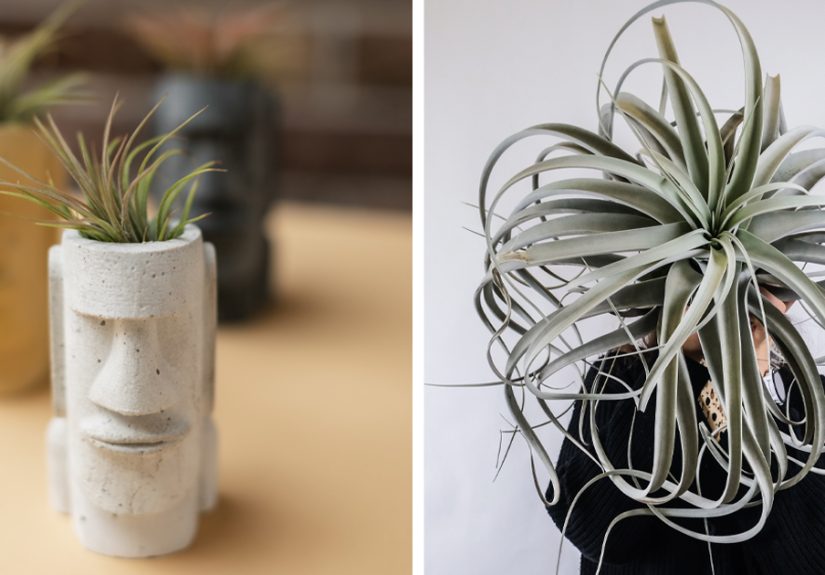
- Tillandsia xerographica: sculptural, dramatic, and highly collectible
- Tillandsia aeranthos: reliable, attractive, and often blooms nicely
- Tillandsia bulbosa: curly, quirky, and great for artistic displays
- Tillandsia tectorum: fuzzy and drought-tolerant, though it likes a different watering rhythm than many common types
If you are just starting out, buy a few different varieties and pay attention to how each reacts in your home. Air plant care is partly science and partly learning which diva needs what.
Design Guide: How to Style Air Plants Indoors
Air plants are half houseplant, half home decor. Because they require no potting soil, they can go almost anywhere that gets decent light and dries quickly after watering.
1. Driftwood Mounts
This is the classic look. Mount one large xerographica on driftwood for a gallery-style effect, or cluster several smaller plants together for a more natural composition.
2. Glass Globes and Open Terrariums
These look clean and modern, especially in minimalist spaces. Just make sure the container is open and the plant can be removed easily for watering and drying.
3. Seashells, Stone Bowls, and Shallow Dishes
Great for coffee tables, vanities, or shelves. Air plants pair beautifully with pebbles, shells, and natural textures. They bring a coastal or spa-like vibe without asking you to install an actual waterfall in your living room.
4. Hanging Displays
Fishing line, wall hooks, and hanging holders let you use vertical space. These work especially well near bright windows where the plant gets good light and airflow.
5. Wreaths and Seasonal Decor
Air plants can be worked into wreaths, table centerpieces, and holiday arrangements. They are ideal when you want something living that looks special but does not involve dragging around a giant planter.
6. Mixed Botanical Installations
Air plants pair well with orchids, mounted ferns, and natural wood elements because many like similar bright, indirect conditions. Use contrast in color and shape: spiky forms, soft mossy textures, pale ceramics, dark wood, or matte black metal.
Where Air Plants Work Best in the Home
Try air plants in:
- Bright bathrooms with filtered light
- Kitchen windows that get morning sun
- Home offices where you want greenery without desk clutter
- Bedroom shelves near east-facing windows
- Entry tables or wall-mounted displays in bright foyers
Avoid placing them right next to heating vents, radiators, or harsh, blazing glass where they roast all afternoon like tiny decorative kebabs.
Mistakes to Avoid
- Assuming “no soil” means “no water”
- Leaving water pooled in the center after soaking
- Keeping them in dark corners because they look cute there
- Using closed terrariums with poor airflow
- Overfertilizing in hopes of miracle growth
- Ignoring species differences between greener mesic types and silver xeric types
Extra Experience: What Living With Air Plants Actually Feels Like
One reason air plants have stayed popular is that they change the whole emotional experience of keeping houseplants. Traditional houseplants often come with a routine that feels practical and a little serious: check the soil, rotate the pot, repot when rootbound, clean the saucer, apologize to the fern. Air plants feel different. They are still real plants with real needs, but they invite a more creative relationship with your space.
At first, most people buy them because they look amusingly low-commitment. A tiny plant in a shell or hanging globe feels more like decor than gardening. Then something sneaky happens. You start noticing the details. One plant turns pink before blooming. Another develops a curl that looks more dramatic every week. A silver fuzzy one stays compact and stoic, while a greener one acts like it wants spa humidity and emotional support.
They also teach observation in a very direct way. A pothos can sulk for a while before you realize something is wrong. Air plants send faster, clearer signals. Brown tips tell you the room is too dry. A tightened curl says, “Excuse me, I am thirsty.” A mushy base says, “You loved me too hard.” After a while, you stop following generic schedules and begin responding to the plant in front of you, which is honestly a useful skill for all indoor gardening.
Design-wise, air plants are fun because they solve awkward decorating problems. That narrow bathroom ledge? Good candidate. The floating shelf where a pot would feel bulky? Perfect. The bright office corner that needs a little life but not a giant planter? Air plant territory. They add texture and movement without visual heaviness, and that makes them incredibly versatile in modern interiors, small apartments, and minimal spaces.
There is also something satisfying about how air plants reward patience. They are not flashy every day, but when they bloom or produce pups, it feels surprisingly personal. You realize the strange little plant you almost forgot about has been quietly doing excellent work the whole time. Then it gives you babies as if to say, “See? I had a plan.”
Of course, the experience is not flawless. Some displays are gorgeous but annoying to water. Some plants dry out faster than expected. A glass globe may look chic until you realize you have created a tiny humidity trap with commitment issues. But those small mistakes are part of the learning curve, and air plants are forgiving enough that most growers figure them out quickly.
In the end, living with air plants feels like a mix of gardening, styling, and light detective work. You learn your home better. You understand where the morning light falls, which rooms stay humid, and where air moves well. That makes air plants more than trendy decor. They become one of the easiest ways to make a room feel alive, thoughtful, and just a little more interesting.
Conclusion
Air plants require no soil, but they do require a little strategy. Give them bright indirect light, real watering, good airflow, and a setup that lets them dry properly. Do that, and these sculptural little plants can thrive for years, bloom beautifully, and multiply through pups. Better yet, they can fit into design styles ranging from coastal and boho to minimalist and modern without demanding much square footage.
In other words, air plants are not maintenance-free. They are simply high-style, low-drama houseplants once you understand the rules. And compared with certain ferns, that is basically sainthood.