Table of Contents >> Show >> Hide
- What “Soulful” Actually Means (No Incense Required)
- Why a UK Design Company Has an Unfair Advantage (In the Nicest Possible Way)
- The Soulful Interiors Playbook: 10 Moves a UK Studio Uses
- 1) Start with three words, not a shopping cart
- 2) Layer lighting like you layer outfits
- 3) Use color to create emotion, not just “match”
- 4) Pattern, but with manners
- 5) Texture is the shortcut to “I want to stay here”
- 6) Mix old and new using the 80/20 principle
- 7) Create curated clusters (not clutter)
- 8) Bring in nature like it’s part of the architecture
- 9) Make sustainability invisible (in a good way)
- 10) Finish the “final 10%” that makes the room feel complete
- Room-by-Room Examples: How the UK Approach Looks in Real Life
- How to Work with a UK Design Company from the US
- Common Pitfalls (and How British Designers Dodge Them)
- The Takeaway: Soul Over Showroom
- Experiences: What It Feels Like to Live in a Soulful Home (The Extra )
- SEO Tags
There’s a certain kind of room that makes you exhale without realizing you were holding your breath. It doesn’t scream. It doesn’t audition for social media. It just… gets you. The pillows look like they’ve been hugged. The lighting is flattering in the way your best friend is flattering: honest, but never cruel. And the whole place feels like it has a backstoryeven if the only drama in it is a dog who refuses to sit anywhere that isn’t the expensive rug.
That feeling is what many people mean by soulful interiors: spaces that feel lived-in, warm, layered, and personal. UK design companies have become especially known for this “soul first, showroom later” approachblending heritage and humor, craft and comfort, polish and a little imperfection. Let’s break down how they do it, and how you can borrow the method for a home that feels like yours (not like you copied and pasted a catalog).
What “Soulful” Actually Means (No Incense Required)
“Soul” in design isn’t a specific style. It’s an outcome. A soulful home can be modern, traditional, eclectic, minimal-ish, or full-on maximalist. The common thread is emotional resonancerooms that feel collected, considered, and kind to the humans living in them.
Signs you’re in a soulful space
- Layered comfort: softness, texture, and places to landliterally and emotionally.
- Personal narrative: art you actually like, objects that mean something, and “why” behind the choices.
- Light with intention: not just “bright,” but flattering, flexible, and mood-aware.
- Contrast and patina: a mix of old and new, shiny and matte, refined and relaxed.
- Breathing room: personality without chaos; character without clutter panic.
Why a UK Design Company Has an Unfair Advantage (In the Nicest Possible Way)
UK studios often work in buildings with historyGeorgian terraces, Victorian flats, Edwardian homes, countryside cottageswhere “blank slate” is not an option. That forces designers to practice a kind of respectful improvisation: honoring what’s there, while making it feel current and livable.
1) They’re trained on “characterful bones”
When your starting point includes aged floorboards, quirky proportions, and charming architectural oddities, you learn to design with the building instead of fighting it. The result tends to feel groundedless “trend moment,” more “this makes sense here.”
2) They love craft (and they don’t treat it like an afterthought)
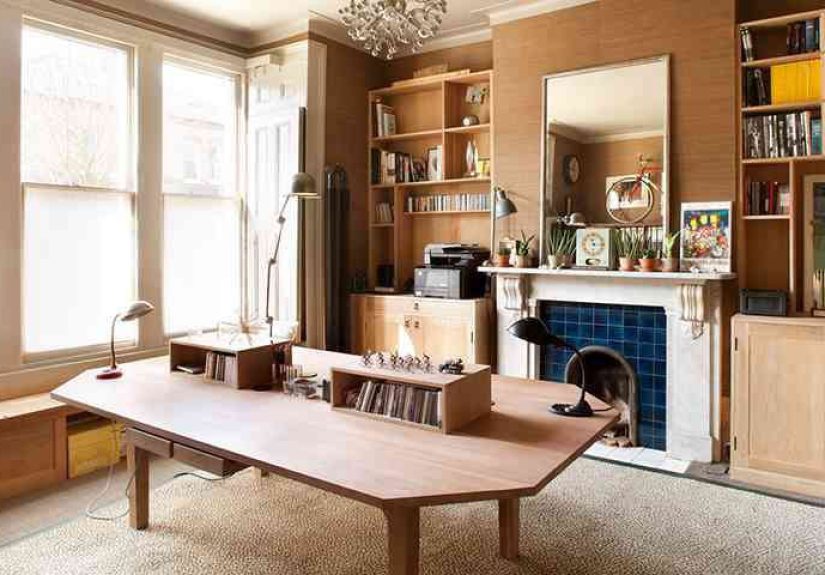
Bespoke joinery, thoughtful millwork, tailored upholsteryUK studios often lean hard into craftsmanship. Not because it’s fancy, but because it solves problems: awkward alcoves become libraries, tiny hallways become storage, and every inch earns its keep.
3) They do contrast with a wink
British design often pairs the refined with the playful: antiques next to contemporary art, a proper pendant over a slightly mischievous wallpaper, heritage palettes with modern silhouettes. It’s confident without taking itself too seriouslylike wearing a tuxedo with fun socks and pulling it off.
The Soulful Interiors Playbook: 10 Moves a UK Studio Uses
1) Start with three words, not a shopping cart
A strong UK-led concept typically begins with a simple “north star” triothree adjectives that describe the mood. Think: calm, collected, witty. Or moody, modern, romantic. This keeps decisions consistent as the project grows, and it prevents “Oops, I accidentally bought 14 different kinds of brass” syndrome.
2) Layer lighting like you layer outfits
Soulful rooms rarely rely on a single overhead fixture. Designers build a lighting “wardrobe” with multiple sources:
- Ambient: overall glow (ceiling fixtures, recessed, indirect).
- Task: focused light (reading lamps, under-cabinet, desk lights).
- Accent: drama and depth (sconces, picture lights, uplights).
Bonus: small lamps in unexpected placeslike a kitchen countersoften the room and make evenings feel instantly more human. You know, like your kitchen stopped yelling and started speaking in a reasonable indoor voice.
3) Use color to create emotion, not just “match”
Instead of treating paint as background, UK studios often use it as atmosphere. One powerful technique is color drenching: painting walls, trim, and sometimes ceilings in related shades to create an immersive mood. Done well, it makes a room feel intentional and enveloping, not “small.”
Tip: mix finishes (matte walls, satin trim) and add texture (linen, wool, wood grain) so a single-color space still has depth.
4) Pattern, but with manners
Soul doesn’t mean chaos. UK designers often “stack” patterns using a quiet strategy:
- One hero: a bold wallpaper, rug, or fabric that sets the tone.
- Two supporting patterns: smaller scale or softer contrast.
- Plenty of solids: so your eyes can rest (and so you don’t feel like you live inside a kaleidoscope).
For the brave: pattern drenching can work beautifully in small rooms like powder baths or entryways, where a big visual moment feels deliberatelike a good punchline, quick and memorable.
5) Texture is the shortcut to “I want to stay here”
When a room feels flat, it’s often a texture problem. UK studios layer tactile materialscozy textiles, natural fibers, leather with patina, stone, timber, ceramicsto create warmth even in neutral palettes. Texture is also the secret weapon for making modern spaces feel less sterile.
6) Mix old and new using the 80/20 principle
A soulful interior usually has time travel in it. Many designers recommend a simple balance: make most of the room either “classic and grounded” or “clean and contemporary,” then add a smaller dose of the opposite for character. That could mean a modern sofa with vintage side tables, or traditional paneling with contemporary art. The point is contrastnot a furniture identity crisis.
7) Create curated clusters (not clutter)
The best “lived-in” rooms are edited. Group meaningful objects in small vignettesbooks, ceramics, framed photos, found piecesthen leave space around them. This is how you get personality without mess. Think “gallery wall,” not “my junk drawer became sentient.”
8) Bring in nature like it’s part of the architecture
Biophilic design isn’t just adding a plant and naming it. UK studios often treat nature as a design material: natural textures, views framed intentionally, organic shapes, and calming “zen corners.” Some homes go bigger with plant walls or indoor garden moments, but even subtle moveswood tones, stone, botanical prints, daylight-friendly window treatmentsadd softness and ease.
9) Make sustainability invisible (in a good way)
The most sustainable choice is often what lasts. Beyond that, designers increasingly prioritize reclaimed or reworked materials, low-emission paints, energy-efficient lighting, and secondhand pieces that keep quality high and waste low. Sustainable doesn’t have to look like a lecture; it can look like a gorgeous dining table with a past life.
10) Finish the “final 10%” that makes the room feel complete
Many homes have the basics but still feel “meh.” The final layer is where soul shows up: a well-placed sconce, a darker anchor piece that adds visual weight, a soft throw that breaks up sharp lines, a small artwork that makes you smile every time you walk past it. These are the details that make a space feel designed for living, not just staged for scrolling.
Room-by-Room Examples: How the UK Approach Looks in Real Life
Living Room: Comfort with character
Start with a “foundation” sofa in a durable fabric. Add two different side tables (not matching twins), a mix of lighting (a floor lamp plus at least one table lamp), and a rug that’s large enough to hold the seating area together. Then bring in character: a vintage chair, a slightly odd-but-great artwork, and a cluster of books that suggests you have interests beyond streaming algorithms.
Kitchen: Warmth in the hardest-working room
UK studios often make kitchens feel less like workshops and more like rooms people actually want to linger in. A small lamp on the counter, warm metals, textured tile, and wood elements soften the utilitarian vibe. If you’re painting cabinets, consider a deeper color for a grounded, cozy feelespecially if your home has good natural light.
Bedroom: A retreat, not a storage unit with pillows
Go for layered bedding (texture matters more than price), bedside lighting that isn’t harsh, and one “mood move” that sets the tone: a painted ceiling, a color-drenched wall, or a subtle patterned wallpaper behind the bed. Keep a little negative spaceyour brain needs somewhere to sit down.
Bathroom: Spa energy without pretending you’re at a resort
Lighting does most of the heavy lifting here. A flattering sconce (or two) beats a single bright overhead. Add tactile materialsstone, wood accents, textured towelsand a calm palette. If you want drama, a bold wallpaper in a powder room is a classic UK-style flex: small space, big personality.
How to Work with a UK Design Company from the US
Yes, it’s totally doableand often surprisingly smooth if the process is well-structured. Many studios run international projects with a mix of remote planning and occasional site visits. What tends to matter most is clarity, documentation, and a shared visual language.
Practical tips for cross-Atlantic projects
- Align on scope early: full-service design vs. concept-only vs. room-by-room consulting.
- Plan samples smartly: paints, fabrics, and finishes may vary by market; build time for approvals.
- Confirm specs and codes: especially for lighting, electrical, and plumbing.
- Use a local team: a US contractor and trades reduce risk and keep timelines realistic.
- Expect a “story-driven” brief: UK studios often ask lifestyle questions that feel like therapybecause the answers make the design better.
Common Pitfalls (and How British Designers Dodge Them)
- All overhead lighting: replaced with layered light and dimmers for mood control.
- Over-matching: swapped for curated contrast (cohesive, not identical).
- Trend-chasing: avoided by anchoring the design in personal narrative and lasting materials.
- Too much “new”: balanced with vintage, handmade, or reworked pieces that add soul.
- Clutter panic or sterile minimalism: solved with edited clusters and intentional negative space.
The Takeaway: Soul Over Showroom
A soulful interior isn’t about copying a British lookit’s about adopting a British mindset: design for comfort, story, and longevity; mix old and new; let lighting and texture do the emotional work; and give your home permission to feel like a real person lives there.
If your space feels a little flat, don’t start by replacing everything. Start with the moves that change how a room feels: add a lamp, deepen the color, soften the textiles, curate what you already own, and bring nature closer. The goal isn’t perfection. The goal is a home that feels like it’s on your side.
Experiences: What It Feels Like to Live in a Soulful Home (The Extra )
People often talk about “before and after” photos, but the real shift happens in the in-between momentsthe ordinary Tuesday stuff. In a soulful home shaped by a UK design company’s approach, mornings tend to feel quieter, even when life isn’t. That’s not magic; it’s design doing emotional labor. You wake up and the bedroom doesn’t glare at you with a ceiling light that could interrogate a suspect. Instead, a warm bedside lamp eases you into the day. The textures help too: a wool throw at the foot of the bed, linen that feels soft instead of slippery, a rug that doesn’t make your feet regret their choices.
In the kitchen, the “experience upgrade” is usually the surprise hit. A small lamp on the counter sounds almost silly until you live with it. Suddenly the room stops feeling like a task factory and starts feeling like a place where someone might pour a glass of wine and talk to you while you cook. The best part is that it doesn’t require a renovation the size of a small noveljust a lighting layer and a little restraint with the shiny things.
Then there’s the way guests behave. In a soulful living room, people sit longer. They drift toward corners and nooks because the layout invites it. Conversation feels less performative because the room itself isn’t trying to impress anyone. A slightly mismatched chair becomes the seat everyone fights over because it’s comfortable and has personality. A bookshelfstyled with actual books, not just “neutral objects shaped like regret”becomes a magnet for curiosity. Friends pick things up, ask questions, and you get to tell the story behind a piece. That’s the “soul” part: your home gives you prompts to connect.
Even the “mess reality” improves, which feels unfair but is true. When storage is built with intentionbespoke shelves, smart cabinetry, baskets that don’t look like they were purchased in a panictidying gets easier. Not fun, exactly. But easier. And because the design includes breathing room, the home doesn’t look trashed the second you leave a mug out. It looks lived-in. Like a place where humans exist, not a museum where you whisper around the furniture.
Over time, the biggest experience is confidence. When a room is designed around a clear moodthose three guiding wordsyou stop second-guessing every purchase. You know what belongs. You stop chasing trends because the space already feels complete. And that’s the quiet luxury of soulful interiors: your home supports your life, reflects your stories, and gives you daily comfort without demanding constant reinvention. It’s not just prettier. It’s kinder.