Table of Contents >> Show >> Hide
- The 51-Year Puzzle That Finally Blinked First
- Who Was the Zodiac Killer?
- What Was the Zodiac 340 Cipher?
- How the Amateur Codebreakers Cracked the Message
- What the Solved Zodiac Message Actually Revealed
- Why Did It Take More Than 50 Years?
- Why Amateur Codebreakers Matter
- The Role of Technology in Solving Z340
- Why the Zodiac Cipher Still Fascinates People
- What the Z340 Solution Did Not Do
- Lessons and Experiences From the Z340 Breakthrough
- Conclusion
- SEO Tags
Note: This article synthesizes public records, historical reporting, and cryptography analysis. It avoids unnecessary graphic detail and focuses on the mystery, the codebreaking process, and the larger lessons of the Z340 breakthrough.
The 51-Year Puzzle That Finally Blinked First
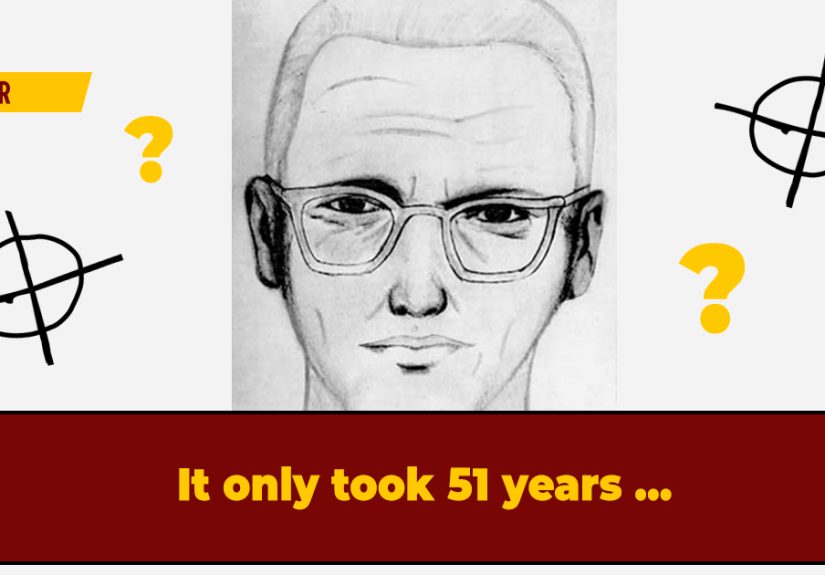
For more than half a century, one of America’s most infamous unsolved crime stories carried a second mystery inside it: a strange block of 340 symbols mailed by the Zodiac Killer to the San Francisco Chronicle in 1969. The cipher looked like the kind of thing a haunted typewriter might cough up after drinking too much coffee: circles, triangles, crosses, half-filled shapes, and odd marks arranged in a grid. Experts tried. Hobbyists tried. Computers tried. The message sat there, silent and smug.
Then, in December 2020, three amateur codebreakers finally cracked it. The team consisted of David Oranchak, a software developer from Virginia; Sam Blake, an Australian mathematician; and Jarl Van Eycke, a Belgian programmer known for creating the codebreaking software AZdecrypt. Their solution was later confirmed by the FBI, turning the so-called Zodiac 340 cipher, or Z340, from a cold wall of symbols into readable text.
Did the decrypted message reveal the Zodiac Killer’s name? No. Did it solve the case? Also no. But it did solve one of the most stubborn cryptographic riddles in true-crime history. In other words, it did not hand investigators the keys to the castle, but it did finally open one very rusty door.
Who Was the Zodiac Killer?
The Zodiac Killer was an unidentified figure linked to at least five confirmed killings in Northern California between 1968 and 1969. He became infamous not only because the case remained unsolved, but because he communicated with newspapers and law enforcement through letters, threats, symbols, and ciphers. His letters often began with the chilling phrase “This is the Zodiac speaking,” and they helped turn the case into a long-running American obsession.
Unlike many criminal cases that fade from public memory, the Zodiac case kept returning through books, films, documentaries, podcasts, online forums, and amateur investigations. Part of the fascination came from the killer’s use of codes. A mystery is already sticky; add secret writing and suddenly everyone with graph paper thinks they might be one cup of tea away from solving history.
What Was the Zodiac 340 Cipher?
The Zodiac 340 cipher was a 340-character coded message mailed in November 1969. It followed an earlier Zodiac cipher known as Z408, named for its 408 symbols. That first cipher was solved quickly in 1969 by Donald and Bettye Harden, private citizens from California. The Z408 message did not reveal the killer’s identity, but it did prove that Zodiac’s ciphers could contain real messages rather than pure nonsense.
Z340 was different. It was shorter, stranger, and much harder. For decades, professional cryptanalysts, law enforcement experts, computer scientists, and amateur sleuths tried to solve it. Some believed it might be gibberish. Others thought it contained the killer’s name. Many proposed solutions, but none stood up to serious testing.
The problem was not simply that the symbols stood for letters. If that were all, frequency analysis might have helped more quickly. In a basic substitution cipher, one symbol replaces one letter. In a homophonic substitution cipher, multiple symbols can represent the same letter, which makes patterns harder to detect. Z340 also involved transposition, meaning the letters were rearranged in a systematic way. Imagine someone writing a sentence, cutting it into puzzle pieces, tossing them into a hat, and then giving you the hat with no instructions. Rude? Yes. Effective? Unfortunately, also yes.
How the Amateur Codebreakers Cracked the Message
They Combined Human Intuition With Software
The Z340 solution was not the result of one magical button labeled “Solve Creepy Cipher.” It took years of work, failed theories, technical experiments, and collaboration. David Oranchak had studied the Zodiac ciphers for years and shared his work through the “Let’s Crack Zodiac” project. Sam Blake contributed mathematical insight and a flood of possible reading patterns. Jarl Van Eycke brought AZdecrypt, a powerful homophonic cipher-solving program.
The team tested many ways the message might have been written and then rearranged. They looked at diagonal patterns, reading directions, and transposition methods. They explored hundreds of thousands of possible arrangements. Most led nowhere, which is the glamorous reality of codebreaking: hours of clever work followed by a screen full of alphabet soup.
The Breakthrough Came From the Right Reading Pattern
The breakthrough came when the team found a transposition pattern that began producing recognizable English. Once meaningful fragments appeared, the rest of the message became easier to reconstruct. The text included Zodiac’s familiar taunting tone and referenced a television call-in incident that he denied being involved in. The message also repeated themes from earlier Zodiac communications, including his strange claims about death and paradise.
The decrypted message began with a line addressed to those trying to catch him, making it clear that the author wanted attention as much as secrecy. That fits the broader Zodiac pattern: the ciphers were not private diary entries. They were performances. The killer wanted newspapers, police, and the public to look. The code was a locked box placed directly under a spotlight.
What the Solved Zodiac Message Actually Revealed
The biggest surprise was that the message did not reveal the Zodiac Killer’s identity. For decades, many people hoped Z340 would contain a name, a confession with hidden details, or some decisive clue. Instead, it delivered more of the same dark boasting and theatrical menace that appeared in other Zodiac letters.
That may sound disappointing, but the solution still mattered. First, it confirmed that Z340 was not meaningless filler. Second, it showed that Zodiac used a more complex system than many casual observers expected. Third, it ended a 51-year debate over whether the cipher could be solved at all. And fourth, it demonstrated how modern computing and persistent amateur research can contribute to historical mysteries.
In short, the solved message did not unmask the Zodiac Killer, but it did unmask the cipher’s method. That is a real achievement. Not every locked door hides treasure; sometimes the victory is proving how the lock worked.
Why Did It Take More Than 50 Years?
Z340 lasted so long because it blended several difficulties at once. It used many symbols, obscured letter frequencies, and rearranged the message in a way that made normal reading patterns fail. A human looking at it from left to right would see little useful structure. A computer could test many possibilities, but only if researchers gave it the right assumptions.
This is where the case becomes especially interesting. The codebreakers did not merely have better computers than people had in 1969. They also had decades of accumulated ideas, public discussion, software improvements, and failed attempts to learn from. Failure, in this case, was not wasted effort. It was compost. Not glamorous compost, admittedly, but useful.
Some cryptography experts have suggested that Zodiac may not have realized how difficult he had made the cipher. After his first cipher was solved quickly, he may have tried to make the next one harder and accidentally overshot the runway. The result was a message that remained unreadable until a global team used modern tools and patient experimentation to reconstruct it.
Why Amateur Codebreakers Matter
The word “amateur” can sound like a polite way of saying “someone brought a ukulele to a symphony.” But in this case, amateur does not mean unserious. It means the successful codebreakers were private citizens rather than official investigators working inside a government agency. Their work was disciplined, technical, and deeply informed.
Modern amateur research communities can be surprisingly powerful. They share documents, test claims, build tools, challenge weak theories, and preserve obscure details that might otherwise disappear. Of course, amateur sleuthing can also go wrong when speculation outruns evidence. The Z340 solution stands out because it was testable. It produced coherent text, matched known context, and was submitted for verification.
That is the key difference between responsible investigation and internet fog-machine mystery theater. A strong claim needs evidence that other people can examine. The Z340 team did not simply announce, “Trust us, we found the secret.” They showed the method, documented the process, and allowed the solution to be checked.
The Role of Technology in Solving Z340
Technology did not solve Z340 alone, but it made the solution possible. AZdecrypt helped process large numbers of possible symbol substitutions. The team also modified and guided computational searches based on human reasoning. This partnership between people and machines is often where the best breakthroughs happen.
A computer can test possibilities quickly, but it does not automatically know which possibilities are worth testing. Humans bring historical context, pattern recognition, suspicion, patience, and occasionally the ability to say, “Wait, that weird-looking mistake might not be a mistake.” The Z340 solution required both brute-force exploration and careful interpretation.
That balance is increasingly important in research of all kinds. Whether the subject is cryptography, genealogy, digital archives, or old police records, the winning formula is rarely “just use software.” It is usually “ask better questions, then use software intelligently.” Z340 is a perfect example.
Why the Zodiac Cipher Still Fascinates People
The Zodiac 340 cipher fascinates people because it sits at the intersection of fear, language, logic, and unfinished history. A normal unsolved case asks, “Who did this?” A cipher adds, “And what did this hidden message say?” That second question gives the public a puzzle to hold. It transforms spectators into would-be participants.
There is also something uniquely frustrating about a visible secret. The Z340 cipher was not missing. It was not buried in a vault. It was right there, printed and copied for decades. Anyone could look at it. Almost no one could read it. That kind of mystery has a way of tapping its foot in the corner of the room forever.
The 2020 solution gave the public a rare kind of closure. Not complete closure, because the Zodiac Killer’s identity remains unknown. But partial closure matters. It proves that even long-cold mysteries can still move. Sometimes history is not frozen; it is just waiting for the right combination of persistence, collaboration, and software that does not get tired.
What the Z340 Solution Did Not Do
It is important to be clear: cracking the Zodiac Killer’s message did not solve the Zodiac case. It did not identify a suspect. It did not confirm the many dramatic theories that have circulated for decades. It did not prove that every claimed Zodiac letter is authentic. It did not decode the shorter unsolved ciphers, such as Z13 or Z32, in a way accepted by authorities.
That clarity matters because famous unsolved cases attract bold claims. Every few years, someone announces a new suspect, a new hidden name, or a new “final solution.” Some claims are interesting. Others are built on coincidence, wishful thinking, or pattern-hunting so aggressive it could find a confession in a cereal box.
The Z340 crack is different because it rests on a reproducible cryptographic solution. It is a reminder that real progress is often narrower than headlines suggest, but also more valuable. Serious work does not need to solve everything to matter.
Lessons and Experiences From the Z340 Breakthrough
The story of amateur codebreakers cracking the Zodiac Killer’s message after more than 50 years offers surprisingly useful lessons beyond true crime. First, it shows the value of patient curiosity. Many people want the thrill of a breakthrough, but few want the long middle part where nothing works. Z340 required years of trying, failing, adjusting, and trying again. That is not glamorous, but it is how difficult problems usually get solved.
Second, the case shows why collaboration matters. Oranchak, Blake, and Van Eycke brought different strengths. One person understood the history and had spent years studying Zodiac’s ciphers. Another contributed mathematical creativity. Another built software capable of attacking the cipher at scale. None of those strengths alone guaranteed success. Together, they created momentum.
Third, the breakthrough teaches a healthy respect for uncertainty. Before Z340 was solved, many theories sounded possible. Some people believed the cipher contained a name. Others believed it was nonsense. Others proposed elaborate solutions that looked convincing until tested. The final answer reminded everyone that confidence is not the same as proof. A good theory should survive contact with evidence.
Fourth, the story is a masterclass in using technology without worshiping it. The software was essential, but it needed human guidance. The team had to choose which patterns to test, recognize meaningful fragments, and interpret the results. That lesson applies far beyond cryptography. Tools are powerful, but they become much more powerful when used by people who understand the problem.
Fifth, Z340 shows that amateurs can make serious contributions when they work carefully. The word “amateur” should not be an insult. Many important discoveries begin with people who are deeply interested, self-taught, and willing to spend evenings and weekends on problems that institutions no longer prioritize. The important thing is not whether someone has an official title. The important thing is whether the work is rigorous, transparent, and testable.
For anyone interested in puzzles, research, writing, or investigation, the experience of Z340 offers a simple but powerful takeaway: difficult mysteries reward organized persistence. Keep notes. Test assumptions. Share responsibly. Be willing to be wrong. Do not confuse a pattern with proof. And when the answer finally appears, remember that it probably came from dozens of failed attempts that quietly prepared the ground.
There is also a human lesson here. The Zodiac case involved real victims, real families, and real fear. The cipher is fascinating, but it should never become a game that erases the people harmed by the crimes. The best true-crime writing and research keeps that balance: curiosity without cruelty, analysis without sensationalism, and respect for facts over fantasy.
In the end, the cracking of Z340 is not just a story about a solved code. It is a story about patience, teamwork, humility, and the strange endurance of unanswered questions. More than 50 years after the message was mailed, three private citizens proved that even a mystery famous for silence can still speak.
Conclusion
The cracking of the Zodiac Killer’s 340-character cipher was one of the most remarkable true-crime and cryptography breakthroughs of the modern era. After 51 years of failed attempts, David Oranchak, Sam Blake, and Jarl Van Eycke showed that the message was real, complex, and solvable. The decrypted text did not reveal the Zodiac Killer’s identity, but it did close one chapter in a case that has haunted American culture for decades.
The larger meaning of the breakthrough goes beyond the Zodiac case. It proves that old problems can yield to new methods, that amateur researchers can do serious work, and that collaboration between human insight and computer power can solve puzzles once thought impossible. The mystery of who the Zodiac Killer was remains unsolved, but the mystery of Z340 no longer does. For a cipher that spent half a century staring back at the world, that is no small defeat.