Table of Contents >> Show >> Hide
Some houses are built to impress the neighbors. Others are built to survive Thanksgiving. And then there are rare homes that do something more ambitious: they turn architecture into diplomacy. Common Ground: A Chinese-Style Family Compound in California belongs in that last category. It is not just a beautiful house. It is a serious, thoughtful answer to a very modern question: how do several generations live close together without driving one another into the nearest hedge?
The answer, in this case, is not a giant suburban box with too many sofas and one unlucky guest room by the laundry. It is a family compound in California shaped by Chinese courtyard thinking, designed around shared life but equally serious about privacy, retreat, and rhythm. In other words, it is a home that understands family the way good architecture should: as a group of people who need both communion and breathing room. Lots of breathing room. Preferably with good light.
The Real House Behind the Title
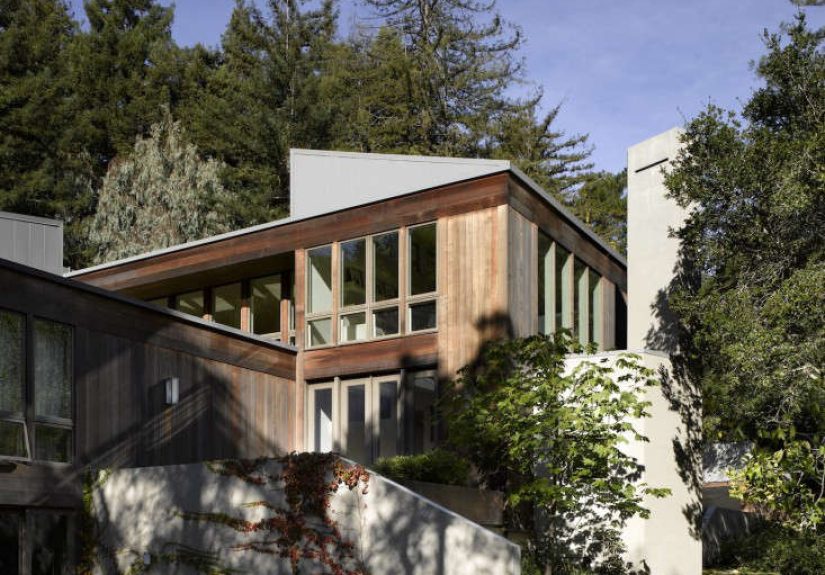
The home most closely associated with this title is Tsao & McKown’s Piedmont House in Northern California, designed for three generations of a family with Chinese roots. At the center is an internal courtyard used for dining, with shared rooms flowing outward and more private areas arranged beyond. That plan matters because it is doing far more than organizing furniture. It is organizing relationships.
Instead of treating the house as one continuous open-plan sprawl, the design uses a layered layout. Common spaces invite gathering. Bedrooms and sitting areas pull away into quieter zones. Gardens and courts act like pressure valves, softening the edges between togetherness and solitude. This is the kind of planning that says, “We love each other very much, and we also love doors.”
That is one of the smartest aspects of a Chinese-style family compound in California: it does not confuse closeness with constant contact. The home creates a center of gravity, but it does not force everyone into the same orbit every minute of the day.
What Makes It Chinese-Style?
Calling the house “Chinese-style” does not mean it is a stage set full of decorative clichés. The stronger reading is architectural and spatial. The project draws from the logic of traditional Chinese courtyard living, where the arrangement of built forms around interior open space creates hierarchy, protection, ritual, and flow.
In Chinese garden and courtyard traditions, movement matters. Views are framed. Thresholds are deliberate. Walls do not simply separate; they reveal. A courtyard is not leftover outdoor square footage. It is a room without a roof, a social hinge, a place where weather, family life, landscape, and architecture meet on equal terms.
That is why the Piedmont house feels so compelling. Its Chinese influence is not pasted on with a dragon motif and a prayer that nobody notices. It is embedded in the plan. The house borrows the deeper grammar of courtyard design: enclosure without heaviness, order without stiffness, beauty without shouting.
The Courtyard as Social Engine
At the center of the house sits the dining courtyard, and that choice tells you everything. Many American homes make the television room the emotional headquarters. This house gives that honor to a shared courtyard. That is not just elegant; it is revealing. Meals, conversation, drifting in and out, a grandparent reading, a child cutting through on the way to somewhere else, a door left open to a garden breeze: all of that becomes part of daily life.
The courtyard becomes the family group chat, only quieter and with better architecture. It invites spontaneous contact without demanding performance. Nobody has to “host” the courtyard. It simply waits there, doing what great shared spaces do: making connection feel natural.
Framed Views, Measured Movement
Another distinctly Chinese quality in this kind of compound is the idea that a house should unfold in sequences. You arrive, pass through, turn, pause, glimpse a garden, cross toward a brighter space, then discover another layer beyond. The home does not dump its entire personality on you at the front door. It is more polite than that.
This measured revelation creates calm. It also creates dignity. Family members are not constantly on display in one giant aquarium of open-plan life. The architecture gives each generation its own degree of visibility and privacy. That is a small miracle in domestic design.
Why California Is the Perfect Setting
A Chinese-style compound could theoretically exist anywhere, but California gives this idea unusually fertile ground. The state’s climate supports indoor-outdoor living in a way many places can only dream about while scraping ice off the driveway. Mild weather makes courtyards, terraces, and garden-facing rooms more usable for more of the year. That means the architecture can lean harder into open transitions, natural ventilation, and outdoor gathering.
California is also culturally suited to hybrid design. It has a long history of adapting global architectural traditions into regionally specific forms. Japanese influence, Spanish courtyards, modernist glass walls, ranch-house informality, and Asian garden traditions have all shaped the state’s design language. So a Chinese-style family compound in California does not feel imported in a clumsy way. It feels translated.
That translation matters. The best homes do not copy old forms word for word. They preserve the meaning while adjusting the syntax. In California, that often means more openness to landscape, a lighter touch with materials, and a stronger relationship between private refuge and outdoor life.
California Family Life Is Changing, Too
The house also feels timely because multigenerational living is no longer a niche arrangement in the United States. It is increasingly a practical and emotional reality. Rising housing costs, longer lifespans, caregiving needs, cultural traditions, and changing expectations about family support have all pushed more households toward shared living.
Design publications and housing experts keep returning to the same conclusion: successful multigenerational homes need flexible layouts, privacy, separate suites or wings, and shared spaces that feel welcoming rather than cramped. That is exactly where a courtyard-based compound excels. It offers togetherness without collision. It lets family life breathe.
California’s broader housing conversation, including the rise of ADUs and family compounds built around one property, only makes this model more relevant. Even when a household is not living in a single formal compound, the same design principle applies: bring people close, but not so close that everybody can hear somebody microwaving leftovers at midnight.
The Design Lessons Hidden in Plain Sight
1. Privacy Is Not the Opposite of Family
Many homes treat privacy like an afterthought. In a multigenerational compound, privacy is infrastructure. It is as essential as plumbing, and arguably more emotionally important. This California house understands that shared life works better when individuals can step away without staging a dramatic exit.
Private bedroom clusters, garden-facing retreats, and transitional zones all reduce friction. They let grandparents rest, parents work, teenagers decompress, and guests exist without feeling like decorative objects in the family museum.
2. Shared Space Works Best When It Has Purpose
The central dining court is not vague “open space.” It has a job. It gathers people around food, conversation, and routine. Great communal design is usually specific like that. A courtyard for dining. A sitting room for reading. A garden walk for transition. A porch for evening air. Each shared space earns its place by supporting a ritual.
That is one reason the house feels rich rather than oversized. It is not packed with empty square footage wearing expensive finishes like a necktie. It is composed around use.
3. Landscape Is Part of the Family Plan
In a compound like this, landscape is not frosting. It is structure. Courtyards, gardens, and planted edges make the house more livable by filtering views, carrying light inward, and softening transitions between generations and rooms. They create visual relief. They provide quiet. They give people somewhere to be that is not entirely inside and not entirely away.
Chinese garden traditions have long understood this balance. Rock, water, paving, framed vegetation, and controlled vistas do not simply beautify a property; they produce mood and meaning. In California, where outdoor living is part of everyday life, that lesson becomes even more powerful.
4. Cultural Influence Is Strongest When It Is Spatial
One of the most refreshing things about this house is that its cultural influence is architectural before it is decorative. Yes, materials and details matter. But what really carries the idea is planning, proportion, and sequence. The home does not need to scream its references because the layout already speaks them fluently.
That is a valuable lesson for any homeowner or designer trying to create a residence inspired by heritage. Start with how people move, gather, and rest. Style without spatial logic is costume. Style anchored in lived practice becomes architecture.
Specific Examples That Make the House Memorable
Part of the charm of the original project is that it pairs formal ideas with intensely lived-in details. The house is serious about solids and voids, about rooms radiating from a center, about balconies overlooking the court, about gardens extending the private suites. But it also avoids feeling solemn. It has warmth, wit, and family texture.
That combination is crucial. A multigenerational house cannot succeed on theory alone. It must survive actual human behavior: shoes by doors, grandparents with routines, siblings with opinions, children moving too fast, and someone always looking for a quiet place to take a call. The best compounds do not erase family messiness. They choreograph it.
And that is why this California house resonates beyond architecture circles. It is not merely photogenic. It is persuasive. It makes a case that family living can be generous, elegant, and culturally rooted without becoming nostalgic or overbuilt.
What Other Homes Can Learn from It
You do not need a custom-designed compound in Piedmont to learn from this idea. The underlying principles scale surprisingly well. A modest California property with a detached ADU can apply the same logic. So can a renovation that creates separate suites around a shared patio. So can a suburban home that turns a neglected side yard into a true courtyard connecting the main house and guest quarters.
The lesson is not “build a grand compound or go home.” The lesson is to organize family life around respectful proximity. Give people places to gather with intention. Give them private retreats that feel legitimate, not leftover. Use courtyards, gardens, porches, and passages to mediate between one generation and the next.
In a time when housing conversations are often dominated by cost, scarcity, and compromise, that is a surprisingly hopeful design message. Architecture cannot solve every family tension. It cannot make teenagers answer texts or convince relatives to agree on thermostat settings. But it can make daily life more gracious. That is no small thing.
Experience: What It Feels Like to Live with Common Ground
Imagine arriving at a house like this on a mild California morning. The light is soft, the air carries that faint mix of wood, stone, and planted earth, and the first thing you notice is not size but sequence. The house does not lunge at you. It invites you forward. A wall frames a view. A doorway suggests another space beyond. A turn in the path hints that the real center of life is not at the curb but deeper inside.
Then you reach the courtyard, and everything makes sense.
This is where the compound breathes. The sky is overhead. A table might be set for lunch, or not; either way, the space feels ready. One person passes through with tea. Another lingers. Someone upstairs appears briefly on a balcony, says hello, then disappears again. The beauty of the place is that no moment has to be ceremonial to feel important. Daily life becomes the event.
By afternoon, the house behaves differently. Sun moves across the paving and catches a wall at an angle that makes the material suddenly look richer. Interior rooms borrow brightness from the courtyard, and the courtyard borrows intimacy from the rooms around it. The boundaries start to blur in the best possible way. You are inside, outside, and somewhere pleasantly in between.
For older family members, a compound like this can feel reassuring rather than isolating. They are not tucked away in a symbolic “in-law room” that says, with all the tenderness of a motel, “Good luck in there.” They remain part of the center while still having rooms of their own, routines of their own, and the dignity of withdrawal when needed. That is a quiet but profound achievement.
For parents, the experience is different but equally powerful. Shared childcare becomes easier. Family meals become less of a logistical summit meeting. Support is close, but not smothering. There is enough autonomy that help can feel generous instead of invasive. That is the magic trick every multigenerational household wants to pull off, and very few floor plans truly support.
For younger people, especially children, the compound offers a rich sense of memory in the making. They do not grow up thinking family happens only on holidays or through scheduled visits. They absorb it spatially. A grandparent in the garden. A cousin in the courtyard. An aunt reading in a sitting room just beyond a screen of windows. The architecture turns kinship into part of the everyday landscape.
There is also an emotional effect that is harder to quantify but impossible to miss: the house slows people down. Not because it is inconvenient, but because it is composed. You notice transitions. You become aware of weather. You register who is present. You move through the home with just a little more attention than usual, and that attention changes how you experience one another.
At night, the compound likely becomes even better. Interior lights glow into the courtyard. Shadows soften edges. The house starts to feel less like a set of rooms and more like a small world held together by light, air, and familiarity. The day’s busyness settles. Someone is still talking at the table. Someone else has retreated to a private room. Both states belong equally. That, ultimately, is what common ground means here: not sameness, not forced closeness, but a design generous enough to hold different kinds of family life at once.
Conclusion
Common Ground: A Chinese-Style Family Compound in California is compelling because it refuses false choices. It proves a house can be culturally rooted without becoming theatrical, multigenerational without becoming crowded, and luxurious without becoming cold. Its courtyard-centered plan turns domestic life into something more layered, more humane, and more adaptable to the way families actually live.
In the end, the real achievement is not aesthetic, though the aesthetics are strong. It is social. The house creates a framework where multiple generations can share one property with grace, privacy, and connection. That is harder than building a pretty house. It is also far more useful.
And in California, where land is precious, family life is evolving, and indoor-outdoor living is practically a regional religion, this kind of compound feels less like a fantasy and more like a brilliant prototype. Not a museum piece. Not a nostalgia project. A living argument for how architecture can make room for both heritage and change.